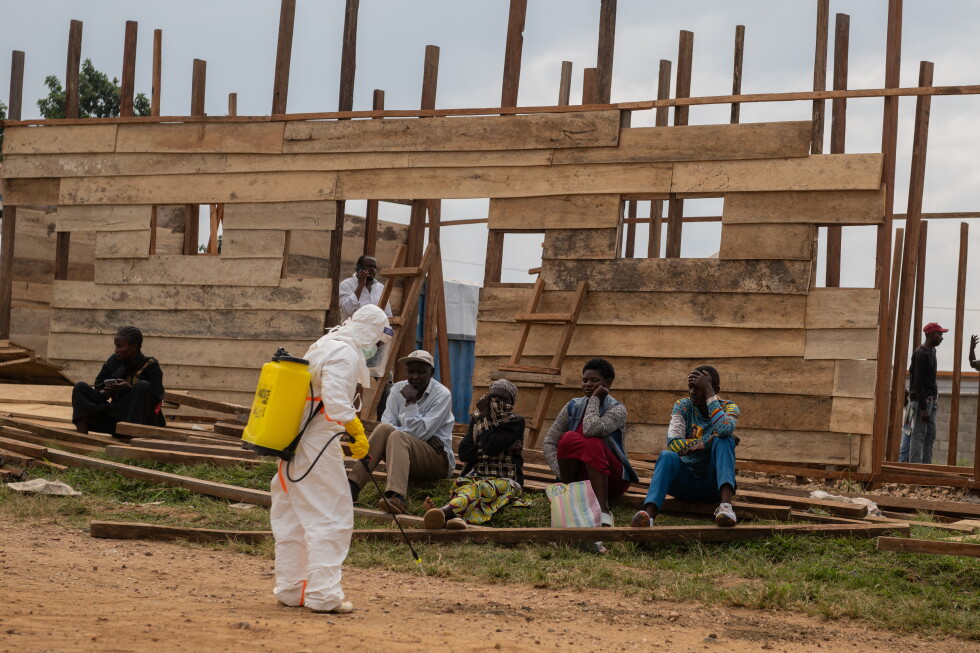
DAKAR, SENEGAL – Just one month after the Ebola outbreak was formally detected across the Democratic Republic of Congo’s eastern region and neighboring Uganda, the death toll has surpassed 200, marking it the most severe early-stage Ebola outbreak on record, the Africa Centres for Disease Control and Prevention (Africa CDC) confirmed in a Thursday briefing.
Dr. Wessam Mankoula, a medical epidemiologist with Africa CDC, told reporters that the outbreak has already recorded 894 confirmed cases as of this week—three times the caseload seen at the same 30-day mark during Uganda’s 2000 Ebola outbreak, which registered 224 cases at the corresponding point. The higher current count is partially explained by delayed detection: health authorities only confirmed the outbreak’s existence on May 15, weeks after community transmission was first suspected. Since last week alone, confirmed cases have jumped 38%, and the virus has already spread to 32 separate health zones across eastern Congo.
What makes this outbreak particularly dangerous is its strain: it is caused by the rare Bundibugyo Ebola virus, for which no approved vaccines or specific antiviral treatments exist. Early testing did not screen for this less common variant, as most of Congo’s 16 previous Ebola outbreaks were linked to the Zaire strain, a more widespread variant for which effective vaccines are already available. As of this week, 74 infected patients across the affected region have recovered, and researchers are currently advancing development of experimental treatments including targeted monoclonal antibodies for Bundibugyo.
Over 90% of all confirmed cases are concentrated in Congo’s eastern Ituri Province, with additional cases detected in North Kivu and South Kivu provinces. The virus has already crossed the international border into Uganda, where 19 confirmed cases and two deaths have been documented to date.
Public health officials are facing steep barriers to bringing the outbreak under control, starting with critical gaps in contact tracing. Africa CDC estimates that for the 894 confirmed cases, between 17,000 and 35,000 close contacts should be monitored for symptoms. As of Thursday, only roughly 4,000 contacts—less than 15% of the projected total—have been located and are under active evaluation.
“We are still far from controlling the situation of this outbreak,” Mankoula said, noting that long-running insecurity and geographic isolation in Ituri have hobbled tracing efforts. Decades of armed conflict in the province have displaced nearly one million people, according to the United Nations’ Office for the Coordination of Humanitarian Affairs, leading to constant population movement as communities flee violence. Ituri’s dense forests, underdeveloped road infrastructure, and scattered remote villages mean accessing affected communities can take multiple days of travel. Tracing efforts are further complicated by the large population of artisanal miners working in the region’s mineral-rich interior, who move frequently between isolated mining sites with little official oversight.
Compounding these challenges are critical gaps in funding and personnel. Of the more than $900 million in international pledges committed to the outbreak response, only $90 million has actually been disbursed to frontline response teams, Mankoula said. Africa CDC estimates it requires 540 trained response personnel to fully address the crisis, and currently has only 84 staff deployed to the affected region.
Mankoula added that the organization is working urgently to accelerate the release of committed funds, saying: “We’re keeping our fingers crossed those new pledges will be fast tracked, and we’ll be following up with different member states and different partners about their commitment to turn those pledges into actual money released to their affected countries or partners.”