For months, Saudi Arabia managed to avoid direct fallout from the escalating regional conflict triggered by the war against Iran, even as smaller neighboring nations became engulfed in rising tensions. The kingdom’s state-owned oil giant, Saudi Aramco, even posted record-breaking profits over the summer, leveraging its strategic East-West Pipeline to route crude exports away from the high-risk Strait of Hormuz, where Iranian-aligned forces had targeted commercial shipping. That safe position has now collapsed entirely.
The critical East-West Pipeline is now out of commission following a drone strike carried out by Iran-aligned militias based in Iraq. Simultaneously, Houthi forces in Yemen have unleashed a wave of missile and drone attacks targeting population centers across Saudi Arabia, including an incident where a Houthi drone was intercepted over Mecca—Islam’s holiest site, whose stewardship forms a core pillar of legitimacy for the ruling House of Saud. The Houthis have denied intentionally targeting the city. These concurrent attacks have left Saudi Arabia fighting on two separate, high-stakes fronts.
On one front, the kingdom’s allied Yemeni forces are scrambling to repel a sweeping Houthi ground offensive across Yemen, while on the home front, Saudi Arabia defends its own territory against non-stop aerial attacks. The timing of the Houthi blitz could not be worse for Riyadh: global stockpiles of the U.S.-made interceptor missiles that form the backbone of the kingdom’s air defense network are running critically low.
Long reliant on the U.S. security umbrella it accepted after World War II, Saudi Arabia now finds Washington unwilling to step up. U.S. President Donald Trump recently confirmed that Houthi representatives had contacted the U.S. to state they have no interest in conflict with America, and Reuters has reported that U.S. officials held secret talks with Houthi delegates mediated by Oman, a major development that sidelines Saudi interests.
In response to shifting U.S. commitments and regional instability sparked by the U.S.-Israeli campaign against Iran, Saudi Arabia moved to expand its own security alliances, most notably through the Mecca Pact with Turkey and Pakistan. But like the U.S., these new partners have shown zero willingness to enter direct conflict with the Houthis, a movement that has already proven its ability to sustain heavy battlefield losses and continue fighting. Today, neither Turkey nor Pakistan have deployed any support to Saudi Arabia, leaving the kingdom isolated.
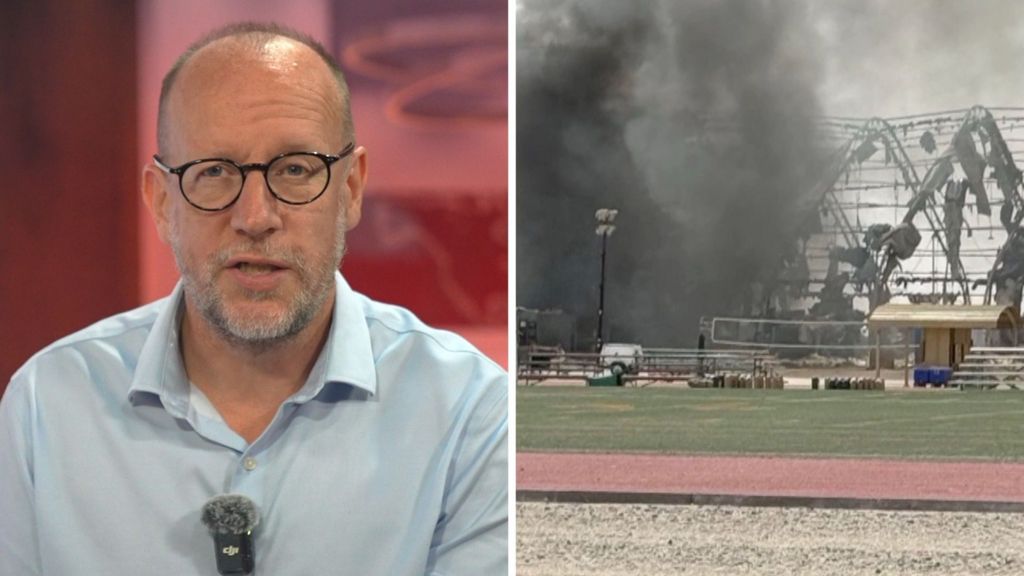
“Saudi Arabia is in a huge bind right now. They are pretty alone,” explained Neil Quilliam, a Gulf research expert at London-based Chatham House, in an interview with Middle East Eye. “The U.S. isn’t there. The Mecca Pact states haven’t showed up. They have few cards to play.”
The Houthi advance along Yemen’s Red Sea coast has already placed the strategically vital Bab el-Mandeb Strait firmly under the group’s control. This waterway is the primary chokepoint for Saudi oil shipments bound for Asian markets. Combined with the disabling of the East-West Pipeline, which fed crude to European markets through the Red Sea, the Houthi advances now threaten both major Saudi export routes. The group is currently advancing on two key Yemeni inland cities, Taiz and Marib; if these fall, the Saudi-backed, internationally recognized Yemeni government faces collapse.
On the ground, Saudi Arabia—which refuses to deploy its own ground troops into Yemen—has no reliable local partners to back. The National Resistance Forces, a militia previously funded by the United Arab Emirates that held the Red Sea coastline, disintegrated almost immediately during the Houthi advance. The only Yemeni faction with proven combat capability is the Southern Transitional Council (STC), which is committed to restoring an independent state in southern Yemen. The UAE’s open support for the STC earlier this year sparked a major rift between Abu Dhabi and Riyadh, and the STC’s demands for major concessions in exchange for fighting the Houthis run directly counter to Saudi Arabia’s core regional interests.
“The UAE knows how to fight in Yemen, but they want concessions to come back in. Saudi Arabia views those demands as anathema to its national interest,” a anonymous diplomat familiar with bilateral talks between the two nations told Middle East Eye.
The economic damage of the recent attacks is already tangible: Saudi Arabia was forced to cancel multiple crude oil shipments to Europe this week, and all loading operations at Yanbu, the Red Sea terminal that serves as the endpoint of the disabled East-West Pipeline, have been suspended. More broadly, the escalating conflict threatens to derail Crown Prince Mohammed bin Salman’s flagship Vision 2030 initiative, which aims to diversify the Saudi economy away from oil dependence. The kingdom is set to host a major global investment conference next month, where it hopes to attract billions in foreign investment for new projects including AI data centers and tourism infrastructure.
Saudi and allied Yemeni forces have launched limited retaliatory strikes against Houthi targets, but Riyadh has not committed to the large-scale intervention it launched at the start of the Yemen civil war a decade ago. The kingdom spent years working to extricate itself from that protracted conflict, and a 2022 ceasefire between the Houthis and Saudi-aligned forces reduced open fighting. However, Saudi Arabia has maintained a strict blockade on Houthi-controlled Yemeni ports and airports throughout the de facto truce.
“A return to full-scale ground war offers little that eight years of campaigning failed to deliver,” noted Hesham Alghannam, director general of the Strategic Studies and National Security Programmes at Riyadh’s Naif Arab University for Security Sciences. Western officials based in Riyadh confirm that Saudi leadership has no appetite to re-enter the Yemeni quagmire, mindful of the damage it caused to Saudi Arabia’s international reputation and arms supply chains.
Analysts widely agree that Saudi Arabia’s hesitation to deploy its own powerful air force to halt the Houthi advance stemmed directly from Riyadh’s reluctance to act without explicit U.S. backing. That indecision, experts say, allowed the Houthis to seize vast swathes of territory in a matter of weeks.
The dual attacks on Saudi energy infrastructure and regional influence do not exist in a vacuum: the Houthis are a core member of Iran’s “axis of resistance” aligned against U.S. and Gulf interests in the region. While the movement maintains it retains operational independence, Middle East Eye confirmed earlier this summer that Iran has supplied the Houthis with new military equipment and advisory support to ramp up their campaign. This offensive comes as Iran was set to hold talks with Gulf states this week to de-escalate tensions in the Strait of Hormuz, leaving Saudi Arabia as the last major Gulf oil exporter operating at full capacity—now vulnerable on two maritime fronts.
The current frozen conflict in Yemen dates back to the 2022 UN-brokered ceasefire, which called for lifting the Saudi blockade on Houthi-held territory in exchange for political negotiations. Those talks never gained meaningful momentum, and the Houthis have grown increasingly frustrated under the ongoing economic isolation. Regional diplomats say the current offensive is driven in part by the Houthi goal of imposing shipping tolls in the Red Sea, mirroring the leverage Iran already holds in the Strait of Hormuz. The Houthis have publicly stated their blockade of Saudi shipping will only end when their own ports and airports are allowed to operate without restrictions.
Military analysts say Saudi Arabia has a range of escalation options available, from calibrated air strikes to a full return to large-scale intervention. The most expedient short-term option would be to pay financial concessions to the Houthis in exchange for a new truce, but experts say that outcome is politically untenable for Riyadh.
“It would look like complete capitulation. Saudi Arabia sees itself as an emerging middle power. They can’t afford to lose face and just give in to Houthi terms,” Quilliam said.
This leaves Saudi Arabia with the path of gradually increasing military pressure, though the kingdom is determined to avoid being dragged back into a years-long ground war that would derail its economic transformation plans. Many Saudi security experts argue for a measured approach: incremental military action to raise the cost of Houthi attacks, paired with negotiations that offer the Houthi leadership a face-saving political resolution.
Other analysts argue a return to large-scale air campaign, modeled on the 2015 Decisive Storm offensive, is the most likely outcome, particularly as no genuine Yemeni political dialogue appears possible in the near term. One key proposal being discussed is an effort to internationalize control of the Bab el-Mandeb Strait, to draw greater support from the U.S., European nations, and other Arab partners for Saudi Arabia’s campaign.
In the end, the future of the conflict and Saudi Arabia’s next move will depend largely on whether its key international and regional allies choose to step in—and for now, that support remains missing in action.