作者: admin

  • Tailors and dressmakers retire their pincushions as US demand for skilled sewers grows

    Tailors and dressmakers retire their pincushions as US demand for skilled sewers grows

    NEW YORK — Inside Kil Bae’s compact Manhattan one-man shop 85 Custom Tailor, the 63-year-old artisan leans over his sewing machine, carefully hemming a custom dress, when a new request interrupts his work: a customer is ready to pay $280 to alter a $20 vintage Tommy Hilfiger reversible bomber jacket he picked up from a local thrift store. For Bae, this price disparity, once unheard of, has become an increasingly common source of revenue that keeps his small business running today.

    Bae, who began honing his tailoring craft at 17 in his native South Korea, examines the cotton jacket, pins its seams, and moves around his client with the focused precision of a sculptor shaping raw marble. He is just one of thousands of aging professional tailors, sewers and dressmakers across the United States: the entire trade is shrinking as veteran artisans retire, even as consumer demand for custom alteration work surges to multi-year highs.

    Fashion industry analysts trace this new wave of demand to shifting consumer attitudes and changing health trends. A generation of shoppers raised on low-cost disposable fast fashion are now turning to skilled tailors to refine mass-produced ready-to-wear pieces, add one-of-a-kind personal touches to off-the-rack garments, breathe new life into thrifted secondhand finds, and extend the lifespan of their existing wardrobes. Beyond that, Bae notes that the rising popularity of weight-loss medications including Wegovy and Zepbound has driven a sharp increase in requests for resized waistbands, tapered sleeves and other body-altering adjustments to existing clothing.

    Unlike many traditional skilled trades, tailoring has a unique advantage that will protect it from technological disruption, Bae argues: “I recommend this job to young people because this one cannot be AI’d. Artificial intelligence has automated pattern making, but it cannot replicate the handcrafted nuance a tailor brings to every job. Every body is different, every shape is unique. AI can’t copy that kind of personalization. If I close this shop today, I can walk out and find another tailor job tomorrow.”

    Even with that stability, however, the trade has failed to attract enough new entry-level workers to replace the generation of artisans set to retire in the coming decade. The trend mirrors labor gaps seen in other hands-on skilled trades from custom engraving to musical instrument repair, where decades of under-recruitment have left widespread workforce shortages.

    U.S. Bureau of Labor Statistics (BLS) data underscores the scale of the decline. Almost two years ago, the agency counted fewer than 17,000 tailors, custom sewers and dressmakers working at formal business establishments across the country — a 30% drop from 10 years earlier. When including self-employed artisans and workers in private households, the median age for all tailors and sewers hit 54 in 2024 — 12 years higher than the median age for the entire U.S. employed workforce.

    Industry experts point to pay and working conditions as the key barriers drawing young people to the trade. The mean annual wage for tailors, dressmakers and custom sewers was $44,050 as of May 2024, according to BLS calculations, far below the $68,000 average annual income for all U.S. workers. The job also requires hours of hunched, detail-focused work that takes a significant physical toll over a career. Most modern fashion education programs also prioritize training for mass industrial production rather than hands-on custom craft work, says Scott Carnz, provost at LIM College, a New York-based institution that offers fashion business degrees: “Most of fashion training is really aimed at mass production, not spending time in a shop handmaking a garment. The work is also tedious.”

    Despite the overall decline in the total workforce, online job postings for tailors have stayed remarkably stable in recent years, says Cory Stahle, a labor economist with Indeed’s research division. Between February 2020 and February 2024, advertised tailor openings dropped by just 2%, compared to a nearly 30% drop in marketing and software development postings over the same period. “There is a kind of craftsmanship here that I think is an important piece that we can’t ignore,” Stahle, who specializes in U.S. labor market analysis, said.

    For more than a century, immigrant workers have been the backbone of America’s custom garment and tailoring trade. Julia Gelatt, associate director of the U.S. Immigration Policy Program at the nonpartisan Migration Policy Institute, says an analysis of recent U.S. census data finds roughly 40% of all tailors, dressmakers and sewers are foreign-born, with the largest shares hailing from Mexico, South Korea, Vietnam and China.

    To address the deepening labor shortage, industry and education leaders have begun partnering to cultivate a new generation of master tailors. Nordstrom, North America’s largest employer of tailoring and alteration specialists, has teamed up with New York’s Fashion Institute of Technology (FIT) to launch a nine-week intensive training program focused on advanced sewing and alteration techniques.

    “Customarily, tailoring has never been part of the American skill set,” said Michael Harrell, an FIT instructor and Broadway costume builder who teaches the program. The course received more than 200 applications for its inaugural 15-student cohort, which began coursework in October 2023 and graduated with completion certificates in February 2024, according to Jacqueline Jenkins, executive director of FIT’s Center for Continuing and Professional Studies. The hands-on curriculum is designed specifically to prepare graduates for full-time roles at Nordstrom, which employs 1,500 alteration and tailoring specialists across its luxury department store locations to handle everything from basic jean hemming and rip repair to custom suit fitting and evening gown reworking. So far, 10 graduates from the first cohort have already been hired by Nordstrom or are in the final stages of the hiring process, said Marco Esquivel, Nordstrom’s director of alterations. “We owe it to the broader industry to ensure that this is an art form that exists for years and years to come, and continues to serve customers both within our walls as well as outside,” Esquivel said.

    Other major retail brands are also expanding their custom tailoring services to match growing consumer demand. Brooks Brothers, the iconic American luxury menswear brand that has offered custom garments since the 1800s, launched a test of bespoke women’s tailoring at five locations in 2023. This year, the brand rolled out the service to 40 additional stores, with pricing starting at $165 for custom shirts and $1,398 for custom suits.

    Back at Bae’s Manhattan shop, 33-year-old client Jonathan Reiss confirms he is certain he wants to move forward with the $280 alteration of his $20 thrifted jacket. Reiss says he plans to wear the jacket regularly, and has shifted away from the fast fashion habits of his younger years: “I think I fell victim to buying cheap stuff, and then you realize it just falls apart or shrinks or it just doesn’t last long.”

    Like many veteran tailors, Bae has struggled to find a successor to carry on his craft. He tried to persuade his son, now 34, to learn the trade, but his son left a career in tech to open his own bagel shop. “Young people. They just want to find a job in computers,” Bae said. “I think that’s too boring. I think this is very interesting. Every time, I am drawing in my head. I am like an artist.”

    Bae got his start training under his older sister and brother at their custom apparel shop outside Seoul, South Korea. After five years of apprenticeship, he moved to Seoul to work on custom orders and designer samples for major domestic brands. He later relocated to the New York City area, where he worked as a pattern maker for iconic design houses including Ralph Lauren and Donna Karan. He opened his first own shop in Connecticut in 2011, but was forced to close the location after a decade when the COVID-19 pandemic gutted local small business revenue. He reopened at his current Manhattan address a year later, and now works with three specialized sewing machines: a basic all-purpose model, a heavy-duty machine for thick materials like denim and leather, and an overlock machine to finish raw fabric edges.

    For now, Bae says he plans to keep working as long as his hands stay steady enough to handle the fine work of tailoring: “I’m always learning,” he said.

  • Saudi oasis town adjusts to life in the firing line

    Saudi oasis town adjusts to life in the firing line

    Nestled in central Saudi Arabia, the tranquil oasis town of Al-Kharj has long been a beloved escape. For generations, overstretched residents of nearby Riyadh have flocked here to unwind, drawn by its lush palm-lined avenues, world-famous sweet dates, and green agricultural landscapes that stand out dramatically against the kingdom’s endless expanses of arid desert. Today, however, this once-peaceful retreat finds itself at the heart of escalating regional conflict, its quiet daily routine disrupted by the constant threat of incoming projectiles.

    Al-Kharj’s proximity to the sprawling Prince Sultan Air Base, a critical military installation that once hosted U.S. command operations during the 1991 Gulf War and the 2003 invasion of Iraq, has put the town directly in the line of fire. Following the joint U.S.-Israeli strike on Iran that launched on February 28, Tehran has launched repeated waves of attacks targeting Gulf states it accuses of enabling American military operations. Iran’s Revolutionary Guards has openly claimed that Saudi Arabia hosts advanced U.S. fighter jets including F-35s and F-16s at Prince Sultan, alongside refueling and storage infrastructure, making the base a priority target.

    Last month, multiple U.S. media outlets confirmed that at least a dozen American service members were wounded in an Iranian attack on the base. While Iranian officials have publicly claimed they destroyed a high-value advanced surveillance aircraft worth hundreds of millions of dollars, additional reports confirm several U.S. aerial refueling tankers also sustained damage in the strike.

    For Al-Kharj’s 350,000 residents, the conflict has already spilled into civilian life. The town recorded Saudi Arabia’s first civilian casualties from the current wave of tensions on March 8, when two migrant workers were killed after a projectile crashed into a residential neighborhood. Just last week, two local residents were injured when debris from an intercepted drone fell onto three private homes, and a separate incident damaged six additional properties, according to official Saudi statements.

    Despite the repeated strikes and growing risk, however, most Al-Kharj residents have maintained remarkable stoicism, adapting their daily routines rather than succumbing to panic. “We hear the loud booms of missile interceptions, but we rarely spot anything in the sky,” 66-year-old local Abdullah told AFP, requesting only his first name be published due to strict Saudi security sensitivity. Speaking after afternoon prayers at his neighborhood mosque, Abdullah noted: “This is all very new for Al-Kharj, but life goes on as normal — there’s no panic, no change to how we live.”

    Government worker Turki, who also only shared his first name, explained that while the town’s newfound place in global headlines has led friends and family across the country to check in constantly, daily public life continues uninterrupted. During a recent lunch rush at a local popular restaurant, AFP observed diners scrolling through war updates on their phones between bites of traditional rice and meat dishes, a small routine adaptation that underscores how residents have integrated the new risk into everyday life.

    Even younger residents, who openly acknowledge their fear, refuse to alter their daily schedules. Twenty-one-year-old student Batool, sipping coffee at a downtown cafe, admitted: “I would be lying if I said I’m not afraid when I hear the explosions, or when I heard about the foreign workers who died. But I’m not letting fear change how I live. As you can see, I’m still studying outside, my routine hasn’t shifted at all because of the war.”

    While AFP observed no heavy deployment of additional security forces around the town despite the regular strikes, residents confirm the threat is always lingering. Mobile phones regularly receive alert warnings of incoming attacks, and concerns about the next barrage never fully fade.

    The presence of U.S. forces at Prince Sultan Air Base carries long-standing geopolitical weight. American troops first withdrew from the base in the early 2000s, after decades of controversy: conservative factions of Saudi society have long viewed foreign military presence on the soil of Islam’s two holiest sites as a religious insult, a grievance infamously cited by Osama bin Laden as a core justification for the September 11 attacks. U.S. forces only returned to the base in 2019 under a new bilateral agreement between Washington and Riyadh, with initial reports indicating hundreds of personnel would be stationed there.

  • Sputtering Arsenal face test of character in Sporting clash

    Sputtering Arsenal face test of character in Sporting clash

    For Mikel Arteta’s Arsenal, a season brimming with historic ambition has hit its first major bump in the road, and the club now faces a defining moment of truth as it travels to Portugal to take on Sporting CP in the first leg of the Champions League quarter-finals. Fresh off two devastating back-to-back defeats that have punctured the Gunners’ dream of an unprecedented domestic and European quadruple, Arteta has called on his shell-shocked squad to turn the pressure into an opportunity to prove their mental grit.

    The crisis of confidence sparked on Saturday, when second-tier Southampton dumped Arsenal out of the FA Cup quarter-finals with a stunning 2-1 upset. That result came just a fortnight after Arteta’s side fell to a 2-0 loss to Manchester City in the League Cup final, wiping out Arsenal’s two remaining domestic cup hopes and ending their chase of a historic four-trophy haul. The pair of defeats mark the first time this season that Arsenal have dropped consecutive matches, with only four other losses recorded across all competitions to this point. For long-suffering Arsenal fans, who have waited 22 years for a Premier League title and not lifted a major trophy since the 2020 FA Cup, the slump has triggered widespread soul-searching, with renewed doubts over whether this squad can finally end the club’s long silverware drought.

    Despite the sudden setback, Arteta remains steadfast in his belief that his side can navigate the mounting pressure. Arsenal still hold a comfortable nine-point lead over second-place Manchester City at the top of the Premier League, and enter the tie against Sporting as clear favorites to advance to the Champions League semi-finals. The Gunners also have prior form on their side, having routed Sporting 5-1 in the 2022-23 Champions League group stage, a result many in the camp are leaning on for confidence ahead of Tuesday’s clash.

    “This is the first challenging period we’ve faced all season, but this is why we play the game,” Arteta told reporters ahead of the match. “You don’t get to win the biggest trophies without facing moments like this. Compared to what other clubs go through, this is nothing. It’s time to stand up and perform the way we have all season.”

    Arteta has doubled down on his support for his players, rejecting any criticism of a squad that has delivered a historic nine months of consistent results. “I will defend these players more than anyone else,” he said. “They’ve put everything on the line for this club all season, and one defeat doesn’t change that. I take full responsibility for the result, and we have the most exciting phase of the season ahead of us.”

    One bright spot for Arsenal in recent weeks has been the resurgence of Swedish striker Viktor Gyokeres, who now looks set to be a key figure against his former club. After a slow start to his first season at the Emirates following his summer move from Sporting, Gyokeres has found his form in crucial moments: he scored Arsenal’s consolation equalizer against Southampton, bagged a brace in the win over Tottenham Hotspur in the north London derby, and even netted the late winner that booked Sweden’s place in the upcoming World Cup.

    The biggest cloud hanging over Arsenal heading into the tie is a growing injury crisis that threatens to derail their dual title push. Star winger Bukayo Saka and midfield enforcer Declan Rice both missed the Southampton defeat and England’s recent international friendlies, and both are racing against the clock to prove their fitness for Tuesday’s clash. Center-back Gabriel Magalhaes is also a major doubt after being forced off early against Southampton with a knee injury.

    Despite the fitness concerns, midfielder Christian Norgaard has kept an upbeat tone, echoing Arteta’s call for the squad to embrace the challenge instead of dwelling on the recent upset. “It’s okay to be frustrated, and we need to learn from what went wrong against Southampton,” Norgaard said. “But this isn’t the time to walk around with our heads down. We’ve got massive games coming up, every one of them is a chance to get back on track, and we have to look forward.”

    For a club that has come so far after years of near-misses, Tuesday’s clash in Lisbon is more than just a quarter-final tie. It is a test of whether this Arsenal side has the character to turn a rare setback into another step toward ending the club’s decades-long wait for major glory.

  • Asian shares mostly gain as focus turns to a deadline issued by President Trump on Iran

    Asian shares mostly gain as focus turns to a deadline issued by President Trump on Iran

    TOKYO – As the first full trading week of April got underway, most Asian markets that remained open for trading posted moderate gains on Monday, with investor sentiment tightly tethered to three major destabilizing factors: the ongoing armed conflict in Iran, soaring global crude oil prices, and upcoming policy statements from former U.S. President Donald Trump.

    Japan’s benchmark Nikkei 225 climbed 0.7% to 53,514.39 during afternoon trading, while South Korea’s Kospi index notched a 1.4% gain to reach 5,450.33. Several major regional markets remained closed for public holidays: Australian markets were shut for Easter observance, while both Shanghai and Hong Kong exchanges suspended trading for a traditional Chinese holiday.

    The core source of market anxiety stems from a growing standoff over the Strait of Hormuz, one of the world’s most critical chokepoints for global energy shipments. Trump has issued a deadline for Tuesday, threatening to strike Iran’s critical infrastructure hard if the Iranian government does not reverse its closure of the strait. As of Monday, there had been no indication that Iran would back down from its closure, keeping markets on edge.

    Global energy markets have been roiled by the standoff in recent weeks, with prices surging on widespread fears that the conflict in Iran will drag on longer than initially projected. Energy markets were closed on the prior Friday, so Monday marked the first trading opportunity for many investors to price in new developments. On Monday, benchmark U.S. crude edged down 42 cents to settle at $111.12 per barrel, while Brent crude, the global pricing standard for oil, gained 64 cents to hit $109.67 per barrel.

    While the United States only sources a small share of its imported oil from the Persian Gulf region, global oil pricing operates as a unified commodity market, meaning disruptions in the region ripple through to every consumer economy worldwide. Import-reliant East Asian economies are particularly exposed to the closure: resource-poor Japan, for example, imports the vast majority of its energy needs and depends heavily on unimpeded access to the Strait of Hormuz.

    To offset potential supply disruptions, regional governments have already begun rolling out contingency plans. Japanese Prime Minister Sanae Takaichi told lawmakers recently that Japan would release its national oil reserves and is working to establish alternative shipping routes. South Korea’s trade ministry, meanwhile, announced plans to deploy at least five vessels to Saudi Arabia in the coming weeks to set up new oil transport pathways via the Red Sea.

    “As we kick off the first full trading week of April, the word uncertainty is paramount. Last year it was centered on the impact of ‘Liberation Day’ tariffs, this year it’s uncertainty surrounding the ongoing Iranian War,” explained Jay Woods, a market analyst at Freedom Capital Markets based in New York.

    U.S. stock markets were closed for Good Friday on the prior trading day and were set to reopen for regular trading on Monday. Multiple European markets also suspended trading on Friday for the Easter holiday, adding to thin trading volumes and elevated volatility across global assets.

    In foreign exchange markets, the U.S. dollar posted a tiny decline against the Japanese yen, slipping to 159.56 yen from 159.63 yen in the prior trading session. The euro, meanwhile, inched up slightly to trade at $1.1523, up from $1.1517 a day earlier.

  • US was arming Iranian dissidents through Kurds while negotiating with Tehran, Trump reveals

    US was arming Iranian dissidents through Kurds while negotiating with Tehran, Trump reveals

    On Easter Sunday, former U.S. President Donald Trump made a series of stunning, unplanned disclosures about U.S. operations targeting Iran, confirming that Washington secretly armed anti-government protesters inside the country just weeks before launching military strikes—even as American diplomatic envoys held face-to-face negotiations with senior Iranian leaders on European soil.

    In a phone interview with Fox News correspondent Trey Yingst, Trump laid out details of the covert operation: the U.S. arranged weapons shipments to Iranian demonstrators who flooded city streets in late 2024, sparked by crippling economic hardship brought on by sweeping U.S. sanctions on Tehran. However, the secret mission ultimately went completely off plan.

    The weapons, which were routed to intended recipients through Kurdish intermediaries based in the region, never ended up in the hands of the protesters the U.S. intended to arm. Paraphrasing Trump’s account during the on-air segment, Yingst relayed the former president’s blunt assessment: “We sent them a lot of guns. We sent them through the Kurds, and the president says he thinks the Kurds kept them.”

    This on-the-record confirmation aligns with earlier unconfirmed intelligence reports that the Central Intelligence Agency had been working for months to arm Iranian Kurdish opposition groups. Trump’s remarks also line up with public comments he made in early March, when he stated it would be “wonderful” if Iranian Kurdish forces based in Iraq crossed the border to launch attacks on the Iranian government. Just days after that provocative comment, however, Trump walked back his position, adopting a far more cautious tone. “We’re very friendly with the Kurds, as you know, but we don’t want to make the war any more complex than it already is. I have ruled that out. I don’t want the Kurds going in,” he said at the time.

    Experts say the newly revealed admission makes clear that the U.S. was far more deeply involved in efforts to destabilize the sitting Iranian government than previously acknowledged—at the exact same time that U.S. diplomats were holding unofficial back-channel negotiations with Iranian representatives. The mass protests that the U.S. sought to support were ultimately crushed by Iranian security forces, with conflicting reports over casualties. Trump claimed in the interview that Iranian authorities killed more than “40,000 civilians” during the government crackdown, but no independent verification or credible evidence has emerged to back up that staggering death toll claim.

    In separate comments to Axios, Trump shared additional details about another high-stakes recent event: the successful rescue of an American F-15 aircrew member whose plane was shot down over Iranian territory the previous Friday. The downed pilot was safely recovered in the late hours of Saturday, capping off a multi-day search and extraction operation that put U.S. forces on high alert. During the mission, U.S. intelligence officials had raised concerns that the pilot’s emergency locator beacon was being used by Iranian forces as bait to lure American rescue teams into a trap.

    Trump’s inflammatory language describing Iranians during his discussion of the pilot rescue drew swift backlash from political observers and advocacy groups across the globe. Referring to ordinary Iranian citizens in his remarks to Axios, Trump claimed: “Thousands of these savages were hunting him down. Even the population was looking for him. They offered people a bonus if they captured him.” The dehumanizing language was immediately condemned as bigoted and inflammatory by critics.

  • Artemis mission headed for first lunar flyby since 1972

    Artemis mission headed for first lunar flyby since 1972

    Fifty-two years after the final Apollo mission departed the Moon’s vicinity, NASA’s groundbreaking Artemis program is on the cusp of a new era of human lunar exploration, with four international astronauts approaching the historic milestone of the first crewed lunar flyby since 1972. The four-person crew — mission commander Reid Wiseman, Christina Koch, Victor Glover of the United States, and Jeremy Hansen representing the Canadian Space Agency — is closing in on the moment when lunar gravity will capture the Orion capsule’s trajectory, slinging it into a loop around the Moon that marks a turning point for modern deep-space human spaceflight.

    This mission is packed with unprecedented firsts that expand the face of space exploration. Koch will make history as the first woman to fly around the Moon, while Glover, a Black astronaut, will go down in textbooks as the first person of color to complete a lunar flyby. For Hansen, the mission cements his place as the first non-American astronaut to accomplish the feat. The mission’s core objectives stretch far beyond symbolic milestones, however: during their planned flyby on Monday, the crew will spend hours documenting lunar surface features, collecting critical data that will lay the groundwork for future crewed lunar landings.

    Days ahead of the planned flyby, the crew has already achieved a first in observational astronomy. Early Sunday, NASA released a new image captured by the Artemis crew showing the massive Orientale basin on the Moon’s far side, marking the first time human eyes have ever viewed the entire sprawling crater directly. The bullseye-shaped impact crater, often called the Moon’s equivalent of the Grand Canyon, had only ever been photographed by robotic orbital cameras before this mission. Speaking in a live question-and-answer session with Canadian schoolchildren from space, Koch described the crew’s excitement at the unprecedented view. “It’s very distinctive and no human eyes previously had seen this crater until today, really, when we were privileged enough to see it,” she said.

    As the capsule swings around the far side of the Moon near the end of the flyby, the crew will also get a rare front-row seat to a deep-space solar eclipse, where the Moon will pass directly between the Orion capsule and the Sun, leaving only the Sun’s wispy outer corona visible. In addition to observational work, the mission carries a critical engineering mandate: the astronauts are the first to test NASA’s new Orion Crew Survival System (OCSS) spacesuits in the actual space environment. The bright orange suits, designed to protect the crew during launch and atmospheric reentry, can also provide up to six days of breathable air in an emergency scenario. The crew will run through functional tests to assess how quickly they can don and pressurize the suits, gathering real-world performance data that cannot be replicated in ground simulations.

    While the Artemis II crew will not land on the lunar surface itself, they are on track to break a 50-plus-year-old record: they will travel farther from Earth than any human in history. NASA Administrator Jared Isaacman outlined the mission’s broader significance in a televised interview with CNN on Sunday, noting that the data collected on this flight is irreplaceable for upcoming Artemis missions. Over the coming day, while the crew operates on the far side of the Moon out of direct communication with Earth, they will eclipse the previous distance record, and engineers will collect vital performance data on Orion’s systems. “This is the first time astronauts have ever flown on this spacecraft before,” Isaacman said. “That’s what we’re most interested in getting data from.”

    As of Sunday, the crew had already completed a successful manual piloting demonstration and walked through their full flyby plan, reviewing all lunar surface features scheduled for analysis and photography. The data collected during this mission will be critical to preparing for Artemis III, the first crewed lunar landing scheduled for 2027, and the subsequent landing mission Artemis IV planned for 2028, Isaacman added. “The information will be pretty paramount to set up for subsequent missions,” he said, emphasizing that Artemis II is far more than a demonstration flight — it is the foundational step for NASA’s long-term goal of establishing a sustained human presence on and around the Moon.

  • Hungarians’ growing anger at living in EU’s ‘most corrupt state’

    Hungarians’ growing anger at living in EU’s ‘most corrupt state’

    As Hungary prepares for its pivotal April 12 general election, widespread public anger over systemic corruption and mounting economic hardship has put an end to 16 years of Prime Minister Viktor Orban’s rule within reach, with voters increasingly rejecting the elite wealth accumulation that has defined his administration. On paper, Orban’s publicly declared assets are remarkably modest: a small cache of personal savings and a shared villa in the Hungarian capital Budapest. But a growing share of the electorate in the European Union’s most corrupt member state, per Transparency International’s latest Corruption Perceptions Index, is convinced that the prime minister and his inner circle have built an opaque network of illicit wealth siphoned from public coffers.

    While Orban himself maintains a facade of humble living, multiple members of his inner circle and close family have amassed extraordinary fortunes since he returned to power in 2010. His 85-year-old father, Gyozo Orban, owns multiple construction material businesses and the historic Hatvanpuszta estate, which he has renovated into a sprawling luxury manor estimated to be worth hundreds of millions of dollars. Drone footage from independent Hungarian media reveals the walled compound, located near Orban’s childhood home, boasts two swimming pools, a private wildlife park, and dozens of outbuildings. Leading Hungarian anti-corruption advocate and independent lawmaker Akos Hadhazy argues that Gyozo Orban acts merely as a front for his son’s hidden interests.

    Other close associates have also skyrocketed to wealth through public contracts, many of which receive partial funding from the EU. Orban’s son-in-law, Istvan Tiborcz, rose to prominence as one of Hungary’s most powerful entrepreneurs through his former company Elios, which secured billions in public lighting contracts across the country. The EU’s anti-fraud office OLAF eventually uncovered serious procedural irregularities in the deals, prompting Tiborcz to pivot his investments to the real estate and tourism sectors. Even more striking is the rise of Lorinc Meszaros, Orban’s childhood friend and a former plumber, who is now Hungary’s wealthiest individual with a net worth of $4.8 billion, per Forbes. Meszaros now controls a vast cross-sector empire spanning construction, energy, banking, and media, all built on a steady stream of government public contracts.

    Systemic corruption has drained an estimated 2.84 billion euros ($3.27 billion) from Hungarian public finances every year since 2016, Hadhazy told AFP, adding that graft is not a collection of isolated incidents but the core operating model of Orban’s administration. This graft has come at a steep cost for ordinary Hungarians, who have struggled for years with stagnant economic growth, sky-high inflation, and rapidly declining quality of public services. Gabor Szebenyi, an 81-year-old retired history teacher who attended a recent opposition rally, compared the current system to feudalism, saying: “It’s our money, not theirs. But they are spending it as if they were the sole owners.”

    A veteran construction contractor with 30 years of experience in the industry, who spoke to AFP on condition of anonymity, confirmed that public procurement contracts are predetermined before bids are even submitted, despite nominal competition on paper. “Those at the bottom of the chain do the work and get paid last — sometimes months later,” he explained, adding that he is now preparing to exit the industry and sell his equipment out of frustration. “I’m so angry. While those in power lead luxurious lives and travel by private jets, small businesses are struggling to survive.”

    The corruption crisis has already had tangible diplomatic and financial consequences for Hungary. Transparency International ranks the country as the EU’s most corrupt, tied with Bulgaria, highlighting systemic risks in public procurement and limited competition for large contracts that account for 5% of Hungary’s total GDP. The Hungarian government has rejected the ranking and insists its procurement rules fully comply with EU standards, but the EU has frozen 19 billion euros ($22 billion) in allocated development funds over persistent concerns about corruption and erosion of the rule of law.

    Orban’s main challenger in the upcoming election, opposition leader Peter Magyar, has centered his campaign on tackling graft, vowing to unblock the frozen EU funds and launch full investigations into the wealth accumulation by Orban and his inner circle if he wins office. Political analyst Zoltan Ranschburg, from the Budapest-based Republikon think tank, noted that Orban’s powerful state propaganda machine has been able to deflect criticism for years, but it has lost credibility as economic conditions have worsened. For millions of Hungarians fed up with systemic graft and elite impunity, the upcoming election represents a rare chance to end more than a decade and a half of Orban’s rule.

  • In El Salvador’s mass trials, ‘the innocent pay for the guilty’

    In El Salvador’s mass trials, ‘the innocent pay for the guilty’

    Four years after Salvadoran President Nayib Bukele launched his high-stakes war on street gangs, the Central American nation is moving forward with a sweeping, secretive mass trial process that has drawn fierce condemnation from human rights defenders over its disregard for basic due process protections. Under a nationwide state of emergency that has been in continuous effect since 2022, more than 91,000 people have been detained on alleged gang ties, and thousands of these detainees are now being judged in collective proceedings before anonymous judges in closed courts, their fates sealed in a single ruling that groups dozens of defendants together.

    For many working-class Salvadoran families, the process has already become a nightmare of arbitrary justice, where innocent people face being punished alongside actual criminals. Take 35-year-old Williams Diaz, an air conditioning technician arrested by soldiers three years ago as he traveled to his job. Diaz was immediately transferred to the Terrorism Confinement Center (CECOT), Bukele’s flagship maximum-security prison built to hold suspected gang members, where more than 10,000 detainees are packed into severely overcrowded cells. Today, he waits to be tried alongside dozens of other men accused of belonging to the Barrio 18 gang, with no prior criminal conviction on his record.

    His mother, Gladis Villatoro, a tortilla vendor who lives in a modest home 12 miles east of the capital San Salvador, fears the worst. Under the collective trial system, a conviction for one defendant in the group often means convictions for all. “If they convict one, they convict the whole lot…the innocent will pay for the guilty,” she said, speaking softly to avoid distressing her 6-year-old grandson, Diaz’s son. Her anxiety has deepened in recent months after learning her son is suffering from kidney failure; she has had no update on his condition in a year, clinging only to prayers for a miracle that contradicts Bukele’s own public promise that no suspect who enters CECOT will ever leave.

    A short drive from Villatoro’s home, 58-year-old baker Reynaldo Santos shares the same fear for his 24-year-old son Jonathan, a factory worker with no prior criminal record. Jonathan was arrested at home while playing the popular video game Fortnite, which law enforcement cited as evidence of gang affiliation. Though he was released pending trial, he faces arbitrary re-arrest at any moment. “It’s like Russian roulette, it’s a nightmare,” Reynaldo says of the family’s ongoing uncertainty. Jonathan, who lives with anxiety and depression, only asks for a fair chance to prove his innocence, his father adds.

    Bukele’s mass incarceration policy has put roughly 1.4 percent of El Salvador’s total population behind bars without full due process, creating an unprecedented backlog that the country’s court system has struggled to clear. To address the logjam, the Attorney General’s Office launched the collective mass trial process in 2024, and pledged to finalize 3,000 indictments in the first three months of 2026. In a recent move that increased the stakes for all defendants, the Salvadoran Legislative Assembly voted to raise the maximum sentence for alleged gang members, labeled “terrorists” under government law, from 60 years to life imprisonment — a change that applies even to minors. Vice President Felix Ulloa has defended the collective trial model as an “innovative” approach to tackling El Salvador’s historic gang violence crisis, and says sentences will be adjusted to reflect a defendant’s alleged rank within a gang structure.

    But human rights groups and independent legal experts warn the process is fundamentally broken, built on legal reforms that have stripped away core protections for the accused. Reforms to El Salvador’s organized crime law eliminated the requirement to assign individual criminal responsibility and scrapped preliminary hearings that are designed to weed out weak cases with insufficient evidence before they go to trial. Multiple defense attorneys, who spoke to AFP on condition of anonymity out of fear of retaliation, describe the proceedings as nothing more than a conviction factory. Before each mass trial, a co-operating imprisoned gang member with a hidden face testifies against every defendant in the group in exchange for a reduced sentence, but rarely provides any concrete evidence to back up their claims — yet their testimony is almost always enough to secure a conviction, the lawyers say. In many cases, defense attorneys are not even notified of the mass hearings or informed of the specific charges against their clients; one attorney who represented a produce vendor sentenced to 30 years in prison alongside 163 other defendants in February only got to speak to his client for one minute before the proceeding began.

    Public defender offices are completely overwhelmed by the surge in cases, so many families like Villatoro and Santos have gone into deep debt to hire private attorneys rather than rely on overworked court-appointed counsel. New York-based watchdog Human Rights Watch has documented widespread patterns of arbitrary arrest, with detainees taken into custody based on nothing more than anonymous tip-offs, personal neighborhood disputes, or police officers meeting arrest quotas to earn performance bonuses. For Juan Pappier, HRW’s deputy director for the Americas, the mass trials “lack the basic guarantees of due process, which increases the risk of convicting innocent people.” Prominent Salvadoran criminal lawyer Roxana Cardona has warned that the process will turn the country’s already overcrowded prisons into “human pits.”

    Bukele, who has won broad popular support at home and across Latin America for cutting El Salvador’s once sky-high gang violence rates, has repeatedly dismissed criticism from legal experts who warn his crackdown amounts to crimes against humanity, arguing that the dramatic reduction in violence justifies the extraordinary measures he has taken. AFP has reached out to the Salvadoran prosecutor’s office and national government for comment on the allegations of due process violations, but has not yet received a response. With trial proceedings sealed from public view and little information available about how the process is being carried out, families of the accused are left only with uncertainty and fear that their loved ones will pay the price for a government crackdown that targets the guilty alongside the innocent.

  • US Secret Service investigates reports of gunfire near White House

    US Secret Service investigates reports of gunfire near White House

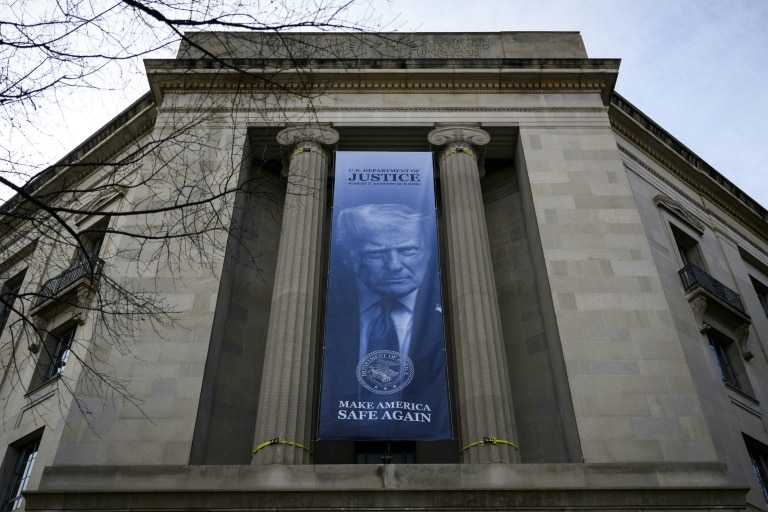
    In the early hours of Sunday local time, a report of gunfire near the White House triggered a sweeping investigation by the US Secret Service, putting the nation’s capital on heightened security alert while President Donald Trump remained in residence for the Easter weekend.

    According to official statements from the agency, Secret Service officers were dispatched to Lafayette Park, a green space located directly north of the presidential residence, just minutes after midnight local time, which corresponds to 04:00 GMT, following multiple calls reporting shots fired in the area. Responding teams immediately locked down the zone and carried out a systematic search of the park and all adjacent neighborhoods to locate the source of the gunfire and any potential person of interest.

    As of Sunday evening, investigators have not located any suspect connected to the incident, and no reports of civilian or law enforcement injuries have emerged. The Secret Service and its collaborating law enforcement partners are now actively tracing a potential vehicle linked to the case as they continue to piece together what happened.

    Unlike most weekends, when Trump travels to his private Mar-a-Lago estate in Florida for downtime, the president opted to stay in Washington DC this Easter holiday. White House Communications Director Steven Cheung noted in a Saturday post on X that Trump had been working continuously from the Oval Office and the White House complex throughout the weekend. Per CBS News, the BBC’s US media partner, Trump was scheduled to host a private family Easter dinner at the White House on Sunday.

    Secret Service spokesman Anthony Guglielmi confirmed in an update on X that the investigation forced temporary closure of multiple public roads in the affected area, but all thoroughfares have since been reopened to traffic. While routine operations across the White House complex have remained uninterrupted, Guglielmi added that a heightened security posture has been implemented across the perimeter as a precaution.

    A Secret Service representative reaffirmed to the BBC on Sunday evening that the active investigation is still ongoing, with investigators working to trace all potential leads. The White House has not yet issued a formal response to the BBC’s request for additional comment on the incident.

  • From digging coal to selling noodles? China’s mining workers face change

    From digging coal to selling noodles? China’s mining workers face change

    Once the beating heart of China’s industrial growth, the northern Chinese city of Datong in Shanxi Province—long known as the nation’s coal capital—stands at a crossroads of economic and energy transition. As China pivots sharply toward renewable energy, which met nearly all of the country’s growing electricity demand in 2025, former coal heartland communities are grappling with the messy, uneven process of reinventing their local economies. For one retired miner, the shift has opened a surprising new door, but for many others, uncertainty and barriers to new opportunity remain the norm.

    Yang Haiming, who hung up his mining gear at age 60 when he retired from Datong’s No. 9 Mine, rejected the idea of stepping away from work entirely. Decades ago, when Yang was an active miner, the state-owned coal enterprise built an entire worker village right alongside the No. 9 shaft: a self-contained community complete with a primary school, childcare center, sports facility, and an elevated rail line that carried extracted coal out to power cities across the country. In those peak years, the village hummed with activity; thousands of workers and their families packed its streets, especially during holiday celebrations. Today, that era feels like a distant memory.

    Most of the No. 9 Mine has been converted into Jinhuagong National Mine Park, a public museum that preserves China’s industrial mining heritage for visitors. The village’s school stands shuttered, its gates locked, and most of the low-rise apartment blocks once filled with mining families are only partially occupied—many now home to new residents drawn by cheap housing, not active mining work. Yang, who stayed in the region after retirement, has carved out a new niche serving the booming tourism trade near the Yungang Grottoes, the world-famous 6th-century Buddhist cave site that draws millions of annual visitors. He now owns and operates a local restaurant specializing in grilled lamb skewers, and in good months, he earns more than he did during his final years working in the mine.

    Yang’s successful career pivot, however, makes him an outlier among the generations of Shanxi workers who built their lives around coal. The province’s footprint in global coal production is staggering: if Shanxi were an independent nation, it would rank as the world’s largest coal producer. In 2025 alone, its roughly 800,000 active miners extracted 1.3 billion tons of coal—nearly one-third of China’s total national output. Millions more Shanxi residents hold jobs indirectly tied to the coal industry, from logistics and transportation to local service businesses. As the energy transition progresses, supporting these workers through the shift is widely recognized as a critical priority; experts warn that leaving coal communities behind risks widespread economic hardship and social instability.

    For many working and retired miners, the barrier to entering new industries like tourism is too high to overcome. Thirty-six-year-old active miner Zhou Hongfei told reporters he has considered switching to tourism work to support his wife and 8-year-old daughter, but hesitates to take the risk. “To really be able to make contact with and then switch into a new industry is very hard, and the truth is, I don’t dare,” he explained. “If you leave this industry, you don’t know if it’ll work out. Can I adapt? And what if this ends up being a burden for my family?”

    Tom Wang, a Shanxi native, environmental activist, and founder of People of Asia for Climate Solutions, notes that most long-time coal miners lack the specialized skills needed to secure stable work in new sectors. “There are many who don’t know what to do, who say they don’t have the right skill sets for anyone else. All they know is to be a coal miner, or the easiest fallback option is for them to go back to farming,” Wang said. Even miners who stay in the industry face uncertainty: many of Datong’s oldest mines are nearing the end of their operational lifespans, and workers who are reassigned often face longer commutes and lower wages at new, more distant sites. One active miner, who requested anonymity out of concern for professional repercussions, has taken a second job driving for a ride-hailing service, working five extra hours a day after his mining shift to make ends meet. He questioned whether ordinary workers will ever get to share in the benefits of Datong’s tourism boom. “This tourism industry, how do I get in there? For Datong, those who can enjoy the benefits of this tourism boom, it’s mostly the big hotels and maybe some restaurants, noodle shops, but what do you think regular people can get?” he asked.

    Shanxi’s provincial government has pursued a range of alternative economic development strategies, from investing in coal-to-hydrogen projects to promoting local specialty agricultural products. But the province’s most high-profile and successful effort to build a post-coal economy centers on expanding cultural tourism, particularly around the Yungang Grottoes. Visitor numbers to the site have surged in recent years, jumping from 3 million in 2023 to 4.5 million in 2024, after the blockbuster Chinese video game *Black Myth: Wukong* featured the grottoes and nearby regional sites, drawing legions of new tourists to the area. Local tour guide Yan Jiali said the tourism boom has sparked widespread interest in licensed guide jobs, even among older residents: “Even my mom’s friends would come ask me about taking this test,” she said. Hang Kan, director of the Yungang Research Institute and a National People’s Congress representative, has pushed to accelerate tourism development, framing the sector as a future “strategic pillar” that will boost living standards for Shanxi residents.

    Even as the transition away from coal accelerates, few analysts expect Shanxi—or China—to abandon coal entirely. Recent global events, including the ongoing Iran war, have underscored the vulnerability of global energy supply chains to disruption, and experts widely view coal as a critical safety net for China’s energy security. Analysts at the Centre for Research on Energy and Clean Air (CREA) note that the Chinese government recently walked back plans to cap national coal consumption, declining to implement a hard limit. “The confidence hasn’t grown to the point where they can entirely depend on renewable energy,” explained CREA analyst Qi Qin. In fact, China continued rapid expansion of coal-fired power generation in 2025, bringing 78 gigawatts of new capacity online—more than the total coal power India built over an entire decade. Still, Wang holds out hope that China’s push to expand high-tech industries could bring new, stable jobs to Shanxi, which powered the nation’s rise to become a global economic powerhouse. “What if DeepSeek comes over to Shanxi and says, OK, we will start a data center here? What if Baidu comes over to Shanxi?” he asked, referencing leading Chinese technology firms.

    For retired miners like Yang, who has found success in the new tourism economy, the shift comes with a touch of nostalgia. When recalling the crowded, bustling streets of the old mining village during its peak years, he noted, “It was crowded everywhere. Now the bustling scenes have gone, and so has the feeling.” That tension—between the promise of a cleaner, more sustainable future and the uncertainty of transition for working people—defines this new chapter for China’s former coal capital.