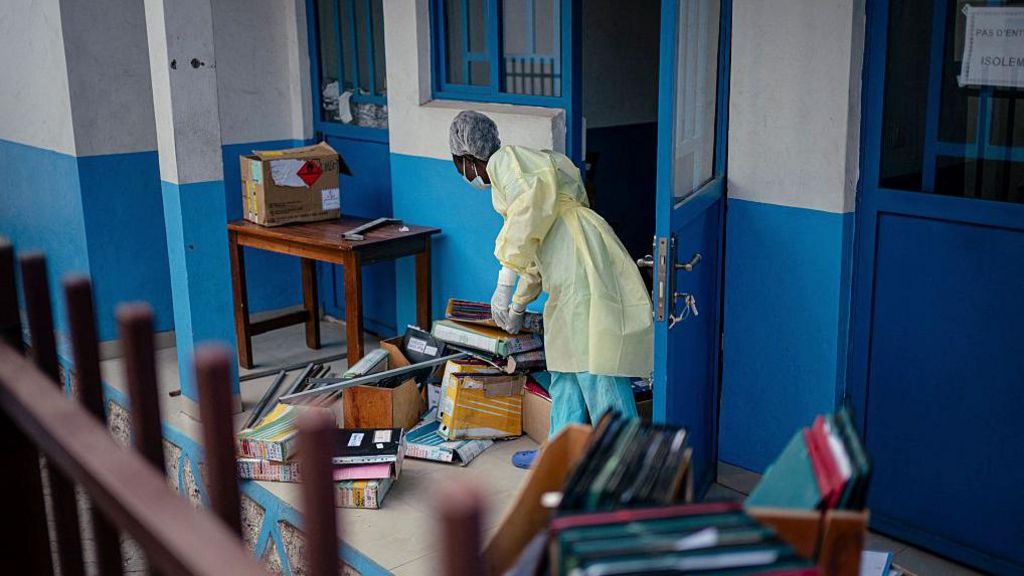
In a development that has drawn global public health attention, U.S. health officials confirmed Monday that an American national working with a medical missionary organization in the Democratic Republic of Congo (DRC) has tested positive for the Ebola virus. The infected individual, identified by mission leadership as Dr. Peter Stafford, a physician with the Christian medical outreach group Serge, contracted the virus while caring for patients at Nyankunde Hospital in Bunia, located in eastern DRC’s Ituri Province – the current epicenter of the ongoing outbreak.
After displaying the first characteristic Ebola symptoms over the weekend, the infected American will be transferred to Germany for specialized medical care, according to Dr. Satish Pillai, incident manager for the U.S. Centers for Disease Control and Prevention (CDC) Ebola response team. Beyond the confirmed case, the CDC is coordinating the evacuation of at least six other American citizens who were also exposed to the virus during their time in the affected region. Two additional exposed Serge group members, including Stafford’s wife, remain asymptomatic and are adhering strictly to monitored quarantine protocols, the organization confirmed in an official statement.
The scale of the ongoing outbreak has already reached alarming levels: John Nkengasong, head of the Africa Centres for Disease Control and Prevention (Africa CDC), revealed in comments to the BBC that the outbreak has claimed at least 100 lives so far, with more than 390 suspected cases recorded across the affected region.
In response to the confirmed case and ongoing outbreak risks, the CDC issued a new public health order Monday barring entry to the United States for all non-citizen travelers who have visited any Ebola-affected country – including the DRC, neighboring Uganda, and South Sudan – within the previous 21 days. The order is enacted under Title 42, a decades-old public health statute that allows U.S. authorities to impose temporary entry bans on non-citizens to prevent the spread of dangerous communicable diseases.
Despite the new entry restrictions, CDC officials stressed that the overall risk of widespread Ebola transmission to the general U.S. public remains extremely low. To support frontline response efforts in the DRC, the agency is deploying additional specialized response staff from its Atlanta headquarters to the outbreak’s core zone to assist with containment, contact tracing, and treatment operations.
The World Health Organization (WHO) already designated the DRC outbreak a Public Health Emergency of International Concern (PHEIC), the organization’s highest level of public health alert, though it has not met the formal criteria to be classified as a pandemic. The current outbreak is driven by the Bundibugyo Ebola strain, a variant for which no specifically approved antiviral treatments or licensed vaccines currently exist, complicating global response efforts. WHO officials have repeatedly warned that the actual size of the outbreak is likely far larger than officially reported cases indicate, with substantial risk of further spread to local communities and across regional borders.
To contextualize the current risk, the 2014–2016 West African Ebola outbreak remains the largest on record since the virus was first identified in 1976. That outbreak infected more than 28,600 people across multiple West African nations and spread to Europe and the United States, killing a total of 11,325 people globally.
Ebola is a zoonotic virus, meaning it circulates naturally in wild animal populations – most commonly fruit bats – with human outbreaks typically initiated when humans handle or consume infected bushmeat. After exposure, symptoms develop between 2 and 21 days, beginning abruptly with flu-like symptoms including fever, headache, and fatigue before progressing to more severe, life-threatening complications.