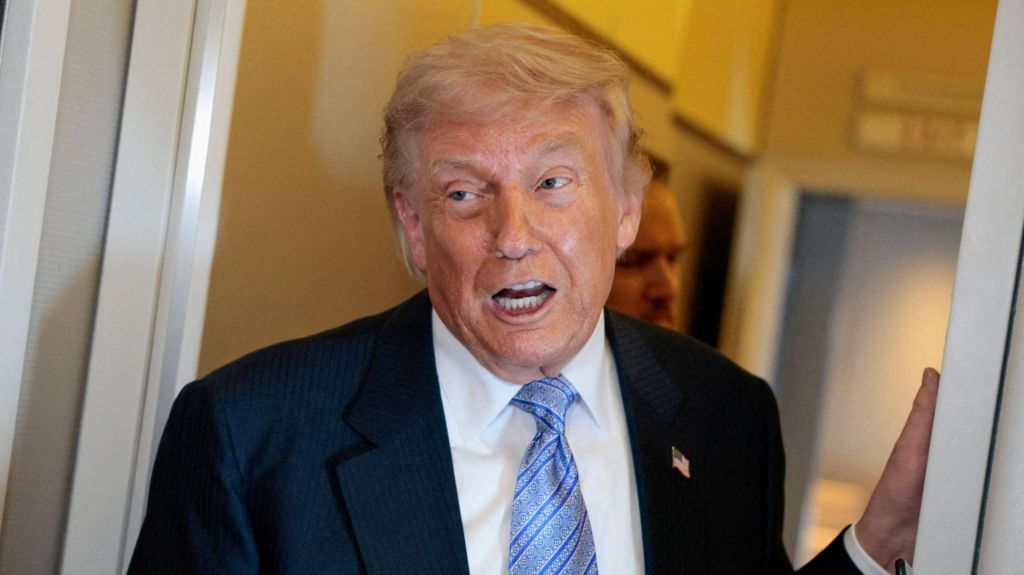
Less than 24 hours before a planned American military assault on Iran was set to launch, U.S. President Donald Trump announced Friday he had paused the operation following appeals from three key Gulf Arab nations, saying that constructive negotiations are now underway to reach a widely acceptable deal.
In a public statement posted to his Truth Social platform, Trump clarified that the heads of state of Qatar, Saudi Arabia, and the United Arab Emirates personally requested the delay in military action. He added that U.S. officials have been told a final agreement that meets Washington’s core demands is within reach, emphasizing a non-negotiable red line: “NO NUCLEAR WEAPONS FOR IRAN!”
Even as he paused the strike, Trump maintained a firm posture of deterrence. He warned that all branches of the U.S. military remain on high alert, ready to execute a large-scale, full-scale attack against Iran on extremely short notice if negotiations fail to deliver a satisfactory outcome.
As of Friday evening, Iranian officials had not issued any public response to Trump’s latest comments.
The current tension traces back to late February, when joint Israeli and United States forces launched extensive air strikes across Iranian territory. In retaliation, Tehran deployed drones and missiles to target Israeli positions and American military assets located across Gulf nations.
An April ceasefire, negotiated to create space for diplomatic talks aimed at ending the open conflict, has broadly held. While occasional cross-border exchanges of fire have been reported, neither side has resumed large-scale offensive operations since the truce went into effect.
One major sticking point remains the Strait of Hormuz, the world’s most critical energy chokepoint. Iran has maintained effective control of the waterway, effectively closing it to commercial transit since the outbreak of hostilities. Approximately 20% of global oil supplies and a large share of the world’s liquefied natural gas pass through the strait, and Iran’s closure in retaliation for U.S.-Israeli strikes has caused a sharp spike in global energy prices.
In response to the Hormuz closure and to pressure Tehran into concessions, the United States has implemented a strict naval blockade of major Iranian ports, cutting off much of the country’s normal maritime trade.