作者: admin

  • ‘There’s all doom and gloom’: Storm must ignore 118 years of history to win the premiership

    ‘There’s all doom and gloom’: Storm must ignore 118 years of history to win the premiership

    Since debuting in Australia’s National Rugby League (NRL), the Melbourne Storm have built a legacy of iconic, record-breaking achievements. But as the 2024 season hits its early stretch, the club faces an unprecedented challenge: overcoming a historic statistical curse that has blocked every team from claiming the premiership title after conceding 50 points in a single regular season game.

    Last Friday, the red-hot, unbeaten Penrith Panthers delivered a humiliating 50-10 defeat to the Storm, marking the first time in 23 years under head coach Craig Bellamy that an opponent has put half a century of points on the board. The lopsided result extended Melbourne’s losing streak to three consecutive matches, and immediately sparked widespread skepticism across social media and rugby league circles, with pundits pointing to the long-standing stat that no NRL side has ever gone on to win the grand final after allowing 50 points in a single season game.

    But Melbourne superstar five-eighth Cameron Munster is refusing to write off the Storm’s 2024 title hopes, saying the club has the power to rewrite the history books on their own terms.

    Addressing the media after the defeat, Munster acknowledged the team’s underperformance over the past three weeks, saying individual players need to take accountability for their poor form. “We’ve probably been below par the past three weeks. Individually, we probably have to look in the mirror,” Munster said. “To the Panthers’ credit, they probably played the perfect game and put a lot of pressure on us. There were some points that we could have stopped and scrambled, but they showed us where we need to be and what bar we need to set.”

    Far from seeing the blowout as a terminal blow to the season, Munster framed the loss as a critical wake-up call for the side, noting that the defeat came as early as round five, leaving plenty of time to course-correct. “It was a good learning for us and (showed) we still have a lot of improvement in us, but it’s only round five. There’s all doom and gloom and I know there’s a lot of history and stats around that if you have 50 points put on you then you can’t (win the comp). It’s up to us as a group to change that.”

    Bellamy, who is famous for fiery post-loss dressing room outbursts, surprised the squad with a surprisingly measured reaction after the Panthers defeat, in contrast to his anger following Melbourne’s previous two losses, where the side blew double-digit leads to fall against the Brisbane Broncos and North Queensland Cowboys.

    Statistically, the Storm’s attack held up well against the premiership favorites: the side completed 94% of their attacking sets, a strong result against one of the league’s toughest defensive units. The critical failing was on the other side of the ball, with the Storm missing a staggering 48 tackles in the match.

    Munster said the defensive lapse was not a problem of talent, but one of attitude – a flaw the side can fix with a mental reset. “I don’t think it’s too much of a personnel thing, I think it’s more about attitude. It doesn’t take a rocket scientist or anyone to be able to tackle. Everyone is in this team for a reason because they’re talented, they can run the ball and they can defend. It’s just a matter of an attitude thing, and we need to switch that,” he said. “There are always two sides to a game of rugby league. You can attack as much as you want, but the defensive side is what wins grand finals.”

    The Storm get an immediate chance to bounce back this Saturday night, when they host the New Zealand Warriors at their home ground. The Warriors come into the match off back-to-back losses and will be missing several key starting players due to injury, giving Melbourne a clear opportunity to reverse their losing form.

    Munster warned against underestimating the Warriors, noting that the match is the first of two tough consecutive fixtures against top 2023 sides, with the Canberra Raiders up next. “They probably haven’t gone as great as they would have liked the past couple of weeks,” Munster said. “But they’re a good quality team and then we’ve got a tough couple of weeks with them and the Raiders so what a great opportunity to go up against some of the teams that were at the top last year to see where we’re at.”

  • Former Australian soldier charged with committing 5 war crime murders in Afghanistan

    Former Australian soldier charged with committing 5 war crime murders in Afghanistan

    CANBERRA, Australia — Australian federal law enforcement officials have unveiled historic war crime charges against a 47-year-old former Australian soldier, marking only the second such prosecution stemming from decades of Australian military deployments in Afghanistan. The accusations, laid Tuesday, center on claims the veteran unlawfully killed five unarmed, non-combatant Afghans between 2009 and 2012 while he served with Australian forces in the country.

    The identity of the accused has not been publicly released by authorities. He was taken into custody Tuesday morning at Sydney International Airport, after disembarking a domestic flight from Brisbane, and is scheduled to make his first court appearance in Sydney later the same day.

    Australian Federal Police Commissioner Krissy Barrett outlined the specifics of the allegations during a press briefing Tuesday. According to Barrett, prosecutors will argue that all five victims were in custody, disarmed, and under the control of Australian Defence Force (ADF) personnel at the time of their deaths, meaning none were participating in active hostilities. “It will be alleged the victims were shot by the accused, or shot by subordinate members of the ADF in the presence of and acting on the orders of the accused,” Barrett told reporters.

    This prosecution comes nearly four years after the release of a landmark 2020 independent military inquiry, which uncovered conclusive evidence that elite Australian Special Air Service Regiment (SAS) and commando troops had unlawfully killed 39 unarmed Afghan civilians, prisoners, and local farmers between 2005 and 2016. In response to the report’s findings, the Australian government established the Office of the Special Investigator (OSI) to probe the allegations and pursue criminal charges where evidence warranted.

    This is only the second war crime charge brought against an Australian Afghanistan veteran to date. The first case involves 44-year-old former SAS soldier Oliver Schulz, who has pleaded not guilty to one count of war crime murder. Schulz is accused of shooting 39-year-old Dad Mohammad three times in the head in a wheat field in Afghanistan’s Uruzgan Province in May 2012.

    Under Australian federal law, a conviction for war crime murder carries a maximum sentence of life imprisonment. The offense is legally defined as the intentional killing of a person not actively participating in armed conflict, a classification that includes civilians, captured prisoners of war, and wounded combatants.

    OSI’s investigations director Ross Barnett told reporters that as of the latest update, investigators have probed 53 separate war crime allegations stemming from the 2020 report, with 39 of those inquiries concluding without sufficient evidence to file charges.

    Commissioner Barrett emphasized Tuesday that the alleged misconduct tied to the new charges is limited to a small number of current and former ADF personnel, and does not reflect on the broader service of the Australian military. “The alleged conduct related to these charges is confined to a very small section of our trusted and respected ADF which helps keep this country safe,” Barrett said. “The overwhelming majority of our ADF do our country proud. Today’s charges are not reflective of the majority of members who serve under our Australian flag with honor, with distinction and with the values of a democratic nation.”

    Between 2001, when Australia joined the U.S.-led invasion of Afghanistan, and the full withdrawal of Australian troops in 2021, roughly 40,000 Australian military personnel deployed to the country, with 41 Australian service members killed during the 20-year campaign.

  • Taiwan opposition leader heads to China in what she calls a ‘journey for peace’

    Taiwan opposition leader heads to China in what she calls a ‘journey for peace’

    TAIPEI, Taiwan — In a significant development that marks the first visit by a Taiwanese opposition leader to mainland China in 10 years, Kuomintang chairwoman Cheng Li-wun departed Taipei Tuesday for a trip to mainland China, accepted an official invitation from Chinese President Xi Jinping. Cheng frames her trip as a peace-seeking mission amid long-running cross-Strait tensions, as Beijing maintains its sovereign claim over the self-governing island and has repeatedly refused to rule out the use of military force to assert control.

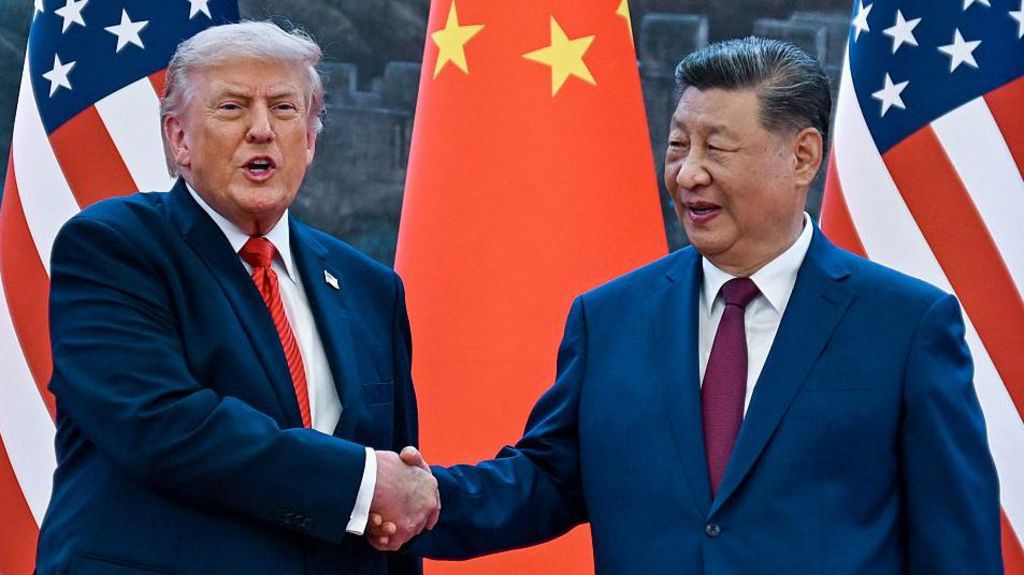
    The well-timed trip comes weeks ahead of a scheduled Beijing summit between Chinese President Xi Jinping and former U.S. President Donald Trump, adding an extra layer of geopolitical significance to cross-Strait and U.S.-China relations. Ahead of her departure, Cheng stressed to waiting reporters at Taipei International Airport that all possible efforts must be made by both sides to avoid conflict and pursue every available opening to advance cross-Strait peace.

    Cheng emphasized that the core goal of her visit is to demonstrate to the global community that desire for peace is not limited to one side of the Taiwan Strait. “Through this journey for peace, I believe the world will see more clearly the sincerity and determination of the Communist Party of China Central Committee to resolve all outstanding differences between the two sides through peaceful dialogue and people-to-people exchange,” she added.

    A small crowd of both supporters and critics gathered at the Taipei airport, holding contrasting signs and chanting competing slogans as Cheng prepared to depart, reflecting the deep domestic divides in Taiwan over cross-Strait engagement policy.

    The visit unfolds against a backdrop of heightened tensions between Beijing, Washington, and the current ruling government in Taipei. In December of the relevant year, the Trump administration announced a $10 billion arms sales package to Taiwan, including medium-range missiles, howitzers, and reconnaissance drones — a move that drew sharp criticism and anger from Beijing.

    Under Beijing’s one-China policy, all diplomatic partners of China are barred from maintaining official formal relations with Taipei. The U.S. remains Taiwan’s most powerful informal ally and primary arms supplier, and the controversial arms sale is expected to be a top agenda item during the Xi-Trump summit in Beijing.

    During a February phone call between Xi and Trump, the Chinese leader made clear that “Taiwan will never be allowed to separate from China,” according to an official readout of the conversation released by the Chinese government at the time. He also urged the U.S. to exercise extreme caution when handling Taiwan arms sales issues, repeating Beijing’s long-standing position that the Taiwan question is the most sensitive and critical issue at the core of U.S.-China relations.

    In recent months, Beijing has ramped up military pressure on Taiwan, deploying warplanes and naval vessels near the island on an almost daily basis and holding two large-scale joint military exercises around its borders. The most recent major exercise, held in December immediately following the announcement of the U.S. arms sale, included coordinated live-fire drills involving air force, navy, and long-range missile units. The U.S. State Department responded at the time by condemning the drills, saying they unnecessarily raised regional tensions and calling on Beijing to halt its military pressure campaign against Taipei.

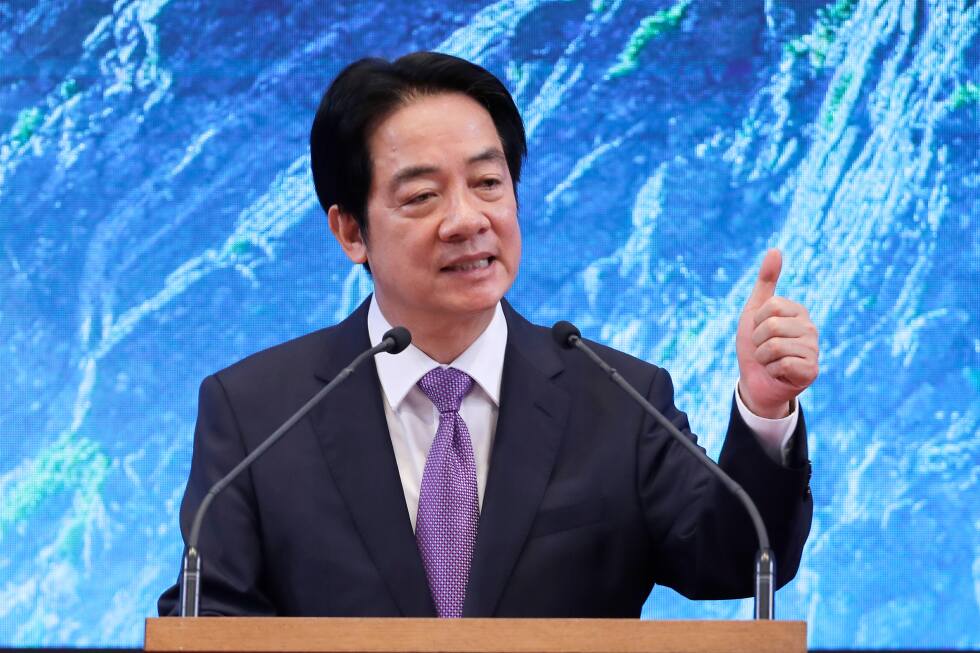
    Beijing currently refuses all official engagement with Taiwan’s sitting President Lai Ching-te, whom it labels a dangerous separatist pushing for permanent separation from the mainland. Cheng’s trip also coincides with a domestic political standoff in Taipei, where the opposition-controlled legislative yuan has blocked attempts by Lai’s government to pass a $40 billion special defense budget aimed at upgrading the island’s defense capabilities.

  • US ban on Chinese fixed spy cameras led to a rising drone threat

    US ban on Chinese fixed spy cameras led to a rising drone threat

    For nearly two decades, Chinese-manufactured security cameras from major firms like Hikvision and Dahua Technology have quietly permeated critical infrastructure, government buildings and military installations across North America, Europe and dozens of nations worldwide. Marketed as affordable, high-quality public safety and traffic monitoring tools, these devices have long been suspected of serving a secondary purpose: enabling state-aligned surveillance that critics warn erodes national sovereignty and enables digital control. What was once a quiet challenge of embedded fixed surveillance has now evolved into a more mobile, harder-to-detect threat, according to national security analysts, following successive bans on Chinese camera technology by Western governments.

    The roots of the current espionage landscape stretch back to China’s 2003 launch of its Safe City program, a domestic initiative that built a nationwide network of internet-connected cameras integrated with facial recognition, license plate tracking and artificial intelligence to enable large-scale social and political control. In the decades that followed, China exported this entire surveillance ecosystem to more than 25 countries across Africa, Asia, the Middle East and Latin America, with Hikvision and Dahua serving as the primary hardware suppliers. Even as late as 2018, long after security concerns were first raised, a sole-source contract for Hikvision cameras at the U.S. Embassy in Kabul, Afghanistan, raised urgent questions about embedded vulnerabilities in Chinese hardware. Investigations soon revealed that both Hikvision and Dahua cameras built with backdoor access that allowed unauthorized remote access, effectively opening a gateway for foreign hackers to infiltrate networked surveillance systems.

    What began as a concern over compromised cameras at a single diplomatic outpost quickly expanded into a full-blown national security issue for the U.S. It was revealed that Chinese-manufactured cameras had been deployed across dozens of U.S. military bases and federal government facilities, creating a widespread surveillance risk. By 2019, the U.S. passed the National Defense Authorization Act (NDAA), which mandated the removal of all Hikvision and Dahua equipment from federal facilities, and banned new purchases of the technology for government use. Other Western nations followed with similar restrictions.

    But the ban triggered an unexpected shift in how Chinese-linked espionage operates, the report by former U.S. Deputy Under Secretary of Defense Stephen Bryen reveals. In place of fixed cameras that can be identified and removed, China has increasingly turned to unmanned aerial vehicles (drones) to conduct surveillance on sensitive Western sites. This shift aligns almost perfectly with the timeline of U.S. restrictions: a sharp rise in unauthorized drone incursions over military and critical infrastructure sites began immediately after the 2019 camera ban went into effect.

    Recent high-profile incursions underscore the scale of the new threat. In March 2026, repeated unauthorized drone flights were recorded over Barksdale Air Force Base in Louisiana during the loading of B-52 bombers for a deployment linked to operations in Iran. Just weeks earlier, unidentified drones were spotted over Fort McNair in Washington, D.C. — home to senior U.S. defense and diplomatic officials — triggering White House emergency meetings and elevated security protocols. In 2023, Langley Air Force Base, the headquarters of the U.S. Air Force’s Air Combat Command, recorded 17 consecutive nights of unauthorized drone flights over its flight line, with swarms of up to 15 drones, some as large as small cars, documented. Even as far back as 2019, dozens of unidentified drones shadowed a U.S. Navy warship fleet off the coast of Southern California for weeks, with investigators ultimately linking the incursion to a Hong Kong-flagged cargo vessel. Across the U.S. in late 2024, the Pentagon confirmed that hundreds of unauthorized drone incursions were recorded over sensitive defense sites in a two-month window, even as thousands of other drone flights were authorized by the FAA.

    Beyond the shift to drones, the past year has revealed how vulnerabilities in Chinese surveillance hardware have been exploited by Western intelligence agencies themselves in operations abroad. In Venezuela, where Hikvision and Dahua cameras built a nationwide surveillance network for the Nicolas Maduro regime, U.S. Cyber Command pre-loaded malware into the camera network years in advance, creating hidden “shadow administrator” accounts that allowed real-time surveillance of Maduro in the lead-up to Operation Absolute Resolve. U.S. intelligence was able to track every detail of Maduro’s daily movement, residence, travel schedule, and even identify his personal pets, according to comments by Joint Chiefs of Staff Chairman General Dan Caine in early 2026.

    A similar operation unfolded in Iran, where Israeli intelligence hacked a vast network of Chinese-supplied cameras across Tehran to track senior Iranian regime leaders. By mapping movement patterns of bodyguards and drivers via cameras on residential streets, parking lots and shift change locations, Israeli analysts were able to pinpoint the schedule of Iran’s Supreme Leader Ali Khamenei, enabling a strike that killed Khamenei and other top leaders in February 2026. Hikvision and Dahua cameras are the most widely deployed surveillance hardware across Iranian cities, where the regime used Chinese technology to build what analysts call a “digital iron curtain” for internal control; a third Chinese firm, Tiandy, supplied specialized low-light facial recognition cameras to the Iranian Revolutionary Guard Corps.

    The high-profile compromises of Chinese surveillance systems in Venezuela and Iran have triggered internal upheaval within China’s top surveillance firms. In April 2026, reports emerged that Chinese authorities had arrested 300 Hikvision employees on allegations of espionage-related failures, according to reporting from Chinese-Canadian dissident journalist Sheng Xue, who has long documented China’s export of surveillance technology. The arrests come after waves of mass layoffs and corporate restructuring at Hikvision in 2024 and 2025, which were initially attributed to financial pressures, though analysts now suspect internal political purges linked to the failures of Chinese surveillance and defense technology in overseas operations. It is widely reported that Chinese leadership is alarmed by the repeated compromise of Chinese-supplied systems, raising questions about ongoing internal accountability for the breaches.

    For the United States, the threat remains far from resolved. While the federal government has moved to remove banned Chinese cameras from military and government facilities, millions of previously imported Hikvision and Dahua cameras remain in use by private businesses, commercial property owners and non-government organizations across the country. Even more concerning is the prevalence of Chinese-designed components hidden in domestic-branded products: the 2026 compliance challenge centers on Chinese-built Systems on a Chip (SoC) and firmware that appear in third-party cameras, which still carry the same security vulnerabilities. In early April 2026, the Federal Communications Commission proposed expanding existing restrictions to implement a full ban on all imports of Hikvision and Dahua-related equipment, moving beyond the existing ban on new models to cover all imports.

    The rise of drone-based surveillance has created an entirely new set of challenges that the U.S. has yet to address. Modern low-cost drones can be linked to satellite communications networks like Starlink, enabling high-resolution 4K video streaming and high-speed data transfer from anywhere in the country. Drones can not only capture imagery of sensitive installations, but also detect unsecure mobile phone signals from base personnel, harvest personal and professional data from those devices, and even plant spyware that enables long-term tracking of service members. Even for unclassified mobile devices, the data available — including names, contact information, travel schedules, and photos of personnel — creates significant long-term counterintelligence risks.

    Ironically, the successful push to remove vulnerable fixed Chinese cameras has cleared the way for a more agile, harder-to-counter threat. “We are just at the beginning of the drone war here at home,” Bryen argues, noting that the Pentagon has yet to develop a comprehensive national strategy to counter repeated unauthorized incursions. As drones can be launched from remote locations, hidden in cargo, and operated by cross-border teams, the threat is expected to grow in coming years as restrictions on Chinese fixed surveillance technology continue to expand globally.

  • AFL 2026: Jack Scrimshaw reveals the motivation behind Hawthorn’s Easter Monday heist

    AFL 2026: Jack Scrimshaw reveals the motivation behind Hawthorn’s Easter Monday heist

    In Australian Football League (AFL) lore, few rivalries burn as consistently close and competitive as the one between Hawthorn and Geelong, even when both sides are navigating shifting fortunes on the league ladder. For the 2026 Easter Monday clash, that rivalry carried an extra edge of personal payback for the Hawks, who entered the MCG contest desperate to erase the bitter memory of a 2025 preliminary final exit at the hands of the Cats. What unfolded was a back-and-forth thriller that ended with a one-point Hawthorn victory sealed in the final seconds before the final siren, capping a stunning late comeback that delivered the club its first win over Geelong in two years. A year ago, Patrick Dangerfield’s Geelong side blew Hawthorn apart in the second half of the preliminary final, ending the Hawks’ 2025 premiership dream before they could even earn a spot in the league’s decider. That pain lingered in the Hawthorn locker room through the off-season, and head coach Sam Mitchell leaned into that unfinished business heading into the Easter Monday blockbuster, according to Hawks defender Jack Scrimshaw. “Mitchell touched on the occasion a fair bit, but the core of his message was all about what Geelong took from us last September,” Scrimshaw told reporters after the match. “They stole our chance to play in a grand final in that prelim, so we carried that extra hunger to go after them from the first bounce. We talked about it all through pre-game, it added another layer of motivation, and we were dead keen to get payback.” Scrimshaw added that the result marked a critical milestone for a Hawks squad that had dropped back-to-back matches to both Geelong and the Brisbane Lions in 2025. “Beating top-tier opposition like this is the next step for our group, and today we pulled off a really big scalp,” he said. The game looked headed for another Geelong win deep into the final quarter, when Cats forward Shannon Neale kicked a goal that put his side up by six points, with less than two minutes left on the clock. With the clock ticking down and their season still young, Hawthorn dug in, focusing first on winning individual matchups to turn the tide. Even Scrimshaw admitted he was bracing for another heartbreaking loss in the closing seconds. “Oh mate, I was worried to be honest, it really could have gone either way,” he said. “We just stuck to our process, every guy focused on getting their own job done, and in the end the boys pulled off something special.” It was veteran Hawks forward Jack Gunston who delivered the match-winning moment, pouncing on a loose ball and slotting a precision kick that nudged Hawthorn ahead by a single point just moments before the final siren sounded. Gunston’s red-hot early season form has been earning praise from both fans and teammates alike this year, and Scrimshaw said his experience and poise under pressure was the difference in the tense finale. “I’ve got no words for him, he’s unbelievable,” Scrimshaw said of the veteran. The result ends Hawthorn’s two-game losing streak against Geelong, and lives up to the long history of tight, hard-fought contests between the two powerhouse clubs. “There’s such a rich history between these two clubs, no matter where either of us sit on the ladder, these games always tend to be close,” Scrimshaw added. “It’s just so good to get one back over Geelong, we haven’t beaten them in so long, it feels great to finally get it done.”

  • Oil prices rise as US stocks fall ahead of Trump’s deadline for Iran

    Oil prices rise as US stocks fall ahead of Trump’s deadline for Iran

    Financial markets across the globe faced heightened volatility on Tuesday, driven by cascading geopolitical uncertainty as a self-imposed deadline from U.S. President Donald Trump for Iran to reopen the Strait of Hormuz approached. With the clock ticking down to an 8 p.m. Eastern time cutoff, Trump issued a stark warning that a “whole civilization will die tonight, never to be brought back again” if Tehran failed to comply with his demands. In direct response, Iranian officials have called on civilian youth to form human chains around critical infrastructure, including power plants and bridges that the U.S. president has explicitly threatened to destroy.

    By 11:30 a.m. Eastern time, major U.S. stock indices were deep in negative territory. The broad-based S&P 500 slid 0.8%, while the Dow Jones Industrial Average dropped 355 points, also a 0.8% decline. The tech-heavy Nasdaq composite underperformed further, closing the mid-morning window down 1.2%. Trading has been marked by erratic swings since the outbreak of hostilities between the U.S.-led coalition and Iran in late February, and Tuesday was no exception: within the first hour of trading alone, the Dow fluctuated wildly from a 74-point gain to a 425-point loss as investors scrambled to price in shifting geopolitical risks.

    The most dramatic market moves played out in the global energy sector, where crude oil prices spiked sharply following Iran’s decision to block the Strait of Hormuz, a critical chokepoint through which roughly 20% of the world’s daily oil supplies pass to global markets. The ongoing conflict has already disrupted crude production and shipping routes across the Persian Gulf, pushing energy prices far above pre-war levels. On Tuesday, benchmark U.S. crude climbed 3.2% to settle at $116.08 per barrel, while international benchmark Brent crude added 0.9% to reach $110.75 per barrel — up from roughly $70 per barrel before the war began in late February. The national average for a gallon of regular gasoline in the U.S. has now jumped to $4.14, up from under $3 just weeks before the start of hostilities, AAA data shows.

    Market analysts warn that prolonged disruption to Persian Gulf energy supplies could lock in sustained high oil prices, triggering a global wave of persistent inflation that would weigh heavily on household budgets and economic growth. Compounding uncertainty, Iran rejected a latest ceasefire proposal on Monday, reiterating that it would only accept a permanent end to all offensive military operations. This is not the first time Trump has issued a high-stakes deadline for bombing Iranian infrastructure, only to back down and extend the ultimatum multiple times since the war began. This pattern of shifting threats, paired with the president’s 2025 decision to walk back multiple threatened stiff tariffs on global imports after his second inauguration, has left investors guessing whether another delay could be in the cards.

    “Investors are likely to remain on edge and markets unable to establish trends, probably until there is a clear outcome later this evening: a deal, the U.S./Israeli strikes intensify, or Iran’s retaliation becomes escalatory instead of proportional,” said Paul Christopher, head of global investment strategy at Wells Fargo Investment Institute.

    Sectors most sensitive to rising fuel costs bore the brunt of the selling pressure on Wall Street. Norwegian Cruise Line Holding dropped 5% amid expectations of higher operating costs, while United Airlines sank 3.9%. Discount retailers that cater to lower-income households, whose customers are least able to absorb rising gasoline prices, also saw sharp declines: Dollar Tree slid 4.9% and Dollar General fell 2.7%. Cryptocurrency-linked firms also fell alongside sinking bitcoin prices, with Coinbase Global dropping 4% and Strategy declining 4.4%.

    Not all sectors closed in negative territory, however, as a handful of positive corporate and regulatory news limited broader market losses. Health insurance stocks surged after the U.S. Centers for Medicare & Medicaid Services announced an expected net average 2.48% increase in Medicare Advantage payments for 2027, a figure that outpaced most investor expectations. UBS analyst AJ Rice noted that the higher payment forecast was better than many on Wall Street had predicted, pushing UnitedHealth Group up 8.7% and Humana 6.2% higher.

    Universal Music Group (UMG) also provided a boost to global indexes after Bill Ackman’s Pershing Square Capital Management announced a cash-and-stock bid to acquire the major record label, home to superstars including Taylor Swift and Bad Bunny, for an approximate valuation of $64 billion. Pershing Square argues that the buyout would eliminate lingering uncertainty that has suppressed UMG’s share price, and if completed, would relocate the company’s headquarters to Nevada and shift its primary listing from Amsterdam to the New York Stock Exchange. UMG’s Amsterdam-listed shares jumped 12.3% on the news, but still trade below the offer price, signaling that investors remain skeptical the deal will cross the finish line.

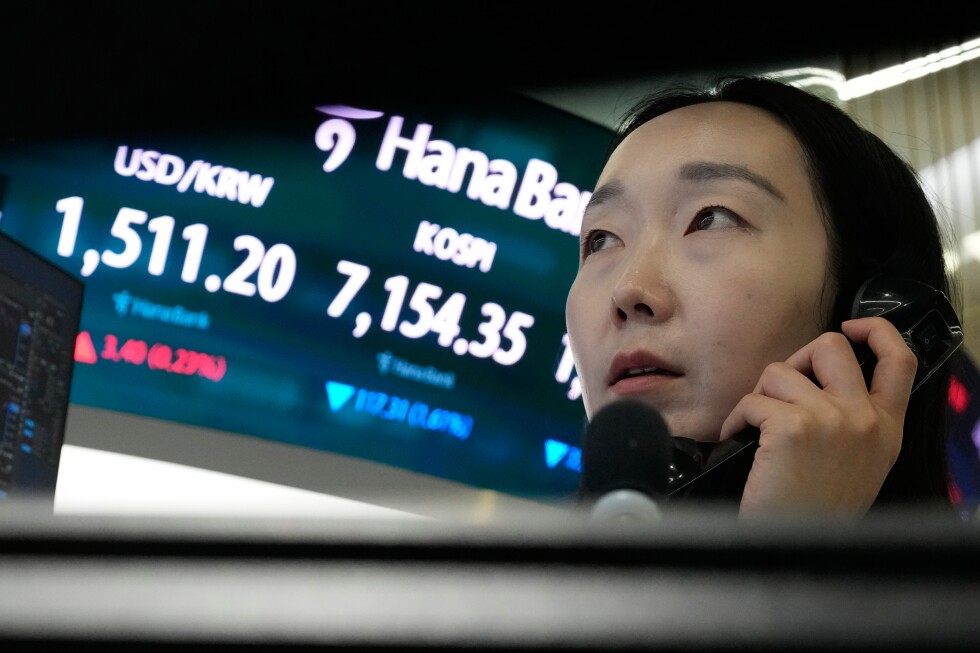
    Overseas, most European stock indices finished the day in negative territory, while Asian markets delivered mixed results: South Korea’s Kospi led regional gains with a 0.8% climb. In U.S. bond markets, Treasury yields moved higher ahead of the deadline, with the 10-year Treasury yield rising to 4.36% from 4.34% late Monday, lifted in part by climbing oil prices. The 10-year yield now sits well above its pre-war level of 3.97%, and the rise has pushed up mortgage and lending rates for U.S. households and businesses, creating additional downward pressure on overall economic growth.

  • Brendan Nicholls: Man accused of attack on Imam Ismet Purdic to plead guilty, court told

    Brendan Nicholls: Man accused of attack on Imam Ismet Purdic to plead guilty, court told

    A 23-year-old Melbourne man charged over an alleged road rage assault targeting a prominent local Islamic religious leader has confirmed he will enter a guilty plea when he appears for a sentencing hearing next month, a Victorian magistrates court has confirmed.\n\nBrendan Nicholls, a Bunnings warehouse employee, was arrested and charged with one count of common assault and one count of criminal damage in January, following the alleged evening incident on January 10 in Dandenong South. The victims of the attack were identified as Imam Ismet Purdic, leader of the Bosnia-Herzegovina Islamic Society (BHIS) Noble Park Mosque, and his wife Sabina Purdic.\n\nAccording to police allegations, the altercation began around 7:40 p.m. as Imam Purdic was traveling along the South Gippsland Highway. Occupants of a black Volkswagen Golf, who police say included Nicholls and a second co-accused man, began driving erratically around Purdic’s vehicle while yelling verbal abuse, including anti-Muslim slurs, at the couple. It is alleged that after Purdic pulled off the highway into a nearby service station to de-escalate the confrontation, the two men followed, damaged Purdic’s vehicle, and physically assaulted the imam by punching him in the head. The attack was only halted when bystanders stepped in to intervene.\n\nWhen Nicholls appeared for a preliminary hearing at Dandenong Magistrates’ Court on Tuesday afternoon, his defense lawyer Aabed Anaki told the court that all four criminal charges laid against his client had been resolved through pre-trial discussions with prosecuting police. Anaki requested an adjournment to schedule a full one-hour guilty plea hearing for May 1.\n\nMagistrate Hugh Radford granted the adjournment, ordering that Nicholls remain in custody at the Western Plains Correctional Centre until the plea hearing, where he will appear via remote video link. Radford confirmed on record that the case has proceeded to a guilty plea arrangement.\n\nA second man who was also charged in connection with the alleged attack is scheduled to make his first court appearance at Dandenong Magistrates’ Court on May 22. No further details about his case or potential plea have been released publicly at this stage.

  • Bangladesh conducts emergency measles vaccinations as outbreak kills more than 100 children

    Bangladesh conducts emergency measles vaccinations as outbreak kills more than 100 children

    A deadly measles outbreak that has claimed the lives of more than 100 children in less than a month has prompted Bangladesh to roll out an urgent immunization campaign, as public health authorities work to contain the fast-spreading infection. In a collaborative effort between the Bangladeshi government and global health partners including the World Health Organization (WHO), UNICEF, and Gavi, the Vaccine Alliance, the campaign began Sunday targeting children between 6 months and 5 years old across 18 high-risk districts. The initiative will expand to all regions of the country in phased stages starting next month, according to a joint official statement.

    As of mid-March, Bangladeshi health officials have recorded more than 7,500 suspected measles cases, with over 900 confirmed infections in the South Asian nation of 170 million people. Rana Flowers, UNICEF’s representative in Bangladesh, emphasized the organization’s deep alarm over the sharp surge in cases, which disproportionately endangers the country’s youngest and most medically vulnerable populations. “This resurgence highlights critical immunity gaps, particularly among zero-dose and under-vaccinated children, while infections among infants under nine months, who are not yet eligible for routine vaccination, are especially alarming,” Flowers said.

    Per WHO guidelines, measles is an extremely contagious airborne viral illness that triggers fever, respiratory distress, and a distinct full-body rash. The infection can lead to severe life-threatening complications, particularly for young children. Widespread vaccination is the only effective way to halt transmission, but WHO data notes that 95% population coverage is required to achieve herd immunity and stop sustained spread.

    Bangladesh’s current Health Minister Sardar Mohammed Sakhawat Husain told Parliament Monday that the current outbreak stems from systemic mismanagement and failures by previous administrations. He alleged that the ousted government of former Prime Minister Sheikh Hasina, followed by the interim administration led by Nobel Peace Prize winner Muhammad Yunus, failed to maintain adequate vaccine stockpiles, leading to shortages that affected measles vaccines and six other routine childhood immunizations. The ongoing immunization program was further disrupted by the country’s recent period of political upheaval: Hasina was removed from office in a mass popular uprising in 2024, and Yunus’s interim government only transferred power to a newly elected administration after February’s general election.

    Public health officials are now urging parents to seek immediate hospital care for any child showing suspected measles symptoms, warning against self-treatment with unregulated medications from local shopkeepers. F. A. Asma Khan, deputy director of Dhaka’s Infectious Diseases Hospital, stressed that any child experiencing a high fever above 38.3°C (101°F) should be evaluated by professional medical staff immediately. “Instead, they must take the child to a hospital as soon as possible, because our medical officers are capable of providing proper basic treatment,” Khan said.

    Bangladesh has made significant progress in childhood immunization over the past four decades: following the launch of a national mass immunization campaign in 1979, the country raised full immunization coverage from just 2% to 81.6% today. Still, UNICEF warned in a 2023 report that despite these gains, stark immunization disparities remain across different population groups and regions, leaving millions of children at risk of vaccine-preventable diseases like measles.

  • Australia’s most-decorated soldier arrested over alleged war crimes – local media

    Australia’s most-decorated soldier arrested over alleged war crimes – local media

    In a landmark development that marks one of the most significant legal milestones in Australia’s military history, Australia’s most highly decorated living soldier has been taken into custody, with criminal war crime charges related to his service in Afghanistan set to be formally brought against him, local media has confirmed.

    Forty-seven-year-old Ben Roberts-Smith, who ended his career with the Australian Defence Force in 2013, was detained by authorities at Sydney Airport. The former Special Air Service corporal and Victoria Cross recipient is scheduled to appear before an Australian court on Tuesday to face five counts of murder related to alleged war crimes committed during his deployment in Afghanistan.

    This arrest comes nearly two years after a 2023 civil defamation trial delivered a pivotal ruling that found Roberts-Smith unlawfully killed four unarmed Afghan civilians during his time in the country. Despite the court’s findings, the former soldier has repeatedly denied all allegations against him, previously describing the claims as “egregious” and “spiteful”. He has long maintained that any killings attributed to him occurred legally amid active combat operations, or that they never took place at all. Last year, he lost an appeal against the 2023 defamation verdict.

    The case traces its origins back to the 2020 Brereton Report, a landmark independent investigation into alleged war crimes by Australian forces in Afghanistan. The report uncovered credible evidence that elite Australian soldiers had unlawfully killed 39 Afghan civilians between 2005 and 2016, and formally recommended that 19 current and former service members be investigated for criminal prosecution. Roberts-Smith’s defamation trial was a historic first: it marked the first time any Australian court had conducted a formal assessment of war crime claims against the country’s military personnel.

    This is an ongoing breaking news story, with new details expected to be released in the coming hours as the legal process progresses. Audiences can access real-time updates through the BBC News mobile app, or by following the BBC Breaking account on X.

  • Trump, top officials detail US operation to rescue airman in Iran

    Trump, top officials detail US operation to rescue airman in Iran

    WASHINGTON — In a Monday press briefing at the White House, former President Donald Trump has publicly outlined the full scope of a daring U.S. military search-and-rescue operation that recovered an American airman stranded inside Iranian territory, confirming that the mission relied on a deployment of up to 155 aircraft and included the deliberate destruction of stranded U.S. cargo planes to prevent sensitive technology from falling into Iranian hands.

    Trump told reporters the rescued pilot suffered serious, life-altering injuries during the incident. When pressed for additional details about the stranded aircraft, the president confirmed that U.S. forces destroyed the disabled planes, which carried sensitive communications infrastructure and cutting-edge anti-missile technology. After the initial aircraft were disabled, he added, the remainder of the extraction operation shifted to lighter, more maneuverable aircraft that could navigate Iranian airspace and terrain with greater speed and a lower risk of detection.

    The high-stakes mission faced internal pushback from some military advisors, Trump acknowledged, with many warning the operation put hundreds of service members at risk of death. “Hundreds of people could have been killed,” he said. “So we had people that were within the military that said this is not wise, and I understood that. But I decided to do it.”

    Chairman of the Joint Chiefs of Staff Dan Caine expanded on the role of U.S. air support during the mission, explaining that an A-10 Warthog aircraft that sustained damage over Iran on Friday was part of a specialized “Sandy” close air support mission designed explicitly for rescue operations. The aircraft’s sole task was to position itself between the stranded airman, advancing rescue teams and incoming hostile fire from Iranian forces. Caine confirmed the A-10 was struck multiple times by Iranian anti-aircraft fire, but the pilot managed to steer the damaged plane out of Iranian territory before ejecting safely over territory held by allied forces. “The plane had only one job: Get to the survivor, bring the rescue force forward, and put themselves between that survivor on the ground and the enemy,” Caine told reporters.

    Central Intelligence Agency Director John Ratcliffe detailed the agency’s critical role in locating the missing airman, saying the CIA leveraged a network of on-the-ground human intelligence assets and advanced surveillance technologies to pinpoint the aviator’s location by Saturday morning, confirming he was alive and alone. Ratcliffe described the search effort as an extraordinarily difficult challenge, comparing it to “hunting for a single grain of sand in the middle of a desert.”

    The mission was also a race against time, Ratcliffe noted, as locating the airman quickly while misleading Iranian forces about the rescue effort was critical to the operation’s success. To pull this off, the CIA launched an elaborate deception campaign against Iran that hid the airman’s location from Iranian forces while keeping U.S. teams updated on his position. The pilot was hiding in a mountain crevice throughout the operation, and remained completely undetectable to Iranian search teams thanks to the CIA’s misdirection, Ratcliffe confirmed.

    Trump also confirmed that an Iranian shoulder-fired anti-air missile was responsible for downing a U.S. Air Force F-15E Strike Eagle that crashed in Iranian territory on Friday. Notably, neither the president nor any of his top senior officials provided additional details about the specific type of missile used, or further context for how the fighter jet was shot down over the country.