作者: admin

  • Kon Gob, Yahye Abas: Pair charged over alleged Lygon St machete attack on New Year’s Eve

    Kon Gob, Yahye Abas: Pair charged over alleged Lygon St machete attack on New Year’s Eve

    Two months after a brazen New Year’s Eve group machete attack that left two young men hospitalized with severe injuries on one of Melbourne’s busiest entertainment strips, two of the accused have appeared before the Melbourne Magistrates’ Court, with one receiving a stern final warning over case delays.

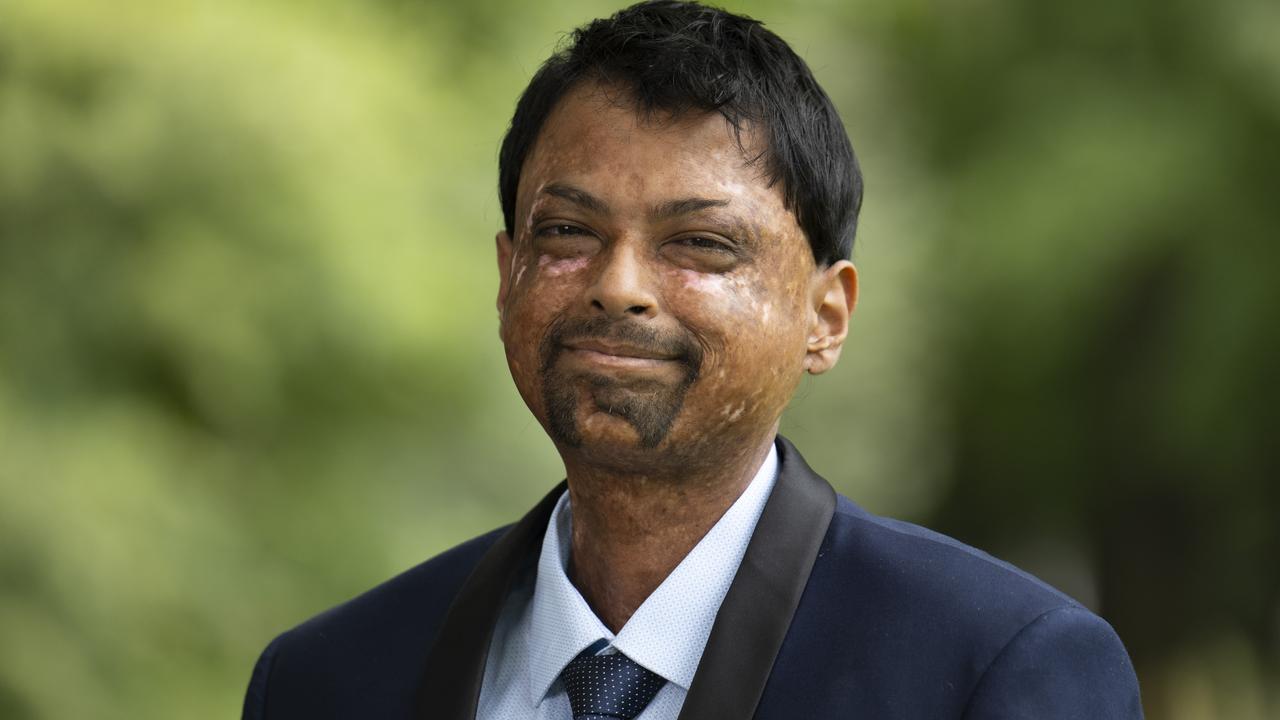
    On Tuesday afternoon, 20-year-old Kon Tong Gob made his first court appearance since being charged over the December 31 incident on Lygon Street, Carlton, a popular pedestrian strip lined with restaurants and bars that was packed with revellers ahead of midnight. To avoid press photography, Gob covered his entire head with a jacket as he entered and exited the courtroom, keeping his face hidden from view.

    Authorities allege Gob, 21-year-old co-accused Yahye Abas, and a 17-year-old minor carried out the targeted attack outside The Balcony Shisha Bar, which was captured in full by local closed-circuit television. Investigators confirm the two groups involved were already known to one another, and the three offenders fled the scene in motor vehicles after the assault. Two victims, an 18-year-old and a 20-year-old, were rushed to emergency care with serious wounds. All three accused face three identical charges: violent disorder, affray, and intentionally causing serious injury. Two additional men arrested in connection with the case in January – a 19-year-old from Carlton and a 21-year-old from Reservoir – have since been released without any charges being laid.

    During Tuesday’s hearing, Alana Reader, Gob’s legal representative, requested an adjournment of the case. Magistrate Gerard Lethbridge granted a one-month delay but issued an unambiguous final warning that no further extensions would be permitted. “It’s not going to be further adjourned after that date,” Lethbridge told the court.

    Abas also appeared before the court on the same day, and his case was also adjourned following reports he has made a legal deal offer to prosecuting authorities. The court confirmed prosecutors have asked for a four-week window to review and assess the proposal. Both Gob and Abas are scheduled to return to Melbourne Magistrates’ Court for their next hearing on May 6.

  • Risks as Sino-Russian ‘Make America Weak Again’ dream coming true

    Risks as Sino-Russian ‘Make America Weak Again’ dream coming true

    Against the backdrop of a deeply fractured 2020s global order, U.S. foreign policy under the re-elected Donald Trump has created unexpected shifts in power that are rippling across every continent. What some analysts have framed as an accidental win for Beijing and Moscow has, in reality, exposed systemic weaknesses across all three of the world’s major nuclear superpowers – and forced U.S. allies in Europe and Asia to confront urgent questions about their own long-term security and resilience.

    The core argument put forward by analyst Bill Emmott, based on his on-the-ground reporting from Japan, opens with a provocative framing: if China and Russia shared a joint strategic slogan today, it would be “MAWA – Make America Weak Again.” From their perspective, a second Trump term has delivered exactly what they hoped for: a U.S. leader whose erratic foreign policy weakens American global standing rather than advancing his stated goal of Making America Great Again. Trump’s ongoing military campaign in Iran has only amplified this effect.

    Contrary to fears that a quick U.S. takeover of Iran’s oil sector would leave Beijing and Moscow cornered, the reality of Trump’s policy has been unmitigated failure for U.S. interests. The stalemate in Iran has already pushed crude oil prices up by more than 50% since the conflict began, delivering tangible economic and strategic gains to both major powers. For China, a weakened Trump means a far weaker negotiating position in bilateral trade talks. When the U.S. president attends the rescheduled Beijing summit in mid-May, he will arrive not as a powerful negotiator, but as a supplicant, still reeling from the 2024 confrontation where Beijing’s threat of a critical mineral export embargo forced Trump to retreat from his planned 145% tariffs on Chinese goods. Beyond trade, China has also gained diplomatic ground: more nations, both wealthy and developing, now view Beijing as a far more predictable and reliable global partner than the volatile United States.

    For Russia, the benefits are even more direct. The surge in global oil prices has rescued Moscow’s public finances, extending its ability to sustain its war effort in Ukraine. Further gains could come from growing transatlantic rifts over Iran: if European capitals clash with Trump over policy, U.S. weapons shipments to Ukraine via Europe could shrink, and a frustrated Trump could even cut off all American intelligence and communications support for Kyiv. For Vladimir Putin, who has long aimed to dismantle NATO, any deepening divide between the U.S. and its European allies is a major strategic win – even if Trump cannot follow through on his repeated threats to withdraw the U.S. from the alliance, a step that would almost certainly be blocked by a Republican-led Congress.

    But it is a mistake to frame this shift as a simple zero-sum game where the decline of the U.S. automatically elevates China and Russia. The far more sober reality, Emmott argues, is that American failure in Iran has laid bare that all three nuclear superpowers face profound structural weaknesses that make them far more equal in vulnerability than previously assumed. Russia, despite its vast nuclear arsenal and natural resource wealth, has already endured four years of grinding military failure in Ukraine, gaining only minimal territory at the cost of more than one million dead and wounded troops. China, meanwhile, is trapped by its own long-term economic challenges: slowing annual growth, a shrinking and aging population, and soaring public and private debt – trends that an energy price shock will only worsen, leaving it unable to fully exploit American weakness. As for the United States, its weakness stems from the re-election of a leader who is openly corrupt, has launched an unplanned Middle Eastern military adventure with no clear exit strategy, and is systematically eroding the value of America’s greatest global asset: its web of security alliances across Europe and Asia.

    This new era of widespread great power weakness poses direct and urgent risks to U.S. allies in Europe, Japan and South Korea. If the current short-term energy shock from the Iran conflict becomes a long-term crisis, all these nations will face deep economic damage. Worse, the resulting fiscal pressure will leave them with even less capacity to increase their own military spending – a step that has become increasingly critical to deter coercion from China and Russia, even as dependence on U.S. security guarantees grows riskier.

    To understand how allies are processing this new reality, Emmott spent a week in Japan consulting with government and business leaders on the impact of the Iran war, drawing three key lessons that apply equally to Europe. The first is cautiously reassuring: even though the U.S. has redeployed military forces from Asia to the Middle East, weakening deterrence against China, Japanese leaders broadly agree that Beijing will not risk an invasion or blockade of Taiwan. China’s own internal weaknesses, including an ongoing anti-corruption purge of senior People’s Liberation Army generals and the examples of Russian failure in Ukraine and American failure in Iran, have reinforced Beijing’s caution about taking major military risks.

    The second finding, however, is far more worrying: for the first time since the atomic bombings of Hiroshima and Nagasaki 81 years ago, open public debate has begun in Japan over whether the country should develop its own independent nuclear arsenal. This shift reflects multiple overlapping anxieties: widespread fear that the Iran war will spark a global wave of nuclear proliferation as nations seek to defend themselves; growing uncertainty about the reliability of the American nuclear umbrella that has protected Japan (and much of Europe) for decades; and questions over whether the Trump administration’s demand that allies take more responsibility for their own defense extends to nuclear capabilities. For decades, U.S. administrations have blocked allied efforts to develop nuclear weapons, particularly in South Korea, but that long-standing taboo is now breaking down. The very fact that this debate is happening signals a broader acceptance that the world has grown far more dangerous, and old rules and taboos can no longer be trusted. Currently, the Japanese nuclear discussion remains smaller than the open debate already underway in France and Germany.

    The third key finding mirrors the challenges facing Europe: Japanese government and business leaders are largely paralyzed by uncertainty over how long and how severe the current energy price shock will be. While they have avoided stoking public panic, they acknowledge that decades-long national energy plans – which still prioritize fossil fuels – will need to be completely rewritten. The main alternatives under consideration are expanded nuclear energy, geothermal power, and greater investment in wind and solar. Currently, wind and solar combined account for only around 13% of Japan’s electricity generation (most of that from solar), far below the 40-50% share common across most European countries, held back by resistance from established domestic business interests.

    Despite these profound challenges, Emmott notes that both Japanese and European leaders recognize that while their vulnerability is acute, a path to greater resilience exists. Rapid technological progress and the spread of diverse global supply chains for energy and critical commodities mean that vulnerability can be reduced over time – but only if action is taken now. Delaying planning until tomorrow or the 2030s is not an option: the time for allies to build their own resilience against global shocks, including those originating from the current White House, is immediate.

  • ‘He won’t miss a beat’: Rival tips Bronson Xerri to come out firing in his return game, Dragons make major changes for round six

    ‘He won’t miss a beat’: Rival tips Bronson Xerri to come out firing in his return game, Dragons make major changes for round six

    The National Rugby League’s next round of fixtures is bringing a wave of dramatic lineup changes across the competition, headlined by speed centre Bronson Xerri’s shock recall to the Canterbury-Bankstown Bulldogs starting side. Xerri will get his first start of the season outside of the opening round in Las Vegas this Thursday, when the Bulldogs face off against competition heavyweights and title favourites Penrith Panthers. He will replace captain Stephen Crichton, who is currently sidelined recovering from an AC joint injury.

    Xerri’s path back to the starting 13 has been anything but smooth. After being dropped to reserve grade following the season opener, speculation quickly mounted that the winger could seek an immediate release from his contract to pursue opportunities elsewhere. Things grew even more tense on Good Friday, when Crichton picked up his early injury, but Ciraldo opted to leave Xerri on the bench instead of slotting him into the starting lineup. Instead, the coach shifted five-eighth Burton to left centre and called Sean O’Sullivan up into the halves.

    Now that he has earned his shot against the league’s top side, Penrith centre Paul Alamoti says he expects a fired-up, hungry performance from the returning Bulldogs speedster. “I think we’ll see a lot of fire and a lot of energy from him, and rightfully so,” Alamoti told reporters ahead of the clash. “The position that he’s been in, that’s what I’m expecting from him: someone who is hungry on the field, who is locked in on every single play. He won’t miss a beat.”

    For the unbeaten Panthers, the lineup news is far less chaotic, with hooker Mitch Kenny returning to the side fresh after serving a suspension.

    Down the coast at St George Illawarra Dragons, the club has announced a major overhaul of its halves pairing for a must-win upcoming clash, following a messy performance against North Queensland Cowboys last round. Kyle Flanagan is back in the starting seven just weeks after suffering a sickening head knock, slotting back into the number seven jersey. Big-money off-season signing Daniel Atkinson, who struggled with a poor kicking performance against the Cowboys, will shift to five-eighth to accommodate Flanagan’s return.

    Dragons captain Clint Guthrie will miss the next several weeks with a hamstring injury, opening the door for Tyrell Sloan to step into the fullback position, where he will add much-needed attacking speed to the side. On the wing, Setu Tu will come in to replace suspended forward David Fale.

    Across at Brisbane Broncos, captain Adam Reynolds has been named in the starting side despite exiting last week’s match early with a groin injury. Reserves back Tom Duffy has been named on standby to step into the side if Reynolds is ruled out unfit pre-match. Blake Mozer has been named on the bench to replace the injured Ben Hunt, while Jesse Arthars will get the start at fullback after superstar Reece Walsh was ruled out for at least a month with a fractured cheekbone.

    Speaking ahead of his first start in the fullback role, Arthars said he was not feeling added pressure filling in for the representative star. “I don’t feel the pressure. Obviously we are two different players and I just want to bring my strengths,” Arthars said. “I am sure the boys will have faith in me, and that is something I want to repay to my teammates and to Madge (coach Michael Maguire) for picking me and trusting me.”

    Josiah Karapani is returning to the Cowboys starting lineup on the wing after missing last round over disciplinary issues, and he will go up against Brisbane’s Arthars. Cowboys centre Braidon Burns is still in doubt after leaving last week’s match with an ankle injury.

    For Sydney Roosters, the side is getting two key playmakers back this round: enforcer Victor Radley returns after serving a club-imposed suspension, while prop Spencer Leniu is back from a hamstring injury. Hugo Savala will step into left centre to replace the injured Billy Smith.

    Elsewhere across the league, Brandon Smith has finally received medical clearance to make his season debut for the Melbourne Storm after spending the opening weeks of the year sidelined with a lingering calf injury. For the Canberra Raiders, Jed Stuart will start on the wing in place of Xavier Savage, who is out with an ankle injury. At Cronulla-Sutherland Sharks, Mawene Hiroti has been named to replace injured centre Jesse Ramien, who will go up against the Roosters’ new starting centre Savala. The Storm have also welcomed outside backs Moses Leo and Jack Howarth back into the squad after extended time on the injury list.

    New Zealand Warriors will be without starting five-eighth Luke Metcalf for multiple weeks with a hamstring injury, with Chanel Harris-Tavita stepping into the playmaking role to replace him.

    Parramatta Eels are facing a crisis of injuries after a bruising Easter Monday loss, with four key players ruled out of the next round: Bailey Simonsson, Sean Russell, Jonah Pezet and breakout rookie Apa Twidle are all unavailable. Araz Nanva will make his first grade debut on the right wing, while Ronald Volkman has been named starting five-eighth, with starting centre Will Penisini hopeful of a return from his own injury issue.

    Finally, Jeral Skelton has been recalled to the starting wing for Wests Tigers ahead of their clash against Newcastle Knights, who will be without star centre Bradman Best, who is out with a groin injury.

  • Why Real Madrid tie could make or break Kane’s Ballon d’Or hopes

    Why Real Madrid tie could make or break Kane’s Ballon d’Or hopes

    As European football’s biggest club competition enters its decisive quarter-final stage, one of the sport’s most hotly anticipated individual prizes is already reaching a defining early crossroads. Harry Kane, the prolific England captain who has rewritten the goalscoring record books this season, could become the first British footballer to lift the Ballon d’Or in 25 years – but an unexpected ankle injury has thrown his historic bid into question just days before Bayern Munich’s crucial first-leg tie against Real Madrid at the Santiago Bernabeu.

    No player across the top European leagues can match Kane’s output in the 2025-26 campaign: the striker has notched 53 goals in just 45 appearances across both club and country, a remarkable return that has already cemented his status as one of the game’s all-time greatest goalscorers. Yet Kane himself acknowledges that sheer individual goalscoring form will not be enough to secure football’s most prestigious individual award. The 31-year-old was forced to sit out Bayern’s dramatic 3-2 Bundesliga win over Freiburg at the weekend, leaving the club and its fans waiting anxiously for updates on his fitness ahead of Tuesday’s 20:00 BST kickoff. Having ended his long personal trophy drought by winning the Bundesliga with Bayern last season, Kane knows additional domestic silverware in Germany will not be enough to sway Ballon d’Or voters.

    In modern football, the Ballon d’Or has increasingly become an award that rewards team success as much as individual brilliance. Contrary to the original vision of the prize, which was created to honor standout individual performances, a major team trophy – whether the Champions League, World Cup, or a top continental championship like the European Championship – is now widely viewed as an unwritten prerequisite for lifting the golden ball. Kane will get two shots at securing that required title this year: this month’s Champions League run with Bayern, followed by the 2026 FIFA World Cup in North America this summer, where he will captain the England national side. But the Bayern clash offers arguably his clearest and earliest path to building a winning case.

    Bayern have been in devastating form all season, racking up 37 wins from 43 matches across all competitions, but their European campaign will rise or fall on the form of their talismanic striker. Speaking to media back in November, Kane summed up the modern reality of the Ballon d’Or race: “I could score 100 goals this season, but if I don’t win the Champions League or the World Cup, you’re probably not going to win the Ballon d’Or. It’s the same with any player. You have to be winning those major trophies.”

    Historical data backs up that assessment. Since 2006, nearly 80% of Ballon d’Or winners have claimed the award in a year where they also lifted either the Champions League or a major international tournament. Only two all-time greats – Lionel Messi and Cristiano Ronaldo – have bucked that trend in the past two decades: Messi won in 2010, 2012 and 2019 despite Barcelona exiting the Champions League at the semi-final stage in each of those years, while Ronaldo claimed the 2013 prize when Real Madrid also bowed out at the same stage. In more recent seasons, the trend has grown even stronger: 10 of the last 11 Ballon d’Or winners have won the award after a Champions League or major international title, with every winner over the past five years following this pattern.

    A 2022 rule change has only reinforced this dynamic. Prior to 2021, the award honored performances across a calendar year, straddling two club seasons. Now, it is aligned to a single August-to-August club campaign in Europe, putting even greater focus on end-of-season trophy runs. While the 100 top international journalists who vote for the award are instructed to consider individual talent, class and fair play alongside team achievements, it is the team success factor that consistently proves decisive.

    Tuesday’s Bernabeu clash carries extra weight for Kane because it pitches him directly against his closest rival for the 2025 Ballon d’Or: Real Madrid’s own star striker Kylian Mbappé. Like Kane, Mbappé has never won the award, but he is enjoying a sensational debut second season in Spanish football, notching 38 goals and 43 total goal involvements across all competitions this term – totals that place him second only to Kane among players in Europe’s top five leagues. Also yet to win a Champions League title, Mbappé currently leads this season’s competition scoring charts with 13 goals, just four short of matching the single-season tournament record.

    Beyond his club form, Mbappé, the France captain, has already notched 12 World Cup goals in his career, putting him within striking distance of Miroslav Klose’s all-time record of 16. If he leads Real Madrid to Champions League glory this month or fires France to World Cup glory this summer while breaking that record, his Ballon d’Or credentials will become nearly unbeatable.

    Mbappé is far from Kane’s only competitor this year. His own Bayern team-mate Michael Olise, a London-born winger who joined the club from Crystal Palace in 2024, has emerged as a key player for France over the past 12 months, notching a leading 24 assists across all competitions this season to cement his own case. Lamine Yamal, the 18-year-old Barcelona sensation who finished second in last year’s Ballon d’Or voting, has continued to go from strength to strength for La Liga leaders Barcelona and World Cup favorites Spain, breaking a raft of age-related records and in line to become the first teenage winner of the award if he continues his form.

    Real Madrid’s Vinícius Júnior and Barcelona’s Raphinha are often overshadowed by their more high-profile team-mates Mbappé and Yamal respectively, but a strong World Cup performance with Brazil could catapult either into late contention. The North American World Cup also offers a final swansong chance for the sport’s two greatest modern icons: eight-time winner Messi and five-time winner Ronaldo. While both now play outside Europe, they have been eligible for the award since 2007, and their candidacies will stand or fall almost entirely on how they perform for their national sides this summer.

    For Kane, the history of British Ballon d’Or winners offers both inspiration and reason for caution. Only seven British players have ever won the award, and the last to do so was Michael Owen for Liverpool back in 2001 – exactly a quarter of a century ago. The first ever Ballon d’Or went to England’s Stanley Matthews in 1956, and the 1960s saw a golden run for British winners, with Manchester United’s iconic “Holy Trinity” of Denis Law, Bobby Charlton and George Best claiming the prize in 1964, 1966 and 1968 respectively. Kevin Keegan, who won back-to-back Ballon d’Or awards with Hamburg in 1978 and 1979 after moving from England to Germany, offers a particularly relevant template for Kane’s current bid.

    Owen’s 2001 win came after he led Liverpool to three domestic cup titles and scored a famous hat-trick for England in a 5-1 World Cup qualifying win over Germany in Munich. Since 2001, the award has been dominated by players from Spanish giants Barcelona and Real Madrid, who have produced 15 of the 23 winners in that period. Only three British players have made the top three in that time: Frank Lampard (second in 2005), Steven Gerrard (third in 2005) and Jude Bellingham (third in 2024). Another point of concern for Kane is that no Ballon d’Or winner has played for a German club since Matthias Sammer won it for Borussia Dortmund in 1996, though Robert Lewandowski was widely considered a deserving winner with Bayern in 2020 when the award was controversially canceled due to the COVID-19 pandemic.

    For fans eager to follow the action, full highlights of every Champions League quarter-final first leg will be available from 22:00 BST on Wednesday via BBC iPlayer and the BBC Sport website and app. A special edition of Champions League Match of the Day will also air on BBC One at 22:40 BST on Wednesday, recapping all the action from the week’s ties.

  • AFL 2026: South Australian great Mark Ricciuto suspects Zak Butters is all but out of Port Adelaide

    AFL 2026: South Australian great Mark Ricciuto suspects Zak Butters is all but out of Port Adelaide

    As one of South Australia’s most respected Australian Football League legends, Brownlow Medallist and eight-time All Australian Mark Ricciuto has delivered a stark assessment of Port Adelaide superstar Zak Butters’ future at the club, claiming there is a 99% likelihood the young gun will depart for Victoria at the end of the current season.

    Butters is entering the final stretch of his existing contract with Port Adelaide based at Alberton, and his impending free agency has already triggered widespread speculation of a heated bidding war for his services when the off-season transfer window opens. According to industry rumours, the Western Bulldogs hold the strongest position to secure Butters’ signature, as the player has openly shared his goal to relocate closer to Darley, his rural Victorian hometown.

    In comments shared with media this week, Ricciuto outlined the two stark paths Port Adelaide’s list management team now faces. The first option involves ramping up a massive contract offer to convince Butters to stay, potentially pushing his annual salary as high as AUD 2.5 million – well above the AUD 2 million figure widely cited as the going rate for star players at Melbourne-based clubs. The alternative would see the Power cut ties, capitalise on the transfer market to secure a package of high-value early draft picks, and accelerate a full team rebuild ahead of the upcoming entry of the Tasmanian AFL team, which will reshape future draft allocations.

    “All I can go on is what I hear from everyone across the industry, and everyone says he’s probably a 99 per cent chance of going,” Ricciuto said. “I don’t know what the list managers at Port Adelaide will do – they might chuck an extra half a million a year on top of any existing offer, but who knows? They could also choose to let him leave, pocket the draft picks, and push forward with their rebuild. Chad Cornes has raised questions about Mitch Georgiades potentially departing too; if both players leave this off-season, Port could walk away with four or five top-round picks before the Tasmanian team entry adjusts the draft structure. I don’t know what will end up happening, but if you follow the rumour mill, the rumour mill says he’s gone.”

    Beyond his analysis of Butters’ future, Ricciuto also shared his assessment of his former club, the Adelaide Crows, heading into their upcoming Round 5 Gather Round clash against Carlton this Thursday night. The Crows currently hold a 1-3 win-loss record after dropping three consecutive close matches against the Western Bulldogs, Geelong and Fremantle – a start that has left many fans concerned about the team’s trajectory this season.

    Ricciuto, however, urged supporters not to hit the panic button just yet, noting that Adelaide’s slow start comes against an unusually tough opening schedule. “I think they’ve played four really good sides, had a couple of slow starts and their midfield is perhaps a little bit down as well,” he explained. “The team’s ball movement has been a talking point, so I think they’re probably only playing at 70 to 80 per cent of their full capability right now. They’ve still been competitive with the top teams in the competition, so I think there’s a lot of upside with this Adelaide group. I certainly wouldn’t be panicking, but I’d want to see some improvement in form from the players who are currently underperforming. That’s not uncommon for anyone in the competition – anyone can hit a form slump, but as long as you put in the work on the training track, you turn things around eventually.”

    Ahead of this year’s Gather Round hosted in South Australia, Ricciuto has also thrown his support behind the “Always respect, always DrinkWise” public health campaign, urging footy supporters flocking to Adelaide for the blockbuster weekend of football to prioritise responsible drinking and look out for their fellow fans.

    “It’s a big weekend Gather Round, it’s a good time, there’s lots of people in Adelaide, lots of interstaters,” he said. “I think the key thing is to drink alcohol in moderation and making sure you’re remembering Gather Round for the right reasons. There’s a lot of passion in footy, in close games, in big moments, so just do everything in moderation.”

  • Taiwan opposition leader makes first China visit since 2016

    Taiwan opposition leader makes first China visit since 2016

    In a landmark move marking the first visit by an incumbent leader of Taiwan’s main opposition party to mainland China in a decade, Kuomintang (KMT) chairperson Cheng Li-wun landed in mainland China on Monday. Cheng, who assumed the KMT’s top leadership post last year, confirmed she happily accepted an invitation from Chinese President Xi Jinping for the six-day trip, framing her visit as an effort to build a “bridge for peace” across the Taiwan Strait.

    Cross-strait communications have been partially frozen by Beijing since 2016, when Tsai Ing-wen of the pro-independence leaning Democratic Progressive Party took office as Taiwan’s president. Beijing cut the formal exchanges after Tsai refused to accept the 1992 Consensus, which endorses the one-China principle.

    During her visit, Cheng is scheduled to travel across three major Chinese cities: Shanghai, Nanjing, and Beijing, with a planned meeting with President Xi expected in the final stretch of the trip. While the KMT has historically held warmer cross-strait ties with the Chinese Communist Party compared to the ruling Democratic Progressive Party, analysts note that Cheng’s eager approach to this visit marks a clear shift from the more cautious stance adopted by her recent KMT predecessors.

    The timing of the visit comes as growing skepticism toward the United States has spread among sectors of Taiwan’s public, a shift largely driven by inconsistent signals from former president Donald Trump on U.S. policy toward Taiwan and ongoing uncertainty stemming from the Middle East conflict, according to William Yang, a Northeast Asia analyst at the International Crisis Group, a non-profit global think tank.

    Yang explained that Cheng is positioning this visit as an opportunity to demonstrate her ability as a political leader to sustain constructive cross-strait exchanges and work toward de-escalating long-running tensions between the two sides. For decades, Beijing has maintained its position that self-governed Taiwan is an inalienable part of Chinese territory, stating it will eventually reunify the island with the mainland and not ruling out the use of military force to achieve this goal. Meanwhile, a large share of Taiwan’s population identifies as a distinct sovereign nation.

    While the United States officially recognizes Beijing as the sole legitimate government of China rather than Taipei, it has remained Taiwan’s largest provider of military arms for decades. In recent years, Trump has publicly stated that Taiwan should fully compensate the U.S. for any security protection it receives against mainland China. Just one week before Cheng’s arrival in mainland China, a bipartisan delegation of U.S. lawmakers visited Taipei to push Taiwan’s legislature to pass a proposed $40 billion special defense budget, which is currently stalled in the opposition-controlled legislative body.

    The invitation from Xi to Cheng also comes roughly one month before Xi is set to hold a scheduled meeting with Trump during Trump’s visit to Beijing on May 14 and 15. According to Wen-ti Sung, a political scientist at Australian National University’s Taiwan Centre, Beijing’s move to hold a cordial dialogue with Taiwan’s main opposition party is a strategic step to weaken arguments in favor of expanding U.S.-Taiwan defense cooperation.

    This strategic positioning, Sung added, will allow Beijing to prioritize negotiating trade and economic agreements with the U.S. during Trump’s visit, rather than being forced to center the meeting on cross-strait disputes.

    For Cheng and the KMT, the visit carries clear domestic political benefits ahead of Taiwan’s upcoming local elections scheduled for later this year. Though Cheng launched her political career as a pro-independence advocate, she has worked in recent years to build a public reputation as a cross-strait peacemaker. Yang notes that Cheng is attempting to navigate a careful middle path between Washington and Beijing, strengthening her own domestic leadership standing while highlighting that current Taiwan President Lai Ching-te has failed to restart official engagement with mainland China.

    However, Cheng’s conciliatory stance toward Beijing has faced significant backlash within Taiwan, according to Chong Ja-Ian, a political scientist at the National University of Singapore. Chong explained that many Taiwanese voters view Cheng as an unprincipled opportunist who prioritizes her own political survival and advancement over core issues, a public perception that is reflected in opinion polls showing low public confidence in her leadership.

    “That also means that she is willing to wheel and deal,” Chong added. “Who this benefits, and how much, are the bigger questions that remain unanswered.”

  • ‘Morale boost’: NASA carries out Moon mission during tough year for science

    ‘Morale boost’: NASA carries out Moon mission during tough year for science

    In a moment decades in the making, NASA’s long-awaited Artemis II mission reached its dramatic milestone this week, as four astronauts guided the Orion spacecraft on a close swing around the far side of the Moon. While the mission unfolded 240,000 miles from Earth, hundreds of agency staff packed into Houston’s historic Johnson Space Center White Flight Control Room on Monday to capture a celebratory group photo, their grins reflecting the excitement of a feat not accomplished by American astronauts in 50 years. For thousands of NASA team members who have spent years, even decades, developing the Artemis program, this successful lunar flyby comes at a uniquely challenging moment for American scientific research. The Trump administration has ushered in sweeping cuts to federal science spending, frozen long-planned projects, and reduced agency workforces across the sector. Just one week before Artemis II reached its lunar milestone, the White House tabled a new budget proposal that would slash NASA’s overall operating budget by 23%, with deep cuts to the agency’s core science programs. Space policy analyst Clayton Swope of the Center for Strategic and International Studies notes that NASA has navigated these severe headwinds to deliver on one of the nation’s most high-profile exploration goals. “It’s been under very challenging circumstances,” Swope told Agence France-Presse, affirming that the mission team has delivered on its promise despite widespread resource cuts. For the scientists and engineers who built the Artemis program, the successful mission has been far more than a technical achievement — it has been a much-needed injection of institutional morale. Exploration scientist Jacob Bleacher, who has worked on the initiative for more than a decade, called the milestone a “massive positive moment” for the entire agency. Speaking from Johnson Space Center’s Science Mission Operations Room, Bleacher described the experience as surreal. Most current NASA staff and the majority of the American public were not alive during the 1960s Apollo Moon landing era, turning the iconic lunar missions into a distant historical myth rather than a living, ongoing achievement. “This is my generation’s first chance to step up and really do this,” Bleacher said. “I like to think about it as walking through a doorway into how humankind explores the solar system going forward.” Amanda Nahm, a program scientist based at NASA Headquarters, echoed that sentiment, saying the mission’s progress has already offered a substantial “morale boost” for staff across the agency. “We all work at NASA because of this — and I think it’s helping remind us that our base mission is this hard, exciting exploration — seeing new things, trying out new things we’ve never done before,” Nahm said. “I think it will hopefully reinvigorate us all.” For the four astronauts on board Artemis II, the weight of the moment has not been lost on the crew. Mission commander Reid Wiseman emphasized that the mission’s success belongs to the thousands of ground staff who prepared for the flight over years of work. “We just feel like we’re lifted up by the team that supports us, and you just sort of execute the plan,” Wiseman said as the crew traveled away from Earth. “A lot of people telling us how to work this and manage this vehicle, and a lot of great training, and you just kind of go step by step, which I think is pretty remarkable, what this team can do. It really highlights their excellence.” The Artemis program’s ultimate goal — set by the Trump administration, which has pushed for a crewed lunar landing before the end of the second presidential term in 2029 — remains on the horizon, but this first crewed lunar flyby in a generation has already renewed momentum for a program navigating significant political and budgetary headwinds.

  • China is winning one AI race, the US another – but either might pull ahead

    China is winning one AI race, the US another – but either might pull ahead

    Seventy years ago, the most high-stakes global technological contest of the Cold War saw the United States and the Soviet Union pour billions of dollars and the world’s top scientific talent into developing increasingly powerful nuclear arsenals. Today, a new great power rivalry is unfolding, this time between Washington and Beijing, with a completely different prize at stake: global dominance of artificial intelligence (AI).

    Unlike the Cold War nuclear race, this contest plays out not just in classified government facilities, but in university research labs, the boardrooms of Silicon Valley’s most valuable startups, and the campuses of China’s leading tech hubs, with trillions of dollars of investment and the future of the global economy hanging in the balance. As University College London cognitive neuroscience researcher Nick Wright frames it, the competition can be neatly split into a battle between AI “brains” and AI “bodies” — with each power holding distinct historical advantages that are rapidly shifting as the race accelerates.

    For years, the United States has held an unchallenged lead in AI “brains”: the software, microchips, and large language models (LLMs) that power conversational AI tools like ChatGPT. The turning point for mainstream AI came in November 2022, when California-based OpenAI launched ChatGPT, the first widely accessible LLM trained to hold natural, conversational interactions with users. The launch sent shockwaves through the global tech industry, with social media flooded by users sharing innovative use cases for the new tool overnight.

    Today, OpenAI reports more than 900 million weekly users of ChatGPT — nearly one in eight people on Earth — and rivals including Google, Anthropic, and Perplexity have poured billions of dollars into developing competing LLM systems to capture a share of the emerging commercial market, which threatens to upend entire white-collar industries. But beyond commercial gain, US policymakers have framed AI dominance as a core strategic priority in the rivalry with China, with American advantage built not just on clever algorithms, but on control of the advanced hardware that powers cutting-edge AI.

    Virtually all of the world’s most advanced high-performance microchips, required to train and run large LLMs, are designed by US firm Nvidia, which in 2024 became the first company in history to reach a $5 trillion market valuation. Most of these chips are manufactured by Taiwan Semiconductor Manufacturing Company (TSMC) in Taiwan, a US ally. Washington has leveraged a decades-old framework of export controls, strengthened dramatically by President Joe Biden in 2022 as the AI race heated up, to block China from accessing these chips. The US’s “foreign direct product rule” forces even foreign manufacturers like Dutch semiconductor equipment giant ASML — the only company in the world that produces the extreme ultraviolet lithography machines required to make advanced chips — to comply with US export restrictions, blocking shipments to China.

    For years, this policy appeared to successfully lock in US advantage in AI “brains” — but in January 2025, the same week that Donald Trump was inaugurated for his second presidential term, China upended the status quo with the launch of its own conversational AI chatbot, DeepSeek. For end users, DeepSeek delivers comparable performance to ChatGPT: it can answer complex questions, write functional code, and is available entirely for free — at a fraction of the development cost of leading American LLMs.

    The launch triggered immediate market upheaval: Nvidia lost $600 billion in market value in a single day, the largest single-day loss in US stock market history. AI journalist Karen Hao argues that Washington’s export control policy may have backfired dramatically: forced to develop LLMs without access to cutting-edge American chips, Chinese developers were pushed to innovate more efficient model architectures, accelerating the country’s push for AI self-reliance.

    In Beijing, DeepSeek acted as a major catalyst for the country’s AI ecosystem, according to Selina Xu, a researcher focused on Chinese AI policy working in the office of former Google CEO Eric Schmidt. The launch also highlighted a key structural difference between the two countries’ AI industries: while US firms tightly guard AI intellectual property behind closed, proprietary systems, Chinese developers have adopted a widespread open-source approach, publishing model code publicly to allow other firms to build on existing work rather than starting new projects from scratch. As a result, Xu notes, while top American proprietary models may still hold a small quality edge, Chinese models deliver 90% of the capability at just 10% of the cost, erasing much of the US’s historical lead in AI brains.

    When it comes to AI “bodies” — the physical robotics and drones that integrate AI into real-world tasks — China has held the upper hand for more than a decade. Beginning in the 2010s, the Chinese government poured billions of dollars in subsidies into robotics research and manufacturing, leveraging the country’s position as the world’s leading manufacturing hub to build a dominant domestic industry. Today, China is home to more than two million working industrial robots — more than the rest of the world combined — and international visitors to major Chinese cities are often surprised by how fully integrated robots are into daily life, from autonomous drone food deliveries to automated retail restocking.

    China has made particularly rapid progress in humanoid robots, human-shaped machines designed to replicate human movement and task performance. A 2025 report from the bipartisan US think tank Center for Strategic and International Studies highlighted a fully automated “dark factory” in Chongqing, where 2,000 robots and autonomous vehicles work together to roll a new car off the production line every minute, capable of operating 24/7 without any human staff. Facing a rapidly aging population that will see more than 300 million people aged 60 or older by 2035 — a total larger than the entire current population of the United States — the Chinese government sees humanoid robots as a critical solution to filling labor gaps in manufacturing and elder care. Today, China controls 90% of global exports of humanoid robots.

    Even with this lead in physical robotic systems, however, China still faces a gap when it comes to the intelligent software “brains” that enable robots to carry out complex, variable tasks. Simple repetitive industrial tasks only require basic control software, which China can produce domestically, but advanced robots capable of adapting to unstructured environments need agentic AI — a form of AI that can operate as an independent actor to complete multi-step assignments without constant human input. For this high-value AI software, Wright notes, the United States still holds a clear lead — and 80% of a robot’s total value comes from its brain, not its body.

    Today, both powers are racing to integrate agentic AI into physical robotic systems, and US firms have already demonstrated breakthroughs in this space. Boston Dynamics, the American engineering firm, has integrated agentic AI into its famous four-legged robot Spot, which has become a viral online sensation with millions of views of its capabilities. Spot now carries out autonomous safety inspections in industrial warehouses, detecting overheating equipment, gas leaks, and chemical spills, then feeds its findings to AI analytics software that can resolve issues without any human intervention.

    Beyond industrial applications, the fusion of AI and robotics is already transforming military conflict: last year, Ukraine deployed the Gogol-M, an AI-powered aerial mothership drone that can fly hundreds of kilometers into Russian territory, release smaller attack drones, and allow those drones to autonomously identify targets and detonate without any human guidance.

    With no clear finish line to the AI race, it remains impossible to predict which power will come out on top, says Greg Slabaugh, professor of computer vision and AI at Queen Mary University of London. Unlike the 1969 moon landing, Slabaugh argues, AI victory will not come down to one singular, defining moment. Instead, long-term sustained advantage will depend on which country most effectively embeds AI across its entire economy and sets global standards for the technology — just as with past transformative technologies like electricity and computing, the ability to scale and adapt matters more than inventing the technology first.

    The two powers are also pursuing fundamentally different governance models for AI: large US private tech companies are pushing to speed development with minimal regulation, while China’s government places strict state oversight over all AI research. One model promises a future of hyper-charged consumer capitalism built around AI, while the other frames the technology as a tool to be directed by the state for national goals.

    Oxford Said Business School professor Mari Sako notes that each power is well-positioned to succeed under its own framework, but when two competing systems clash, the side that can win the support of global users and adopters is most likely to emerge on top. With the entire global balance of power in the 21st century hanging in the balance, this AI race could well be the contest that decides which nation emerges as the world’s leading superpower.

  • More than 1,700 Brits who fell ill in Cape Verde join action against Tui

    More than 1,700 Brits who fell ill in Cape Verde join action against Tui

    A growing mass legal action against major European travel operator Tui has now drawn more than 1,700 claimants who fell ill during all-inclusive package holidays to the popular West African destination of Cape Verde, with law firm representatives confirming an updated death toll of eight British nationals linked to post-travel illnesses.

    Leading the multi-claimant personal injury suit, UK-based law firm Irwin Mitchell says new inquiries are still coming in as recently as two weeks ago, indicating that safety issues at popular Cape Verde resorts frequented by Tui holidaymakers have not been resolved months after official health warnings were issued. Lead solicitor Jatinder Paul described the case as unprecedented in his decades of personal injury practice, noting that no other similar claim has involved this many affected claimants or such a high number of fatal outcomes.

    Clairmants have reported a range of serious gastrointestinal and parasitic infections contracted during their stays, including E. coli, salmonella, shigella, and cryptosporidium. Vulnerable groups including infants as young as six months old are among those affected. In February 2026, the UK Health Security Agency (UKHSA) issued an official public warning to British travellers over trips to Cape Verde, confirming that between October 2025 and February 2026 alone, 112 cases of shigella and 43 cases of salmonella had been linked to travel to the archipelago. Both infections cause severe diarrhea, abdominal cramping, and high fever, and can turn life-threatening for vulnerable people.

    Cape Verde, a former Portuguese colony off the coast of West Africa, has grown into one of the most popular winter sun destinations for European travellers seeking warm weather and golden sandy beaches. Tui, one of the largest tour operators serving the region, has brought more than one million British holidaymakers to the islands since 2022 alone.

    Lawyers have collected on-the-ground evidence of systemic hygiene failures at multiple resorts popular with Tui packages. Video footage reviewed by the BBC shows multiple hazards: undercooked food served at hotel buffets, swarms of flies surrounding open buffet stations, and visible mould growing inside guest rooms.

    Two high-profile fatal cases highlight the severity of the risks. Sixty-four-year-old Elena Walsh from Birmingham travelled to the five-star RIU Cabo Verde resort on a Tui package in August 2025. She developed acute illness just two days into her trip and died in a local hospital within 48 hours of falling sick. Her son, Sean Walsh, recalled the rapid and shocking deterioration of his mother’s health, urging other travellers to avoid booking trips to Cape Verde despite its reputation as a budget-friendly sunny destination. “People can go and be fine, but my mum wasn’t. I just don’t want anyone else to go through what our family has,” he said.

    A second 64-year-old traveller, Karen Pooley from Lydney, developed acute gastric illness during her Tui-booked two-week Cape Verde holiday in October 2025. After falling ill, she slipped on water leaking from a faulty fridge while rushing to the bathroom, breaking her leg. She was airlifted to a hospital in Tenerife for advanced care but died the next day from sepsis and multi-organ failure. Her daughter, Liz Pooley, holds Tui fully responsible for her mother’s preventable death. “No family should have to FaceTime their mum on a Friday and plan her funeral by the next Friday. This should never have happened,” she told reporters.

    RIU Hotels and Resorts, which operates the resort where Walsh stayed, has pushed back against the claims, releasing a statement asserting that “the health and safety of guests are our main priority” and that all its Cape Verde properties “follow the strictest international health and hygiene standards, certified by external prestigious consultancy firms specialised in health and safety.”

    Tui, for its part, says it is currently conducting its own internal investigation into the claims. The company told reporters it is “not in a position to provide a formal statement at this stage” as it still has not obtained access to the full official Cape Verde public health report into the outbreaks, which remains unpublished. The tour operator added that it provides targeted support to any customer who becomes unwell while staying at partner resorts, arranging access to appropriate medical care and assistance when needed.

    Lawyers for the claimants say they are pursuing full damages from Tui, arguing the company had a core responsibility to ensure package holidays it sells do not expose customers to life-threatening health hazards. If an out-of-court settlement cannot be reached, Paul says the case will proceed to the UK High Court, where claimants are seeking millions of pounds in total compensation for illness, loss of life, and emotional harm.

  • ‘I’ve got to go where the best opportunity is’: Jack Cole could leave Penrith at the end of the season

    ‘I’ve got to go where the best opportunity is’: Jack Cole could leave Penrith at the end of the season

    One of the National Rugby League’s most promising young playmakers is facing an uncertain future at the Penrith Panthers, with a potential move to a new club for the 2027 season growing increasingly likely as his path to consistent first-grade football is blocked by established stars.

    Twenty-two-year-old Jack Cole, who has been a part of the Panthers organization since he was 15 years old, is currently in his fourth season with the club. However, he has been stuck behind star halfback Nathan Cleary, rising talent Blaize Talagi and experienced recruit Jack Cogger in the team’s depth chart, leaving him with little room to break into the top side. Out of contract at the end of the current season, Cole has emerged as a potential target for rival NRL clubs, though he has ruled out a move to the UK’s Super League at this stage of his young career.

    In an interview with NewsWire, Cole shared that he expects more clarity around his future over the next one to two months, and is focusing on his on-field performance to attract interest from suitors, whether that be Penrith or rival clubs. “I don’t know yet. It’s still early days, obviously being round five. Hopefully I get a bit more clarity maybe over the next month or two,” Cole explained. “Enjoying my footy and just focusing on my footy is going to help that cause. So I’m not really trying to worry about too much else really. Just trying to knuckle down and get better. And then obviously that will create more interest.”

    While Cole made clear he holds deep affection for the Panthers organization that has developed him from a teenager, he acknowledges that professional rugby league is a business, and his next move will be driven by the opportunity to secure consistent first-grade game time and long-term financial security. He is eager to make the jump from understudy to a starting leading man at a club, and is open to a move if Penrith cannot offer him that path. “I love it at Penrith and we’ll just see what happens. I’ve got to go where the best opportunity is, because at the end of the day, it is a business. If there wasn’t an opportunity here for me at the end of the year to progress or play consistent NRL, then you’d obviously have to try to have a look,” he said.

    This season, Cole has turned in strong performances in the NSW Cup after recovering from major shoulder surgery that cut short his pre-season training. During his rehab, he leaned heavily on Panthers star Nathan Cleary, who underwent the same procedure years earlier, for guidance on the mental side of recovery. Cleary shared a key mental skills technique he uses – visualization – to help Cole prepare for a return to playing, focusing on routine game processes rather than big high-pressure moments. “He told me to focus on the video and the mental side of the game. There are a lot of good things here we do about visualisation, which obviously if you can train your mind and visualise some stuff then it’s going to help with the physical side when you’re back doing that stuff too. Most people close their eyes and just put yourself in scenarios. It’s more so about process instead of picturing big moments like matchwinning tries,” Cole explained. Cleary also shared diet tips, including bone broth and oysters, though Cole admitted he has not tested the oyster recommendation.

    Cole has not yet featured in first-grade this season, but he stands ready to step up into the side when Cleary is away representing New South Wales in the annual State of Origin series. He credits Penrith’s “next man up” culture and the NSW Cup side’s alignment with the first-team game plan for making it easy for reserves to slot straight into the top side when called upon. “I think that’s a big part of Penrith where everyone’s got to be ready. It’s sort of a next man up mentality here, so we all train the same, we all have the same sequences, set plays. Our Cup team models our game off the NRL team, so I think that helps that when someone does get called up, you sort of just slot straight in,” he said. “If I get called up, I’ll be ready and just enjoy it and take it with both hands.”