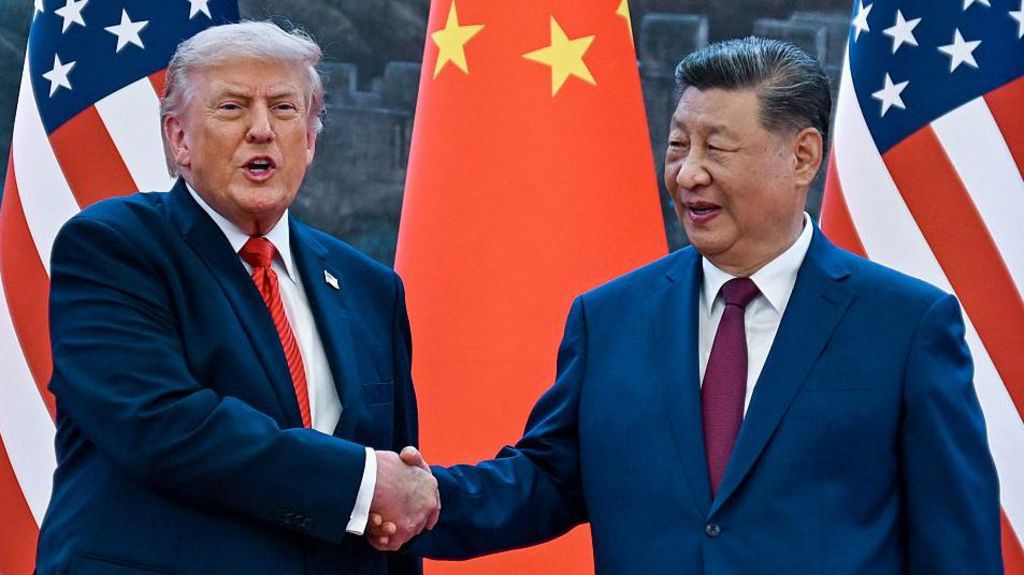
A high-stakes diplomatic visit to Beijing by former U.S. President Donald Trump has delivered tangible breakthroughs on trade between the world’s two largest economic powers, headlined by a confirmed Chinese order for 200 Boeing commercial aircraft and a new push to expand a critical tariff truce.
China’s Commerce Ministry made the order official in an announcement Wednesday, confirming that alongside the aircraft purchase, the United States has committed to providing long-term supply guarantees for jet engines and key aircraft components to Chinese operators. Beyond the aerospace deal, the two nations have also agreed to open negotiations aimed at extending the tariff truce first reached in October 2025, with plans to cut existing tariffs on at least $30 billion worth of mutual goods trade.
The confirmation came as Chinese President Xi Jinping convened talks with Russian President Vladimir Putin in Beijing, just days after Trump wrapped up his bilateral meetings with Chinese leadership. During his trip, Trump secured a slate of trade pledges that also included expanded market access for American agricultural producers into the huge Chinese consumer market.
Speaking to reporters aboard Air Force One shortly after departing China last Friday, Trump framed the agreements as a historic win for U.S. manufacturing. “We made a lot of great trade deals, including over 200 planes for Boeing, with a promise of 750 planes total, which would be by far the largest order ever,” he told journalists.
The U.S. business delegation that accompanied Trump on the trip included Boeing Chief Executive Officer Kelly Ortberg, alongside other major U.S. business leaders such as Tesla CEO Elon Musk and Jensen Huang, head of leading artificial intelligence chip maker Nvidia.
In a post-trip statement, Boeing hailed the visit as a turning point for its access to the Chinese market. “We had a very successful trip to China and accomplished our major goal of reopening the China market to orders for Boeing aircraft,” the company said. The 200-aircraft commitment marks the first tranche of a larger expected deal, with the manufacturer noting that “we expect further commitments will follow after this initial order.”
The current tariff truce between Washington and Beijing dates back to October 2025, when negotiators from both sides reached an agreement on the sidelines of an international meeting in Kuala Lumpur, Malaysia, ahead of a previous Trump-Xi summit in South Korea. That earlier deal extended the pause on tit-for-tat tariffs until November 2026, and included a small reduction in U.S. tariffs on Chinese imports alongside a Chinese commitment to pause new restrictions on exports of rare earth minerals and specialized magnets—critical inputs for a wide range of U.S. manufacturing and tech sectors.