作者: admin

  • US Para Nordic ski team has new home with US SKI & Snowboard fresh off winning 10 golds in Italy

    US Para Nordic ski team has new home with US SKI & Snowboard fresh off winning 10 golds in Italy

    Fresh off a historic medal haul at the 2026 Milan Cortina Winter Paralympics, the U.S. Para Nordic Ski Team — which encompasses cross-country skiing and biathlon — is entering a new era of institutional support, after U.S. Ski & Snowboard and the U.S. Olympic & Paralympic Committee (USOPC) announced Tuesday that the squad will now be managed under the national governing body’s umbrella. The integration marks the latest step in a broader push to expand Para sport programming within U.S. Ski & Snowboard, following the return of Paralympic Alpine skiing and snowboard squads to the organization’s oversight in 2023. Prior to this latest move, the U.S. Para Nordic Team had operated under direct USOPC management since 2014. The timing of the shift could not be more favorable, coming just weeks after the team turned in a dominant performance in Italy, walking away with 10 gold medals from the Games. Standout para athletes Oksana Masters and Jake Adicoff led the charge, each securing four gold medals individually, including a shared victory in the mixed relay event. For Masters, the win cemented her status as one of the most decorated Paralympians in U.S. history, bringing her total medal count across Summer and Winter Games to an extraordinary 24. Under the new structure, Para Nordic athletes will gain access to a full suite of support resources previously unavailable to the squad under USOPC management. These benefits include entry to U.S. Ski & Snowboard’s state-of-the-art Center of Excellence in Park City, Utah, as well as dedicated full-time coaching, travel funding, advanced sports science support, registered dietitian services, marketing guidance, and career development resources for athletes. Masters, who has led the team’s success for more than a decade, expressed enthusiasm for the new partnership, framing the shift as a critical new chapter for the program. “It’s exciting to think about the future and the added visibility and resources that can come with it,” Masters said in an official statement announcing the move. “We’re proud of everything we accomplished to date, and we’re motivated to carry that legacy forward as we begin a new chapter with U.S. Ski & Snowboard.” Sophie Goldschmidt, president and CEO of U.S. Ski & Snowboard, echoed that optimism, noting that the organization is eager to leverage its existing infrastructure to help the Para Nordic team build on its already impressive track record of global success. “We look forward to working together to support their goals and continue building upon their success on the world stage,” Goldschmidt said. The integration comes as U.S. Paralympic winter sports continue to gain institutional investment and mainstream attention, following record-breaking medal performances at the 2026 Milan Cortina Games that have highlighted the talent and dedication of the nation’s para athlete community.

  • Trump warns ‘whole civilization will die’ in Iran if ultimatum expires

    Trump warns ‘whole civilization will die’ in Iran if ultimatum expires

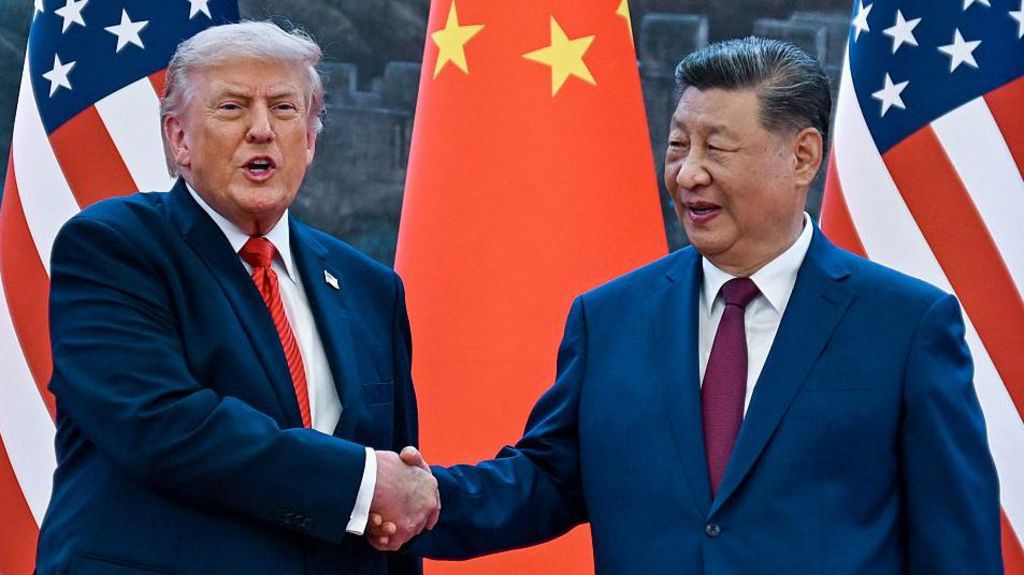
    In an escalation of bellicose rhetoric against Iran that has sent shockwaves through the global political landscape, former and current U.S. President Donald Trump has issued a catastrophic warning: if Tehran fails to comply with his sweeping demands by a Tuesday midnight GMT deadline, an entire Iranian civilization faces permanent annihilation. The stark threat marks a new peak in weeks of escalating military pressure led by the United States and its regional ally Israel, which have already carried out sustained airstrikes against Iranian military sites, eliminated top Iranian military and political leadership, and left critical segments of the country’s infrastructure in ruins.

    Early Tuesday, Trump doubled down on his aggressive posture in a post to his Truth Social platform, issuing one of the most extreme threats of the ongoing conflict. “A whole civilization will die tonight, never to be brought back again. I don’t want that to happen, but it probably will,” he wrote. While he offered few specific details on what a full-scale U.S. attack would entail, Trump has already outlined plans to target civilian infrastructure, threatening to bomb Iran’s bridges, power grids and other critical public facilities back to the “Stone Age”.

    The core demand at the heart of Trump’s ultimatum is that Iran end its de facto closure of the Strait of Hormuz, the strategically critical narrow waterway that carries a large share of the world’s global oil and commodity trade. Rejecting incremental de-escalation, Trump dismissed a circulating temporary ceasefire proposal as insufficient on Monday, leaving no room for partial compromise. Iran has already pushed back firmly against U.S. pressure, with state media reporting that Iranian authorities refuse to accept anything less than a full, permanent end to the ongoing war, rather than a temporary pause in hostilities.

    Despite his apocalyptic rhetoric, Trump appeared to leave a narrow opening for a last-minute diplomatic breakthrough. “Now that we have Complete and Total Regime Change, where different, smarter, and less radicalized minds prevail, maybe something revolutionarily wonderful can happen, WHO KNOWS? We will find out tonight,” he added in his Truth Social post.

    Critics across the political spectrum have decried Trump’s threats as a blatant violation of international law. On Monday, Trump confirmed that if his deadline passes without Iranian compliance, U.S. forces would begin systematically destroying every bridge across Iran and crippling every major power plant – a planned attack that military and legal experts widely condemn as a clear-cut war crime. Leading Congressional Democrat Chuck Schumer, the Senate Minority Leader, was among the most vocal critics, condemning the president’s words in a post to X. “This is an extremely sick person,” Schumer wrote. “Each Republican who refuses to join us in voting against this wanton war of choice owns every consequence of whatever the hell this is.”

    The Trump administration’s campaign of pressure received backup from Vice President JD Vance, who doubled down on the threat during a diplomatic visit to Budapest, where he met with Hungarian Prime Minister Viktor Orban. Even as Vance acknowledged that the U.S. has “largely accomplished its military objectives” to date and suggested further negotiations were possible ahead of the deadline, he delivered an ominous warning to Tehran. “They’ve got to know we’ve got tools in our toolkit that we so far haven’t decided to use,” Vance told reporters. “Trump will decide to use them if the Iranians don’t change their course of conduct.”

    Sustained airstrikes have continued across Iran since the U.S.-Israeli bombing campaign began on February 28. On Tuesday, Iranian officials confirmed that the country’s primary oil export terminal, located on Kharg Island, has come under fresh attack, adding to the growing damage to the country’s energy sector and broader economy.

  • Sinner and Alcaraz start fast on Monte Carlo clay in race for No.1

    Sinner and Alcaraz start fast on Monte Carlo clay in race for No.1

    The 2025 men’s tennis clay court season kicked off its first Masters 1000 event in Monte Carlo on Tuesday, with the sport’s two top superstars Jannik Sinner and Carlos Alcaraz delivering dominant opening-round wins to fuel their tight, high-stakes battle for the ATP world number one ranking ahead of the French Open.

    With Olympic sprint legend Usain Bolt watching from the stands of the Monte-Carlo Country Club, the top two-ranked players turned in clinical performances that sent them smoothly into the tournament’s second round. Second-ranked Sinner, the Italian powerhouse who enters the clay swing in red-hot form, took just 64 minutes to blow past France’s Ugo Humbert in a lopsided 6-3, 6-0 victory. Shortly after, world No. 1 and defending Monte Carlo champion Carlos Alcaraz followed Sinner onto center court, wrapping up a 6-1, 6-3 win over Argentina’s Sebastian Baez 69 minutes after the opening first serve.

    This clay season carries extra significance for Sinner, who is still chasing his first ATP Masters 1000 title on clay and gunning to knock Alcaraz off the top spot in the global rankings. The Italian comes into Monte Carlo fresh off a historic unbeaten Sunshine Double in March, where he claimed back-to-back titles at the Indian Wells and Miami Open without dropping a single set. Tuesday’s win extended his winning streak at 1000-level events to an impressive 18 matches.

    Speaking after his victory, Sinner acknowledged the challenge of adapting his game to his first clay tournament of the season. “It was a good performance from my side. The first clay event is never easy. You have to change your game style a little bit, how you approach certain situations. I come here with good feelings but, at the same time, not many expectations,” he said.

    Against Humbert, a player he had not faced in five years, Sinner took a handful of games to find his rhythm on the red dirt. He broke Humbert’s serve in the fifth game to take control of the first set, closing it out 6-3. The second set was a complete rout: Sinner dropped zero games, sweeping Humbert aside 6-0 in just 23 minutes. He will next face the winner of the match between Argentina’s Francisco Cerundolo and Czech qualifier Tomas Machac.

    For Alcaraz, the opening win marked a promising return to his favored surface after a long hard-court stretch. The 21-year-old Spaniard admitted he had been eager to get back on clay. “It’s been almost one year since the last match I played on clay. To be honest, I missed it. I missed getting myself dirty a little bit,” he said. Last clay season, Alcaraz dominated the surface, claiming three titles from four tournaments including the Monte Carlo crown, with his only defeat coming in the Barcelona final.

    Alcaraz’s path to retaining the world number one ranking is already an uphill battle, as ranking regulations reset points after 12 months, and Sinner has no points to defend from Monte Carlo this year. After his opening win, Alcaraz openly acknowledged that Sinner’s ascent to the top spot is only a matter of time. “I’m going to lose the number one in the world. I don’t know if it’s going to be in this tournament or the next one. It is going to be really difficult to defend all the points and even if I do, Jannik is going to add some points in this tournament. Number one is not on my mind but to be my best on clay and let’s see how the clay court season is going to be,” Alcaraz explained.

    The Spaniard’s performance against Baez even exceeded his own expectations. He sailed through the first set, hit a small rough patch in the second, then closed out the match by winning the final seven consecutive points to seal victory. “A really good start to the tournament for me. I surprised myself with the level. I thought I was going to play a little bit worse,” he said. Alcaraz will next meet either Argentina’s Tomas Etcheverry or France’s Terence Atmane in the second round.

    The 2025 clay season already carries extra narrative weight after last year’s dramatic Roland Garros final, where Sinner — returning from a doping ban that sidelined him for the start of the clay swing — pushed Alcaraz to a five-hour, five-set epic. Sinner held a two-set lead and three championship points before ultimately falling to the Spaniard, setting the stage for a rematch that could come at any point during the clay swing, including Monte Carlo.

  • UK government blocks Kanye West from London music fest

    UK government blocks Kanye West from London music fest

    In a decisive move that caps days of growing public and political outrage, the United Kingdom Home Office announced Tuesday it has rejected US rapper Kanye West’s visa application to enter the country, forcing the immediate cancellation of his much-debated headline slot at London’s Wireless Festival. The 48-year-old, who now goes by the name Ye, had been scheduled to perform three consecutive nights at the July event as part of a contested European comeback tour, following years of repeated antisemitic incidents that have derailed his career.

    Citing the rapper’s long pattern of harmful antisemitic rhetoric and actions, Home Office officials told the BBC that West’s presence in the UK would run counter to the public good, justifying the visa refusal. Wireless Festival organizers confirmed the cancellation via Instagram hours after the decision was announced, noting that all ticket holders — who only gained access to purchase tickets earlier that same day — will receive an automatic full refund for their purchases.

    The ban comes after a cascade of withdrawals from major corporate sponsors in the lead-up to the announcement. Drinks industry giants PepsiCo and Diageo pulled their sponsorship support for the London festival once public backlash against West’s booking intensified, putting increasing pressure on organizers and government officials to act.

    In a last-minute attempt to defuse mounting controversy, West took out a full-page advertisement in the Wall Street Journal headlined “To Those I’ve Hurt” ahead of the visa decision. In the ad, he framed his planned London performance as a showcase of personal change, writing, “My only goal is to come to London and present a show of change, bringing unity, peace, and love through my music.” He also extended an offer to meet in person with members of the British Jewish community to address concerns over his past remarks, adding, “I know words aren’t enough — I’ll have to show change through my actions. If you’re open, I’m here.”

    West’s controversial 2025 release of a song titled “Heil Hitler”, timed to the 80th anniversary of Nazi Germany’s defeat in World War II, reignited global condemnation of his antisemitic views. He has previously attempted to frame his past antisemitic outbursts as a symptom of his bipolar disorder, a framing that drew sharp rebuke from UK Health Secretary Wes Streeting Tuesday. Streeting called West’s attempt to use his mental health diagnosis to justify his harmful actions “appalling” in remarks to British broadcasters.

    Prime Minister Keir Starmer had already publicly voiced concern over the booking over the weekend, noting that it was troubling that West had been confirmed to perform given “his previous antisemitic remarks and celebration of Nazism.”

    Leadership of British Jewish organizations have reacted to the ban with mixed but broadly supportive stances. Phil Rosenberg, president of the Board of Deputies of British Jews, had previously said the group would be open to meeting with West only if he canceled his Wireless Festival appearance. Ahead of the ban, Rosenberg noted that “the Jewish community will want to see genuine remorse and change before believing that the appropriate place to test this sincerity is on the main stage at the Wireless Festival.”

    The Campaign Against Antisemitism, which had publicly called on the UK government to block West’s entry, praised the decision as a victory for efforts to root out antisemitism in public life. “For once, when it said that antisemitism has no place in the UK, it backed up its words with action,” the group said in a statement. It added: “Someone who has boasted of making tens of millions of dollars from selling swastika T-shirts and who released a song called ‘Heil Hitler’ just months ago clearly would not be conducive to the public good in the UK.” The organization urged remaining potential sponsors to continue to avoid any partnership with events involving West.

    The visa ban is the latest in a string of setbacks for West’s attempted European comeback. Earlier this year, the mayor of Marseille, France, publicly declared that the rapper was “not welcome” to perform a scheduled June concert in the city, mirroring the UK government’s stance that West’s harmful views make him an inappropriate guest for major public events.

  • Carnival fever hits Lagos as locals celebrate Afro-Brazilian heritage

    Carnival fever hits Lagos as locals celebrate Afro-Brazilian heritage

    On a bustling Monday this April, the streets of Nigeria’s Lagos Island transformed into a vibrant tapestry of color, sound, and celebration as the annual Fanti Carnival kicked off its 2026 iteration. For over two centuries, this beloved festival has turned Lagos’ central financial hub into a stage for cultural joy, drawing attendees from across the country and beyond to honor a unique shared history.

    The roots of the Fanti Carnival stretch back to the 19th century, when hundreds of formerly enslaved Africans and their descendants chose to resettle on the African continent after generations living in Brazil and Cuba. Many of these Afro-Brazilian returnees put down roots on Lagos Island, bringing with them a rich tapestry of new cultural traditions, performance styles, and community practices that had evolved during their time in the Americas.

    Over decades, these imported customs blended seamlessly with the longstanding cultural traditions of Nigeria’s majority Yoruba people, giving birth to a one-of-a-kind celebration that cannot be traced to either origin alone. As carnival organizers put it, the Fanti Carnival is “neither wholly Brazilian nor wholly Yoruba, but entirely its own.”

    This year’s event lived up to its storied reputation, featuring a packed lineup of spectacles that wowed onlookers. Booming live musical performances echoed between island buildings, while elaborately costumed stilt walkers danced through crowds alongside ornately decorated horses and giant, vibrant dragon displays. Seven historic community associations, each rooted in a different neighborhood of Lagos Island, have carried the responsibility of organizing and sustaining the carnival for generations, with each group identifiable by its own distinct signature color palette. The Lafiaji association, for example, sticks to a iconic red and white color scheme that sets its participants apart during processions. One attendee even designed a custom eye-catching outfit emblazoned with the names of all seven organizations to honor their work.

    For attendees, the carnival is far more than just a street party: it is a vital link to shared history that must be preserved for future generations. “I love the energy, the artistic splendour, the creativity” of the event, Glamour Sandra, a first-time attendee, told the Associated Press on the sidelines of the parade. Longtime participant Ademola Oduyebo emphasized the cultural importance of the annual gathering, noting: “It is important that we preserve this, so that… generation after generation everybody will get to understand the importance of this and how Brazilians and Lagos came to be.”

    That commitment to intergenerational transmission was on clear display Monday, as dozens of children and teenagers joined the processions, decked out in handcrafted creative costumes that reflected the event’s traditions. After days of celebration wrapping up this week, organizers have already confirmed that the beloved festival will return to Lagos Island next April, continuing a legacy that has endured for more than 200 years.

  • Earthset and a solar eclipse: Nasa releases first images from Moon fly-by

    Earthset and a solar eclipse: Nasa releases first images from Moon fly-by

    In a landmark moment for modern human space exploration, NASA has publicly released the first never-before-seen photographs captured by the Artemis II crew during their groundbreaking flight past the Moon, offering the public an intimate, unprecedented view of our closest celestial neighbor and home planet from a human vantage point not seen since the final Apollo mission more than 50 years ago.

    Among the released images, one frame that has already drawn global attention captures what NASA describes as a quiet, stunning Earthset: our blue home planet peeking gently over the rugged, crater-pocked horizon of the Moon, a perspective that has only ever been witnessed by a handful of humans in history. A second photograph showcases a rare, spectacular solar eclipse, a sight only accessible to a crew orbiting the Moon — the lunar body perfectly aligned between the spacecraft and the Sun, completely blocking the star’s bright disk to create a singular astronomical view. A third image, nicknamed by NASA “Ready for a close up”, offers a crisp, detailed look at the Moon’s battered, ancient surface, highlighting the geological features that scientists continue to study to unlock the solar system’s history.

    The images were captured during the mission’s six-hour lunar flyby maneuver, a phase of the journey that included a period of planned radio silence when the Orion capsule passed behind the far side of the Moon, cutting off contact with ground control on Earth. According to NASA’s official timestamp, the iconic Earthset photograph was shot through one of Orion’s observation windows at 18:41 Eastern Daylight Time (23:41 BST) this past Monday.

    In its detailed official description of the frame, NASA explained that the shadowed portion of Earth in the image is in the grip of nighttime, while the sunlit hemisphere clearly shows swirling cloud systems stretching across Australia and the Oceania region. In the immediate foreground of the photograph sits Ohm crater, a well-preserved complex impact crater marked by distinct terraced edges and a relatively flat floor split by sharp, raised central peaks. NASA added that these central peaks form when the asteroid or comet impact that creates the crater temporarily liquefies the lunar surface, which then rebounds upward to form the raised central rock formations after the initial impact.

    The agency has not yet confirmed which of the four Artemis II crew members took the photographs, as the mission is currently on its return trajectory toward Earth, with splashdown planned in the coming days. The Artemis II mission is the first crewed test flight for NASA’s Artemis program, which aims to land the first woman and first person of color on the lunar surface later this decade, establish a long-term sustainable lunar outpost, and prepare for future human missions to Mars. These first hand-held photographs from the mission are already being celebrated as a reminder of the power of human space exploration to connect people across the globe to the wider universe.

  • Oil rises, stocks fall as Trump’s Iran deadline looms

    Oil rises, stocks fall as Trump’s Iran deadline looms

    Global financial markets swung sharply on Tuesday, as fresh US-Israeli strikes near Iran’s critical Kharg Island oil export terminal triggered volatility just hours before a looming deadline set by US President Donald Trump for Tehran to reopen the Strait of Hormuz. The escalating Middle East tensions have injected deep uncertainty into trading rooms across the world, leaving investors bracing for the possibility of a full-scale attack that could cripple global energy supplies.

    Oil prices recorded immediate gains following the strike reports: the May contract for West Texas Intermediate, the US crude benchmark, climbed 2.7 percent to settle at $115.44 a barrel, while June Brent North Sea crude rose 0.5 percent to $110.30 a barrel. While prices climbed even higher in the immediate aftermath of the strike news, they partially pulled back after confirmations emerged that the targeted sites were military facilities rather than key energy export infrastructure, easing some of the most extreme market jitters for the moment.

    Equity markets across major global economies moved firmly into negative territory. All three major US stock indices opened lower and remained down through morning trading, with the Dow Jones Industrial Average dropping 0.6 percent to 46,391.07, the S&P 500 falling 0.5 percent to 6,577.13, and the Nasdaq Composite slipping 0.6 percent to 21,867.83. European mid-afternoon trading followed the downward trend, with London’s FTSE 100 falling 0.4 percent, Paris’ CAC 40 edging 0.1 percent lower, and Frankfurt’s DAX dropping 0.4 percent. By contrast, the US dollar saw little volatility against most major global currencies, holding steady through the trading session.

    The root of the current market tension dates back to late February, when Iran blocked commercial passage through the Strait of Hormuz— a waterway that carries roughly one-fifth of the world’s daily global oil trade. The disruption has already pushed global energy prices sharply higher, and policymakers around the world are now bracing for a potential second inflation surge tied to the escalating conflict.

    President Trump ramped up rhetoric ahead of his self-imposed midnight GMT deadline, warning Tehran that any failure to reopen the strait would result in what he called the “complete demolition” of Iran’s critical national infrastructure. He doubled down on the threat on Tuesday, stating that “a whole civilization will die” if Iran rejects US war demands, though he added that he “hopes” such drastic action will not be necessary. Iran has shown no indication of backing down: the country’s Revolutionary Guard has issued a counter-warning that it will destroy all major energy installations across the Persian Gulf if any US attack crosses Tehran’s stated “red line.”

    Market analysts note that trading activity is being driven by conflicting emotions: cautious optimism that a full-scale attack can be avoided is running parallel to deep anxiety that conflict will break out. “Ultimately no one knows what the president will do next, and this is causing tensions to remain high in financial markets,” explained Kathleen Brooks, research director at XTB. Patrick J. O’Hare, an analyst at Briefing.com, summed up the market mood, noting “Today is a hand-wringing day if there ever was one.”

    The rising energy costs have already started to show up in economic data. On Tuesday, the Philippines reported that annual inflation jumped to 4.1 percent in March, exceeding analyst forecasts and hitting the highest level in nearly two years. Last week, US economic data showed that service sector growth cooled in March, as businesses adjusted their outlooks to account for higher energy prices and potential new supply chain disruptions.

    Against the backdrop of Middle East tension, there was one bright spot in global markets: shares of Samsung Electronics rallied roughly one percent after the tech giant projected that its first-quarter net profit would soar 755 percent year-over-year to an all-time record of $38 billion, driven by booming demand for advanced semiconductors that power artificial intelligence systems.

    Among major Asian benchmark indices, Tokyo’s Nikkei 225 closed flat at 53,429.56, while Shanghai’s Composite Index gained 0.3 percent to close at 3,890.16. Hong Kong’s Hang Seng Index was closed for a public holiday on Tuesday.

  • Crabapple blossom events draw spring crowds to Tianjin

    Crabapple blossom events draw spring crowds to Tianjin

    As mild spring temperatures sweep across northern China, a series of crabapple blossom-themed events have turned Tianjin into a top domestic travel destination, attracting thousands of tourists from across the country during the annual Qingming Festival holiday.

    The fourth iteration of the Jinyu Heping Crabapple Blossom Festival launched over the holiday break and will remain open to the public through April 12. The celebration transforms key downtown landmarks across the city, with entire streets lined by blooming crabapple trees and a full schedule of cultural performances staged for guests.

    For many travelers, the crabapple blossoms have become a major draw that justifies a dedicated trip to the port city. Lin Yiru, a tourist who traveled from eastern China’s Zhejiang province to attend the festival, shared her positive impression of the event. “I came to Tianjin specifically to see the crabapple blossoms during the Qingming Festival holiday,” she explained. “The city has its own unique charm, and the area around Minyuan Square was lively and full of energy.”

    The floral celebration extends beyond city-run public events, with two of Tianjin’s most prestigious higher education institutions opening their gates to the public for their own crabapple blossom activities. Tianjin University and Nankai University, both located in Tianjin, have opened their scenic campus grounds to outside visitors, combining unobstructed blossom viewing opportunities with a lineup of cultural experiences that highlight the institutions’ academic and historical heritage.

    The wave of spring tourism to Tianjin for the crabapple festival underscores the growing popularity of seasonal floral tourism across China, as domestic travelers increasingly seek out unique, nature-focused cultural experiences during public holiday breaks.

  • Iran has allowed two French former detainees to leave the country, Macron says

    Iran has allowed two French former detainees to leave the country, Macron says

    PARIS – In a long-awaited breakthrough that eases months of diplomatic tension between France and Iran, French President Emmanuel Macron confirmed Tuesday that two French citizens, Cécile Kohler and Jacques Paris, have finally been permitted to depart Iran and are now en route to France. The pair had been confined to French diplomatic facilities in Tehran since their release from Iranian prison last November, after being held for more than three years on disputed spying charges that France has repeatedly dismissed as baseless.

    Macron announced the development in an official post on X, writing, “Cécile Kohler and Jacques Paris are free and on route toward French territory, after three and a half years of detention in Iran.” This green light for their departure, a diplomatic outcome France has pursued for months, comes amid escalating regional tensions following the recent outbreak of cross-border conflict between Israel and Iran. The agreement signals a notable instance of diplomatic outreach between Tehran and Paris, even as the region grapples with broader conflict. Macron has maintained that France remains uninvolved in the regional hostilities, noting the country was not consulted in advance on U.S.-Israel strikes and has no desire to be drawn into the war.

    The full prisoner swap agreement, confirmed by both Iranian state media and French officials, sees Iran release Kohler and Paris in exchange for France allowing Iranian national Mahdieh Esfandiari to leave the country. Esfandiari was convicted by a French court in February 2024 on charges of inciting terrorism over comments she made regarding the October 7, 2023 Hamas-led attacks on Israel. Tehran has pushed for her release since last year, and negotiations on the swap have been underway for months.

    Macron extended official gratitude to Oman for its key role as a mediator in brokering the deal, calling the outcome a major relief for the pair and their families. “It’s a relief for us all and obviously for their families,” Macron wrote.

    Kohler and Paris, both tourists, were first arrested during a trip to Iran in May 2022. After their imprisonment, Iran rejected international calls for their release, while France repeatedly condemned their detention as arbitrary and unjustified, publicly accusing Iran of pursuing a “hostage policy” of detaining foreign citizens to use as diplomatic bargaining chips – an allegation Tehran has consistently denied.

    Following their release from prison in November 2024, Iranian authorities refused to grant them exit visas, leaving them sheltering in the French Embassy in Tehran for months. French Foreign Minister Jean-Noël Barrot confirmed in an X post Tuesday that he had spoken directly to the pair, who shared their overwhelming emotion and joy at the prospect of reuniting with their loved ones back in France. “They are definitively FREE,” Barrot wrote. He also thanked France’s ambassador and on-the-ground diplomatic staff in Tehran for supporting and protecting the pair “under very difficult conditions.”

    Diplomatic contacts between the two countries accelerated after the latest regional conflict broke out in early March. Macron became the first Western leader to hold talks with newly elected Iranian President Masoud Pezeshkian on March 8, and the two leaders have spoken two additional times by phone since, with Macron repeatedly pushing for the immediate return of the two French citizens. Negotiations on the final swap framework advanced steadily through September, when Iranian Foreign Minister confirmed the two sides were close to a final deal. That same month, France officially halted proceedings against Iran at the International Court of Justice, where it had brought a case alleging Tehran violated international consular protections for the two detainees. Court records confirm France requested the full discontinuance of the proceedings as part of the swap agreement.

  • Ringleader of suspected human trafficking network arrested in Ethiopia

    Ringleader of suspected human trafficking network arrested in Ethiopia

    In a landmark cross-border law enforcement operation, Ethiopian federal police have announced the capture of Yetbarek Dawit, the man accused of leading a brutal transnational human trafficking network that preyed on thousands of migration hopefuls across East Africa for nearly eight years. Dawit, who has not yet issued a public response to the allegations against him, was apprehended alongside nine suspected accomplices in Shire, a northern town located in Ethiopia’s Tigray region near the borders of Eritrea and Sudan. None of the 10 detainees have been formally charged in court as of the latest updates.

    Authorities allege that since 2018, Dawit’s criminal organization lured more than 3,000 primarily young migrants from six East African nations — Djibouti, Eritrea, Ethiopia, Kenya, Somalia and Sudan — with false promises of safe passage to Europe via Libya. Once the migrants arrived in Libya, the network confined them in five purpose-built detention warehouses run by Dawit, where they systematically subjected captives to extreme violence and abuse to extort additional ransom payments from their families back home.

    Investigative testimonies collected from more than 100 survivors and their families spanning six countries (Ethiopia, Libya, the Netherlands, Switzerland, the United Kingdom and Canada) have linked the network to the deaths of over 100 migrants and the sexual abuse of more than 50 women. Survivor accounts detail horrific conditions inside the warehouses: captives who could not meet ransom demands were fed only once daily, and endured torture methods including beatings with rubber clubs, wooden sticks and electric wires, prolonged chaining of hands and feet, and burns from melted plastic dripped onto their skin. Women held captive were systematically subjected to sexual violence that left lasting physical and psychological trauma, authorities confirmed.

    Law enforcement officials note that Dawit, who is wanted by law enforcement agencies across multiple countries, used a network of aliases to evade capture for years: he went by “Adhanom” in Sudan, “Ahmed” in Djibouti and Somalia, “Munir” in Kenya, and “Kibrom” in Sweden and other European nations. Investigators ultimately combined advanced tracking technology, witness testimonies, and cross-border collaboration to pinpoint his location in Shire. Following the arrest, authorities froze all bank accounts linked to Dawit and his co-conspirators, and seized all real estate and assets tied to the criminal group.

    The successful operation was the culmination of a complex, months-long cross-border investigation led in partnership with the Regional Operational Centre (Rock), an East African anti-smuggling initiative funded by the European Union that was created specifically to disrupt transnational human smuggling and trafficking networks operating in the region. Official arrest photos of the suspects — seven men and three women — have been publicly shared on the Ethiopian Federal Police official Facebook page. Following their capture in Tigray, all 10 suspects were transferred to Ethiopia’s capital Addis Ababa on Monday for ongoing judicial processing. Ethiopian police estimate the criminal network generated more than $19 million (roughly £14 million) in illicit profits from its years of trafficking and extortion activities.