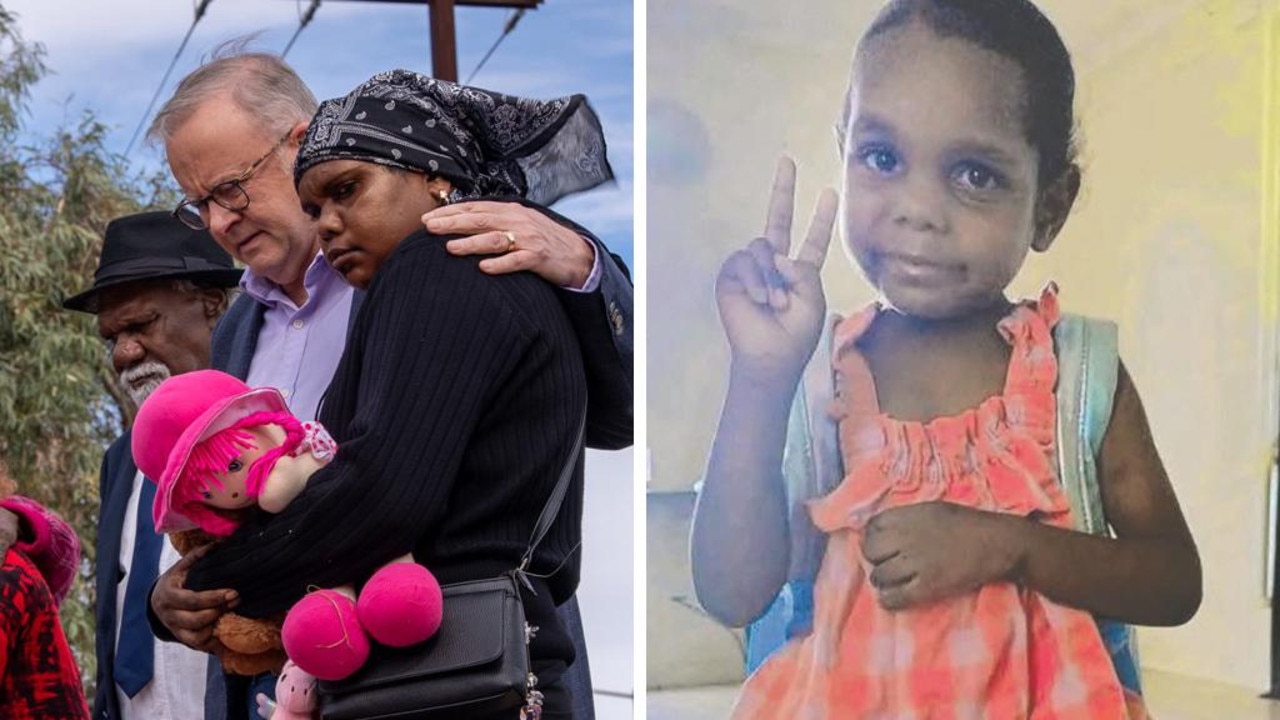
A national tragedy that has sparked urgent calls for systemic reform in remote Indigenous community services moved forward this week, as Australian Prime Minister Anthony Albanese met privately with the family of Kumanjayi Little Baby, the five-year-old Warlpiri girl allegedly murdered last month at an Alice Springs town camp.
WARNING: Aboriginal and Torres Strait Islander readers are advised this article references a deceased Indigenous child, whose name and story are shared with the permission of her family.
Kumanjayi went missing from the Northern Territory town camp on April 25, with 47-year-old Jefferson Lewis taken into custody in connection with her death. Lewis’ arrest ignited violent clashes between community members and police outside Alice Springs Hospital, where the suspect was detained, and amplified long-simmering demands for urgent action to address intergenerational poverty and overhaul flawed child protection systems across the Northern Territory.
On Wednesday, Albanese traveled to Alice Springs to sit down with Kumanjayi’s mother, grandfather and grandmother, marking his first face-to-face meeting with the grieving family since the child’s killing. After the meeting, the prime minister spoke publicly to honor the young girl’s life and acknowledge the family’s immeasurable pain.
“Kumanjayi was cherished and loved,” Albanese told reporters. “They are going through the worst of devastation, and at this time, they have asked that they be allowed to go through their sorry business with the privacy, dignity and solemnity that it deserves.”
Albanese added that the family had taken some small comfort in the outpouring of community support that has emerged in Alice Springs since the tragedy. “It was an opportunity as well, too, where we laid flowers at the memorial, at the camp that has sprung up spontaneously,” he said. “This is a young person lost far too early under circumstances unbearable. They are trying to bear their way through this with dignity, with respect, and it will remain something that is with them forever.”
He noted that the family remains proud of their beloved daughter and granddaughter, but carry the devastating regret that Kumanjayi will never get to grow into the adult she was meant to become. “It was important to be able to say to the family that the nation stands with them in their grief … we’ll give them every support that they need,” the prime minister said.
Turning to the broader policy failures that the tragedy has laid bare, Albanese committed that the federal government would work collaboratively with the Northern Territory government and local Indigenous leaders to deliver tangible improvements. “Every child has the right to be safe and to enjoy a quality of life free from danger,” he said. “This is a time where what I want to see is the different levels of government coming together with the community in the same way that the community has.”
Addressing longstanding inadequate conditions in remote town camps specifically, Albanese acknowledged that all levels of government have fallen short, and must “do much better” to improve living outcomes. “My government has acknowledged that is the case,” he said. “When it comes to housing, we are building more remote housing. When it comes to the issues that were raised with me about Yuendumu and other communities, as well as the town camps – clearly, the Northern Territory government have had responsibility since 2012 for the town camps. Clearly, there’s a need to do better, to make sure that the living conditions are improved.”
Albanese pointed to on-country dialysis programs that keep Indigenous community members connected to their traditional lands while accessing critical care as a practical model for how targeted government investment can deliver tangible change to remote communities.
The tragedy has already prompted a high-profile call for national reckoning from Kumanjayi’s aunt, Coalition frontbencher Jacinta Nampijinpa Price, who broke down in tears earlier this month while delivering an emotional tribute to her niece on the floor of the Senate.
Price used the address to demand an honest, unflinching conversation about the ongoing failures of child protection systems for Indigenous children across remote Australia. “I don’t want to be here right now, to have to stand in this chamber, to deliver a condolence speech for a little girl in my family,” she said. “She was loved. She should still be here.”
“The hardest truth is that for many in my hometown, none of this came as a surprise,” Price continued. “For too long in this country, there has been silence around what is happening in too many town camps and remote communities – a silence driven by fear, a fear of causing offence, a fear of being labelled racist, fear of speaking honestly about dysfunction, violence, alcohol abuse, neglect and conditions. Vulnerable children are growing up in that silence and it is killing our babies. And when I say our babies, our people, I mean all Australians.”