作者: admin

  • These Iranians supported the US-Israeli war. Now they realise their mistake

    These Iranians supported the US-Israeli war. Now they realise their mistake

    After weeks of devastating US-Israeli airstrikes across Iran, the announcement of a ceasefire has brought much-needed quiet to civilian communities across the country – but for a segment of Iran’s anti-establishment population that initially pinned hopes of political change on the foreign assault, the end of bombing has only delivered crushing disillusionment. For many who once framed external military action as a shortcut to systemic change, the destruction of civilian infrastructure and broken promises of targeted intervention have forced a painful reckoning.

    Leila, a 25-year-old Iranian who requested a pseudonym for security reasons, is among those who now admit they were wildly wrong in their early assumptions. “I thought this was it – I thought the Islamic Republic was finally coming to an end,” she explained. Like many other opposition-aligned Iranians, she bought into the narrative that the strikes would be quick, decisive, and deliver immediate political transformation, even claiming she believed Washington and Jerusalem had already struck a post-conflict power-sharing deal with exiled opposition leader Reza Pahlavi. “I was wrong,” she says plainly.

    Leila is far from alone. In the opening days of the conflict, a subset of Iranian opponents of the ruling government viewed former U.S. President Donald Trump and Israeli Prime Minister Benjamin Netanyahu as unlikely allies who could clear the path for the change they had long demanded during years of internal unrest. But as the campaign dragged on and the full scale of civilian and infrastructure damage came into view, those rosy expectations evaporated almost entirely.

    Leila questions the logic of targeting the country’s basic civilian networks, pointing to the destroyed bridges, demolished railway lines, and flattened oil depots that dot the post-strike landscape. “How does that help change a government?” she asks. The contradiction between Trump’s past messaging and his eventual threats hit especially hard: back in January, at the peak of widespread anti-government protests that had been met with a brutal security crackdown, Trump took to social media to promise demonstrators that help was imminent. Just weeks before the ceasefire, he issued a terrifying public warning to Iran that “a whole civilization will die tonight, never to be brought back again” before backing down to agree to the pause in hostilities.

    “In the span of just two months, we went from ‘help is on the way’ to threats about the destruction of Iranian civilization,” Leila said. The fallout has not only been political – it has torn apart personal relationships, too. She says she lost friendships over her decision to trust foreign powers, after she dismissed warnings from peers that Trump and Netanyahu would not act in Iran’s best interest, even accusing doubters of being sympathetic to the ruling establishment. Many of those bonds have never healed. “Now I feel like everything I believed in just collapsed,” she admits.

    Twenty-nine-year-old Ali shared a nearly identical arc of hope followed by disillusionment. In the wake of the January nationwide protests – sparked by soaring inflation that escalated into widespread anti-government unrest, with conflicting death tolls putting fatalities between 3,117 (per Iranian government figures) and at least 7,015 (per the U.S.-based Human Rights Activists News Agency) – Ali came to believe external military force was the only path to change. “We thought war would finish everything,” he said. Instead, the strikes destroyed his family’s home, leaving him and his relatives homeless, though they escaped with their lives.

    Ali had bought into claims that U.S. and Israeli military technology would enable precision strikes that avoided civilian casualties, targeting only regime figures and military sites. “Maybe when they realised they couldn’t change the system, they started hitting everything. Or maybe I was just naive,” he reflected.

    Not all anti-establishment Iranians shared the initial optimism that foreign intervention would bring freedom. Forty-seven-year-old Maryam says she always knew the campaign would end in disaster. “Only blind people could think that a war started by Trump and Netanyahu would bring us freedom,” she argued. “Didn’t we see Gaza? Lebanon? Syria? How could anyone think this would be different?”

    By the end of the strikes, U.S. and Israeli attacks had leveled critical national infrastructure: energy facilities, transportation links, steel and petrochemical plants, a Tehran synagogue, multiple hospitals, universities, schools, and hundreds of small local businesses. “Maybe we should be relieved that the explosions have stopped,” Maryam concedes. “But how do you rebuild a country after this?” She remains sharply critical of Iranians who initially backed the strikes, many of whom she says are now trying to distance themselves from their earlier support. “I cannot forgive that,” she says.

    Fifty-four-year-old Abbas goes even further, arguing that the war has permanently ended any remaining political relevance for Reza Pahlavi, the son of Iran’s last monarch and a leading exiled opposition figure. “Reza Pahlavi did everything he could to reach to power,” Abbas said. “But he never condemned any of the US or Israeli attacks on Iran’s infrastructure.” He pointed to Pahlavi’s public praise for Trump, noting the opposition leader used every form of flattery to win U.S. support, only to be cast aside once Washington reached a ceasefire deal with the Tehran government. “I hope his supporters understand now: you can’t rely on someone who is willing to see his own people killed and his country destroyed just to get to power,” Abbas added.

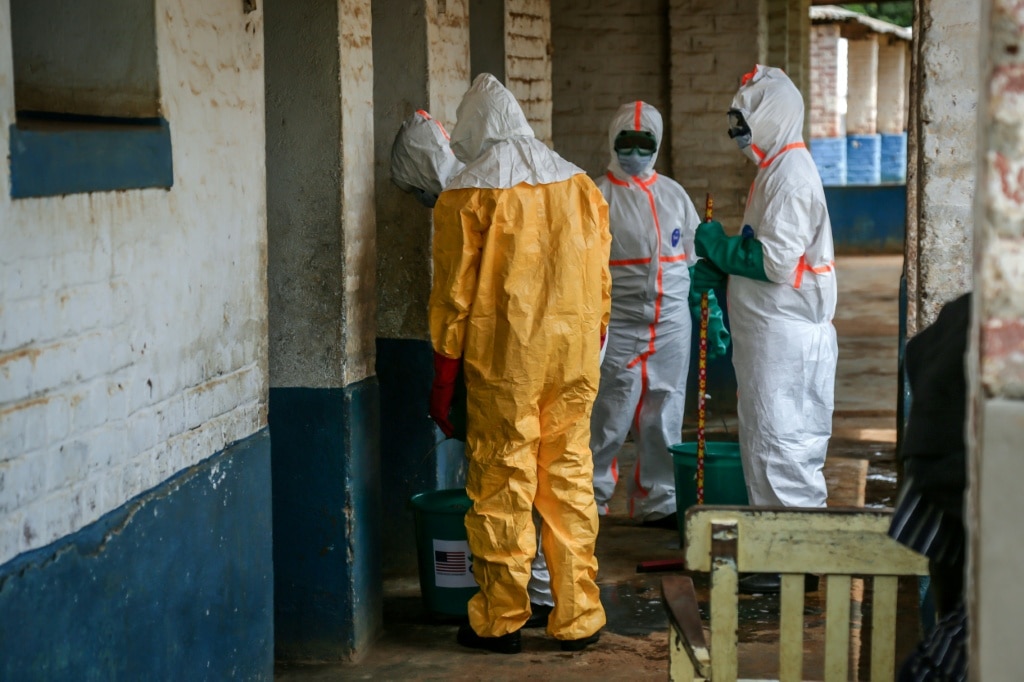
    For many ordinary Iranians, the ceasefire has brought a long-overdue sense of relief, even as deep uncertainty lingers. Thirty-four-year-old Niloufar, a Tehran resident who spent 40 days sheltering indoors to avoid airstrikes, says the announcement of a ceasefire still feels surreal. “When the ceasefire was announced, it felt unreal. Like something had lifted off my chest,” she said. “For the first time in 40 days, I was able to sleep peacefully.”

    Despite the pause, sporadic explosions continue to be reported, and a recent Israeli strike in Lebanon that killed dozens has already been labeled a violation of the ceasefire terms by Iranian officials. Many Iranians remain skeptical that the truce will hold, and distrust runs deep on all sides. Thirty-one-year-old Mehdi says he trusts neither the U.S. and Israeli governments nor his own country’s ruling establishment. “I don’t trust the US or Israel. Honestly, I don’t even trust them more than our own government,” he said. He notes that negotiations were already underway before the strikes began, leaving him wondering why this round of talks should be trusted more than past efforts. “We were negotiating, then suddenly they attacked,” he said. “What if they negotiate again and then strike even harder?”

    That sense of profound, widespread disillusionment defines the current moment for many opposition Iranians. Ali sums it up bluntly: “Before the war, we used to say things couldn’t get worse. Now we know they can. We thought war would solve everything. Now we know it’s not that simple.” He adds a final, sharp judgment: “And we learnt something else, too: Reza Pahlavi is a stupid and ineffective politician who shows little real concern for the lives of those of us still living inside Iran.”

  • Venezuela police tear-gas protesters demanding salary rises

    Venezuela police tear-gas protesters demanding salary rises

    On April 8, 2026, a massive demonstration of roughly 2,000 Venezuelans marched through central Caracas toward the Miraflores Presidential Palace, demanding urgent increases to stagnant baseline salaries and pensions – only to be dispersed with tear gas by riot police, according to on-the-ground reporting from Agence France-Presse.

    The confrontation marks the largest show of public dissent against interim President Delcy Rodriguez’s administration since August 2024, reflecting a sharp shift in public mood: after years of violent crackdowns on opposition under ousted former president Nicolas Maduro that deterred public protest, Venezuelans have begun to openly voice their long-simmering frustrations with economic hardship. As protesters pushed forward within kilometers of the presidential compound, helmeted riot police officers equipped with shields moved to block their path, triggering scattered clashes between demonstrators and law enforcement.

    Rodriguez, who took power in January 2026 after Maduro was ousted and captured during a U.S. military raid, has already faced mounting criticism for failing to address Venezuela’s crippling cost-of-living crisis, which has left most working and retired citizens unable to cover basic needs. Just one day before the protest, Rodriguez addressed the nation on television to confirm a planned wage increase would take effect on May 1 – but she declined to reveal the size of the adjustment, a choice that further fueled public anger.

    Venezuela’s official monthly minimum wage has remained frozen at 130 bolivars, equivalent to just $0.27 USD, since 2022. This figure is roughly 330 times lower than the United Nations’ $90 per month (equaling $3 per day) extreme poverty threshold. Even public sector workers, who earn up to $150 per month when including state-mandated bonuses, still take home far less than the $645 per month that independent economic estimates calculate a Venezuelan family needs to cover basic food costs alone. The nation currently grapples with annual inflation exceeding 600%, eroding any limited purchasing power workers have managed to retain.

    Protesters emphasized that they are demanding increases to base salaries, not just adjustments to one-time or monthly bonuses – a workaround past administrations have repeatedly used to claim wage growth while leaving core pay stagnant. “Enough of this deception about salary increases. They want to pass off our government bonuses as a salary. That is completely unheard of,” 71-year-old retiree Mauricio Ramos told AFP, echoing the sentiment of many demonstrators.

    The interim administration has framed its cautious approach to wage hikes as a measure to avoid worsening already sky-high inflation, a policy shaped in large part by U.S. influence. After the January raid, former vice president Rodriguez was endorsed by then-U.S. President Donald Trump to take power, in exchange for granting Washington expanded access to Venezuela’s vast oil reserves. Since taking office, she has followed through on commitments to roll back repressive policies from the Maduro era, granting amnesty to political prisoners and rolling out a series of market-aligned economic reforms. But these changes have yet to deliver tangible relief to everyday Venezuelans, who continue to struggle to afford essential goods including food and medicine.

    Thursday’s demonstration signals a new wave of public assertiveness in Venezuelan politics. After the brutal crackdown on anti-Maduro protests that followed his disputed 2024 presidential election victory, public protests had largely ceased for nearly two years as citizens feared state repression. With the previous regime removed, that fear has begun to fade, allowing long-unmet demands for economic justice to move back into the public sphere.

  • KMT chairwoman emphasizes cross-strait peace creates new opportunities

    KMT chairwoman emphasizes cross-strait peace creates new opportunities

    During an official visit to Shanghai on April 8, 2026, Chinese Kuomintang (KMT) Chairwoman Cheng Li-wun reiterated that sustained cross-Strait peace is the foundation for unlocking unprecedented mutual opportunities for both sides of the Taiwan Strait, while emphasizing the natural complementary strengths that the Chinese mainland and Taiwan bring to collaborative development.

    Speaking to reporters during a tour of Shanghai’s Yangshan Deep Water Port — a world-leading hub for intelligent, sustainable maritime shipping that launched commercial operations in 2005 — Cheng stressed that unnecessary tensions and miscommunication must not be allowed to hinder the shared progress of people on both sides. “We should not let unnecessary conflicts and misunderstandings limit our potential for progress and development,” Cheng stated, noting that both the mainland and Taiwan have built globally leading advantages across distinct industries and sectors, and that coordinated collaboration would allow both sides to maximize these strengths.

    Yangshan Deep Water Port, which Cheng visited as part of her delegation’s itinerary, stands as a landmark example of the Chinese mainland’s advances in modern shipping infrastructure: it currently operates a global network of more than 350 international trade routes, connecting to major port hubs across over 200 countries and regions worldwide.

    After observing firsthand the mainland’s cutting-edge progress in high-growth sectors including drone logistics, the low-altitude economy, and artificial intelligence, Cheng pointed out that deeper cross-Strait collaboration could open new pathways forward for Taiwan’s service industries and traditional manufacturing sectors, which currently face major growth bottlenecks. She underlined that technological innovation can drive much-needed industrial upgrading for Taiwan, while also noting that Taiwan has accumulated valuable practical experience in integrating technology with ecological conservation — expertise that could offer key insights for the mainland, particularly in the field of water resource management.

    Looking ahead to future cross-Strait engagement, Cheng framed dialogue, reconciliation, people-to-people exchange and mutually beneficial cooperation as initiatives that can deliver transformative gains, even amid longstanding tensions. “Reconciliation, dialogue, exchange, and cooperation across the Taiwan Strait can bloom into the most beautiful flowers in the least likely places,” she said.

    A day earlier, at a youth cultural exchange event held on Shanghai’s Yangpu Riverside, Cheng met with multiple young Taiwanese residents who shared their stories of pursuing higher education and launching new businesses on the mainland. She praised the group for their courage and celebrated their successful achievements in establishing roots across the Strait.

    Cheng also shared a personal goal for her 2026 visit: that strengthened engagement would deliver the lasting gift of peace to people across Taiwan. “Peace makes everything people hope for possible,” she said, adding that stable, peaceful relations in the Taiwan Strait would not only benefit people on both sides, but also create new opportunities for the global community at large.

  • Global South forum hails China’s role

    Global South forum hails China’s role

    Against a backdrop of growing global debate over the future of the international order, development and policy experts from across the Global South have identified China’s emergence on the global stage as a transformative force reshaping modern development trajectories and cross-border cooperation frameworks.

    These analysts agree that China’s decades-long domestic transformation, paired with its deepening engagement with developing economies, has become a central reference point in global conversations about alternative growth paths and much-needed reform to global governance systems.

    Donald Ramotar, former president of Guyana, noted that China’s development success stems from its ability to calibrate national policies to shifting global conditions while never losing sight of core domestic priorities. “They had a very intense discussion on appreciating their position in the world and the balance of forces that existed,” Ramotar explained, emphasizing that China successfully opened its economy while building an entirely new development model aligned with its own national needs.

    Ramotar added that China’s foreign policy has consistently centered on cooperation and reciprocal benefit, especially when partnering with low- and middle-income nations facing structural development barriers. “This advanced position of a win-win foreign policy has helped them link with many countries,” he said, pointing out that these equitable development partnerships have allowed participating nations to expand domestic productive capacity and deepen mutually beneficial trade ties.

    Ramotar also highlighted China’s leadership in major multilateral initiatives, including the recent expansion of the BRICS bloc and cross-continental connectivity projects under the Belt and Road Initiative. He argued these efforts reflect a clear understanding that shared economic progress is inextricably linked to global stability: “Peace and economic development are directly connected.” China’s approach to engagement with the Global South, he added, is rooted in the core belief that shared growth drives long-term global stability and expands trade opportunities for all parties: “They believed that if they help other countries to develop and trade with them, both sides will advance.”

    Siphamandla Zondi, a professor of politics and international relations at the University of Johannesburg, framed China’s long-range global outlook as a product of its unbroken history as a civilizational state, a foundation that enables multi-generational policy planning and a unique approach to international engagement that differs dramatically from the short-term, transactional approach common in many Western capitals.

    “The Chinese are able to draw from a pretty intact history … and are able to plan on the basis of the next 300 years,” Zondi said, drawing a contrast with the lasting colonial disruption that has shaped long-term planning capacity in many African and Global South nations.

    Zondi explained that China’s focus on inter-civilizational dialogue and collective self-reliance defines its cooperation with developing countries, adding: “They think about cooperation, coexistence and solidarity as a way of life.” For China, he noted, development remains the central organizing principle of global power and international influence, rejecting the zero-sum logic that has defined traditional great power competition.

    Addressing the common framing of China’s rise in Western geopolitical analysis as a zero-sum challenge to existing power structures, Zondi noted that Beijing’s strategy focuses far more on enabling global production networks than on exercising coercive dominance. China’s unbroken civilizational roots allow it to approach global affairs from a long-term, cross-cultural perspective rather than a narrow, purely nation-state-centric outlook, he added, with intercultural dialogue positioned as a core tool for managing competition and addressing shared transnational challenges.

    “They see the possibility for dialogue among civilizations as a way to resolve competition and challenges,” Zondi said. “The Chinese rise is not about rising to domination but rising to the center as an enabler.”

    Helga Zepp-LaRouche, founder and leader of the Germany-based Schiller Institute, echoed these observations, noting that China’s proposals for global governance offer a much-needed alternative framework for the international community, one built on inclusion, sovereign equality, and mutual respect for all nations.

    “It must not be always one winner and one loser; you can have win-win cooperation where everybody wins,” she said, pointing out that development-focused partnerships are growing increasingly attractive to nations working to close crippling infrastructure gaps and reduce widespread poverty.

    Zepp-LaRouche also linked China’s remarkable domestic economic transformation to consistent, long-term investment in education, technological innovation, and cultural development — all of which she identified as core drivers of productivity and sustained long-term growth. She added that China’s policy trajectory reflects long-range development planning that transcends short-term geopolitical rivalry, a approach that has been reinforced by widespread public confidence in national long-term planning and progress.

    “I have come to the conclusion that the Chinese people are not only content with their government, but they are extremely optimistic,” Zepp-LaRouche said, noting that most Chinese citizens expect future generations to enjoy even higher living standards.

    Looking forward, the experts agreed that as the global system shifts toward a more diversified distribution of economic and political power, nations across the Global South will increasingly seek out practical, equitable development partnerships and new cooperative global platforms. China’s decades of development experience and cooperative policy approach, they concluded, will remain a critical reference point for global discussions about how to navigate this ongoing global transition.

  • Watch: How the US Navy will help recover the Artemis II crew

    Watch: How the US Navy will help recover the Artemis II crew

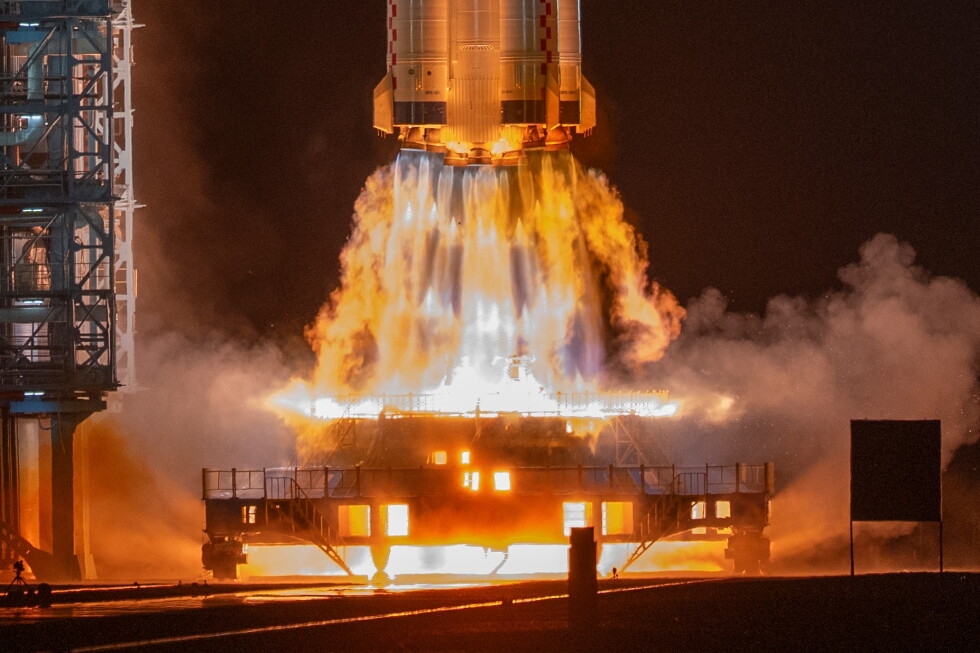
    As NASA’s Artemis program inches closer to its first crewed lunar mission in over half a century, the United States Navy has stepped into a critical role, finalizing preparations to retrieve the Orion spacecraft and its four-person crew after their splashdown in the Pacific Ocean. The mission, which will mark humanity’s first return to crewed deep space exploration since the Apollo program concluded in 1972, is scheduled to conclude with a controlled splashdown off the coast of San Diego on April 10.

  • New strategy aims to boost Kenyan tea

    New strategy aims to boost Kenyan tea

    Kenya, the world’s top exporter of black tea, is breaking new ground across the African continent with an ambitious initiative: the launch of the first low-carbon tea certification system, designed to future-proof one of the nation’s most critical agricultural exports and carve out a new premium niche in the competitive global tea market.

    The initiative, which is still in its early pilot phase, targets carbon emission reductions across every link of the tea value chain — from smallholder farm cultivation and leaf transportation to factory processing and final packaging. Crucially, the project aims to deliver these sustainability gains without compromising the high productivity and signature quality that have cemented Kenya’s global market leadership.

    Piloting the program are two factories based in Nyamira County, western Kenya — a longstanding region celebrated for its abundant, high-quality tea yields: the established Nyansiongo Tea Factory and its newer satellite facility, Matunwa Tea Factory. Both operations are rolling out a suite of climate-friendly production practices to earn low-carbon accreditation, positioning them to capture growing demand from global buyers that now prioritize verifiable sustainability credentials when sourcing agricultural goods.

    The three-party triangular cooperation project is backed by funding from China and Germany, and implemented by the United Nations Food and Agriculture Organization (FAO) in partnership with the Kenya Tea Development Agency (KTDA). Its core mission is to support the Kenyan tea sector’s transition to low-carbon production by scaling energy-efficient technologies and普及 climate-smart agricultural methods.

    Low-carbon production, defined as practices that cut carbon dioxide emissions — the primary greenhouse gas driving human-caused climate change — addresses an urgent threat to Kenya’s tea industry already facing tangible climate impacts. “Global warming is already affecting tea-growing areas. If we do not take action now, the area under tea could reduce significantly,” explained Daniel Machara, chief executive officer of both Nyansiongo and Matunwa factories. Machara noted that rising average temperatures and increasingly erratic rainfall patterns have gradually shrunk the land suitable for tea cultivation, dragging down yields and pushing up production costs.

    Collectively, Kenyan tea supports more than 6 million livelihoods across the country and generates billions of dollars in annual foreign exchange revenue, making this low-carbon transition both an economic and climate priority. Machara framed the certification push as a long-term strategic move that could not only secure the industry’s future but also double Kenya’s tea export earnings over time. The two pilot factories aim to complete their low-carbon certification within the next two years.

    Nyansiongo, commissioned in 1974, has grown into one of western Kenya’s leading tea processors, scaling annual green leaf intake from roughly 8 million kilograms in its early years to 25 million kilograms today, a growth Machara credits to ongoing operational efficiency gains, improved farm management and early adoption of new technologies. The facility produces widely traded CTC black tea, while Matunwa — launched in 2021 — specializes in orthodox tea, a premium product growing in popularity across high-end global markets.

    Shifting consumer demand for verifiably sustainable products has driven the factories’ adoption of a series of innovative eco-friendly changes. One of the most impactful adjustments has been the introduction of co-firing boilers, which replace 80 percent of traditional firewood with biomass briquettes manufactured from compressed agricultural waste and sawmill byproducts. Production manager Erick Moturi noted this shift has cut pressure on local forests by an estimated 80 percent, with plans to reduce firewood reliance even further to prevent environmental degradation.

    Additional decarbonization measures are already in the pipeline: starting in December 2026, the factories will begin phasing out their aging fleet of diesel-powered green tea leaf transport vehicles, replacing them with electric models as diesel units reach the end of their seven-year operational lifecycle. The transition draws on technical expertise from China, which has already built extensive experience integrating electric vehicles into tea production supply chains. The factories have also installed an on-site effluent treatment system that recycles wastewater from processing lines for reuse, cutting pollution discharge, and implemented proactive machinery maintenance to improve energy efficiency and reduce emissions.

    Farmers supplying the factories are also receiving training and support to adapt their growing practices. Factory management encourages adoption of drought-resistant, climate-smart tea varieties, trains smallholders to minimize chemical input use, and supports income diversification by encouraging farmers to interplant tea with alternative crops such as avocados to build resilience against climate shocks.

    China and Germany are providing free technical support and skills training for both farmers and factory staff, equipping them to adopt climate-smart technologies and practices that boost climate resilience and ultimately increase household incomes. Machara noted that producers are eager to participate in exchange programs to gain on-the-ground experience in China and Germany, bringing back advanced sustainable agricultural expertise to benefit Kenyan smallholders and processors alike.

    Monica Orwochi, chairperson of Nyansiongo Tea Factory’s management board, emphasized that the project aligns productivity growth with environmental stewardship: “We educate farmers on proper farming methods so they can produce high-quality tea while protecting the planet.”

  • UK says Russia ran submarine operation over cables and pipelines

    UK says Russia ran submarine operation over cables and pipelines

    Tensions between the UK and Russia have escalated sharply after UK Defence Secretary John Healey publicly accused three Russian submarines of carrying out a covert surveillance operation targeting critical undersea cables and pipelines in waters north of the British mainland. In a press briefing held at Downing Street on Thursday, Healey said the incident represented a deliberate act of malign activity by Moscow, and confirmed British naval and air assets had been immediately deployed to intercept and monitor the Russian contingent, with no evidence of damage to UK Atlantic infrastructure found to date.

    Addressing Russian President Vladimir Putin directly, Healey issued a stark public warning: “We see you. We see your activity over our cables and our pipelines, and you should know that any attempt to damage them will not be tolerated and will have serious consequences.” According to Healey’s account, Russia deployed one Akula-class attack submarine as a diversionary distraction, while two special-purpose spy submarines operated by Russia’s secretive GUGI deep-sea research directorate conducted surveillance of the undersea infrastructure networks. He added that the diversionary attack submarine returned to Russian waters after being tracked by British forces, while the two GUGI vessels remain in the wider region.

    Moscow has rejected the UK’s allegations outright. In a report carried by Russia’s state-owned news agency Tass, the Russian Embassy in London stated that Russia “is not threatening underwater infrastructure, which is truly critical to the UK. We are not using aggressive rhetoric in this regard.”

    To counter the Russian operation, the Royal Navy deployed the Type 23 frigate HMS St Albans, Royal Fleet Auxiliary fuel tanker RFA Tidespring, and anti-submarine Merlin helicopters to continuously track all three submarines. Norway also joined the monitoring effort, though Healey did not disclose details of contributions from other allied nations. “Our armed forces left [Russia] in no doubt that they were being monitored, that their movements were not covert, as President Putin planned, and that their attempted secret operation had been exposed,” Healey told reporters. “We watched them, we were able to track them, we dropped sonar buoys to demonstrate to them that we were monitoring every hour of their operation.”

    Little known to the general public compared to Russia’s iconic KGB or domestic intelligence service FSB, GUGI – the Main Directorate for Deep Sea Research – is one of Moscow’s most formidable and secretive military units. Officially part of the Russian Navy, the agency operates with such a high level of classification that it reports directly to Russia’s defence minister and the president. Headquartered in St. Petersburg on the Baltic coast, GUGI maintains a key Arctic deployment base at Olenya Bay on the Kola Peninsula, which also hosts Russia’s strategic nuclear submarine fleet.

    GUGI’s core mandate covers deep-water underwater surveillance, reconnaissance and sabotage operations. Global military analysts note that only the United States matches GUGI’s unique capability to operate advanced military hardware at extreme ocean depths. This hardware includes small uncrewed mini-submarines, which experts believe were the assets deployed by Russia during the recent operation near UK cable routes. These mini-subs can be launched covertly under cover of darkness from larger mother ships such as the Russian spy vessel Yantar, which has previously been spotted operating near critical infrastructure in the English Channel. The systems have the technical capability to cut undersea cables, or tap into them to intercept data traffic passing through the networks.

    This type of activity falls under the framework of modern hybrid warfare: hostile acts carried out by a state that fall short of a clearly attributable, lethal attack that would trigger a formal declaration of war. UK and NATO military planners have long raised concerns that widespread covert Russian surveillance of Western undersea infrastructure is intended to give Moscow a strategic advantage in the event of a future open conflict. If hostilities were to break out, the Kremlin could activate pre-positioned devices to sever or disrupt critical data and energy networks, causing widespread disruption to civilian and military operations.

    Healey argued that Putin chose to launch the operation at a moment when global attention is heavily focused on the ongoing war in the Middle East, and reaffirmed that Russia remains the “primary threat to UK security.” While acknowledging the persistent threat Moscow poses, Healey expressed confidence in UK forces’ ability to track future Russian activity and expose any covert operations that threaten British national interests.

    Prime Minister Keir Starmer echoed Healey’s stance, saying he was “determined to protect the British people from paying the price for Putin’s aggression in their household bills.” He added that the UK would not “shy away from taking action and exposing Russia’s destabilising activity that seeks to test our resolve.”

    The incident has quickly become a point of domestic political debate in the UK. Opposition Conservative Party leader Kemi Badenoch called on Starmer to immediately publish the government’s long-promised Defence Investment Plan, posting on social media platform X that “We stand shoulder to shoulder on Russian aggression. To be strong abroad we need clarity on spending at home. Without the investment plan, Starmer’s strategy is just words.” Reform UK leader Nigel Farage, referencing recent reports of Russian navy vessels escorting Russian oil tankers through the English Channel, claimed “If we have learnt one thing in the last month, it is that we do not have an operational Royal Navy at any level in this country and that for us needs to be a massive wake-up call.”

    Some retired defence officials have also questioned the UK’s ability to counter persistent Russian threats. John Foreman, a retired Royal Navy officer and former UK defence attaché to Moscow, told the BBC that “the rhetoric is a bit tired by now. We’re well aware of the Russian threat. The question is whether we’re doing something about it.” Foreman pointed to the recent decommissioning of two Royal Fleet Auxiliary tankers, RFA Wave Knight and RFA Wave Ruler, as evidence that the UK is “hard-pressed” to maintain maritime security. “I don’t know how we are going to dig ourselves out of this nadir of maritime security that we have found ourselves in,” he said.

    Undersea cables and pipelines are among the most critical but overlooked pieces of global infrastructure. More than 600 undersea cables crisscross the world’s oceans spanning more than 870,000 miles, carrying global internet traffic and electrical power between continents, with landing points often located in remote, lightly protected coastal areas. For the UK specifically, the infrastructure is existential to daily life: roughly 60 undersea cables come ashore at multiple points along the UK coast, with concentrations in East Anglia and South West England, and more than 90% of the country’s daily internet traffic relies on these systems. The UK also depends on North Sea undersea gas pipelines, most notably the 724-mile Langeled pipeline connecting Norway to the UK, for 77% of its gas imports.

    Military analysts say the challenge of countering GUGI operations is significant. Dr Sidharth Kaushal, a sea power researcher at the Royal United Services Institute (RUSI), explained that GUGI’s deep-diving mini-submarines are purpose-built to avoid detection, with engineered reductions in acoustic noise, water displacement and magnetic signature that make them “complex targets” for anti-submarine forces. Kaushal told BBC Verify that it is likely the Russian submarines were still able to gather useful intelligence on the UK’s cable network despite continuous monitoring by the Royal Navy, noting that the UK’s ability to restrict such operations during peacetime is “limited” – particularly as military monitoring activity in international waters is legally permitted. Even so, Kaushal added that the British operation was not without benefit: by tracking the Russian deployment, the Royal Navy likely gathered valuable intelligence on Russian tactics, network mapping priorities, and may even have been able to recover any surveillance equipment left behind by the Russian units.

    This incident aligns with a broader pattern of Russian hybrid activity that the BBC first exposed in 2025, when it reported that Russia was waging a campaign of hybrid warfare against the UK and Western Europe intended to pressure Western nations to end their military support for Ukraine.

  • Impressed by Shanghai’s vitality, KMT leader urges cross-Strait goodwill, mutual trust

    Impressed by Shanghai’s vitality, KMT leader urges cross-Strait goodwill, mutual trust

    In a landmark visit to one of China’s most dynamic economic hubs, Chinese Kuomintang (KMT) chairwoman Cheng Li-wun has publicly called for deepened goodwill and mutual trust between the two sides of the Taiwan Strait, after being struck by the mainland’s vibrant innovation and rapid development during a four-day tour that included stops in Shanghai.\n\nCheng, who leads a cross-party KMT delegation, traveled to Shanghai from Nanjing via high-speed rail on Wednesday afternoon, kicking off her itinerary with a visit to the headquarters of on-demand service giant Meituan. During the stop, the delegation tested the platform’s cutting-edge drone food delivery system, getting an up-close look at the mainland’s fast-evolving smart economy ecosystem. Cheng herself even placed an order for milk tea through the Meituan app, experiencing the convenience of the mainland’s digital services firsthand.\n\nThe following morning, Cheng and her delegation continued their tour with two key stops: Yangshan Port, one of the world’s busiest automated container terminals that serves as a linchpin of global trade, and the Shanghai Aircraft Design and Research Institute, a division of the Commercial Aircraft Corporation of China (COMAC) — the state-owned manufacturer behind China’s domestically developed C919 narrow-body passenger jet. These visits allowed the delegation to observe the mainland’s major progress in advanced manufacturing, infrastructure development, and technological self-reliance.\n\nIn a press briefing after the tours, Cheng praised Shanghai for its remarkable prosperity and urban charm, while reflecting on the city’s turbulent wartime history and its extraordinary transformation into a global economic center over the past decades. “Peace is the most powerful force,” Cheng told reporters. “Given enough time, peace can make anything possible.”\n\nShe emphasized that people across the Taiwan Strait should remain steadfast in their commitment to cross-Strait peaceful development, laying the groundwork for greater mutual understanding and people-to-people exchanges through sustained goodwill. After completing her engagements in Shanghai, the KMT delegation departed for Beijing on Thursday afternoon to continue their cross-Strait exchange itinerary.

  • The Lebanese civilians killed in Israel’s massacre

    The Lebanese civilians killed in Israel’s massacre

    Just days after former U.S. President Donald Trump announced a two-week ceasefire agreement between the United States and Iran, the Middle East has been plunged back into deadly violence after Israel carried out the most destructive and lethal wave of air strikes on Lebanon since the start of 2024.

    The scale of the attack was unprecedented in recent months: Israeli military officials confirmed they launched 100 separate strikes across Lebanon in just a 10-minute window on Wednesday, with the heaviest bombardments concentrated in the capital Beirut. Lebanon’s Ministry of Public Health confirmed Thursday that the assault left at least 200 people dead and more than 1,000 others injured, marking the single deadliest day of Israeli bombing in Lebanon in months.

    Israeli officials have repeated longstanding justifications for the large-scale attack, stating that all operations target only members of the armed group Hezbollah, with the stated goal of weakening the organization’s capacity to launch cross-border attacks against Israeli territory. In a video address released Thursday, Israeli Defense Minister Israel Katz claimed that “more than 200 terrorists were eliminated yesterday” in the strikes.

    However, on-the-ground reporting and multiple verified accounts confirm that a large share of the fatalities are innocent civilians, including children caught in the sudden, widespread attacks. Multiple reports document that children being collected from schools by their parents were among those killed in the surprise bombardments. Outlets including Middle East Eye have begun profiling the civilian victims of the assault, whose lives spanned multiple professions and communities across the country.

    Among the dead is Ghada Dayekh, a veteran radio presenter and reporter with the independent Sawt Al-Farah radio station. Dayekh had worked at the outlet for nearly four decades, reporting from southern Lebanon continuously since the 1980s, before an Israeli strike destroyed her home in the southern city of Sour.

    Another journalist, Suzanne Khalil, a presenter and reporter for Al-Manar TV, was killed in an Israeli strike targeting the village of Kaifoun in Lebanon’s Mount Lebanon Governorate. Khatoon Salma Kershet, a respected poet and researcher who was an alumna of the American University of Beirut, was killed alongside her husband Mohammed in a strike on the Tallet al-Khayyat neighborhood of central Beirut; her death was officially confirmed by the university.

    Two young people affiliated with Al-Karama High School in Choueifat — student Talin Ahmed Hamzi and recent graduate Yasmin Hussein Allam — were also killed in the strikes, the school announced via its official Instagram page. In Kaifoun, Rana Hessaiki Mlaheb was killed while on a mission to purchase medication for people displaced by previous Israeli air raids, local outlet L’Orient Today confirmed.

    In one of the most devastating individual losses reported, physician Nadim Shamseddine was killed alongside his wife Asrar and their three young children when a strike hit their family home in Kaifoun — a space where Shamseddine also saw patients for his medical work. In Beirut, Ola Attar became the latest member of her family to die from violence: her husband Hamad Attar was killed in the catastrophic 2020 Beirut Port explosion, and she leaves behind two orphaned children.

    The deadly attack comes at a moment of fragile hope for de-escalation in the region, following Trump’s ceasefire announcement between Washington and Tehran just 48 hours before the strikes. It has already drawn widespread condemnation from humanitarian groups, who have called attention to the rising civilian death toll and the growing displacement of Lebanese communities amid escalating cross-border violence.

  • Iranian press review: Principlists call for the continuation of war

    Iranian press review: Principlists call for the continuation of war

    After 40 consecutive days of cross-border strikes targeting Iranian industrial facilities, public infrastructure, educational institutions and healthcare facilities carried out by the United States and Israel, a landmark two-week ceasefire agreement reached between Tehran and Washington has triggered sharp internal backlash from Iran’s influential hardline principlist factions, who are demanding military operations continue rather than grant the opposing coalition time to recover. The deal, announced Tuesday, pauses all offensive military actions for 14 days to pave the way for a new round of diplomatic negotiations, but it has already faced fierce pushback from leading conservative voices in the country.

    Hossein Shariatmadari, the high-profile conservative figure and editor-in-chief of hardline Iranian newspaper Kayhan, publicly condemned the ceasefire decision Wednesday, arguing it runs directly counter to core Iranian national interests. In his remarks, he argued that any pause in hostilities combined with new diplomatic talks would only serve as an unexpected opportunity for the US and Israel to regroup their military forces and replenish their supplies, calling the agreement nothing short of a strategic gift to Iran’s enemies. Shariatmadari also cast deep doubt on Washington’s willingness to honor any future deal, noting that even if the United States formally agrees to Iran’s negotiating terms, there is no enforceable guarantee the US side will follow through on its commitments. Pointing to on-the-ground conditions across battlefields, he added that current military indicators show the US-Israeli coalition is already overstretched and exhausted, while Iran holds a stronger strategic position. “We should not let the enemy go when it is out of breath,” Shariatmadari emphasized.

    The divide over the ceasefire has spilled onto Iranian social media as well, where a pre-ceasefire interview clip broadcast on Iranian state television has gone viral across Persian-language platforms. In the footage, Mehdi Khanalizadeh, an international affairs analyst with close ties to principlist groups, criticized an earlier proposal for a 45-day ceasefire, warning that any extended pause would allow enemies that have pledged to target critical Iranian energy infrastructure to rebuild their military capacity and carry out devastating planned attacks.

    While Iranian authorities have imposed restrictions on media coverage of the full scope of damage caused by the 40-day US-Israeli bombing campaign, independent domestic outlets have continued to publish on-the-ground accounts from rescue and relief teams working at strike sites. Reformist daily Shargh published harrowing firsthand testimony from rescue workers responding to air raids across the country. A Tehran-based rescue worker told the outlet the scenes of destruction were so devastating that he could not bring himself to describe the carnage to his own family, describing one particularly traumatic incident where only a partial human remains were recovered from rubble, leaving rescue workers to grapple with what the victim’s family would be forced to bury.

    Another rescue worker described the grim recovery effort at a Minab primary school targeted in a so-called “double-tap” strike—an attack tactic where a second strike hits the same site shortly after the first, targeting first responders. That strike killed at least 165 people, the vast majority of whom were young schoolgirls between the ages of 7 and 12. Recounting the effort to recover a female teacher’s remains from the rubble, the worker told Shargh the body was so badly damaged it was unrecognizable, missing its head. “Everything was so unreal,” he said, adding that workers wrapped the remains in a classroom curtain pulled from the wreckage. The newspaper noted that the scale of destruction the team encountered was beyond what could be easily imagined.

    Beyond internal Iranian political divisions, the conflict has sparked a high-profile embarrassment for pro-war Iranian exiles. A group of pro-monarchist Iranian exiles based in Canada, who were traveling to Washington DC to attend a pro-war rally supporting US military action against Iran, were denied entry to the United States by border officials. The group are supporters of Reza Pahlavi, the son of Iran’s deposed Shah, who is openly backed by Israel and has repeatedly publicly supported US-led military strikes against the current Iranian government.

    Canada-based pro-Pahlavi Persian-language magazine Kiosk first reported that US border agents turned away the majority of the traveling group on March 28. “Nine out of 12 buses carrying Iranians from Toronto, along with a large number of private cars heading to Washington, were unable to obtain entry permits. After hours of delays, they were turned back,” the magazine reported. The incident has triggered widespread mockery on Persian-language social media, where many pro-war exiles openly refer to US President Donald Trump as “Uncle Trump” for his anti-Iran government policies. One user wrote, “Their Uncle Trump did not receive them, despite all the praise they have given him during this time.” Another commenter added, “Those who betray their country for others will always be disgraced. A mercenary is a mercenary everywhere in the world.”

    In a separate development, 320 Iranian political activists, civil society organizers, human rights advocates and university professors have signed an open letter to the Norwegian Nobel Committee calling on the body to revoke the moral validity of the 2003 Nobel Peace Prize awarded to Iranian activist Shirin Ebadi. The signatories argue that Ebadi, a prominent Iranian lawyer and writer, has openly supported military action against Iran in recent years, including a pre-war letter she sent to President Trump explicitly calling for US military intervention in the country.

    “The Nobel Foundation has always emphasised efforts for peace, human rights, coexistence and the rejection of violence,” the open letter reads. “However, in recent years, Shirin Ebadi’s positions have been in clear contradiction with these values.” The letter draws a parallel between Ebadi and former Nobel laureate Aung San Suu Kyi of Myanmar, who faced widespread international condemnation for her silence on the campaign of ethnic violence against the Rohingya minority. The letter notes that Ebadi herself previously criticized Aung San Suu Kyi for failing to condemn what she called ethnic cleansing, and urged the Myanmar leader to uphold the core values of the Nobel Peace Prize. “Today, Ebadi finds herself in a similar position, one that is even more concerning,” the letter concludes.