作者: admin

  • ‘Wasn’t a good idea to bring my walker out’: Cameron Munster insists he’s fine for the Origin opener after training scare

    ‘Wasn’t a good idea to bring my walker out’: Cameron Munster insists he’s fine for the Origin opener after training scare

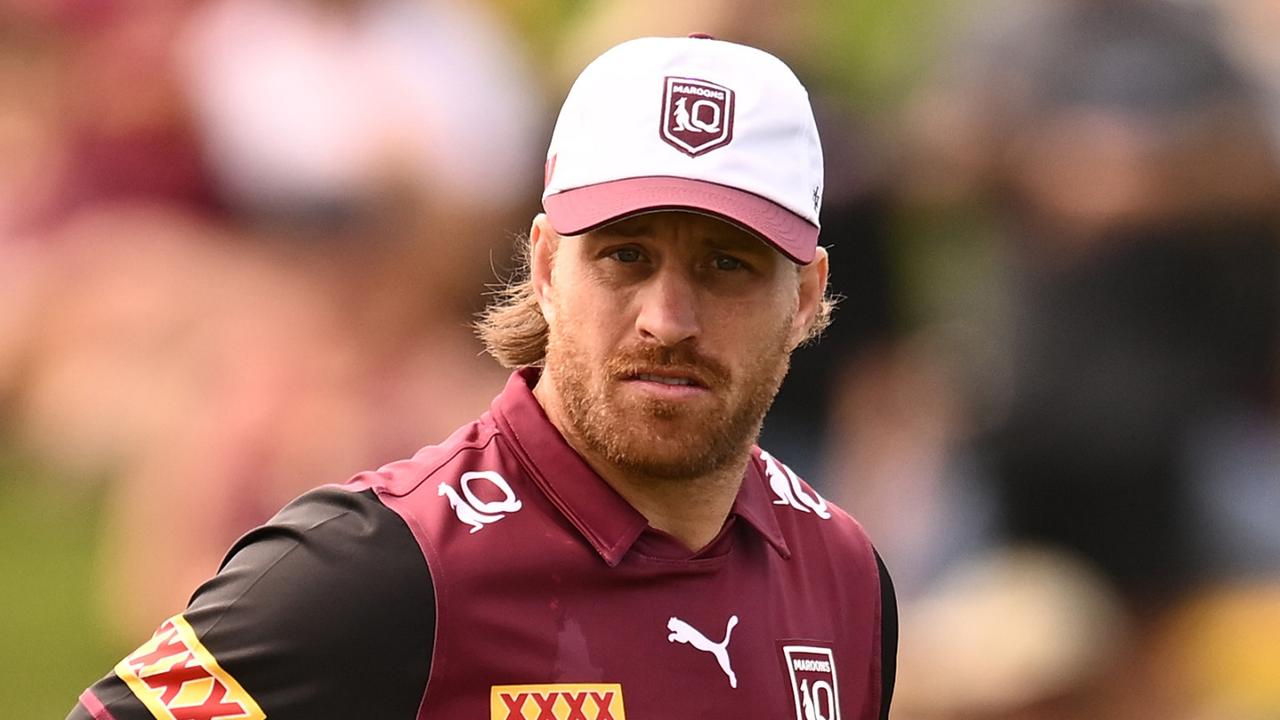
    As the Queensland Maroons prepare for the opening clash of the 2026 State of Origin series in Sydney this Wednesday, veteran captain and five-eighth Cameron Munster has moved quickly to ease growing injury concerns after his no-show at Sunday’s mandatory field training session. The 31-year-old Maroons legend addressed the media on Monday, injecting a dose of humor into the speculation surrounding his absence before clarifying that the decision to sit out was a pre-planned management call, not a sign of a serious underlying injury.

    Joking that he had left his walking frame at home on the advice of the team’s media manager, Munster brushed off playful teasing from his teammates and explained that the rest day was tailored to his changing needs as an older athlete. “I’m just not used to doing back-to-back days anymore. When you get to this point in your career, you understand your body better than anyone,” he told reporters. “I had a bit of general tightness lingering, and we all agreed that going out to train would have left me sore today. Taking the day off was just the smart call to make sure I’m right for Wednesday.”

    Speculation around Munster’s status ran high after his absence, with some suggesting the scratch from the session was either a hidden injury or a deliberate mind games tactic against their upcoming opponents. But Munster categorically denied both theories, noting that the combination of a packed fan day and heavy media schedule on Sunday also made an extra rest day more practical. “If it was up to me, I would have been out there training,” he said. “I pushed the physios and coaches to let me participate, but they reminded me that the captain’s run on Tuesday is more important for getting my body ready for game night. I’d rather skip one session now than be sore and limited when we run out onto the field.”

    The stakes for Munster’s fitness are higher than ever for this series. Queensland has already lost incumbent halfback Tom Dearden to injury, and former veteran playmaker Daly Cherry-Evans is no longer part of the squad. That leaves Munster tasked with leading the team and partnering rookie playmaker Sam Walker in the halves, making his experience and form critical to the Maroons’ opening game chances.

    The experienced playmaker has endured a slow start to his 2026 NRL club season with the Melbourne Storm, with his performance stats well down on his usual career standards. But he has turned a corner in recent weeks, notching three tries and three try assists across his past two outings, including a dominant Magic Round win over the Parramatta Eels that signaled his return to form. Munster attributed his recent turnaround to a shift in approach, leaning into a more attacking style of play that aligns with the current direction of rugby league.

    “Early in the season, I wasn’t playing anywhere near the standard I set for myself over the years,” he admitted. “I changed things up the past couple of weeks, deciding I wanted to play more attacking rugby instead of just sticking to safe, high-percentage plays, and that’s made all the difference.” The shift comes as the sport has moved toward higher-scoring contests under new officiating frameworks, a change Munster was initially critical of. He revealed just a few weeks ago he had stopped watching much rugby league because he felt the new style strayed from the sport’s traditional identity, but he has since adjusted his approach to stay competitive.

    “How the game will be officiated for Origin is still a bit of a mystery,” Munster said. “We can’t waste energy worrying about what the referees will or won’t call. All we can do is stay disciplined across every part of the game, no matter how they call six-agains or any other decision. You can’t stand around complaining about it — you just have to adapt or you’ll get left behind.”

    With high-scoring games becoming the norm across the NRL in 2026, Munster said the Maroons are well positioned to thrive in the current attacking landscape, pointing to the combination of Kalyn Ponga and rookie partner Sam Walker as perfectly suited to the open style of play expected on Wednesday night. Ezra Mam has been named as standby replacement if Munster is ultimately ruled out, but the captain’s confident assessment on Monday has all but confirmed he will take his place in the starting line-up for the series opener.
  • Oil prices slide on hopes of US-Iran peace deal

    Oil prices slide on hopes of US-Iran peace deal

    Hopes for a potential breakthrough peace agreement that could de-escalate conflict between the United States, Iran and Israel have sent shockwaves through global commodity and equity markets on Monday, driving a sharp drop in international oil prices and lifting major Asian stock benchmarks to multi-month or record highs.

    The latest round of diplomatic optimism traces back to comments made by former U.S. President Donald Trump over the weekend. In Saturday social media remarks, Trump confirmed that a framework deal with Tehran had been “largely negotiated,” adding that final details would be unveiled in the near future. He noted he had held constructive conversations with the leaders of major Gulf energy exporters including Saudi Arabia, the United Arab Emirates and Qatar to discuss a draft peace memorandum of understanding, and also said a separate call with Israeli Prime Minister Benjamin Netanyahu had “gone very well.”

    By Sunday, however, Trump struck a more cautious tone on the Truth Social platform, urging his negotiating team not to rush finalizing an agreement. “Both sides must take their time and get it right. There can be no mistakes!” he wrote. While Trump has reaffirmed that any finalized deal would “absolutely” prevent Iran from developing a nuclear weapon and would result in the reopening of the Strait of Hormuz – the critical global energy shipping choke point – he has yet to release full specifics of the proposed agreement.

    Iranian officials have offered a measured take on the ongoing talks. Foreign ministry spokesman Esmaeil Baqaei told Iranian state television that U.S. and Iranian negotiating positions have grown closer over the past week, but cautioned that convergence does not guarantee final deals on core sticking points, and hit out at Washington for what he described as “contradictory statements” from U.S. officials.

    The Strait of Hormuz, the narrow waterway connecting the Gulf oil exporting region to global markets, has been effectively closed to commercial shipping since the outbreak of hostilities on February 28. Roughly 20% of the world’s daily oil and liquefied natural gas supplies transit through the route, making its closure a major disruption to global energy security. The conflict escalated in early March, when Iran threatened to target any commercial vessels attempting to pass through the strait in retaliation for U.S. and Israeli military strikes on Iranian targets; Tehran subsequently launched retaliatory attacks on Israel and U.S.-aligned Gulf states including Saudi Arabia, Bahrain and the United Arab Emirates. A ceasefire took effect in early April, and Washington and Tehran have been holding negotiations on a long-term peace deal ever since.

    Market reaction to the weekend diplomatic developments was swift on Monday Asian trading hours. Global benchmark Brent crude fell 5% to trade at $98.36 per barrel, while U.S. West Texas Intermediate crude dropped 5.3% to settle at $91.50 per barrel. Major equity markets rallied across the region: Japan’s Nikkei 225 index gained 2.5% to cross the 65,000 point threshold for the first time in history. Both Japan and South Korea, which rely heavily on Gulf energy imports, have faced disproportionate economic pressure from the closure of the strait and subsequent energy price spikes. U.K. and U.S. financial and energy markets were closed Monday for public holidays, so formal trading reaction to the news will not be seen until Tuesday.

    Energy analysts note that while the diplomatic breakthrough has delivered near-term relief to jittery energy markets, long-term supply risks remain elevated. “There is now some light at the end of the tunnel, which will bring some near term oil price relief,” said Saul Kavonic, head of energy research at MST Financial. “But even in the most optimistic scenario from here, oil markets will remain tight through 2027 given the time required to normalise oil flows through the Strait, repair damaged oil facilities, and rebuild global oil stocks that have seen record depletion since the war began.”

  • Andrew Abdo set for new role with rival sport after resigning from NRL

    Andrew Abdo set for new role with rival sport after resigning from NRL

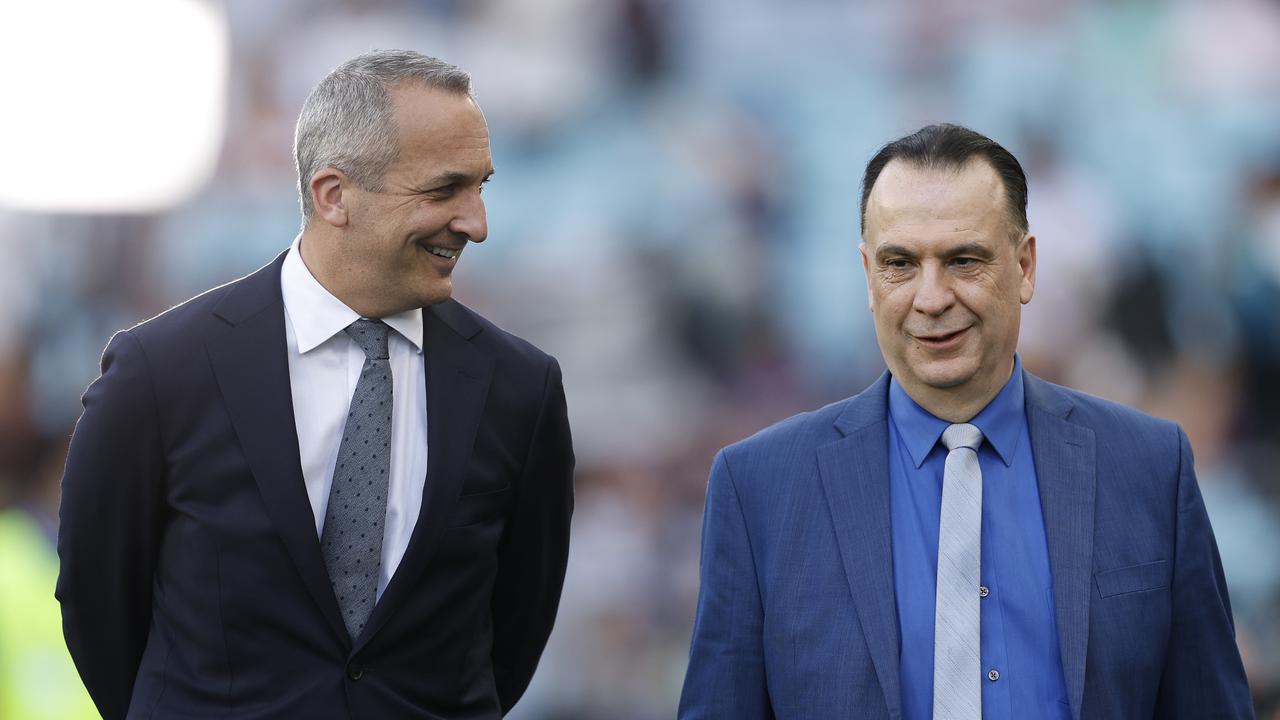
    Australia’s National Rugby League (NRL) has been thrown into unexpected upheaval just 24 hours before the opening match of its flagship State of Origin series, following breaking news that chief executive Andrew Abdo has stepped down abruptly to accept a senior leadership role at Tennis Australia.

    The bombshell development comes at a critical juncture for the NRL, as the governing body prepares to enter high-stakes negotiations for its next round of broadcast rights – the current media agreement is set to expire at the conclusion of the 2027 season, making a stable leadership transition a top priority for the commission.

    While the NRL has not issued an official confirmation of Abdo’s departure as of the latest update, multiple credible media reports have confirmed the resignation. Abdo took over the top executive role from predecessor Todd Greenberg in 2020, initially stepping in as interim CEO before earning a permanent appointment that September. His tenure will be remembered for steering the organisation through the unprecedented disruption of the global COVID-19 pandemic, a period that tested the resilience of every major professional sport.

    Per emerging reporting, Abdo is set to replace Craig Tiley, who has served as chief executive of Tennis Australia for nearly 15 years. In the wake of his departure, NRL Commission chair Peter V’landys is widely expected to step into the role of interim CEO while the organisation launches a search for a permanent successor. Speculation over the permanent role has already begun, with V’landys tipped as a potential candidate to take on a permanent executive chairman position, while South Sydney Rabbitohs chief executive Blake Solly has also been named as an early contender. NRL officials have indicated they will not rush the appointment process, prioritising finding the right candidate to build on Abdo’s work.

    During his four-year tenure, Abdo led the NRL to a series of landmark achievements, including delivering record-breaking annual revenue for the governing body. He also oversaw bold expansion efforts that pushed the code into new markets, headlined by the groundbreaking 2024 season opener held in Las Vegas to grow the sport’s international profile, as well as plans for new professional teams based in Perth, Western Australia, and Papua New Guinea. This story remains developing, with further updates expected from the NRL in the coming hours.

  • Turkey riot police use tear gas to take opposition party HQ

    Turkey riot police use tear gas to take opposition party HQ

    On a tense Sunday in Ankara, hundreds of Turkish riot police officers launched a dramatic incursion into the national headquarters of Turkey’s largest opposition bloc, the Republican People’s Party (CHP), deploying tear gas to break through barricades erected by defiant party members just days after a court ordered the removal of the party’s democratically elected leadership. The violent raid marks the latest escalation in a sustained crackdown on political opposition led by long-serving President Recep Tayyip Erdogan, intensifying fears over the erosion of democratic norms in Turkey ahead of the 2028 national elections.

  • China launches crewed space flight as part of Moon ambitions

    China launches crewed space flight as part of Moon ambitions

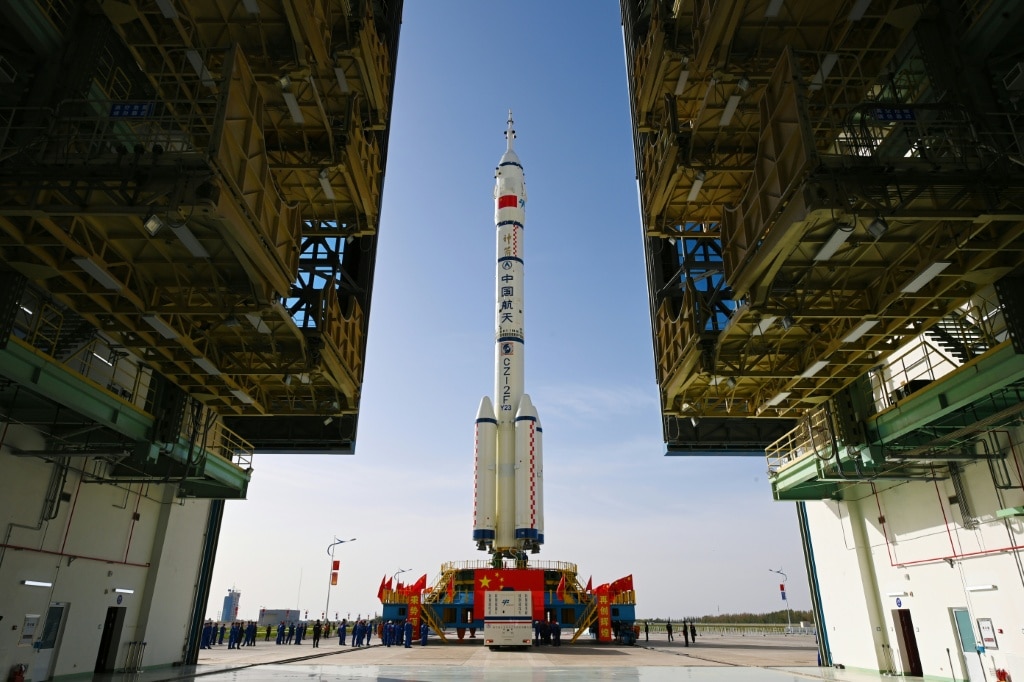
    China has successfully launched the Shenzhou-23 crewed spacecraft, marking another major milestone in its ambitious plan to land humans on the lunar surface by 2030, with the craft completing a smooth docking with the country’s Tiangong Space Station just hours after liftoff, according to official Chinese state media. This mission carries historic significance, as it includes the first ever astronaut from Hong Kong to travel to space, opening a new chapter in the region’s participation in China’s growing space exploration program.

    The Long March 2-F carrier rocket lifted off on schedule at 11:08 pm Beijing Time Sunday (1508 GMT) from the Jiuquan Satellite Launch Center located in China’s arid northwestern Gobi Desert. Footage broadcast by China’s state-run CCTV captured the powerful launch, with the rocket ascending through the night sky, engulfed in bright orange flames and thick plumes of smoke. Roughly 10 minutes after liftoff, the Shenzhou-23 spacecraft successfully separated from the rocket and entered its planned orbit, the China Manned Space Agency (CMSA) confirmed in a social media statement shortly after launch. “All three astronauts are in good physical condition, and the launch mission has been declared a complete success,” the agency added.

    Approximately 3.5 hours after entering orbit, the spacecraft completed an automated docking with the Tiangong Space Station, China’s permanent outpost in low-Earth orbit, state news agency Xinhua reported, citing CMSA updates. The three-member crew is led by 43-year-old Li Jiaying, a former Hong Kong police officer who makes history as the first Hong Kong-born astronaut to reach space. She is joined by two other crewmates: 39-year-old space engineer Zhu Yangzhu, and 39-year-old Zhang Zhiyuan, a former Chinese Air Force pilot who is making his first trip to space.

    In pre-launch ceremonies held at the launch center, crowds of attendees waved national flags and cheered as the three crew members saluted from the stage, accompanied by a ceremonial performance from a military band. Once settled aboard Tiangong, the crew will conduct a wide range of scientific experiments across multiple disciplines, including life sciences, materials science, fluid physics, and biomedical research.

    The centerpiece of the mission is a groundbreaking 12-month orbital stay for one crew member, a first for China’s manned space program that will generate critical data to support the country’s 2030 lunar landing goal. This long-duration mission is designed to study the physiological and psychological impacts of extended exposure to microgravity, a key area of research for any crewed deep space exploration effort, including future missions to Mars. CMSA has stated that the specific crew member selected for the full-year stay will be announced at a later date, based on the progress of the mission in its early phases.

    Richard de Grijs, an astrophysicist and professor at Australia’s Macquarie University, outlined the unique challenges that this mission will address. Extended stays in space carry well-documented health risks for humans, including bone density loss, muscle atrophy, increased radiation exposure, sleep disruption, and cumulative mental and physical fatigue, he explained. Beyond human health, the mission will also test the reliability of critical life support systems, including closed-loop water and air recycling technologies, as well as protocols for managing potential medical emergencies thousands of kilometers from Earth.

    De Grijs noted that the year-long mission represents a steady, deliberate step forward for China’s space program, building operational experience for long-term sustained occupation of the Tiangong Space Station and laying critical groundwork for future lunar and deep space exploration. “A 12-month orbital stay pushes both the program’s hardware and the astronauts themselves into a new operational domain, compared to the shorter six-month missions that have been standard for Shenzhou in earlier phases of the program,” he told Agence France-Presse. Prior to this mission, all crews rotating through Tiangong have served six-month tours of duty before being relieved by replacement crews.

    Shenzhou-23 is a core part of China’s timeline to put astronauts on the Moon before 2030, a goal that puts Beijing in a friendly global space race with the United States, which is pursuing its own return to the Moon through the NASA-led Artemis program. China is already moving forward with testing the next-generation hardware needed for lunar missions, with an uncrewed orbital test flight of the new Mengzhou spacecraft planned for 2026. The Mengzhou craft will replace the current Shenzhou fleet, and is designed specifically to carry Chinese astronauts to the Moon. Beijing also aims to complete the first phase of its International Lunar Research Station, a permanent manned outpost on the lunar surface, by 2035.

    Looking beyond its national program, China has plans to expand international collaboration in low-Earth orbit, with the first foreign astronaut – a Pakistani crew member – set to visit Tiangong by the end of 2024.

    Over the past three decades, China has rapidly expanded its space exploration program, investing tens of billions of dollars into the sector to close the gap with long-established space powers including the United States, Russia, and Europe. The country has already notched multiple historic space firsts: in 2019, it became the first nation in the world to land a robotic probe, Chang’e-4, on the far side of the Moon, a feat no other space program had achieved. In 2021, China successfully landed a robotic rover on the surface of Mars, cementing its status as a major player in deep space exploration.

    China’s development of an independent space station grew out of a political restriction: since 2011, the country has been excluded from participating in the U.S.-led International Space Station, after U.S. legislation banned NASA from any formal collaboration with Beijing. That restriction pushed China to pursue an entirely domestic space station program, which it completed with the construction of Tiangong in 2022.

  • Deadly Israeli strikes pound south, east Lebanon

    Deadly Israeli strikes pound south, east Lebanon

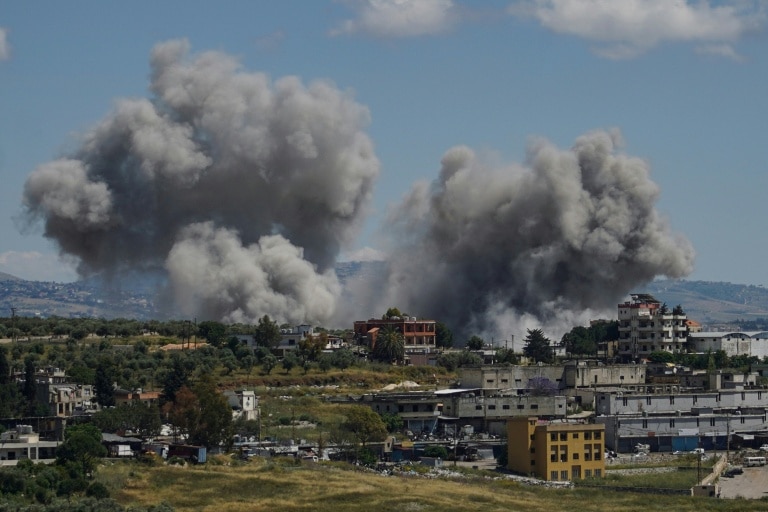
    Fresh waves of deadly Israeli airstrikes have hammered swathes of southern and eastern Lebanon on Sunday, shattering the relative calm of a weeks-old ceasefire and pushing already soaring casualty numbers higher even as Hezbollah’s leader voiced cautious optimism that a forthcoming US-Iran agreement could end the broader regional conflict engulfing the country.

    Lebanon’s Ministry of Public Health announced Sunday that the cumulative death toll from hostilities in the country since March 2 has climbed to 3,123. According to official updates, two people – including a paramedic with the Hezbollah-affiliated Islamic Health Committee – lost their lives in Sunday’s raids. The ministry also confirmed that a single Israeli strike on the southern Lebanese village of Sir al-Gharbiyeh a day earlier killed 11 people, among them six women and one young child, an incident officials have decried as a deliberate massacre.

    The ongoing military operations mark a clear continuation of Israeli hostilities despite a ceasefire that first took effect across Lebanon on April 17 and was recently extended for an additional several weeks. Israeli military officials maintain that all strikes target legitimate Hezbollah positions aligned against the country. The Iran-backed armed group, for its part, has not ceased its own cross-border and frontline attacks: it claimed more than 20 separate assaults against invading Israeli troops in southern Lebanon and other targets inside Israeli territory on Sunday alone, ranging from rocket barrages and drone attacks to artillery shelling.

    While Tehran has signaled that any framework for a de-escalation understanding with Washington to end the broader regional war would explicitly include Lebanon, Israeli Prime Minister Benjamin Netanyahu said Sunday that US President Donald Trump had reaffirmed unwavering support for Israel’s inherent right “to defend itself against threats on all fronts, including in Lebanon.” In an official statement, Israeli military Chief of Staff Lieutenant General Eyal Zamir emphasized that “we continue to strike Hezbollah across all dimensions… the security of civilians and the safety of our forces remain paramount.”

    Lebanon’s official National News Agency documented Israeli airstrikes hitting more than 30 separate locations across southern and eastern Lebanon on Sunday, with multiple strikes resulting in casualties. Agence France-Presse correspondents on the ground reported large plumes of black smoke rising from impacted areas across the region. The Israeli military has issued mandatory evacuation orders for more than a dozen villages in southern Lebanon and the eastern Bekaa Valley, a move that has displaced hundreds of additional civilian residents.

    Lebanon’s civil defense agency confirmed that its regional headquarters in the key southern city of Nabatieh was completely destroyed in an overnight Israeli strike. An AFP photographer witnessed civil defense teams sifting through rubble to recover usable equipment, and as of Sunday afternoon, the Israeli military had not responded to repeated requests for comment from AFP’s Jerusalem bureau on the attack on the facility.

    Speaking amid the renewed violence, Hezbollah Secretary General Naim Qassem expressed hope that a prospective agreement between the United States and Iran would be finalized “God willing” and that Lebanon and Hezbollah would be included in any full cessation of hostilities. However, Qassem doubled down on the group’s longstanding rejection of direct bilateral negotiations between the Lebanese government and Israel, a landmark process that launched recently under US mediation. The talks are scheduled to hold their fourth round in early June, with a preparatory meeting between military delegations set to take place at the Pentagon on May 29.

    “Abandon the direct negotiations… Don’t be with them and stab us in the back,” Qassem warned Lebanese authorities. He also ruled out any discussion of Hezbollah disarmament, stating bluntly that “disarmament is annihilation and we cannot accept it.” Adding that “we and our people face an existential threat,” Qassem stressed that “we will not bow, even if the whole world turns against us.”

    In response to Qassem’s remarks, US Secretary of State Marco Rubio accused Hezbollah of actively seeking to drag Lebanon “back into chaos.” The current cycle of regional violence was triggered in early March, when Hezbollah opened fire on Israel with a massive rocket barrage in retaliation for the US-Israeli airstrike that killed Iran’s supreme leader.

    Under the terms of the ceasefire published by the White House, Israel retains the right to carry out military operations against what it defines as “planned, imminent or ongoing attacks” originating from Lebanese territory. Israeli forces that have invaded southern Lebanon also continue to operate within an Israeli-declared “yellow line” that extends roughly 10 kilometers, or six miles, deep into Lebanese territory along the border.

  • Djokovic fights through tough Roland Garros opener, Zverev strolls

    Djokovic fights through tough Roland Garros opener, Zverev strolls

    The 2026 Roland Garros kicked off its main draw on Sunday with a dramatic opening night headlined by 39-year-old Novak Djokovic, who fought through a massive test to keep his historic chase of a 25th Grand Slam title alive, while Alexander Zverev cruised to a comfortable straight-set win amid a rash of early upsets for seeded and former champions.

    Djokovic entered this year’s Paris tournament with a golden opportunity to etch his name deeper into tennis history: a fourth Coupe des Mousquetaires title would cement him as the outright leader for the most major men’s singles titles in the sport, and top-ranked two-time defending champion Carlos Alcaraz’s injury withdrawal cleared a major path to the crown. It had been two and a half years since the Serb lifted his last Grand Slam trophy at the 2023 US Open, and a shoulder injury had sidelined him for almost the entire 2026 clay court swing heading into Paris, making his opening match even more high-stakes.

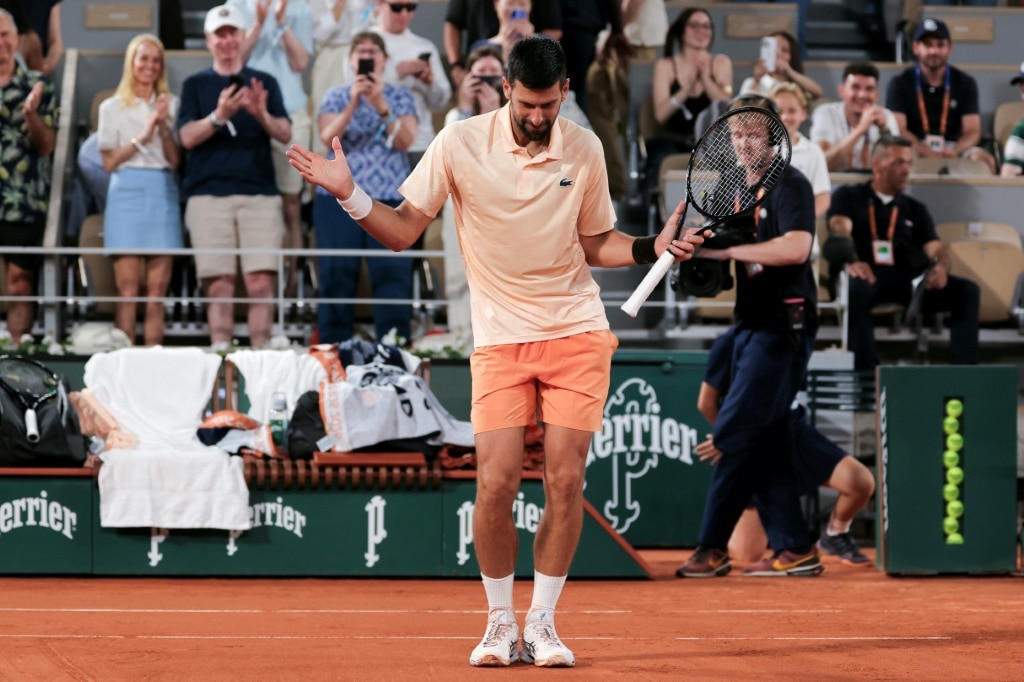
    Facing 2.01-meter French big server Giovanni Mpetshi Perricard in the night session on Court Philippe Chatrier, Djokovic found his historic dream on the brink of an early end. Buoyed by a raucous home crowd, Mpetshi Perricard took the opening set 7-5, and his precise, blistering serve left Djokovic with almost no return opportunities in the early going. But drawing on decades of Grand Slam experience, Djokovic dug in, eventually broke through the Frenchman’s serve resistance, and rallied to seal a 5-7, 7-5, 6-1, 6-4 victory after just under three hours on court. The win marked Djokovic’s first clay court victory of 2026 and stretched his record to 82 career Grand Slam main draw appearances.

    “It was very challenging, obviously mentally,” Djokovic told reporters after the match. “First set, zero chance on him serving. It’s one of the most tremendous serves in terms of precision and speed that I have ever faced in my career. Obviously, the crowd gets into it and you feel the pressure even more. All in all, it was a good match to be part of. Three hours, just what the doctor ordered at age 39.” Djokovic will advance to face another French player, Valentin Royer, in the second round, after Royer defeated Bolivian qualifier Hugo Dellien.

    Earlier in the day, played out under scorching 30-plus degree Celsius heat, German second seed Alexander Zverev earned a far more straightforward opening win, beating France’s Benjamin Bonzi 6-3, 6-4, 6-2. The only small hiccup in Zverev’s polished performance came when he dropped a break of serve in the second set, but he quickly reclaimed control to close out the straight-sets win. “It was always nice to start with a straight-sets win,” Zverev said, with the high temperatures making the shorter match a welcome result. He will next face Czech player Tomas Machac, who defeated Belgium’s Zizou Bergs in straight sets to advance.

    Other early winners on opening day included Russia’s Karen Khachanov, 26th seed Jakub Mensik of the Czech Republic, 19-year-old Brazilian prospect Joao Fonseca, 11th seed Belinda Bencic of Switzerland, and Russian eighth seed teen Mirra Andreeva, all of whom claimed straight-set opening round wins.

    The day was not short of upsets, however. American seventh seed Taylor Fritz was ousted in four sets by unseeded compatriot Nishesh Basavareddy, ranked 148th in the world, marking another early Roland Garros exit for the top seed. 2021 French Open champion Barbora Krejcikova was also eliminated, falling to American 26th seed Hailey Baptiste in three sets. Former Grand Slam champions Emma Raducanu and Sofia Kenin also bowed out in the opening round.

    In the day’s most poignant story, Ukrainian 15th seed Marta Kostyuk extended her clay court winning streak to 12 matches with a comfortable 6-2, 6-3 win over Oksana Selekhmeteva, but revealed after the match that her parents’ home in Kyiv had narrowly escaped destruction that morning, when a Russian missile landed just 100 meters from the property during a large-scale bombardment of the Ukrainian capital. “This morning, 100 metres from my parents’ house, a missile fell,” Kostyuk said. “All my thoughts and all my heart was to the people of Ukraine today. My biggest example are Ukrainian people today.”

  • AFL 2026: West Coast young gun Josh Lindsay sees sharp improvement in emerging Eagles

    AFL 2026: West Coast young gun Josh Lindsay sees sharp improvement in emerging Eagles

    In a tense Australian Football League clash at the packed Melbourne Cricket Ground on Saturday, West Coast Eagles’ young breakout defender Josh Lindsay has framed a narrow 10-point loss to Collingwood as a critical stepping stone for his young team’s long-term development, arguing that every hard-fought outing is building the foundation for future success.

    The match marked a major milestone for Collingwood veteran Scott Pendlebury, and the Magpies looked set to deliver a blowout celebration early in the third quarter when they stretched their lead out to 29 points, seemingly on track to secure a comfortable win. But West Coast refused to fold, mounting a steady comeback that pulled the Eagles within three points late in the fourth quarter thanks to a major score from Jobe Shanahan. Collingwood’s Dan McStay and Nick Daicos ultimately slammed the door on the comeback, kicking late decisive goals to secure the 10-point win and preserve Pendlebury’s milestone celebration.

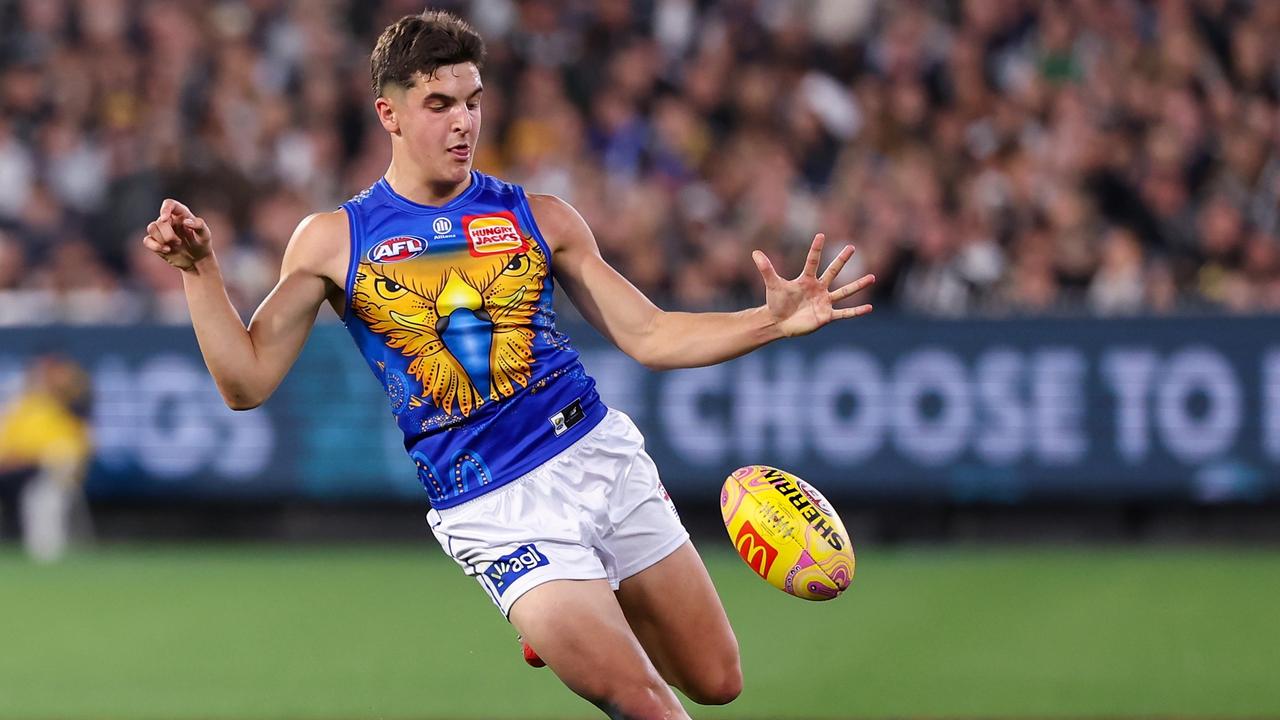
    Despite leaving the MCG without four points, Lindsay, who earned an AFL Rising Star nomination earlier this season, said the four-quarter competitive showing proved how far the rebuilding Eagles have come week-to-week. “We’re probably a bit stiff not to get the result there, but I think our footy is building every week. We’re only getting better from here,” the 10-game veteran explained. “I think it’s just getting more games and experience. The more footy you play, you learn. If you can continue on playing footy, I’ve played 10 games so far and I’ve learned so much. Playing footy together is how I think we’re going to really build.”

    The left-footed half-back has quickly emerged as one of West Coast’s most reliable ball handlers and elite kickers in his short senior career, a skill he attributes to a mix of natural instinct and intentional off-hours practice. “I think some of it comes natural but I work super hard on it,” Lindsay said. “Whether that’s before or after training, the more reps I can do the better I am going to get. I definitely say it’s hard work.”

    While speculation could eventually see the young talent pushed further up the ground into the midfield, Lindsay said he is perfectly content honing his craft in his current half-back role alongside experienced leaders Liam Duggan and Liam Baker for now. “I love my role across half back, the boys give me such good confidence,” he said. “Whether down the track I do venture into the midfield, time will tell, but I am loving down back at the moment.”

  • Surf photographer attacked in water by ‘shark or sea lion’

    Surf photographer attacked in water by ‘shark or sea lion’

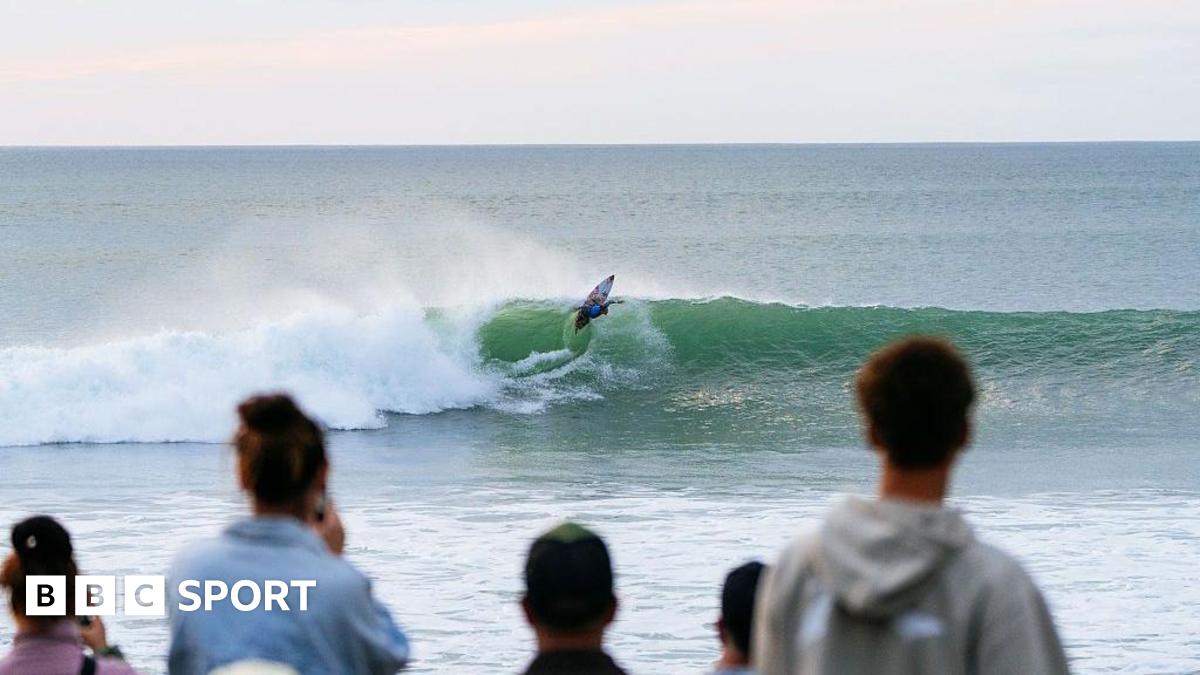
    The final day of the World Surf League (WSL) New Zealand Pro competition faced an unexpected and frightening suspension on Monday, after a marine animal attacked a photographer working in the waters off Raglan, on New Zealand’s North Island. Organizers have yet to confirm whether the aggressor was a shark or a sea lion, but the incident sent shockwaves through the event and forced an immediate pause to the men’s semi-final round. At the time of the attack, elite Brazilian surfers Yago Dora and Italo Ferreira were mid-competition, and both competitors witnessed the sudden incident unfold. WSL officials immediately activated a “code red” emergency protocol, halting all on-water activity while rapid-response medical teams rushed to the scene to assist the injured photographer. The victim has been identified as Ed Sloane, an Australian water photographer who has become a familiar figure on the WSL circuit. Renato Hickel, WSL Vice President of Tours and Competition, confirmed in an interview during the league’s live broadcast that Sloane suffered small puncture wounds from the attack, and was immediately transported to a local hospital via ambulance for further treatment. “We activate code red whenever there is a marine life attack on a competitor or event staff, and this time it was our beloved water photographer,” Hickel told broadcast viewers. “Thank God he is in good spirits, he is doing as well as can be expected after what happened.” Hickel added that while investigators have not formally confirmed the animal’s identity, the on-scene treating doctor leaned toward the conclusion that the attack came from a sea lion rather than a shark. He also noted that the two competing surfers, who saw the splash and the attack unfold from the water, were left deeply shaken by the incident, which reinforced organizers’ decision to pause the event immediately. After the attack, Sloane released a brief statement through WSL to share his condition and thank response teams for their quick action. “I am doing okay, I’ve had bites to my left foot and am getting medical attention,” Sloane said. “I love this place and can’t wait to watch an epic Finals Day. Cheering for everyone for a great finish to the event.” After a several-hour pause to assess safety and deploy additional protective measures, WSL organizers resumed the competition. New safety protocols added for the remainder of the event include extra jet skis positioned for rapid response, and a dedicated drone spotter to continuously monitor the water for any potential marine threats. As of the conclusion of the event’s restart, the exact species of the attacking creature remains unconfirmed. The WSL holds its annual competitive season between April and December each year, traveling to iconic surf destinations across the globe to crown its annual champions.

  • Morocco wants tourists to visit Western Sahara. Some say it’s tightening its control

    Morocco wants tourists to visit Western Sahara. Some say it’s tightening its control

    A low-cost promotional email from Irish carrier Ryanair, advertising cheap €30 return flights from Madrid to the coastal Saharan city of Dakhla as a “Moroccan adventure”, has pulled back the curtain on a growing controversy at the intersection of global tourism and a 50-year-old unresolved territorial dispute. As the $35 ticket price and a flood of new accommodation options from budget hostels to luxury retreats draw growing numbers of international tourists to the region, the labeling of Dakhla and other Western Sahara destinations as part of Morocco has ignited fierce debate over international law, corporate responsibility, and the sovereignty of the Sahrawi people.

    Western Sahara, classified by the United Nations as a non-self-governing territory, has been mired in conflict since Spanish colonial withdrawal in 1976. Morocco promptly claimed the resource-rich territory as its own “southern provinces”, launching an armed conflict against the indigenous Sahrawi independence movement, the Polisario Front. A 1991 UN-brokered ceasefire established a framework for a binding referendum on self-determination, but the vote has never been held. Today, Morocco occupies and administers roughly 80% of the territory, while the Polisario Front controls a small eastern sliver and continues to advocate for full independence.

    Tourism to the Morocco-controlled portion of Western Sahara has surged in recent years, official data from Morocco’s Ministry of Tourism shows. Visitor numbers have jumped more than 50% over the past seven years, rising from 490,297 in 2019 to 743,133 in 2025. This rapid growth has been driven heavily by expanded air access: alongside Morocco’s national carrier Royal Air Maroc, major European airlines including Ryanair, Transavia France, and Binter Canarias now operate direct routes to the territory from European hubs. Most of these carriers, including Ryanair and Transavia France, explicitly list Western Sahara destinations as part of Morocco in their marketing and booking platforms. Only Binter Canarias breaks from this approach, correctly labeling the territory as Western Sahara. Transavia France has stated it only operates routes in line with official authorizations it has received, while Ryanair has declined to comment on the controversy.

    Tourists who have traveled to the region note the tourism sector is still in its early stages. Tom Ruck, a 29-year-old British traveler who flew to Dakhla with Ryanair, reported that dozens of new resort developments remain largely empty, with only a small trickle of family holidaymakers visiting so far. Ruck added that he received a Moroccan entry stamp in his passport, and Moroccan flags are displayed universally across the city, reflecting Rabat’s de facto control of the area.

    The practice of labeling Western Sahara as part of Morocco has drawn sharp criticism from human rights campaigners, legal experts, and the Polisario Front, who argue that it normalizes and legitimizes what they view as Morocco’s illegal occupation in violation of international law. Erik Hagen, a spokesperson for advocacy group Western Sahara Resource Watch, warned that mislabeling the territory distorts public understanding of its status and raises critical questions about corporate due diligence in occupied, politically sensitive regions. Major international travel booking platforms, including Expedia, Booking.com, and Trivago, have also been drawn into the row: all three currently list hotels in Western Sahara as located in Morocco. Booking.com says it adds general disclaimers for disputed regions and advises travelers to check official government travel advisories, while Expedia has declined to comment and Trivago has not yet issued a statement.

    Andrea Maria Pelliconi, an expert in international human rights law at the University of Southampton, argues that airlines and booking platforms have a clear legal obligation to distinguish Western Sahara’s disputed status from sovereign Moroccan territory. She warns that companies that fail to make this distinction could face potential litigation on multiple fronts, including violations of international law and the Sahrawi people’s inherent right to self-determination, as well as breaches of EU consumer protection and fair competition rules.

    Pressure from advocacy groups has already yielded some shifts in industry practice: last year, home-sharing platform Airbnb changed its policy and stopped labeling Western Sahara listings as part of Morocco.

    For the Polisario Front, the growing tourism push is a deliberate strategy by Morocco to cement its claim to the territory through a fait accompli, while leaving most tourists uninformed of the underlying dispute. Sidi Breika, the Polisario Front’s representative to the UK and Ireland, emphasized that all economic and tourism projects in the illegally occupied territory violate the Sahrawi people’s inalienable right to self-determination, a right explicitly recognized by the United Nations. Breika added that the movement is monitoring Ryanair’s activities closely and is actively considering legal action against the carrier.

    Recent diplomatic developments have tilted in Morocco’s favor: in October 2024, the UN Security Council voted to prioritize Morocco’s proposal for an autonomous status for Western Sahara as a path forward, while extending the mandate of the UN peacekeeping mission in the region for another year. The push for the resolution was led by the United States, which first formally recognized Morocco’s claim to Western Sahara in 2020 under the Trump administration, as part of a deal that saw Morocco normalize relations with Israel. Despite this shift, the formal international legal position still requires a mutually agreed political solution to the dispute under UN supervision, and the Polisario Front has repeatedly rejected Morocco’s autonomy proposal.

    Breika stressed that the Sahrawi people’s position remains unwavering: investments in tourism and other economic projects can never replace the Sahrawi people’s right to freely determine their own future.