作者: admin

  • Sinner and Alcaraz wobble but advance to Monte Carlo quarter-finals

    Sinner and Alcaraz wobble but advance to Monte Carlo quarter-finals

    The 2025 Monte-Carlo Masters third round delivered high-stakes drama on Thursday, as two of men’s tennis’ leading title and ranking contenders overcame mid-match stumbles to secure their places in the quarter-finals. World No. 2 Jannik Sinner and defending champion Carlos Alcaraz are locked in a tight battle for the ATP’s top ranking this week, and both players mirrored each other’s rocky paths to the last eight, each dropping a set before grinding out three-set wins.

    Sinner, the Italian sensation who entered the clay-court Masters on a 18-match ATP Masters winning streak after back-to-back titles at Indian Wells and Miami, got off to a blistering start against Czech qualifier Tomas Machac, wrapping up the first set in just 26 minutes with a dominant 6-1 score. But the second set brought an unexpected shift in momentum, with Sinner admitting after the match that fatigue drained his energy levels after a high-intested start to the season. “I felt great before the match, but in the second set I struggled a bit with trying to find the right energy,” Sinner told reporters. “This can happen. I tried to push myself through which I’ve done.”

    Machac, ranked 45th in the world, kept firing aggressive, high-risk winner attempts, and despite squandering two set points on his own serve at 5-4, he dominated the subsequent tie-break 7-3 to force a deciding set. The result also ended Sinner’s 36-consecutive-set winning streak in Masters 1000-level events, an achievement that will now go down in the ATP record books. But the Italian kept his cool, and a brilliant break to love in the third game of the final set handed him the initiative. Sinner closed out the two-hour and one-minute victory with another break to love, extending his unbeaten Masters run to 19 matches.

    Up next for Sinner in the quarter-finals is sixth seed Felix Auger-Aliassime of Canada, who advanced far more easily after Norwegian opponent Casper Ruud retired from their match with the score at 7-5 2-2 in Auger-Aliassime’s favor. Looking ahead to his next match, Sinner said he would prioritize recovery to be ready for the next challenge.

    Alcaraz, the world No. 1 and defending Monte Carlo champion, followed an almost identical script to Sinner on the iconic center court. The Spaniard also raced through the opening set 6-1, saying he rated his hitting a perfect ten out of ten in the first frame. But just like Sinner, he lost his rhythm in the second set, committing 23 unforced errors and failing to convert a break point chance that would have put him in control. Etcheverry, a powerful clay-court specialist from Argentina, seized his opening, won the second set 6-4 to level the match.

    The top seed reclaimed control early in the deciding set, breaking Etcheverry in a marathon second game, but struggled with first serve consistency throughout the final set. He saved a critical break point to hold for 5-2, then needed three match points to close out the two-hour and 23-minute win, booking his place in the quarter-finals with a 6-1 4-6 6-3 scoreline. Alcaraz credited his opponent for forcing the battle, saying “Especially on clay he’s a great fighter. It’s been a great day, a great battle.”

    The defending champion will face Kazakhstan’s Alexander Bublik for the first time in his quarter-final match. Bublik, who defeated Jiri Lehecka 6-2 7-5 to reach the last eight, shares Alcaraz’s reputation for world-class drop shot skills, and the pair have even practiced together in the past. “It’s going to be fun to play,” Alcaraz said. “Let’s see who has the best drop shot.”

    The day also delivered a breakthrough story for young tennis talent: 19-year-old Joao Fonseca of Brazil became the youngest player to reach the Monte-Carlo Masters quarter-finals in two decades, after a confident 6-3 6-2 win over Italy’s Matteo Berrettini. The last player younger than Fonseca to reach this stage of the event was Rafael Nadal, who achieved the feat alongside Richard Gasquet back in 2005.

    “It is super special,” Fonseca said on court after his win. “Of course I want more. I am very confident and focused.” The teenager will face third seed Alexander Zverev of Germany in the quarter-finals, after Zverev beat Belgian qualifier Zizou Bergs 6-2 7-5. Zverev said he was looking forward to the matchup with the rising star. “He is a young upcoming talent and I think we will play each other a lot more in the next couple of years,” Zverev said.

    For Sinner, the week already guarantees a shot at history: he served a provisional ban last year that has left him with no ranking points to defend at this event, meaning he will overtake Alcaraz as the new world No. 1 if he outperforms the Spaniard in Monte Carlo. Both players have now advanced to the last eight, keeping the tense ranking battle alive heading into the weekend.

  • Orbán’s rural base is still behind the Hungarian leader ahead of Sunday’s pivotal vote

    Orbán’s rural base is still behind the Hungarian leader ahead of Sunday’s pivotal vote

    As Hungary prepares for one of its most consequential national elections in recent decades on Sunday, long-serving Prime Minister Viktor Orbán, who has held power for 16 years and secured four consecutive electoral victories, is facing the most significant challenge to his rule from center-right challenger Péter Magyar, leader of the Tisza party. Magyar has spent months crisscrossing Hungary’s rural regions in a bid to erode Orbán’s traditional stronghold of support, but many small-town and older voters remain unwavering in their loyalty to the incumbent.

    While most public opinion polls indicate a growing appetite for change among Hungarian voters, with a significant share having walked away from Orbán’s populist-nationalist Fidesz party, the prime minister retains deep popularity in the country’s smallest settlements and among older demographics. A recent Medián poll underscored this divide: among voters over 65, 47% back Fidesz, compared to just 29% who support Magyar’s Tisza. Support for Orbán also grows consistently as community size shrinks, cementing his rural advantage.

    In the small central Hungarian city of Cegléd, 63-year-old local entrepreneur István Vároczi, who runs a market stall selling handbags and other goods, says he dismisses all polls that forecast Orbán could lose. Having backed Orbán for nearly four decades, Vároczi plans to cast his vote for the incumbent once again. “I’ve never been disappointed in him. His biggest strength is that he didn’t forget where he came from — he always remained a normal person,” Vároczi said. “I’m sure he has flaws, but who doesn’t? Fidesz is the only party I trust, and his performance as prime minister is unparalleled.” Even with years of stagnant economic growth, Vároczi blames external pressures rather than government mismanagement, arguing the administration “is doing what it can for us, for the people.”

    Similar devotion can be found in Albertirsa, a central Hungarian town of roughly 14,000, where retired pipe fitter János Falajtár grew emotional when describing his support for Orbán. Fighting back tears, Falajtár insisted the prime minister has always “acted for the people.” “The decisions don’t matter. Common sense and heart matter,” he said. For Falajtár, Orbán’s greatest achievement has been advancing unity for Hungarians both within the country’s modern borders and across neighboring regions where millions of ethnic Hungarians reside, following the post-World War I territorial changes that stripped Hungary of nearly 72% of its original land. “We are now beginning to unite the Greater Hungary in Vojvodina, Slovakia, Transcarpathia, Transylvania, and even in Austria,” Falajtár said. “They only took a small piece from us, but it’s still ours.”

    Magyar and the Tisza party have seen their support surge in recent years, fueled by widespread public frustration over four years of economic stagnation. Much of that economic strain has been tied to the freezing of billions of euros in European Union development funding, which Brussels halted over ongoing concerns about rule of law breakdowns and systemic corruption under Orbán’s administration.

    But Orbán has worked aggressively to shore up support ahead of the vote with targeted pre-election policies tailored to his core base. Backed by Hungary’s continued reliance on discounted Russian oil and gas, the prime minister implemented a widely popular utility bill reduction program that keeps household energy costs far below European averages. He has also expanded pension benefits, adding a mandatory 13th month pension payment for retirees and rolling out a new 14th month supplement ahead of the election. Other popular initiatives for small communities include a nationwide program to renovate aging local pubs and historic churches, alongside the elimination of income tax for young mothers with multiple children.

    Beyond policy, Orbán’s enduring political charisma, his consistent focus on protecting Hungarian cultural traditions, and his unapologetic push to bolster national pride resonate more deeply with his base than any specific government program. On the campaign trail, Orbán has also framed the election as a battle for national survival, warning voters that a host of external threats — most notably the ongoing war in neighboring Ukraine, which he claims would drag Hungary into direct conflict and bankrupt the nation — await if he does not win a fifth term. For committed supporters like Vároczi and Falajtár, that message, paired with decades of demonstrated loyalty to their communities, is more than enough to secure their vote once again.

  • Nigerian army general and several soldiers killed during an assault on a base in the northeast

    Nigerian army general and several soldiers killed during an assault on a base in the northeast

    On an early Thursday morning in Nigeria’s restive northeastern Borno State, a brazen pre-dawn raid on a military installation in Benisheikh left a brigadier general and an unspecified number of service members dead, according to official Nigerian military and government statements. While the attack succeeded in killing senior military personnel, security forces successfully repelled the assault, army spokesperson Michael Onoja confirmed in an official release.

    Onoja labeled the attackers “terrorists,” the standard terminology the Nigerian military uses for members of the multiple Islamic insurgent groups that have waged a decade-long campaign of violence across the country’s northern regions. Nigeria’s President Bola Tinubu later released a formal statement identifying the fallen senior officer as Brigadier General Oseni Omoh Braimah, extending his deepest condolences to the families of all troops killed in the confrontation.

    In his remarks, Tinubu framed the deadly attack as a signal of growing insurgent desperation amid government military pressure. “The insurgents’ counterattack is a sign of desperation,” the president said. “I extend my condolences to the families of our gallant soldiers, led by Brigadier General Oseni Omoh Braimah, who made the ultimate sacrifice in the defense of our country today in Borno State. The government will never forget their sacrifices.”

    Tinubu reaffirmed the federal government’s unwavering commitment to eradicating extremist violence across the nation, adding: “Their sacrifices will not be in vain. Because of the courage and dedication of our troops on the front line, our resolve to defeat terrorism and all forms of violence across Nigeria is stronger than ever.”

    Echoing the president’s framing, Onoja emphasized that the raid came as insurgent groups have sustained heavy territorial and manpower losses from recent Nigerian military offensives, pushing them to carry out reckless, doomed attacks against fortified military outposts. “This attack is a clear indication of the desperation of terrorist elements who, having suffered significant losses in recent operations, continue to resort to futile and ill-fated offensives against well-defended military positions,” he said. “Regrettably, the encounter resulted in the loss of a few brave and gallant soldiers who paid the supreme price in the line of duty.”

    The attack unfolds against the backdrop of a years-long, deteriorating security crisis across northern Nigeria. Africa’s most populous nation has struggled to contain overlapping insurgencies and militia violence for more than a decade, with the northeast being the epicenter of the conflict. Two of the most prominent active groups are the original Boko Haram insurgent organization and its breakaway faction, the Islamic State West Africa Province (ISWAP), which pledged allegiance to the Islamic State. In the country’s northwest, bordering Niger, the IS-affiliated Lakurawa network also carries out regular attacks on security forces and civilian targets, alongside widespread ransom kidnappings.

    In recent years, the crisis has expanded further, with extremist groups from the neighboring Sahel region expanding their operations into Nigerian territory. Last year, Jama’at Nusrat al-Islam wal-Muslimin (JNIM), a major al-Qaeda-affiliated Sahel insurgent group, carried out its first claimed attack on Nigerian soil, marking a worrying expansion of regional insecurity.

    Earlier in 2024, the United States deployed 200 U.S. troops and surveillance drones to Nigeria as part of a new security cooperation agreement to support Nigerian counter-insurgency efforts. U.S. military officials stressed that American personnel would not participate in direct combat operations, retaining no operational command authority that remains fully in the hands of Nigerian security forces. The deployment was agreed on after former U.S. President Donald Trump raised public claims that Christian communities were being disproportionately targeted in Nigeria’s ongoing violence. Most recently, U.S. forces carried out targeted airstrikes against Islamic State positions in the region on December 26.

    According to United Nations data, the decade-long insurgency has claimed the lives of thousands of Nigerian civilians and security personnel. Many independent security analysts have repeatedly criticized the Nigerian federal government for failing to deploy sufficient resources and effective strategy to protect civilian populations and end the long-running conflict.

  • Greece moves to protect minors from social media with new ban for kids under 15

    Greece moves to protect minors from social media with new ban for kids under 15

    ATHENS, Greece – Greece has stepped into a growing pan-European push for minor online protection by becoming the latest European Union member state to announce draft legislation that would fully block access to social media platforms for all users aged 15 and younger. Greek Prime Minister Kyriakos Mitsotakis framed the national initiative as a deliberate pressure tactic to push the 27-nation bloc to adopt formal, unified age restrictions across all EU member states.

    The proposed rules will apply to all major social media services that allow users to create public or private profiles, engage in cross-user interaction, and share user-generated content – covering industry leaders including Meta-owned Facebook and Instagram, as well as ByteDance-owned TikTok.

    Once the bill is enacted into law, the obligation to enforce the restriction will fall directly on social media companies, which will be required to complete a full re-verification of the ages of all existing Greek users to remove anyone under the age of 15 from their platforms. Greek regulatory authorities note that the state will only play an oversight role: it will monitor platform compliance and only intervene when violations are reported. Reports of non-compliance will be forwarded either to the regulatory body in the country where the platform is headquartered or directly to the European Commission, the EU’s executive governing branch. Potential penalties for violators are steep, including maximum fines equal to 6% of a company’s annual global turnover, recurring daily fines until the platform comes into compliance, and even temporary or permanent restrictions on operations within Greek territory.

    In a pre-recorded video address posted to his own social media channels Wednesday, Mitsotakis spoke directly to young people to explain the rationale behind the ban. He acknowledged that excessive social media use has been linked to rising rates of stress, anxiety, and sleep disruption among adolescents, noting that both parents and young people have privately shared these concerns with him.

    “I know many young people will be angry with this decision. If I were your age, I would probably feel the same way too,” Mitsotakis said in the address. “But our job, my job, is not always to be popular. If something makes us more anxious, makes us feel worse about ourselves, less than we really are, then it is better to put an end to it.”

    The prime minister emphasized that the new law is not an attempt to cut young Greeks off from digital technology as a whole. Instead, he argued, the regulation targets the inherently addictive design of many major social platforms, whose business models are built on maximizing screen time – a model that he says robs young people of their childhood innocence and personal freedom.

    Under the current legislative timeline, the bill will be formally introduced to Greek parliament this summer, with enforcement scheduled to begin on January 1 of next year. Greece is not the first EU country to take this step: it follows similar legislation passed earlier this year by France that also imposes a national ban on social media use for children 15 and under.

    In a formal letter sent to European Commission President Ursula von der Leyen, Mitsotakis called for the establishment of a unified regulatory framework for minor online protection across the entire European Union by the end of 2024, to complement national-level protection measures that member states have already enacted. His proposal includes an EU-wide ban on social media access for users 15 and younger, a bloc-wide standardized age verification process that requires platforms to re-verify all user ages every two years, and the creation of a joint body made up of representatives from member states and the commission to review compliance incidents and impose penalties rapidly.

  • China launches cloud-seeding campaign to support spring farming

    China launches cloud-seeding campaign to support spring farming

    China has rolled out a large-scale national cloud-seeding initiative across its northern regions, designed to boost natural rainfall and snowfall, shore up water supplies for critical spring agricultural activities, and strengthen regional ecological restoration, according to official announcements from the China Meteorological Administration (CMA).

    Dubbed the “Spring Moistening” action, the targeted campaign kicked off in mid-March 2026 with three core priorities: easing persistent drought conditions across arid northern zones, ensuring adequate water access for spring plowing and crop planting, and accelerating recovery of fragile local ecosystems.

    To maximize operational efficiency, both national and provincial-level meteorological agencies have coordinated closely to run regular cross-regional weather modification operations spanning Northwest China and North China, two major grain-producing regions that frequently face spring water shortages. The campaign’s deployment plan allocates 19 specialized aircraft for aerial cloud-seeding work, alongside a vast network of ground-based cloud-seeding equipment. This integrated air-ground framework allows teams to launch multiple coordinated rounds of operations tailored to real-time drought severity and evolving weather patterns.

    As of early April 2026, the initiative has already completed three large-scale joint operations, covering a total affected area of approximately 979,300 square kilometers. CMA data estimates these operations have generated an additional 129 million metric tons of precipitation across the campaign’s working regions.

    The extra rainfall and snowfall have already delivered tangible, positive outcomes: they have supported the resumption of crop growth following winter dormancy, markedly improved soil moisture levels for planting, and significantly reduced the risk of destructive forest fires in drought-prone northern forest zones.

    The Spring Moistening campaign will remain active through April 30, and it forms a core component of a new year-round four-season weather modification program launched by the CMA in 2026 to upgrade China’s national weather modification infrastructure and service capacity. The full annual program is divided into four seasonal operations: Spring Moistening, Summer Safety, Autumn Harvest, and Winter Clearing, structured to deliver continuous, targeted weather modification support across the year for national priorities including disaster risk reduction, national food security, sustainable water resource management, and long-term ecological protection.

    Later in 2026, the CMA will roll out additional seasonal weather modification operations to other parts of the country, including Southwest China, Central China, and East China. These upcoming operations will address local needs such as mitigating severe weather damage, increasing water storage in key reservoirs, and clearing fog at busy coastal port areas to maintain smooth maritime traffic.

  • Israel’s Lebanon strikes threaten to blow up US-Iran ceasefire

    Israel’s Lebanon strikes threaten to blow up US-Iran ceasefire

    Hours after the United States brokered a tentative two-week ceasefire between Israel and Iran, the fragile agreement already faces imminent collapse, as competing interpretations of the deal’s terms and a devastating new wave of Israeli airstrikes have exposed deep cracks in the diplomatic process. In the 24 hours following the ceasefire announcement, hundreds of Lebanese civilians and combatants were killed in Israeli air raids across the country, a move that directly contradicts Iran’s core condition for the truce and raises urgent questions about whether the agreement can survive its first week.

    The core dispute at the heart of the emerging crisis centers on Lebanon’s status in the deal. Iran has repeatedly demanded that an end to all hostilities in Lebanon be a non-negotiable component of the ceasefire, while Israel maintains that the truce only applies to the main open conflict between the two states and excludes military operations against Lebanese militant group Hezbollah. This disagreement is no trivial miscommunication: it cuts to the heart of decades of proxy conflict that has defined Israeli-Iranian tensions across the Middle East.

    To understand why Lebanon has become the make-or-break issue for this ceasefire, it is necessary to unpack the long-running regional power dynamic that has shaped the conflict. Since the 1979 Iranian Revolution, the Iranian government has poured funding and weapons into anti-Israel armed movements across the region, building a network of proxy forces that include Hezbollah in Lebanon, Hamas in Gaza, and the Houthis in Yemen. For Israel, these proxies represent an ongoing existential security threat, positioned far closer to Israeli population centers than Iran’s formal military.

    Over the course of its modern history, Israel has prioritized establishing expanded security buffer zones along its borders to neutralize these threats. Following the collapse of Bashar al-Assad’s regime in Syria in 2024, Israeli forces quickly moved into a demilitarized buffer zone in southwest Syria, extending their security footprint. Since the October 7, 2023 attacks by Hamas, Israel has launched intensive military campaigns against both Hamas in Gaza and Hezbollah in Lebanon, treating the two proxy groups as equal threats to Israeli security. Though both groups have suffered heavy losses over the past two years of conflict, they remain operational, and the Netanyahu government has seized on the broader war with Iran to push for a permanent expanded buffer zone in southern Lebanon. Analysts widely agree that Netanyahu is highly unlikely to abandon this territorial and security goal, and it remains unclear whether U.S. President Donald Trump has any interest in or ability to pressure him to reverse course.

    The current crisis, analysts argue, was largely inevitable given the Trump administration’s approach to the conflict. The White House has shown no willingness to address the deep-rooted intractable issues that lie at the core of Middle Eastern tensions, instead prioritizing a quick exit from a conflict that has become deeply unpopular with U.S. voters. With Trump’s approval ratings sitting at record lows, the administration has rushed to frame a messy partial truce as a diplomatic victory, even as it leaves the core status quo that sparked the war completely intact.

    Unless the U.S. can force Israel to halt its operations in Lebanon and bring Netanyahu into compliance with Iran’s terms, the two-week ceasefire will almost certainly collapse within days. For Iran, a halt to fighting in Lebanon is not just a tactical concession: protecting its proxy network is central to the ideological identity of the regime, which has defined itself in opposition to Israel and U.S. influence in the region for decades. As negotiations begin for a potential long-term peace deal, Lebanon will remain the critical sticking point, and as long as the underlying antagonisms driving regional conflict remain unaddressed, there is little prospect of lasting stability.

    The Trump administration’s exit strategy is fundamentally flawed, critics argue, because it ignores the core historical and political issues that have shaped the conflict. The president’s primary priority is not resolving the Israeli-Palestinian issue or defusing long-running Israeli-Iranian tensions, but rather extricating the U.S. from a war that has dragged on longer than expected and become a major political liability at home. This shift in priorities explains why the administration has reversed course on Iran’s 10-point negotiating framework, which Trump previously dismissed as “not good enough” but now calls a “workable basis” for talks.

    Even a cursory look at the terms of Iran’s proposal shows that it includes core demands that the U.S. could never reasonably accept, such as full Iranian control over the Strait of Hormuz and Iran’s continued right to enrich uranium – a right that directly contradicts the stated core goal of the U.S.-led war: preventing Iran from developing nuclear weapons. By moving ahead with talks on this basis, the Trump administration is creating the illusion of progress to justify a hasty exit, rather than securing tangible concessions that would lead to real peace.

    In practice, the U.S. has already ceded significant ground to Iran, which has shown no willingness to compromise on its core demands. While Iran’s conventional military capacity to project power across the region has been diminished by the war, its ideological commitment to opposing Israel and the U.S. remains unchanged. With the two-week ceasefire in place, the most likely outcome is that the U.S. will withdraw claiming victory, leaving a trail of destruction in the region and the same underlying tensions that sparked the conflict still in place, setting the stage for future rounds of tit-for-tat violence between Israel and Iran.

  • China dismisses claims of support to Iran’s military as ‘false information’

    China dismisses claims of support to Iran’s military as ‘false information’

    In a formal online press briefing held Thursday, China’s Ministry of National Defense has categorically denied unsubstantiated media claims that Chinese entities have provided chip manufacturing equipment and intelligence assistance to Iran’s military, labeling the assertions outright false information.

    Spokesperson Zhang Xiaogang addressed the allegations during the briefing, which centered on two specific claims: first, that Shanghai-based Semiconductor Manufacturing International Corp (SMIC) had supplied chipmaking gear to Iran’s armed forces, and second, that a Chinese commercial satellite firm had intentionally distributed imagery of United States military installations across the Middle East.

    Zhang emphasized that Beijing maintains a firm stance against the circulation of speculative, insinuating, and factually incorrect content crafted to target China. He also pushed back against recent remarks from United States officials, who claimed they had detected coordinated efforts by both China and Russia to bolster Iran’s military capabilities and were prepared to take responsive measures if deemed necessary.

    “China’s position on the Iran issue is open, aboveboard, and completely clear,” Zhang stated. “We have long maintained an objective and impartial stance, consistently working to advance peace negotiations and de-escalation, and we have never at any point added fuel to the fire of regional tensions.”

    The spokesperson further pointed out that the international community has a clear-eyed view of which powers engage in duplicitous rhetoric versus action, and which actors have been the root cause of widespread war and conflict across the globe. The statement comes amid rising geopolitical scrutiny of major powers’ engagements in the Middle East, as Washington has repeatedly sought to level unsubstantiated accusations against Beijing regarding its regional activities.

    Updated on April 9, 2026, the formal denial reaffirms China’s longstanding commitment to regional stability and diplomatic resolution of the ongoing tensions surrounding Iran.

  • IMF to cut global growth forecast due to Mideast war

    IMF to cut global growth forecast due to Mideast war

    As top global economic policymakers gathered in Washington for the annual joint Spring Meetings of the International Monetary Fund and World Bank, IMF Managing Director Kristalina Georgieva delivered a sobering opening announcement Thursday: the ongoing Middle East war will force the fund to downgrade its projections for global economic growth, even if the fragile current ceasefire holds long-term.

    Georgieva emphasized that the conflict has left lasting ‘scarring effects’ that will reshape global economic conditions for years to come. ‘Even in a best case, there will be no neat and clean return to the status quo ante,’ she stated. Even under the fund’s most optimistic outlook, upward spiraling energy costs, widespread infrastructure damage, disrupted global supply chains and eroded investor confidence will pull growth below pre-conflict projections.

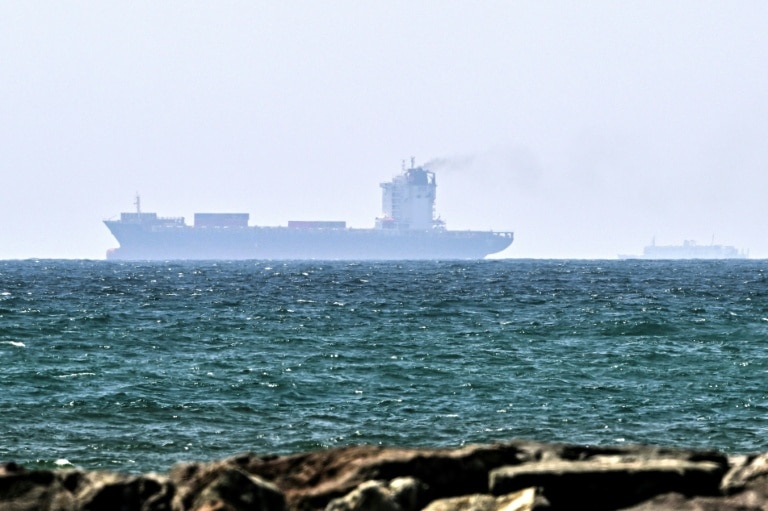
    The violence, which began when the U.S.-Israel campaign against Iran launched on February 28, has upended regional stability and sent shockwaves through global markets. After Iran effectively blocked access to the Strait of Hormuz, a critical chokepoint for nearly a fifth of the world’s daily oil supply, crude prices surged dramatically, snarling supply chains from the Middle East to the farthest corners of the global economy. While a fragile ceasefire is currently in place, both Tehran and Washington have repeatedly accused the other of violating the agreement’s terms, with negotiations for a more enduring peace set to kick off Saturday.

    In anticipation of widening economic fallout, the IMF projects it will need to provide between $20 billion and $50 billion in immediate balance-of-payments support to countries impacted by the conflict. The lower end of that range would be sufficient only if the current ceasefire holds, Georgieva noted. The conflict is also projected to push food insecurity to crisis levels, leaving at least 45 million additional people facing acute hunger as energy and fertilizer price hikes drive up global food costs.

    The IMF chief drew particular attention to the asymmetric burden of the crisis, noting that low-income net energy importers will bear the brunt of the damage far more than wealthier or energy-exporting nations. ‘Spare a thought for the Pacific Island nations at the end of a long supply chain, wondering if fuel still reaches them in the wake of such a severe disruption,’ she said.

    The warning aligns with earlier comments from the World Bank, which released its own assessment Wednesday noting that the conflict has already taken a ‘serious and immediate economic toll’ across the Middle East. Even excluding Iran, the World Bank projects regional economic growth will slow to just 1.8% in 2026, a massive 2.4 percentage point downgrade from projections made before the war began.

    In addition to cutting growth projections, the IMF is also set to revise its global headline inflation forecasts upward, as oil price shocks and supply chain disruptions feed through to consumer prices worldwide. On Wednesday, the heads of the IMF, World Bank and World Food Programme held a pre-Spring Meetings working session to coordinate on the dual economic and food security crises sparked by the conflict, issuing a joint statement warning that rising energy, fertilizer and transport costs will inevitably push more people into food insecurity.

    To coordinate a response to energy market volatility, the two global financial institutions have launched a dedicated coordination group, which will hold its first high-level meeting on Monday. As part of the official Spring Meetings agenda, the IMF will also release its annual Fiscal Monitor report, which is expected to highlight growing government debt levels as countries grapple with a consecutive string of major economic shocks.

    In a separate analysis of the economic costs of conflict released earlier this week, the IMF found that nations directly experiencing active conflict see an immediate 3% drop in national output, with declines continuing to deepen for years after the start of fighting. A previous analysis focused specifically on the Iran conflict concluded that ‘all roads lead to higher prices and slower growth,’ with a particular focus on how heavily disrupted fertilizer supplies will exacerbate global food insecurity. The report emphasized that low-income countries face the gravest risk of widespread hunger, noting that many will require additional external support even as global development assistance has trended downward in recent years.

  • 15th China International Garden Expo to open on April 15

    15th China International Garden Expo to open on April 15

    China’s 15th iteration of the International Garden Expo will welcome its first visitors on April 15 in the coastal city of Wenzhou, located in eastern China’s Zhejiang province, marking the first time the event has been hosted in this region. The official announcement of the opening timeline and event details was made during a press conference held this Wednesday, which also confirmed that general admission to the expo will be completely free for all visitors.

    Among the standout exhibition spaces at this year’s expo is the Maritime Silk Road Cooperation Garden, one of dozens of international-focused garden displays that highlight cross-border cultural and ecological collaboration. Officials emphasized that the event has been developed in direct response to growing public demand for improved green public spaces and a higher quality of urban life.

    Hu Zijian, director of the urban construction department under China’s Ministry of Housing and Urban-Rural Development, explained that the expo brings accessible green landscapes and park amenities directly to local communities. By expanding access to well-designed public green space close to residential areas, the event serves as a tangible implementation of China’s ‘people-centered city’ development philosophy, which prioritizes the well-being and daily needs of urban residents.

  • Israel reopens Al-Aqsa Mosque as it extends settler raid hours

    Israel reopens Al-Aqsa Mosque as it extends settler raid hours

    One of Islam’s most sacred religious sites, Al-Aqsa Mosque in occupied East Jerusalem, has reopened its gates to Palestinian worshippers after an extraordinary 41-day closure ordered by Israeli authorities, a shutdown that spanned the major Muslim holidays of Ramadan and Eid al-Fitr.

    When the first dawn Fajr prayer was held on Thursday morning, more than 3,000 Palestinian worshippers gathered inside the mosque’s sprawling courtyards to worship for the first time since the joint US-Israeli assault on Iran began on February 28. Viral footage circulated on social media captured jubilant crowds streaming through the reopened gates, their relief and joy palpable after the weeks of forced exclusion. Preparations for the reopening had begun days earlier, with volunteer teams and mosque custodians working to clean and restore the site ahead of worshippers’ return.

    Israeli officials have justified the total closure, which blocked all Palestinian Muslim access even for weekly Friday prayers, by citing security risks tied to the conflict with Iran. But Palestinian leaders and community members have openly questioned this justification, pointing out that Israeli authorities allowed large-scale gatherings for Jewish religious holidays were permitted to proceed elsewhere in the region throughout the closure. Many Palestinians argue Israel is using the war on Iran as a cover to tighten its unilateral control over the site, altering longstanding rules governing access, opening hours, and permitted religious activities.

    Al-Aqsa Mosque, located within Jerusalem’s walled Old City, has been governed for decades by the international Status Quo agreement, a framework that explicitly recognizes the site’s Islamic identity and grants exclusive authority to Muslim religious bodies for all matters of access, worship, and site maintenance. However, this longstanding arrangement has been repeatedly eroded by Israeli actions, including frequent incursions and unauthorised prayer by ultranationalist Jewish groups, carried out under armed Israeli police protection. The international community almost universally considers Israel’s 1967 annexation and ongoing occupation of East Jerusalem, including the Old City, as a violation of international law, which holds that occupying powers cannot claim sovereignty over captured territory and are barred from imposing permanent structural changes.

    The developments following the mosque’s reopening have already raised fresh alarms about escalating Israeli changes to the site. Within hours of worshippers completing Thursday’s dawn prayer, Israeli authorities allowed a new expanded schedule of daily incursions by ultranationalist groups, extending the total daily duration of these visits. On the first day of reopening, dozens of ultranationalist visitors entered the site shortly after 6:30 a.m. local time, immediately after Palestinian worshippers were cleared from the area. Video footage shows the visitors conducting unauthorised prayers and dances inside the mosque compound, surrounded by a heavy detachment of armed Israeli police.

    The practice of regular, guarded incursions traces back to 2003, during the Second Palestinian Intifada, and was formalized in 2008 when a limited morning visits of up to three hours were institutionalized. Over the following decades, both the number of participants and the duration of daily visits have grown steadily. Before the recent closure, incursions were split into two daily shifts on weekdays: 7:00 a.m. to 11:00 a.m., and 1:30 p.m. to 2:30 p.m. Under a new schedule approved prior to the February assault on Iran, incursions now run from 6:30 a.m. to 11:30 a.m. and 1:30 p.m. to 3:00 p.m., totaling six and a half hours of daily access for ultranationalist groups, a major expansion from prior arrangements.

    The Jerusalem Governorate has condemned the extended incursion schedule as a dangerous escalation that further undermines the fragile Status Quo agreement. In an official statement following the reopening, the Governorate noted: “The extension reflects an acceleration in efforts to impose new realities at Al-Aqsa Mosque and entrench time-based division, particularly following its reopening after a 40-day closure.”

    This report was originally published by independent outlet Middle East Eye, which specializes in original coverage of the Middle East and North Africa region.