作者: admin

  • Artemis crew home safely after greatest journey in a generation

    Artemis crew home safely after greatest journey in a generation

    After a groundbreaking nine-day journey further from Earth than any human crew has ever traveled, NASA’s Artemis II mission four-person team has completed a flawless re-entry and safe splashdown in the Pacific Ocean, bringing humanity one giant step closer to returning astronauts to the lunar surface.

    The mission, which circled the Moon, closed its final chapter when the European Space Agency-built service module — the component that supplied power and propulsion for Orion throughout its deep space trek — separated from the crew capsule at 19:33 EDT (00:33 BST). What followed was the highest-stakes phase of the entire voyage: atmospheric re-entry, a maneuver that demanded near-perfect precision to avoid catastrophic outcomes.

    As the capsule Integrity, named by the crew, plunged into Earth’s upper atmosphere at over 24,000 miles per hour, its heatshield was exposed to temperatures reaching half the surface temperature of the Sun. Extreme heat triggered a six-minute communications blackout between the capsule and mission control in Houston, a period that left thousands of engineers and flight controllers holding their breath. When Commander Reid Wiseman’s voice cut through the silence with the words, “Houston, Integrity here. We hear you loud and clear,” celebrations broke out across the control room. Shortly after, the capsule’s red-and-white parachutes deployed perfectly, guiding Integrity to a bullseye splashdown that NASA commentator Rob Navias called a flawless end to the historic voyage.

    The successful re-entry was no accident. Following the 2022 uncrewed Artemis I test flight, engineers discovered unexpected damage to Orion’s heatshield, sparking widespread concerns about crew safety on the first crewed mission. To address this risk, teams redesigned the re-entry trajectory, a change that models predicted would cut thermal stress on the heatshield. Artemis II marked the first in-flight test of this adjusted return path, and while full thermal data analysis is still ongoing, the safe arrival of the crew confirms the engineering adjustment worked as intended.

    Once the capsule settled in the ocean, recovery teams carefully extracted the crew: Commander Reid Wiseman, pilot Victor Glover, mission specialist Christina Koch, and Canadian Space Agency astronaut Jeremy Hansen. The four were airlifted to the USS John P Murtha for initial medical checks, and photographs from the recovery ship show the crew smiling, chatting, and posing for photos as they began their recovery back to Earth gravity. They will be flown to Houston on Saturday to reunite with their families, though NASA has not yet announced a date for their first public appearance.

    Flight Director Rick Henfling shared at a post-splashdown press conference that the entire team felt a mix of intense anxiety and steady confidence through the re-entry process. “We all breathed a sigh of relief once the (capsule’s) side hatch opened up,” he said. “The flight crew is happy and healthy and ready to come home to Houston.”

    Acting NASA associate administrator Lori Glaze heaped praise on the crew, highlighting both their individual capabilities and the exceptional teamwork they displayed throughout the mission. “I think they really brought an amazing sense of what we were trying to achieve,” she said. “It was a mission for all of humanity.”

    NASA associate administrator Anit Kshatriya emphasized that the perfect re-entry trajectory was not a stroke of luck, but the product of relentless work by thousands of aerospace professionals. “The team hit it, that is not luck, it is 1,000 people doing their jobs,” he noted.

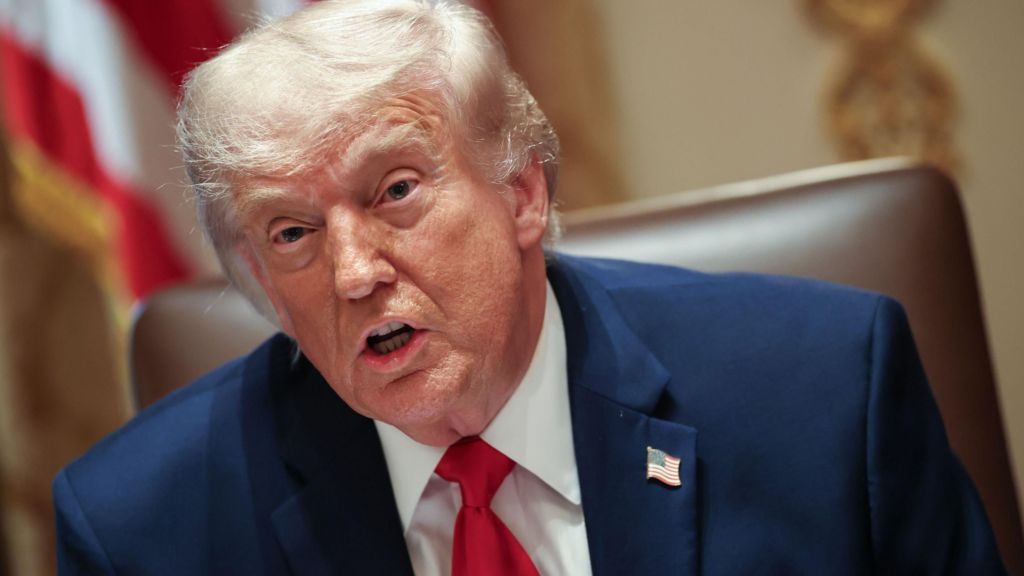
    U.S. President Donald Trump welcomed the crew home in a public statement, calling the entire 10-day mission “spectacular” and reaffirming a standing invitation for the crew to visit the White House.

    This safe return marks a critical milestone for NASA’s broader Artemis Program, which was launched to resume human lunar exploration for the first time since the final Apollo mission in 1972, build a permanent outpost on the Moon, and lay the groundwork for the first crewed mission to Mars. With Artemis II’s success confirming that Orion’s hardware, navigation systems, and crew operations function as intended in deep space, the program can now move forward to its next phases.

    Under the plan laid out by new NASA administrator Jared Isaacman, the next mission, Artemis III, has been redesigned as an Earth-orbit test flight to practice rendezvous and docking procedures with lunar landers built by SpaceX and Blue Origin, and is currently scheduled for mid-2027. The first crewed lunar landing, Artemis IV, is targeted for 2028, though some industry analysts have raised questions about whether that timeline can be met. While today’s successful homecoming does not yet put human boots back on the lunar surface, it lays a solid foundation for the ambitious work ahead — even as the hardest challenges of landing humans on the Moon still lie ahead.

  • NASA’s Artemis II splashes down off southern US California coast

    NASA’s Artemis II splashes down off southern US California coast

    In a landmark moment marking humanity’s return to crewed lunar exploration after more than half a century, four astronauts on NASA’s Artemis II mission have completed their 10-day voyage around the moon and touched down safely off the California coast, the U.S. space agency confirmed.

    The mission’s Orion capsule splashed down in the Pacific Ocean at approximately 17:07 local time on Friday (00:07 GMT Saturday), roughly 96 kilometers off the coast of San Diego, according to NASA’s official mission updates. This successful return caps a milestone journey: it is the first crewed lunar mission launched by the United States since NASA’s Apollo 17 mission lifted off from the moon in 1972, ending the first era of human lunar landings.

    Shortly after the capsule completed its splashdown, Artemis II Commander Reid Wiseman announced that all four members of the crew are in good condition, easing any post-mission health concerns that followed the high-speed atmospheric reentry. The successful conclusion of Artemis II paves the way for the upcoming Artemis III mission, which plans to land the first woman and first person of color on the lunar surface, advancing NASA’s long-term goals of establishing a sustainable human presence on the moon and preparing for future crewed missions to Mars.

  • Chang’e 7 lunar probe to be launched later this year

    Chang’e 7 lunar probe to be launched later this year

    China’s ambitious next step in lunar exploration is on track for liftoff in the second half of 2026, with the Chang’e 7 robotic probe now fully prepared for final pre-launch operations at its coastal launch site, China’s human spaceflight authority has confirmed.

    As of April 9, all structural components and scientific instruments of the Chang’e 7 probe have arrived at the Wenchang Space Launch Center in southern China’s Hainan Province, transported via a combination of air and road shipments, according to an official statement from the China Manned Space Agency (CMSA). In the coming months, engineering teams will complete on-site assembly of the spacecraft and conduct a full suite of functionality and integration tests to confirm the probe is flight-ready.

    The core objective of the Chang’e 7 mission is to map the unique geological environment and natural resource reserves of the moon’s south polar region, an area that has emerged as a high-priority target for global lunar exploration in recent years. To achieve this goal, the mission will pursue major breakthroughs in several cutting-edge space technologies, including high-accuracy soft landing on the uneven lunar surface, legged rover mobility, and controlled hopping detection for permanently shadowed craters – regions that never receive sunlight and are thought to hold large deposits of water ice.

    Unlike previous lunar missions that relied on a single flight architecture, Chang’e 7 will use a combined multi-phase operation approach: an orbiter will survey the region from lunar orbit, while a lander, a mobile rover, and a small hopping flying probe will conduct on-site surface investigations. The mission will also host multiple collaborative scientific projects with international research institutions, underscoring China’s commitment to open space exploration.

    In a notable shift from past Chang’e program announcements, CMSA, rather than the China National Space Administration (CNSA), which has overseen robotic lunar exploration updates for decades, released this latest progress update. Agency officials explained the change is part of a broader plan to integrate China’s existing capabilities in both manned lunar exploration development and unmanned robotic lunar research.

    “By combining the technological advances and decades of mission experience accumulated through both the national manned space program and the Chang’e robotic exploration initiative, we can greatly improve the overall efficiency of China’s lunar exploration efforts,” the statement noted.

    Per pre-launch mission design documents, Chang’e 7 consists of four integrated modules: the orbiter, lander, rover, and the small hopping flying probe. The latter craft is specifically engineered to descend into permanently shadowed craters to search for and analyze water ice, a resource that is critical for future long-term human lunar outposts and deep space exploration missions. In a nod to international collaboration, the probe carries six scientific payloads developed by research teams from around the world. These include laser retroreflector arrays from Italy’s National Institute for Nuclear Physics Frascati National Laboratory, a lunar dust and electric field instrument from the Russian Academy of Sciences’ Space Research Institute, and an international lunar-based telescope from the International Lunar Observatory Association.

    China’s Chang’e program has already completed six landmark robotic lunar missions since its inception, cementing the country’s position as a global leader in deep space exploration. Previous missions have achieved a series of historic firsts: Chang’e 3 and Chang’e 4 successfully deployed two rovers on the lunar near side and far side respectively, while Chang’e 5 and Chang’e 6 retrieved lunar surface samples from both the near and far sides of the moon – a feat no other space program has accomplished to date.

    With pre-launch preparation moving forward according to schedule, Chang’e 7 is set to open a new chapter of detailed scientific exploration of the lunar south pole, generating data that will inform both future unmanned research and China’s planned manned lunar landing missions targeted for before 2030.

  • Russian strikes on Odesa kill 2 ahead of Orthodox Easter ceasefire

    Russian strikes on Odesa kill 2 ahead of Orthodox Easter ceasefire

    In a pre-ceasefire escalation that has heightened tensions ahead of the Orthodox Easter holiday, Russian overnight drone attacks on the strategic Black Sea port city of Odesa left at least two civilians dead and two more injured, Ukrainian local authorities confirmed Saturday. The assault, which targeted a residential neighborhood, caused extensive damage to multiple apartment blocks, private homes, and a nearby kindergarten, just hours before a 32-hour truce broached by Russian President Vladimir Putin was scheduled to take effect.

    According to Ukraine’s Air Force statement, Moscow launched a massive wave of 160 drones across Ukrainian territory overnight, with 133 of the unmanned aerial vehicles successfully intercepted and destroyed by Ukrainian air defenses. In a simultaneous counterclaim, Russia’s Defense Ministry announced that its own forces shot down 99 Ukrainian drones across Russian territory and the Moscow-occupied Crimean Peninsula overnight.

    Putin first announced the planned holiday ceasefire on Thursday, ordering all Russian combat forces to cease offensive and defensive hostilities starting at 4 p.m. local time Saturday through the end of Sunday for the Orthodox Easter observance. Ukrainian President Volodymyr Zelenskyy confirmed Saturday that Kyiv would respect the truce, framing the pause in fighting as a potential opening to advance diplomatic efforts toward lasting peace. However, he issued a clear warning that any violation of the ceasefire by Russian forces would be met with an immediate, robust military response.

    “Easter should be a time of silence and safety. A ceasefire at Easter could also become the beginning of real movement toward peace,” Zelenskyy wrote in an official online post Saturday. “We all understand who we are dealing with. Ukraine will adhere to the ceasefire and respond strictly in kind.”

    The proposed truce follows an earlier Ukrainian proposal to Russia for a mutual pause in strikes on each side’s energy infrastructure over the Orthodox Easter period. Past attempts to implement ceasefires between the two warring parties have largely failed, with both sides repeatedly accusing one another of violating the terms of agreed pauses within hours of them taking effect.

    Kremlin spokesperson Dmitry Peskov framed Putin’s ceasefire announcement as a humanitarian gesture Friday, but reiterated that Moscow remains unwilling to move toward a comprehensive peace settlement unless its longstanding core demands are met — a sticking point that has blocked any meaningful diplomatic progress since the full-scale invasion began in 2022, now in its third year (correction from the original text: the invasion entered its third year in 2024, not fifth).

    Beyond the ceasefire, discussions have also been held to carry out a new round of prisoner exchanges over the Easter weekend. Russian human rights ombudswoman Tatyana Moskalkova confirmed last week that negotiators from both sides are currently working to finalize details for the swap. Periodic prisoner exchanges have stood as one of the only areas of consistent progress in months of U.S.-brokered negotiations between Moscow and Kyiv, which have failed to deliver breakthroughs on the core political and territorial issues that stand in the way of ending the full-scale invasion.

  • Visa-free, favorable policies boost foreign arrivals

    Visa-free, favorable policies boost foreign arrivals

    China has recorded a sharp uptick in foreign visitor arrivals during the first three months of 2026, with newly expanded visa-free entry policies and streamlined cross-border travel facilitation measures cited as the core driving forces behind the growth, the National Immigration Administration (NIA) announced in a press briefing Friday.

    Overall, border inspection authorities processed a total of 185 million entry and exit trips nationwide in the first quarter of 2026, marking a 13.5% year-on-year increase, according to NIA spokesperson Lyu Ning. Breaking down the data, foreign nationals accounted for approximately 21.33 million total trips during the period, a 22.3% annual jump that outpaced growth rates for all other traveler segments, including mainland Chinese residents and travelers from Hong Kong, Macao and Taiwan.

    Of all foreign arrivals recorded in the quarter, nearly 8.32 million entered China through visa-free arrangements, a 29.3% rise from the same period last year. Visa-free entries now make up 77.9% of all foreign arrivals into the country, reflecting the broad impact of China’s recent policy expansions to open its borders to international travelers.

    For comparison, mainland Chinese residents made 91.67 million entry and exit trips, a 14.2% year-on-year increase, while travelers from Hong Kong, Macao and Taiwan completed 72.5 million total trips, representing a 10.3% annual gain.

    Lyu explained that the consistent growth in international visitor arrivals stems from the NIA’s ongoing push to expand institutional opening-up in immigration governance. The administration has coordinated with multiple relevant government departments to expand the list of countries eligible for China’s unilateral visa-free entry policy, while continuously upgrading public services for international travelers.

    As one of the most recent service upgrades, the NIA launched a new pilot program in March that allows foreign nationals staying at non-hotel accommodations to complete temporary accommodation registration entirely online. The pilot is currently operational in seven regional jurisdictions: Chongqing Municipality, Guangxi Zhuang Autonomous Region, and Hebei, Liaoning, Zhejiang, Hubei and Sichuan provinces.

    In addition to the new online registration pilot, immigration authorities have continued to streamline application procedures for all types of entry and exit documents, boosting the efficiency of government services. Over the first quarter of 2026, authorities issued 406,000 visas and other immigration documents to foreign nationals.

    The NIA’s official online service platform handled more than 51.32 million inquiries and other government service requests from both domestic and international travelers during the quarter. The administration’s 12367 hotline service also processed approximately 1.8 million inquiries from callers based in more than 100 countries and regions around the world.

    The quarter also saw strong growth in travel from Taiwan to the Chinese mainland. Applications from Taiwan compatriots for mainland travel permits rose 11.8% year-on-year, while total trips by Taiwan residents to the mainland jumped 27.6% annually. First-time applicants from Taiwan saw a 4.5% quarter-on-quarter increase in permit applications, and applications for port-issued one-time entry permits rose 24.7% from the fourth quarter of 2025.

    This growth follows a policy adjustment implemented on November 20, 2025, that expanded the number of mainland ports authorized to issue one-time travel permits to Taiwan residents from 58 to 100. The expanded network of authorization now covers 56 airports, 27 water ports, and 17 railway and highway ports. Lyu noted that the adjusted policy has made entry to the mainland far safer and more convenient for Taiwan compatriots traveling from all regions of the world.

  • Hainan to expand intl opening-up

    Hainan to expand intl opening-up

    China’s southern island province of Hainan has unveiled an ambitious five-year strategy to deepen its international engagement and cement its role as a critical link between China and the broader global economy, marking a key new phase for its groundbreaking Free Trade Port (FTP) initiative just months after the launch of full island-wide special customs supervision.

    Speaking at a State Council Information Office press conference held in Haikou on April 10, 2026, Hainan Governor Liu Xiaoming laid out the province’s trade and opening-up priorities for the 15th Five-Year Plan period spanning 2026 to 2030, framing this stage as a turning point for the FTP project. The milestone launch of island-wide special customs operations on December 18, 2025, formally concluded the FTP’s initial infrastructure and regulatory framework development, clearing the way for the next phase of expansion.

    To advance this new phase of opening, Liu explained that Hainan will prioritize institutional liberalization by aligning its regulatory frameworks with high-standard global trade rules. The province will align its practices with major multilateral frameworks including the Regional Comprehensive Economic Partnership (RCEP), the Comprehensive and Progressive Agreement for Trans-Pacific Partnership (CPTPP), and the Digital Economy Partnership Agreement (DEPA), while also supporting ongoing negotiations to upgrade the China-ASEAN Free Trade Area to its 3.0 iteration.

    The province enters this new planning period on the heels of robust trade growth over the 14th Five-Year Plan (2021-2025), when both goods and services trade posted average annual growth rates exceeding 20 percent. For the coming five years, Hainan has set clear, ambitious targets: 10 percent average annual growth for goods trade, 20 percent annual growth for services trade, and 10 percent annual expansion in actually utilized foreign direct investment.

    Already, the new regulatory framework and policy incentives are driving tangible on-the-ground growth across Hainan’s processing and trade sectors, with the local coffee industry offering a clear illustration of the benefits of the FTP’s model.

    On the same day the special customs regime launched last December, a shipment of blended roasted coffee beans produced by Charoen Pokphand Group (Hainan) Xinglong Coffee Industry Development Co, a Sino-Thai joint venture based in Wanning city, departed Qionghai Boao International Airport for the Chinese mainland market. The beans, imported raw from Colombia, were roasted, blended and packaged at the company’s automated processing facility in Xinglong Coffee Valley, adding more than 30 percent to their value before shipment. This marked the first shipment from Wanning to qualify for Hainan FTP’s value-added tariff exemption policy for domestic sales, cutting costs significantly for the producer.

    The joint venture already operates under a cross-border model unique to the Hainan FTP: importing low-cost raw materials from global producers, processing them into finished high-value products, then selling finished goods both domestically and internationally. During the company’s first export shipment to Australia, the firm saved 8 percent on import tariffs for raw beans and 13 percent on value-added tax, directly boosting its profit margin and global competitiveness.

    “The most transformative change we have seen stems from Hainan’s institutional opening-up,” noted Ye Jian, general manager of the Sino-Thai joint venture. “Hainan is rapidly emerging as a strategic node in the global coffee supply chain.”

    Ye added that Hainan’s geographic proximity to major coffee-producing nations in Southeast Asia, paired with unimpeded access to China’s 1.4 billion-person consumer market, gives the island an unrivaled competitive advantage. The new special customs regime, he explained, is cutting cross-border logistics costs, streamlining supply chain clearance processes, and attracting skilled industry talent, helping reshape Hainan’s role from a simple entry point for raw materials into a fully fledged global processing hub.

    “A single cup of Xinglong coffee might use beans grown in Colombia, processed and packaged in Hainan, and end up sold to consumers in Australia — that is a perfect, tangible example of how the Hainan FTP connects China’s market and production capacity with the entire world,” Ye said.

    Policy support for the new trade and processing model has expanded in lockstep with the launch of the special customs regime. Ahead of the December 2025 launch, Hainan updated its zero-tariff raw material list in February 2025, expanding the roster to roughly 6,600 eligible products and adding unroasted coffee beans alongside 296 other commodity items. By the end of 2025, the number of companies eligible to access the FTP’s preferential policies had grown by more than 11,000 from pre-expansion levels, signaling widespread business uptake of the new regime.

  • New Zealand envoy highlights opportunities in China’s growth

    New Zealand envoy highlights opportunities in China’s growth

    In a clear acknowledgment of deep bilateral economic interdependence, New Zealand’s Ambassador to China Jonathan Austin has emphasized that New Zealand is closely tracking China’s economic development and the new opportunities generated by China’s ongoing opening-up policy as China enters its 15th Five-Year Plan period (2026-2030). Austin stressed that New Zealand’s own economic performance is directly tied to China’s growth trajectory, given China’s longstanding status as the nation’s largest trade partner.

    “One quarter of all New Zealand’s exports go to China. When China’s economy performs well, our economy performs well,” Austin stated. He added that New Zealand’s policymakers closely analyze China’s five-year development blueprints, with a sharp focus on emerging opportunities created by further market opening in China. “We are actively watching for any new openings that come as China continues to open its economy to the world, that is a key focus for us,” he said.

    Austin went on to note that New Zealand has reaped substantial economic benefits from China’s decades-long growth surge. “I can say sincerely that New Zealand has been one of the biggest beneficiaries of China’s remarkable economic rise,” he said. He also recalled that expanded bilateral trade helped New Zealand navigate the 2008 global financial crisis far more effectively than it would have managed without access to the Chinese market.

    The two countries share a historic trade relationship: New Zealand became the first developed nation to sign a comprehensive free trade agreement with China back in 2008, and an upgraded version of that agreement entered into force in 2022. Official data from China’s Ministry of Commerce confirms that China has held its position as New Zealand’s top trading partner, largest import source, and largest export market for 11 consecutive years.

    Austin described the current bilateral trade relationship as both stable and mutually beneficial. On one hand, Chinese consumers gain access to New Zealand’s premium agricultural products, while the trade basket has gradually diversified to include fast-growing exports of New Zealand cosmetics, health supplements, and advanced manufacturing inputs. On the other hand, New Zealand benefits from China’s manufacturing prowess, technological advances, and a broad range of affordable, high-quality imports that support New Zealand households, businesses, and national decarbonization initiatives.

    Beyond economic and trade ties, Austin highlighted the depth and resilience of the broader bilateral relationship, which spans education, tourism, business partnerships, and close people-to-people family ties. Currently, more than 27,000 Chinese students are enrolled in educational institutions across New Zealand, making China one of the country’s largest sources of international students.

    Austin did not shy away from acknowledging that the two nations do not share identical views on every issue. However, he noted that mature bilateral relationships are not built on ignoring differences. Instead, he said, strong ties are founded on the ability to discuss disagreements openly, respectfully and constructively, while preventing differences from derailing cooperation in areas where the two countries share aligned interests.

    Looking at the broader global context, Austin pointed out that New Zealand shares growing concerns over rising pressures on international rules and norms, increasingly contested global economic relations, and shrinking market openness worldwide. Against this challenging backdrop, Austin confirmed that New Zealand will remain committed to supporting multilateral and regional cooperation, particularly through the Asia-Pacific Economic Cooperation (APEC) forum.

    Founded in 1989 to capitalize on growing economic interdependence across the Asia-Pacific, APEC will hold its 33rd Economic Leaders’ Meeting in Shenzhen, China this coming November. “Through open dialogue and cooperation based on shared best practices, APEC plays a critical role in shaping regional economic policy and upholding the global multilateral, rules-based trading system,” Austin explained.

    In a separate development, a parliamentary delegation led by Gerry Brownlee, Speaker of the New Zealand House of Representatives, will travel to China for an official visit running from Sunday to Thursday.

  • Asia outlook cautious amid Mideast conflict

    Asia outlook cautious amid Mideast conflict

    The ongoing escalation of conflict in the Middle East has cast a long shadow over economic prospects for developing economies across the Asia-Pacific, prompting the Asian Development Bank (ADB) to downgrade its 2026 growth forecast and warn of rising inflationary pressure, according to the bank’s flagship annual publication, the *Asian Development Outlook (ADO)*, released on 11 April 2026.

    The ripple effects of the regional crisis have already disrupted global energy markets, pushing international crude prices above $100 per barrel in recent weeks. As of Friday, the global benchmark Brent crude traded above $96 per barrel, driven by supply uncertainty tied to the conflict. The situation worsened earlier this week, when Iran’s state-run Press TV reported the full closure of the Strait of Hormuz, the strategic maritime chokepoint through which roughly a third of global oil and gas exports flow, most bound for Asia-Pacific markets.

    In a webinar launching the ADO report, ADB principal economist John Beirne explained that the vast majority of developing Asian economies rely on net energy imports from Gulf nations, meaning sustained higher energy prices will translate into direct, material income losses for the region. But the spillover impacts stretch far beyond energy and shipping, he noted, extending to core inputs for agricultural and industrial supply chains that also pass through the Strait of Hormuz. Middle Eastern economies are leading global suppliers of critical commodities including petrochemicals, fertilizers, industrial gases and base metals, all of which have seen upward price pressure amid the supply disruption.

    “High fertilizer and diesel prices raise agricultural costs, which could lead to less input use and lower yields next year, and this could contribute to food insecurity,” Beirne warned.

    ADB economists emphasized that the severity of the conflict’s impact will vary widely across emerging Asian economies, with large emerging markets such as China and India projected to remain broadly resilient despite the external headwinds. ADB senior economist Yothin Jinjarak noted that China’s economy faces limited exposure to the crisis, thanks to multiple built-in buffers against global energy price shocks: substantial strategic petroleum reserves, a highly diversified supply base for energy imports, and a rapidly expanding renewable energy sector that reduces reliance on foreign fossil fuels.

    For India, domestic consumption remains the primary engine of economic growth, supported by rising household incomes and recent tax cuts. Still, the ADB forecast that accelerating food and fuel prices will likely moderate consumption growth in the coming year.

    Across the rest of South Asia, the conflict has hit regional economies on two fronts: not only through higher energy import costs, but also through severe disruption to the tourism sector, explained Rana Hasan, ADB’s regional lead economist for South Asia. “We are already seeing our two large tourism-dependent economies, the Maldives and Sri Lanka, take a hit,” Hasan said. Flight disruptions and the closure of Gulf airspace, a critical transit hub for travelers from Europe and North America heading to South Asia, have cut tourist arrivals sharply in both island nations.

    In Southeast Asia, the risk of persistent, high inflation is concentrated in economies that face overlapping vulnerabilities: high energy import dependence, greater exchange rate pass-through to domestic prices, and limited policy buffers to offset shocks, according to Dulce Zara, ADB’s senior regional cooperation officer for Southeast Asia. Laos, Myanmar and the Philippines rank among the most vulnerable, she said, pointing to Laos as an example: the country has very limited fiscal space to roll out relief measures to cushion consumers from rising fuel prices. By contrast, economies such as Brunei, Indonesia and Malaysia face far lower risk, thanks to existing fuel subsidy programs, dedicated oil price stabilization funds, and diversified domestic energy supplies.

    Another underrecognized drag on regional growth will come from falling remittance inflows, the ADB noted. Remittances from migrant workers employed in the Middle East are a key pillar of household consumption for many South and Southeast Asian economies, including Bangladesh, Indonesia, Nepal, the Philippines and Sri Lanka, all of which rely heavily on labor exports to Gulf nations.

    Hasan added that the ultimate scale of the economic damage will hinge entirely on how the conflict unfolds: “A lot is going to depend on the duration of this Middle East conflict and how long it takes for the economies of the Middle East to recover from the conflict.”

  • Vance in Islamabad for Iran talks overshadowed by mutual mistrust

    Vance in Islamabad for Iran talks overshadowed by mutual mistrust

    On a tightly secured Saturday in Islamabad, Pakistan, US Vice President JD Vance and a top Iranian delegation led by Parliamentary Speaker Mohammad Bagher Ghalibaf gathered for what Pakistani Prime Minister Shehbaz Sharif has framed as a “make or break” effort to end weeks of catastrophic Middle East fighting that erupted in late February.

    The diplomatic gathering, months in the making through backchannel mediation, carries enormous global stakes: any lasting agreement would ease fears of a full regional war and stabilize volatile global energy markets, while a breakdown could reignite open hostilities that have already killed hundreds and destabilized the entire Middle East. But from the moment both delegations touched down, deep-seated mutual suspicion hung over the talks, with both sides openly acknowledging trust remains in short supply after decades of broken negotiating commitments.

    Ghalibaf, leading a 72-member Iranian delegation that arrived overnight at Islamabad’s Nur Khan airbase, was personally greeted by Pakistan’s powerful Army Chief Asim Munir — a figure who shares established personal ties with US President Donald Trump, a detail that helped smooth the path to this week’s negotiations. Shortly after landing, Ghalibaf echoed a sentiment widely held across Iran’s political leadership, telling state media: “We have good intentions but we do not trust. Our experience in negotiating with the Americans has always been met with failure and broken promises.”

    Vance, who led the US delegation that also includes senior White House envoy Steve Witkoff and Trump’s son-in-law and former senior advisor Jared Kushner, struck a similarly mixed tone before departing US soil. After a brief refueling stop in Paris en route to Pakistan, Vance said the US stood ready to negotiate in good faith: “If the Iranians are willing to negotiate in good faith, we’re certainly willing to extend the open hand. But if they’re going to try to play us, then they’re going to find the negotiating team is not that receptive.”

    The current two-week ceasefire that brought both sides to the table is already teetering on collapse, underscoring the urgency of the Islamabad talks. The truce went into effect just 48 hours before Israel launched its heaviest bombardment of Lebanese territory since Hezbollah entered the war in early March, killing hundreds. Israeli strikes continued in Lebanon through Friday, with Tehran refusing to accept Israel’s position that the truce does not extend to the country. Hezbollah, the Iran-aligned militant group, responded overnight with fresh drone and rocket attacks targeting northern Israel and Israeli troops in southern Lebanon, keeping the cycle of violence active even as diplomats gathered in Pakistan.

    Multiple core sticking points remain unresolved before talks can even move toward a lasting deal. Iran has demanded the ceasefire formally cover Lebanon and that billions in frozen international assets be unfrozen — two conditions that have yet to be met. For the US, Trump has made the full reopening of the Strait of Hormuz, the strategic waterway through which roughly one-fifth of the world’s global crude oil shipments pass, a non-negotiable condition for extending the ceasefire. The strait has yet to return to normal shipping operations, and Trump reiterated Friday that Washington would open it “with or without” Iran’s cooperation if no deal is reached. Beyond the strait, Trump told AFP that preventing Iran from acquiring a nuclear weapon remains Washington’s top priority, representing “99 percent” of the US agenda at the talks.

    Pakistan, which pulled off last-minute mediation to bring the historic adversaries to the same capital, has already assembled a specialized team of technical experts to facilitate discussions on navigation, nuclear non-proliferation, and other core disputed issues. The country has ramped up security across Islamabad, deploying heavy police and paramilitary forces to the central diplomatic “red zone” and clearing the city’s top luxury hotel of all other guests to house the delegations. It remains unclear whether US and Iranian negotiators will meet face-to-face, or will follow the indirect format used in earlier Oman-mediated talks held before the outbreak of open war.

    The talks are being closely coordinated with other major global and regional mediators, including Egypt, Turkey, and China, all of which helped lay the groundwork for negotiations. Trump confirmed to AFP that China played a key role in convincing Tehran to attend the talks, and official sources say Beijing has been floated as a potential guarantor for any final lasting agreement. It remains unclear, however, whether China will send a formal delegation to the talks or agree to take on the official guarantor role.

    Public sentiment in Iran remains deeply skeptical of a breakthrough: a 30-year-old Tehran resident told AFP that most of Trump’s public statements are “pure noise and nonsense” to ordinary Iranians. Even as delegations prepared for their first formal meetings, Iran’s state media devoted only a brief segment to the talks in its first Saturday morning broadcast, with a subsequent segment focused on civilian volunteers signing up to defend the country if fighting resumes. For all the high hopes placed on Pakistan’s mediation, the coming days will test whether the two bitter adversaries can set aside decades of hostility to reach a deal that ends the current conflict before it spirals into a wider regional war.

  • Djibouti President Ismaïl Omar Guelleh is reelected for a sixth term

    Djibouti President Ismaïl Omar Guelleh is reelected for a sixth term

    In the Horn of Africa nation of Djibouti, long-sitting head of state Ismaïl Omar Guelleh has secured another five-year mandate, winning a sixth presidential term with a dominant share of the vote according to official election results released after Friday’s ballot. The 78-year-old incumbent captured 97.81% of the total votes cast, capping off a political career that has already spanned more than 20 years at the country’s helm.

    Guelleh’s path to another term was cleared last year, when Djibouti’s legislative body voted to eliminate presidential age limits, a change that removed the last barrier to his reelection candidacy. The race itself saw only one challenger, Mohamed Farah Samatar, a one-time member of Guelleh’s own ruling party. Political analysts broadly agree that the contest offered voters no meaningful or competitive alternative to the incumbent, a reality that fits a broader pattern of Djibouti’s politics. Major opposition groups have repeatedly boycotted national elections in recent years, pointing to systematic restrictions on political speech and organizing that level the playing field heavily in favor of the ruling establishment.

    Election officials confirmed that voting across the country proceeded peacefully, with no major reports of unrest or disruption. On Saturday, crowds of Guelleh supporters gathered outside the presidential palace in the capital Mogadishu to celebrate the outcome, sharing congratulations and marking the victory.

    Guelleh first rose to the presidency in 1999, taking over from his uncle Hassan Gouled Aptidon, the country’s first post-independence leader. This handover cemented a family-led political system that has guided Djibouti’s trajectory for its entire modern history. Beyond its domestic politics, Djibouti occupies an outsize role in global geopolitics thanks to its strategic location along the critical shipping corridor connecting the Red Sea to the Gulf of Aden. The tiny nation, which counts just over 1 million residents, currently hosts multiple foreign military bases, operated by major global powers including the United States, China, France and Japan. Revenue from these base agreements, combined with income from port services provided to landlocked neighboring Ethiopia, forms the backbone of Djibouti’s small but strategically important economy.