作者: admin

  • Three people killed in horror Perth crash

    Three people killed in horror Perth crash

    A devastating traffic collision has claimed the lives of three people in Western Australia’s Perth Hills region, after the vehicle they were traveling in left the roadway and struck a tree on Saturday morning.

    Emergency response teams were dispatched to the accident site on Stoneville Road, located roughly 30 kilometers northeast of Perth’s central business district, shortly after 8:50 a.m. local time, following reports of the crash. All three adult occupants of the car suffered critical, life-ending injuries in the impact, and were pronounced dead at the scene.

    In the immediate aftermath of the tragedy, Western Australia Police closed the affected stretch of Stoneville Road to all through traffic to preserve the crash site for forensic examination. Major crash investigation specialists from the state police force have now taken charge of the probe to determine the exact cause of the accident, with no further details on potential contributing factors released as of the latest update. Local authorities have advised motorists to avoid the area while investigative work continues.

  • AI creates opportunities for clean energy collaboration

    AI creates opportunities for clean energy collaboration

    The rapid, explosive expansion of artificial intelligence across global industries has generated an unforeseen chance for the world’s two largest economies — the United States and China — to join forces on advancing clean energy development, a partnership that industry leaders argue would deliver widespread benefits to both nations and the entire global economy. As AI adoption accelerates, the global rollout of large-scale data centers and skyrocketing demand for high-performance computing have pushed energy access and grid management to the forefront of constraints limiting further AI growth. Against this shifting landscape, industry observers note that the complementary strengths of the U.S. and Chinese clean energy sectors make cross-border collaboration not just a possible path forward, but a logical one.

    Ramkumar Krishnan, a seasoned cleantech entrepreneur and technologist with more than two decades of experience working in clean energy and emerging advanced technologies, shared his perspective with China Daily in San Francisco, emphasizing the universal nature of clean energy innovation. “Technologies and products that are used, whether it’s in the US or in China or in other parts of Asia, they’re all very similar,” Krishnan explained. “There are many ways that I think technology is a connecting piece that brings all nations together, because we all need technology to solve problems.”

    China’s enormous scale in power generation gives it a unique edge in global clean energy collaboration, according to official data from China’s National Energy Administration. The country’s annual total power output now exceeds 10 trillion kilowatt-hours — more than double the total annual power production of the United States, and outstripping the combined power consumption of the European Union, Russia, India and Japan. That massive production and deployment footprint has allowed China to build specialized experience and robust energy infrastructure that other nations can draw from, Krishnan said, especially as countries work to build smarter grid management systems capable of meeting the huge, consistent power demands of modern AI data centers.

    Krishnan highlighted that renewable energy technologies offer a key advantage in meeting rapidly growing power needs, thanks to their far faster deployment timelines compared to traditional large-scale fossil or nuclear projects. A utility-scale solar farm, for example, can be built and connected to the grid in 18 months or less, while nuclear or large hydropower projects often require a decade or more to reach completion. “Bringing the right portfolio of solutions that can help accelerate the adoption of energy, and bringing new energy, that could be another area that we can address the demand that we have from AI,” Krishnan noted.

    For the United States, the primary energy challenge tied to AI growth lies in unlocking greater efficiency from the nation’s existing power generation and transmission capacity. Krishnan pointed out that the U.S. grid currently holds large amounts of excess generation capacity, but much of this capacity remains underutilized, either because it is not consistently available or because surplus capacity is concentrated in specific regional pockets. “How do we actually intelligently manage that? That’s an area of pretty strong interest — how do we model how energy is used, so that we can utilize that excess capacity in different places, whether it’s industries, EV charging stations,” he explained.

    Notably, AI itself may hold part of the solution to the energy constraints it has created, Krishnan argued. Advanced AI systems can power far more dynamic, intelligent energy management platforms that are capable of balancing variable renewable energy supply with rapidly shifting demand from data centers and other energy-intensive end users.

    One Chinese clean energy firm is already moving to turn this collaborative opportunity into tangible cross-border partnerships. GCL Group, a major Chinese clean energy service provider that has already developed utility-scale power projects across California, Colorado and New York, is actively pursuing partnerships with U.S. artificial intelligence companies to deliver tailored energy solutions for the rapid expansion of global AI infrastructure.

    During a recent visit to Silicon Valley, GCL Group chairman Zhu Gongshan outlined the growing urgency for cross-sector collaboration. “Computing demands of generative AI are driving explosive growth in the global AI data center market, while putting mounting pressure on power supplies worldwide,” Zhu said. “As demand for computing capacity surges, energy is emerging as one of the biggest bottlenecks to AI development.”

  • Female rickshaw drivers in Sierra Leone rise above stigma to earn a living and empower women

    Female rickshaw drivers in Sierra Leone rise above stigma to earn a living and empower women

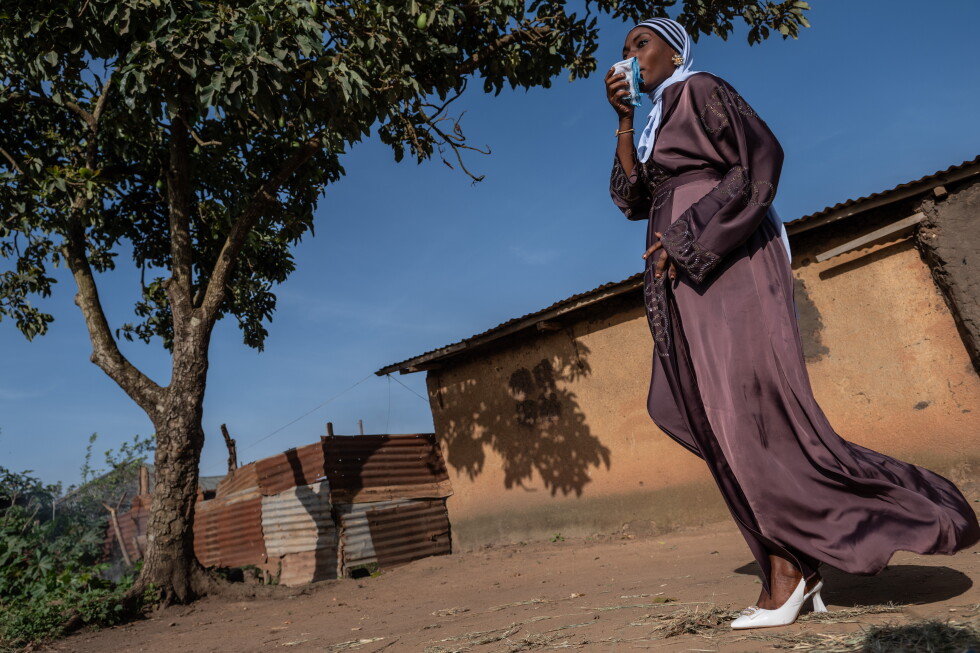
    On a late afternoon in Freetown, Sierra Leone’s bustling capital, 27-year-old single mother Hawa Mansaray pulls her motorized three-wheeled auto-rickshaw—locally called a kekeh—into the main transit park, stepping away for a short break and a moment of prayer. Mansaray is part of a small but steadily growing cohort of women entering a sector long dominated exclusively by men: Sierra Leone’s commercial transport industry.

    Decades after Sierra Leone’s devastating 1991–2002 civil war, the West African nation continues to grapple with rebuilding core infrastructure, and its public transport system has been stretched to breaking point. Freetown’s current population has swelled to more than 1.5 million, roughly three times the size the city’s original infrastructure was designed to accommodate. This gap has created surging demand for flexible, accessible private transport options, pushing motorcycles and kekehs to the forefront of urban mobility. Even though these rickshaws are often rickety, operate at low speeds, and carry higher safety risks due to their open-air design, commuters favor them for their widespread availability, ample ventilation, and comparative comfort for short trips across the city.

    For many women in Sierra Leone, this growing demand has opened an unexpected path out of systemic economic disenfranchisement. The country ranks among the lowest in Africa for access to formal financial services, leaving women and rural communities particularly vulnerable to economic shocks. Deeply entrenched patriarchal norms have long confined most women to low-stability petty trading that keeps them financially dependent on male partners, where income control translates to full decision-making power for men, according to women’s rights advocates.

    Marfoh Mariama Samai, a women’s rights advocate with Plan International Sierra Leone, explains that deep-seated cultural biases still frame women as unfit for many types of manual or commercial work. “When a young woman ventures into a certain type of job, they are stigmatized,” she says. But for women who have broken into the kekeh driving trade, the stigma has been outweighed by the promise of stable, independent income.

    Mansaray knows firsthand the costs of financial dependence. Born in Kailahun District at the height of the civil war, she was forced to drop out of primary school amid the conflict. After separating from her husband, she cycled through a series of small informal businesses to support herself and her child, none of which provided the stability kekeh driving has. She initially never planned to become a driver, but after seeing other women succeed in the trade, she paid for training and earned her spot behind the wheel. Today, she works for a local company that requires a 350 leone ($14 USD) daily return, leaving her with an average daily wage of 175 leones ($7 USD)—enough to support her family and well above the typical income for most working people in the country. “I have done different jobs since I came to Freetown but kekeh has done more for me,” Mansaray says. “I will advise my fellow women who aren’t employed to come into the game.”

    Alimatu Kamara, another female kekeh driver, shares Mansaray’s experience. Unemployed for years before entering the sector, she says the work has been life-changing, though challenges remain: most female drivers report frequent harassment from aggressive male colleagues, and many express ongoing safety concerns about working night shifts. “Some women can panic,” Kamara notes. “It takes mind and determination to continue.” Even so, she is already planning to expand her business by purchasing additional kekehs. “We can’t just sit, waiting for office jobs. With jobs like kekeh, you can even make more money,” she says.

    Union leaders in Freetown say while the number of women in the sector is still small, the growth is promising. The Sierra Leone Kekeh Riders Union counts more than 1,000 registered members in western Freetown, and only around 20 are women—but that number is steadily climbing. District chairman Mustapha Thoronka is a vocal supporter of expanding access for women, backing training programs and advocating for microloans to help cover the upfront cost of vehicles, which remains a major barrier for women with limited access to capital. “Whatever men can do, women can do better,” Thoronka says, adding that he hopes the sector will help more women support themselves and their families without relying on male income. He is now urging the Sierra Leonean government to step in with targeted support to make it easier for more women to enter the trade, noting the high upfront capital required puts it out of reach for many.

    Many commuters also favor female drivers, saying they bring a more careful approach to navigating Freetown’s crowded streets. Mariama Barrie, a regular commuter, says the growing presence of women in the sector sends a powerful message to women who rely on outside support. For Barrie, it is a call to action: “If you know how to ride, take kekeh … rather than sitting and waiting for handouts.” What began as a solution to Freetown’s broken public transport system has become a quiet movement, challenging gender norms and opening a new door to economic freedom for women in one of West Africa’s poorest nations.

  • US, Iran brace for pivotal talks

    US, Iran brace for pivotal talks

    As high-stakes negotiations between the United States and Iran approach in Islamabad, the future of a fragile regional ceasefire and global energy security hangs in the balance, with deep divisions and ongoing military violence casting a long shadow over the scheduled discussions. Set to kick off on Saturday in Pakistan’s capital, the talks could stretch up to 15 days, with negotiators set to address a slate of explosive, high-stakes issues ranging from Iran’s nuclear enrichment program to unimpeded commercial navigation through the strategically critical Strait of Hormuz. However, Iran has already tied its full participation in the dialogue to an immediate end to Israeli military strikes in Lebanon, a demand that comes as Israel continues its offensive against Hezbollah in the region.

    The US delegation will be led by Vice President JD Vance, but Iran has yet to release details of its negotiating team, with top Iranian officials arguing that ongoing Israeli attacks have already stripped the planned talks of meaningful purpose. “The holding of talks to end the war is dependent on the US adhering to its ceasefire commitments on all fronts, especially in Lebanon,” Esmaeil Baqaei, Iran’s Foreign Ministry spokesman, confirmed Thursday.

    Tensions rose further Thursday after US President Donald Trump cast public doubt on Iranian compliance with existing shipping agreements through the Strait of Hormuz, writing on social media that “Iran is doing a very poor job, dishonorable some would say, of allowing oil to pass through the Strait of Hormuz. That is not the agreement we have!” The vocal criticism came amid shifting shipping activity in the region: early Friday, ship-tracking data showed a Botswana-flagged liquefied natural gas tanker reversed course and returned to the Gulf after attempting to exit via a route approved by Iran’s Islamic Revolutionary Guard Corps, highlighting growing uncertainty over the strait’s operation.

    In a Thursday speech marking 40 days since the death of former supreme leader Ali Khamenei—who was killed in a joint US-Israeli strike at the outbreak of the current conflict—Iran’s new Supreme Leader Mojtaba Khamenei declared that the Iranian people had secured a “decisive victory” in the war, and announced that the country would move into a new phase of managing the strategic waterway. De facto disruption to traffic through the strait, through which roughly 20% of the world’s oil supplies pass, has already sent global energy prices soaring: by Friday, the international benchmark Brent crude spot price stood at around $96 per barrel, a 35% jump since the start of the conflict. The price surge has driven up costs for gasoline, food and other essential goods across the globe, far beyond the borders of the Middle East.

    As Pakistan tightened security across Islamabad in preparation for the talks, global economic leaders have warned that the ongoing conflict already poses a major threat to worldwide growth, regardless of whether the fragile ceasefire holds. Kristalina Georgieva, managing director of the International Monetary Fund, told reporters Thursday that “had it not been for this shock, we would have been upgrading global growth.” Speaking ahead of next week’s joint IMF-World Bank spring meetings, Georgieva added: “But now, even our most hopeful scenario involves a growth downgrade.”

    Israeli military activity has continued to escalate in Lebanon, shattering the already uneasy truce between Washington and Tehran. On Wednesday, Israel carried out its deadliest round of strikes on Lebanon since February 28, killing more than 300 people. Early Friday, the Israeli military announced it had targeted an additional 10 rocket launchers across southern Lebanon. Iran’s Parliament Speaker Mohammad Bagher Qalibaf, who is widely rumored to be a leading candidate to join Iran’s negotiating team in talks with Vance, warned Thursday that continued Israeli attacks on Hezbollah would bring “explicit costs and strong responses.”

    Further complicating regional tensions, Kuwait announced Friday it had suffered a drone attack overnight Thursday, which it blamed on Iran. Iran’s Revolutionary Guard quickly issued a denial, rejecting any involvement in the strike.

    Parallel to the US-Iran talks in Pakistan, direct Israeli-Lebanese negotiations are scheduled to launch next week in Washington. But many analysts warn the prospects for progress are slim. Abed Abou Shhadeh, a Jaffa-based Israeli political analyst and activist, described the US-Iran ceasefire talks as “extremely problematic” for Israel. Citing recent Israeli media polls, Al Jazeera reported that 79 percent of Israeli citizens support continuing military operations against Hezbollah in Lebanon, meaning the Israeli government has little political incentive to pursue diplomatic progress.

  • Ban for GP with ‘unhealthy obsession’ with lasers

    Ban for GP with ‘unhealthy obsession’ with lasers

    A decades-long career in general practice has come to an abrupt 18-month suspension for a South Australian physician, after a disciplinary tribunal found he repeatedly violated a standing ban on promoting controversial low-level laser therapy (LLLT) to his patients. The South Australian Civil and Administrative Tribunal handed down the ruling against Mark Rogers, a long-serving Adelaide-based GP who admitted to an ‘almost delusional, unhealthy obsession’ with the alternative treatment.

    The saga of Rogers’ unauthorized practice stretches back more than a decade, court documents show. Seven years ago, regulators first barred Rogers from offering LLLT to his patients, after confirming he made misleading claims about what the therapy could achieve. Most infamously, Rogers had publicly asserted LLLT could be used to treat Alzheimer’s disease, a claim he has since admitted was entirely false.

    Rather than adhering to the 2016 ban, the tribunal found Rogers intentionally and blatantly ignored the regulatory order for years, continuing to steer patients toward LLLT throughout the following decade. The Medical Board of Australia eventually referred the case to the tribunal, bringing six separate misconduct charges against Rogers. Those charges covered failures to deliver adequate patient care, failures to disclose clear conflicts of interest, inappropriate financial and commercial arrangements with a patient, distribution of false and misleading medical information, breaches of a formal agreement with the national medical board, and violations of the conditions of his medical registration.

    The tribunal upheld all six allegations, confirming that Rogers provided inadequate treatment and dangerous inappropriate advice through his repeated recommendations of LLLT. LLLT, sometimes called cold laser therapy, is a non-invasive procedure that uses low-intensity infrared light, marketed most commonly for pain management and inflammation reduction. The treatment remains deeply controversial in mainstream medicine, with multiple independent clinical trials finding LLLT produces outcomes no better than a placebo for most patients.

    What made Rogers’ violations more serious, the tribunal noted, was the undisclosed personal financial stake he held in the therapy, creating an unreported conflict of interest that put his commercial gain ahead of patient welfare. In his testimony to the tribunal, Rogers acknowledged his problematic fixation on LLLT, stating he now hates the treatment and regrets ever becoming involved with it.

    However, the tribunal panel ruled that this belated admission was not enough to warrant leniency. ‘While we accept that Dr Rogers admits his behaviour, it cannot be overlooked that he has, in a sense, been forced into compliance by these proceedings against the background of the previous disciplinary orders,’ the tribunal’s finding read. ‘On our assessment of him during his evidence, we do not consider that he has developed sufficient and sincere insight into his behaviour.’

    The ruling cancels Rogers’ medical practitioner registration immediately and bars him from reapplying for his license for a period of 18 months. In explaining the harsh penalty, the panel emphasized it was designed to protect the public and reinforce trust in the Australian medical system. ‘We believe that the public will be properly protected, that their faith in the medical profession can be restored and that a very strong message will be sent to the medical profession, in particular that dishonest conduct towards the health regulators and disregard for orders of a disciplinary tribunal will not be tolerated and will be met with harsh sanctions,’ the ruling stated.

  • ‘Game on’: How Iran can exact a toll in the Strait of Hormuz

    ‘Game on’: How Iran can exact a toll in the Strait of Hormuz

    In recent days, a quiet but consequential transaction has unfolded off Iran’s coast: an Iranian marine pilot boarded a Greek-flagged tanker carrying Kuwaiti crude bound for Japan, after the captain obtained clearance to enter Iranian territorial waters via VHF radio. The day prior, the vessel’s charterer transferred a six-figure sum in U.S. dollars to an Omani bank tied to the Iranian government. This encounter, experts say, could become a daily routine if ongoing U.S.-Iran negotiations in Pakistan result in a peace deal, formally cementing Iran’s control over the Strait of Hormuz, one of the world’s most critical energy chokepoints.

    Middle East Eye consulted six maritime security experts, ship owners, international law scholars and energy traders to unpack how Iran could turn its de facto control of the waterway into a formal revenue stream, even amid long-standing U.S. hostility. The first step, experts agree, is rebranding: what Iran frames as a charge for passage cannot be called a toll if it hopes to win international and U.S. acceptance.

    Donald Rothwell, a leading law of the sea scholar at Australian National University, explained to Middle East Eye that the better framing is a “fee for service” rather than a transit toll. After military strikes from the U.S. and Israel, Iran effectively restricted traffic through the strait. Under international law, while states bordering international straits are barred from blocking innocent transit, they can suspend passage for security reasons during active conflict, Rothwell noted. Critics point out Iran’s current tactics – including harassing and seizing commercial vessels and designating Omani territorial waters as hazardous – violate existing international norms, but experts say the Trump administration, which has previously floated controversial territorial expansion ideas, may overlook legal technicalities to reach a deal.

    Notably, neither the U.S. nor Iran has ratified the United Nations Convention on the Law of the Sea (UNCLOS), leaving more room for negotiation. U.S. President Donald Trump has already sent mixed signals on the plan: he has suggested sharing transit proceeds with Iran could be positive, but later demanded Iran halt all fee collection immediately. Despite the legal ambiguities, Rothwell argues Iran’s position holds some merit amid the current ceasefire uncertainty.

    “Right now Iran is in a twilight zone, pending a finalised peace deal with the U.S. and Israel,” Rothwell said. “Iran can argue that it needs to guarantee safe passage for transiting vessels amid the risk of resumed military operations, and that escorted transit is a service it provides. That creates a legal opening.”

    While formal tolls are only legally permitted for man-made waterways like the Suez and Panama Canals, precedent exists for international strait states to charge service fees. Australia charges mandatory pilotage fees for vessels transiting the narrow, dangerous Torres Strait shared with Papua New Guinea, and Turkey collects tonnage fees for Bosphorus and Dardanelles transits under the 1936 Montreux Convention to fund safety, rescue and inspection services. Jason Chuah, a maritime law professor at City St Georges University of London, told Middle East Eye that Iran’s situation is not identical to these examples, but these precedents give Tehran a legal foothold to build on.

    Currently, Iran’s control of transit remains ad-hoc and unstructured. Before the recent conflict, roughly 130 vessels transited the strait daily. Between April 8 and 9, that number dropped to just 14, with nearly two-thirds of those belonging to Iran-sanctioned entities or the shadow fleet, according to Marine Traffic analytics. Vessels that do gain passage must submit extensive documentation – including bills of lading, crew manifests, insurance details and previous and next port information – so Iran can screen for U.S. or Israeli links, explained Martin Kelly, head of advisory at risk consulting firm EOS Risk Group. Even with government-to-government approval, there is no guarantee of passage, Kelly added.

    So far, vessels from Iran’s close partners including Russia, Pakistan, India and China have successfully transited. Among Western-linked shipping, Greek firms have been the most active: multiple tankers owned by Dynacom, the shipping group of Greek magnate George Prokopiou, have passed through the strait, with payments made to Iran in Chinese yuan, an anonymous ship owner confirmed to Middle East Eye. While yuan has been used for ad-hoc payments, the head of Iran’s oil, gas and petrochemical exporters union recently told the Financial Times that Tehran prefers payment in cryptocurrency.

    Joshua Hutchinson, chief commercial officer at British maritime security firm Ambrey, told Middle East Eye that Iran has not yet established a clear, scalable framework for the system, due to internal divisions. “The Islamic Revolutionary Guard Corps is disconnected from the politicians right now. So the communication by Tehran has been problematic,” he said. While prospective ship owners – many drawn by sky-high shipping rates – have multiple channels to reach Iran, including embassies and local brokers, the core issue remains payment structure. “Iran has not communicated a clear, scalable payment scheme,” Hutchinson said. “I think that will happen eventually; it’s just progressing slowly because of the split between the civilian government and the military.”

    Iranian officials have publicly floated a $2 million toll per vessel, or $1 per barrel of oil carried, but maritime experts say a tonnage-based fee would be the most practical implementation. While Iran has proven it can drastically reduce traffic through the strait, meaningful monetization requires buy-in from major global shipping players. Currently, record-high shipping rates have left many ship owners weighing risk against reward, said Maria Bertzeletou, senior analyst at shipping services firm Signal Group.

    “At the end of the day, it depends if owners are willing to pay the fees Iran wants and take the risk. Maybe they will prefer to send their vessels on other routes,” Bertzeletou said. She noted that even after the Houthis halted Red Sea attacks in May 2025, total tonnage through the waterway remains 50% lower than pre-attack levels, meaning traffic may not rebound quickly even if a deal is reached. Bertzeletou predicted a split in shipping attitudes: “We could see a bifurcation of the strait with different attitudes between Asian and western shipowners. I have a feeling that some western ship owners could sell some second-hand tankers to Asian owners who have an appetite to cross the strait, while Western owners focus on other routes.”

    Toby Copson, portfolio manager at Davenport Energy, said the timeline for large-scale energy traffic and formal fee collection remains uncertain. “It will be cloak and daggers for some time,” he said, noting that many Chinese vessels currently transiting the strait are not paying fees. However, with rates for Very Large Crude Carriers – the workhorses that carry Gulf crude to Asia – hitting historic highs, and oil and LNG prices also spiking, the proposed fees would be easy for shippers to absorb, Copson argued. “This fee Iran wants could be absorbed so quickly given the spike in oil prices. In the current pricing climate, the shippers would be stupid not to pay it.”

    The biggest barrier remains U.S. sanctions, Chuah noted: any payment to the IRGC, which controls Iran’s border and maritime security operations, would currently violate U.S. sanctions. Iran has demanded sanctions relief as a core condition of any peace deal, part of a 10-point proposal it released this week that Trump has called a “workable” basis for negotiations. While most Western shipping relies on U.S. dollars, Copson said Iran could easily collect fees in yuan or cryptocurrency. For yuan payments, he explained, shippers simply exchange for offshore renminbi and transfer to Iranian accounts, which Iran then converts to gold or dollars through Chinese intermediaries – a process that is not overly complex, though cryptocurrency would offer more opacity.

    Still, the Trump administration is likely to resist any fee framework that excludes the dollar, particularly as the conflict has fueled broader global discussions of de-dollarization. If a deal is reached, the international shipping industry will have little choice but to comply, Chuah said, but the U.S. will face intense pushback from key regional allies that oppose Iran cementing control over the strait. The United Arab Emirates, a close U.S. and Israeli partner that has taken a hard line against Iran during the conflict, has already pushed back: Anwar Gargash, diplomatic adviser to the Emirati president, said this week the UAE will reassess its alliances post-war, and Sultan al-Jaber, head of Abu Dhabi’s state oil company, said Iran continues to use coercion to restrict passage, even amid the ceasefire. “Big oil majors and Gulf states absorb a fee, but it will set a very bad precedent,” Chuah said.

    But other experts argue regional opponents will have little leverage if the U.S. agrees to a deal. “If Trump lifts sanctions on Iran, it will be game on,” Hutchinson said.

  • Iranian delegation arrives in Islamabad for talks

    Iranian delegation arrives in Islamabad for talks

    ISLAMABAD, April 11 – A senior Iranian delegation led by Parliament Speaker Mohammad Baqer Qalibaf touched down in Islamabad on Saturday ahead of highly anticipated negotiations with United States representatives, Pakistan’s Ministry of Foreign Affairs confirmed in an official statement this week.

    The visiting delegation, assembled for the high-stakes diplomatic discussions, also counts Iranian Foreign Minister Seyed Abbas Araghchi among its core members. On arrival at the Pakistani capital, the Iranian delegation was formally welcomed by a senior contingent of Pakistani leadership. The reception party included Pakistani Deputy Prime Minister and Foreign Minister Mohammad Ishaq Dar, National Assembly Speaker Sardar Ayaz Sadiq, Chief of Army Staff Field Marshall Syed Asim Munir, who also serves as Chief of Defense Forces, and Interior Minister Syed Mohsin Raza Naqvi.

    In remarks following the welcome, Ishaq Dar shared Pakistan’s expectation that all negotiating parties will approach the discussions in a spirit of constructive engagement. He reaffirmed Pakistan’s longstanding commitment to continuing its role as a neutral facilitator, working to support all parties in reaching a sustainable, long-term resolution to the ongoing conflict between the United States and Iran.

    The talks mark a rare diplomatic opening between the two longtime adversaries, with Pakistan serving as the host and intermediary for the pivotal discussions that are being watched closely by global powers across the world.

  • Trump likes to back winners in foreign elections. The upcoming vote in Hungary will test his clout

    Trump likes to back winners in foreign elections. The upcoming vote in Hungary will test his clout

    For decades, U.S. presidents have quietly shaped political outcomes in other countries through covert channels, behind-the-scenes diplomacy, and carefully coded public statements. But in his second term, former President turned current President Donald Trump has upended longstanding American norms, throwing open the doors to overt, aggressive intervention in foreign electoral contests on a scale unmatched by any of his predecessors. From Eastern Europe to Latin America to East Asia, Trump has deployed the full weight of his office and the allure of U.S. economic power to elevate ideologically aligned far-right and conservative candidates, breaking with a centuries-old tradition of discreet U.S. non-interference in other nations’ domestic political processes.

    Trump’s most high-stakes test of this new approach will come on Sunday, when Hungarian voters head to the polls to decide whether Prime Minister Viktor Orbán, a longstanding Trump ally, will secure a fifth consecutive term in office. Orbán cemented his bond with Trump early, becoming the first European leader to endorse Trump’s 2016 presidential campaign, and remained loyal even during Trump’s four years out of office, making regular trips to Trump’s Mar-a-Lago resort in Florida and throwing his support behind Trump’s 2024 comeback bid. That loyalty has been rewarded repeatedly: Trump has shared multiple posts on his Truth Social platform urging Hungarians to vote for Orbán, delivered a pre-election video address to a Conservative Political Action Conference (CPAC) gathering in Budapest praising Orbán’s hardline policies on immigration and national sovereignty, and even arranged for a viral speakerphone appearance at a 1,000-person Orbán campaign rally during Vice President JD Vance’s recent two-day trip to the Hungarian capital.

    Secretary of State Marco Rubio, who as a senator once raised public alarms about democratic backsliding under Orbán’s rule, has also put past concerns aside to formally endorse the prime minister, emphasizing his “very, very close personal relationship and working relationship” with Trump. During his Budapest visit, Vance made the administration’s support explicit, even as he criticized the European Union for what he framed as its own foreign election interference in Hungary. “Of course we’re going to work with whoever wins the Hungarian election because we love the people of Hungary and it’s an important relationship,” Vance told reporters. “But Viktor Orbán is going to win the next election in Hungary, so I feel very confident about that and about our continued positive relationship.”

    Hungary is far from the only country where Trump has inserted U.S. political power directly into a domestic electoral contest. In Argentina, the Trump administration finalized a $20 billion currency swap line to prop up the country’s struggling financial markets ahead of key legislative elections, with Trump openly threatening to pull the assistance if pro-market far-right candidate Javier Milei’s coalition failed to win. “If he loses, we are not going to be generous with Argentina. OK?” Trump told reporters during a White House lunch with Milei. Milei’s coalition ultimately prevailed, and the assistance remained in place. In Honduras’ 2023 presidential election, Trump publicly backed conservative former mayor Nasry Asfura, warned that the U.S. would cut off financial assistance if Asfura lost, and pardoned former Honduran President Juan Orlando Hernandez—who shared Asfura’s party affiliation—shortly before voting day, overturning U.S. drug trafficking and weapons convictions against the former leader. Asfura went on to win the race. Trump has also publicly floated a pardon for Israeli Prime Minister Benjamin Netanyahu, who is facing ongoing corruption charges and a tough 2024 reelection contest, and backed hardline Japanese candidate Sanae Takaichi for prime minister.

    Trump and his top officials have repeatedly used CPAC, a hub for global conservative activism, as a platform to elevate preferred foreign candidates. Last year, then-Homeland Security Secretary Kristi Noem spoke at a CPAC gathering in Warsaw, urging Polish voters to support conservative candidate Karol Nawrocki and implying that the future of U.S. military presence in the country could depend on the election result. Nawrocki won his race.

    Trump has openly embraced his role as a global political kingmaker, framing his intervention as a natural extension of his success building influence within the U.S. Republican Party. “I love it when I give endorsements and people win,” Trump told a gathering of allied Latin American leaders earlier this year. White House spokeswoman Anna Kelly defended the administration’s approach, framing it as a model of transparency. “President Trump is a great American statesman who will speak or work with anyone, and he makes no secret about those he likes or supports,” Kelly said. “Many individuals who align with President Trump’s ideology are getting elected to top offices around the world because everyone wants to replicate his immeasurable success on behalf of the American people.”

    Critics, however, argue that Trump’s blatant intervention has upended longstanding U.S. foreign policy norms, turning tools of statecraft that were once used to advance broad American national interests into vehicles for partisan political gain that erode the sovereignty of other nations. David Pressman, who served as U.S. ambassador to Hungary during the Biden administration, told reporters that Hungarian foreign policy on key issues like the war in Ukraine is now being shaped through a U.S. partisan lens, rather than as independent sovereign policy. “The impact of that is to really cheapen a relationship,” Pressman said.

    James Lindsay, a distinguished senior fellow at the Council on Foreign Relations, noted that while past U.S. presidents have influenced foreign elections—often through covert action like the CIA’s 1954 coup that ousted Guatemalan President Jacobo Arbenz, or rare explicit endorsements like Bill Clinton’s public support for Boris Yeltsin in 1993—Trump’s open, widespread intervention is unprecedented. “Trump is just different than other presidents, and he’s viewed differently than other presidents, and that is a strength you can take advantage of,” Lindsay said.

    Democratic critics go further, framing Trump’s intervention as a deliberate expansion of historical U.S. dominance in the Western Hemisphere. Sen. Tim Kaine, D-Va., pointed to the Trump administration’s December national security strategy, which outlined what it called the “Trump Corollary” to the 1823 Monroe Doctrine, a policy that has historically justified U.S. military intervention across Latin America. Kaine, who served as a missionary in Honduras during a period of deep covert U.S. involvement in the region, called the framework “poison language” that violates longstanding best practices for U.S. foreign policy. “America has been deeply involved in regime support, opposition and regime change in the Americas for centuries, and it is not a legacy that we should be proud of,” Kaine said.

    The intervention has also sparked backlash from European leaders. Early in the second Trump term, Vance delivered a fiery speech at the Munich Security Conference where he criticized mainstream German parties for refusing to partner with the country’s far-right opposition, straining bilateral ties. German Chancellor Friedrich Merz later pushed back, noting that no U.S. official had any business weighing in on Germany’s domestic political dynamics. “I wouldn’t do it in America, either,” Merz said. As voters head to the polls in Hungary on Sunday, the result will offer a clear indication of just how much sway Trump’s public endorsement actually holds with foreign electorates, with independent polls showing Orbán trailing ahead of voting day—an outcome that would mark a major rebuke of the U.S. president’s global political ambitions.

  • The myrrh tree that’s key to luxury perfumes and African incomes is threatened by drought

    The myrrh tree that’s key to luxury perfumes and African incomes is threatened by drought

    In the parched, dust-choked lowlands of Ethiopia’s Somali region, a natural resource that has shaped global trade and culture for millennia is facing an unprecedented existential crisis. Myrrh, the aromatic tree resin that serves as a signature base note in hundreds of high-end perfumes from luxury brands including Tom Ford, Comme des Garcons, and Jo Malone, is being pushed to the brink by a climate-fueled historic drought that has ravaged the Horn of Africa for years. Once stretching across dense, sprawling forests across the region, the native Commiphora myrrha trees that produce the resin are now dying off, starved of water and grazed by desperate, hungry livestock struggling to survive in the arid landscape.

    This 2026 on-site research expedition, backed by the American Herbal Products Association and led by supply chain sustainability experts from the University of Vermont and ethical botanical supplier FairSource Botanicals, set out to address two overlapping crises threatening the myrrh trade: the ecological collapse of myrrh forests and the systemic exploitation of local harvesters by exploitative middlemen. For generations, myrrh harvesters in eastern Ethiopia have practiced traditional, low-impact harvesting methods that prioritize long-term forest health: rather than cutting intentional wounds into tree bark to force more resin production—a practice that weakens trees and makes them more vulnerable to pests and disease—local communities collect resin that naturally oozes from existing small wounds on tree trunks. This centuries-old technique produces the highest-quality resin on the global market, but leaves harvesters with just a tiny fraction of the profits generated by the luxury goods myrrh goes into.

    A kilogram of raw myrrh resin earned harvesters between just $3.50 and $10 in 2026, a tiny fraction of the $500 price tag carried by some luxury perfumes that rely on the resin’s distinct earthy fragrance. Currently, most myrrh produced in eastern Ethiopia is sold unregulated to traders from neighboring Somalia, with the Ethiopian government collecting no taxes on the commodity, and harvesters cut off from direct access to global markets that would let them negotiate fairer prices. The research team aims to change that by building transparency into the supply chain, connecting harvesters directly to global buyers to ensure a larger share of profits flow back to the communities that produce the resin.

    Beyond supply chain inequity, the far more urgent threat is the ongoing historic drought, amplified by human-caused climate change. The region’s annual seasonal rains have failed consistently for years, following a devastating extreme flood event in 2023 that devastated crops and grazing land. Today, once-full lakes outside towns like Afcadde sit completely dry, and herders travel as much as 200 kilometers across cracked, parched earth to access the few working wells that still hold water in villages like Sanqotor. Water gathering consumes entire days for local children, who drive donkey carts to deep wells dug into the dry beds of former lakes.

    The drought has hit myrrh populations hard. While mature trees are still largely standing, resin production has dropped sharply as trees conserve what little water they can access. More alarmingly, very few young myrrh seedlings are surviving the harsh conditions. Starving livestock graze on young tree buds, and children pulling goats and sheep through the forest often accidentally uproot small seedlings. Local elder Mohamed Osman Miyir explained that the entire myrrh tree population is declining at an alarming rate, leaving communities deeply worried about the future of a resource that has sustained them for generations. For the poorest residents of the region, who own no livestock and rely entirely on myrrh harvesting for their livelihoods, the collapse of the industry would be catastrophic.

    Myrrh has occupied a central place in global culture, medicine, and trade dating back to ancient Egypt, where it was used in burial rituals, cosmetics, and medicine. Today, growing global interest in natural remedies has sparked new demand for the resin, alongside its steady use in high-end perfumery and traditional local practices—from making ink for Quranic wooden tablets to burning in homes to repel bugs and snakes. Local researchers and harvesters hope that greater global visibility into the challenges facing their industry, paired with the push for direct, fair trade, will help them protect both the myrrh forests and their own traditional way of life. As senior researcher Abdinasir Abdikadir Aweys of the Somali Regional Pastoral and Agro-Pastoral Research Institute noted, local communities are counting on direct market access to deliver stable, sustainable livelihoods that let them continue protecting the forests that the rest of the world depends on for luxury fragrance and natural products.

  • California governor candidate Eric Swalwell denies sexual assault allegations

    California governor candidate Eric Swalwell denies sexual assault allegations

    The 2026 California gubernatorial race has been thrown into sudden turmoil as leading Democratic candidate and sitting U.S. Representative Eric Swalwell is confronting multiple explosive sexual misconduct allegations from former female staffers, claims he has forcefully denied as false, politically timed attacks.

    The first public accusation surfaced Friday in reporting from *The San Francisco Chronicle*, coming from an anonymous former employee who worked in Swalwell’s Castro Valley district office. The woman told the outlet that inappropriate behavior began almost immediately after she was hired, with Swalwell making unwanted sexual comments, soliciting sexual encounters, and sending unsolicited sexual messages. The most serious allegation dates back to September 2019, when she says she woke up naked in Swalwell’s hotel room with only fragmented memory of the previous night. Five years later, after she had left Swalwell’s staff, the woman reported a second incident at a gala where she recalled pushing Swalwell away after he advanced on her, and woke up the next morning with physical signs of sexual trauma. Her account has been corroborated by contemporaneous text messages she shared with friends at the time of the alleged incident, as well as testimony from her former boyfriend, who told the Chronicle he encouraged her to file a police report.

    Hours after the Chronicle’s initial report, CNN published additional accusations from four more former female staffers, all alleging varying degrees of sexual misconduct from Swalwell. The outlet also confirmed that Swalwell’s legal team had sent cease-and-desist letters to two of the accusers just one day before the first allegations became public.

    In an official statement released Friday, Swalwell pushed back hard against all claims, framing the allegations as a last-minute smear campaign timed to derail his campaign just months ahead of the state’s Democratic primary. “These allegations are false and come on the eve of an election against the front-runner for governor,” he wrote. The congressman, who has built a 20-year public service career as a prosecutor and federal legislator, emphasized his long record of advocating for and protecting women, adding that he would “defend myself with the facts and where necessary bring legal action.” He also noted that his immediate focus would be on supporting his wife and children while pushing back against what he called lies targeting his years of public service.

    The accusations have prompted immediate calls from top California Democratic figures for Swalwell to suspend his gubernatorial campaign. House Democratic Leader Hakeem Jeffries was among the first high-profile party members to urge Swalwell to step aside, and he was quickly joined by other prominent state Democrats including Senator Adam Schiff and former House Speaker Nancy Pelosi. In her public statement, Pelosi argued that “this extremely sensitive matter must be appropriately investigated with full transparency and accountability. As I discussed with Congressman Swalwell, it is clear that is best done outside of a gubernatorial campaign.”

    California’s Democratic primary is scheduled for June 2, where party voters will select their nominee for the November general election. Given California’s heavy Democratic lean, the winner of the primary is widely expected to secure the governorship in the fall general election. As of now, Swalwell remains in the race, but the growing pressure from within his own party has thrown his campaign’s future into question ahead of the critical primary vote.