Across Asia’s agricultural trade ecosystem, a stark divide is emerging, driven by a transformative shift: China’s revised import regulations are actively redrawing supply chain maps across the entire region, creating winners and losers among global agricultural producers.
In São Paulo, Brazil, Chinese meat purchasers are now offering premium prices for beef that carries formal certification confirming it comes from deforestation-free supply chains. A purchasing delegation from the Tianjin Meat Industry Association, reflecting shifting consumer priorities in China, has committed to sourcing 50,000 tons of this compliant product by the end of 2026. This move sends a clear, industry-altering signal: transparency and environmental compliance are now non-negotiable core requirements for Chinese importers.
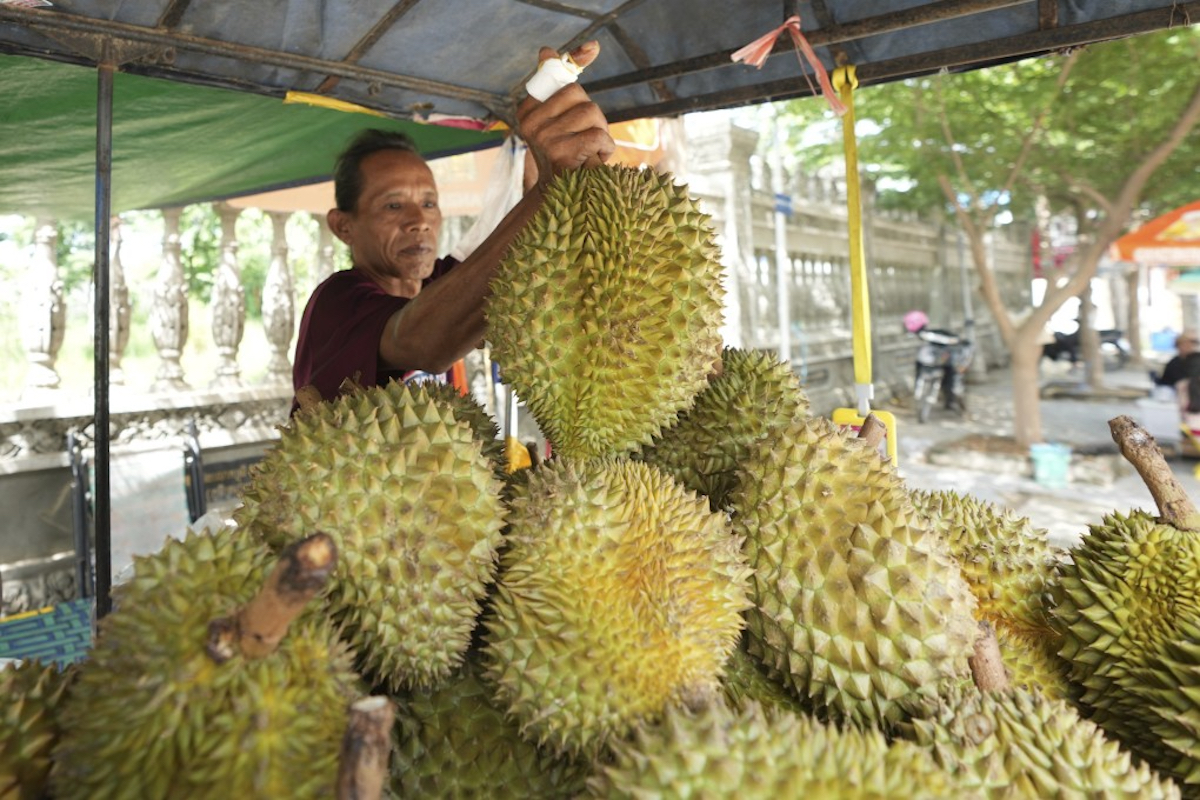
Half a continent away in Southeast Asia, Vietnam’s lucrative durian industry faces a far grimmer reality. In Vietnam’s Dong Thap Province, 80 out of 112 local fruit packaging facilities have suspended all exports to China after banned chemical residues were detected in multiple shipments. Local prices for the popular Ri6 durian cultivar have plummeted to just $1 per kilogram, well below the baseline cost of production. Strengthened safety screenings and persistent inspection bottlenecks have completely locked non-compliant producers out of the Chinese market.
This shift marks a key turning point for global agricultural trade: China is no longer merely a volume-focused mass buyer. Its evolving market access standards now exert profound, far-reaching influence over global agricultural production and trade. For foreign producers aiming to access the world’s largest food consumer market, meeting unified compliance criteria has become the single most decisive factor for success.
### The End of an Era of Relaxed Cross-Border Rules
To understand the current disruption, it is necessary to look back at the old cross-border trade model that prevailed for decades. Between 2003 and 2005, when analyst Ju Liang worked in cross-border logistics along the China-Vietnam border, regional trade lacked mature traceability frameworks, standardized inspection protocols, and strict certification requirements. Basic customs clearance was enough to keep legitimate operations running.
Over time, Vietnamese producers developed a fixed mindset that low price points could compensate for gaps in product quality and incomplete documentation. Chinese logistics operators also grew accustomed to flexible, informal border clearance arrangements. While this low-regulation model drove rapid growth in transaction volumes, it left the entire industry ill-prepared for the regulatory tightening that would eventually come.
China’s Customs Decree 280, which formalizes mandatory registration requirements for all foreign food manufacturers exporting to China, completely upended this long-standing trade logic. The regulation has been translated into multiple languages and officially circulated globally to align international suppliers with updated compliance norms.
Brazil, for its part, proactively prepared for this shift. After a 2017 quality scandal, the country invested eight years between 2018 and 2025 to build a comprehensive end-to-end digital tracking system that covers every step of the supply chain, from pastures and slaughterhouses to warehouses and cross-border shipping. When China raised its food safety and environmental thresholds, Brazil was ready, securing a stable position as a trusted, qualified supplier.
Vietnam, by contrast, has fallen noticeably behind in quality management, product traceability, and logistics and cold chain development, despite its large cultivated fruit acreage. Some local facilities even submitted falsified traceability documents in an attempt to pass customs inspections. These issues stem from deep structural gaps between modern industrial supply chain management and Vietnam’s dominant scattered small-scale farming model. Today, producers that attempt to bypass official standards can no longer evade border restrictions, and face permanent exclusion from China’s mainstream import market.
### Infrastructure Creates the Competitive Divide
A comparison between Thailand and Vietnam makes clear how infrastructure investment shapes export competitiveness in the new regulatory environment.
Thailand has successfully leveraged the China-Laos Railway to boost its tropical fruit exports to China. Cold-chain freight trains move durians and mangosteens from Thai orchards to Kunming quickly via expanded cross-border rail corridors, with products reaching more than 30 major Chinese cities within 48 hours of final road transfer. The railway is projected to carry more than 200,000 tons of tropical fruit in 2026 alone. Advanced refrigeration technology keeps container temperatures within a narrow, stable range, cutting cargo loss from 8-15% under traditional road transport to just 1-5%.
Vietnam’s export chain, by comparison, suffers from crippling operational bottlenecks. Convoys of durian transport trucks regularly queue for 24 hours to wait for pre-shipment testing in Dong Nai Province. By the end of 2025, Vietnam only had 24 testing laboratories accredited by China’s General Administration of Customs (GACC), far too few to meet demand across its major growing regions.
This extended waiting period is not the result of a temporary inspection backlog: it is a consequence of China’s permanent regulatory upgrade. Dong Thap Province alone harvests its massive durian crop in May and June each year, and the country lacks the efficient clearance infrastructure to process this peak output. Shortages of cold storage exacerbate the problem: Vietnam has 117 professional cold storage facilities, but 90% are designed for frozen meat and seafood, leaving very limited capacity for fresh fruit. Annual post-harvest losses reach 20-40%, translating to $3.5 billion to $4.1 billion in economic damage each year.
Given the massive capital investment required to build out cold chain facilities, accredited testing laboratories, and modern cross-border logistics, Vietnam’s structural competitive disadvantages are unlikely to be reversed in the next three to five years. Thai exporters, by contrast, benefit from stable, reliable cold-chain transport supported by a transnational rail network that aligns with China’s requirements.
### Beyond Surface-Level Inspection Bottlenecks
Public discourse in Vietnam often blames export disruptions on limited testing capacity, but this ignores deeper systemic flaws that are the root of the problem.
China enforces strict testing for cadmium, a toxic heavy metal, and Auramine O, an unapproved industrial dye, both of which pose risks to human health. Test results from the Mekong Delta show that a large share of durian and jackfruit samples have excessive heavy metal levels, and any shipment containing unapproved food additives is immediately recalled.
A failed reinspection in China carries long-term penalties: factories with disqualified shipments lose their official export registration codes, and restoring qualification takes six to 12 months – an entire fruit export cycle. Eight local packaging plants have submitted accreditation applications but still await official approval, leaving export operations stagnant.
Vietnam’s fruit and vegetable exports hit a record $8.5 billion in 2025, but that growth was driven entirely by expanded production volume, not systematic industrial upgrading or improved risk resistance. The widely cited “testing bottleneck” conceals a host of unresolved problems: incomplete traceability records, unregulated planting practices, lax factory audits, and chronic underinvestment in cold chain infrastructure. Peer competitors like Thailand have already addressed these issues to adapt to China’s new rules.
### Compliance Standards Reset Global Agricultural Trade
Vietnam’s agricultural regulatory body has pushed local testing institutions to speed up inspections and appealed to Chinese customs for more flexible clearance policies. However, these incremental adjustments cannot close the deep, systemic strategic gaps that hold the country back.
Today, China has emerged as a rule-setter in global agricultural trade. By establishing ESG-aligned purchasing standards, tightening limits on hazardous contaminants, and requiring high-standard cold chain infrastructure, it has put in place clear compliance thresholds for all overseas suppliers. Producers that meet these standards – those that invest in digital traceability, build out cold chain capacity, and maintain complete, accurate trading documents – thrive, while producers that rely on informal operations and falsified credentials are gradually pushed out of the market.
This shifting landscape carries profound implications for Southeast Asian economies. Nations that align their industrial standards and infrastructure development with China’s requirements, like Thailand through its integration with the China-Laos Railway, retain steady access to China’s huge consumer market. Economies that fail to adapt, by contrast, will see their agricultural products lose competitive ground to better-prepared rivals.
Vietnam now faces a critical strategic choice. It can continue to address updated import rules with temporary, stopgap fixes, or it can pursue comprehensive supply chain reform. Full upgrades – covering farm-level traceability systems, standardized testing capacity, and border cold storage networks – can turn compliance requirements into lasting competitive advantages.
A new order for global agricultural trade is already taking shape. Every rejected shipment, every premium paid for certified compliant goods, and every fresh fruit delivered via temperature-controlled cross-border transport signals that this industry-wide transformation is well underway. Compliance rules act as a fair screening mechanism, not discriminatory trade barriers. Meeting high standards is now the essential entry ticket to China’s market, separating competitive, forward-thinking producers from outdated operations and resetting the balance of global agricultural trade.
*Ju Liang is an independent policy analyst with over 20 years of on-the-ground experience in Southeast Asia, specializing in agricultural trade and supply chain compliance. He is currently affiliated with Yunnan Agricultural University, China. All opinions expressed are his own.*