作者: admin

  • Desperation forces Yemenis to risk lives smuggling qat to Saudi Arabia

    Desperation forces Yemenis to risk lives smuggling qat to Saudi Arabia

    For millions of young Yemenis trapped in more than a decade of civil conflict and systemic economic collapse, the promise of a stable future lies almost exclusively across the northern border in Saudi Arabia. As one of the only accessible destinations for steady work, the neighboring kingdom has become a beacon of hope for those fleeing violence and poverty – but the $2,500 price tag for a legal visa and sponsorship puts this path out of reach for nearly all Yemeni households.

    Ahmed, a 35-year-old chef and father of two young children, was one of millions who dreamed of legal work in Saudi Arabia to support his family. Unable to scrape together the funds for official entry, he made the fateful choice to cross the border illegally by the end of 2024, finding casual work in a restaurant in Jazan province. Twice, Saudi authorities caught and deported him back to Yemen, leaving him with no legal way to earn the income his family needed to survive. That’s when he turned to the only viable option he had left: joining qat smuggling networks.

    On his first illegal crossing, Ahmed had already traveled alongside qat smugglers, witnessing firsthand the deadly risks that come with moving the controlled stimulant across the border. Qat is classified as an illegal narcotic in Saudi Arabia, with punishments ranging from a mandatory minimum five-year prison sentence and a $5,300 fine to permanent deportation. For repeat offenders, sentences can stretch to 25 years, and under the kingdom’s anti-narcotics laws, capital punishment is a possible penalty in serious trafficking cases. Despite knowing the dangers – including accounts of smugglers being shot dead by border guards – success stories from fellow villagers convinced him the risk was worth taking.

    For four months, Ahmed successfully made smuggling runs across the border, returning home with enough money to lift his family out of extreme poverty. For two months, they lived without the constant hunger and uncertainty that defined most Yemeni households, and Ahmed planned a second four-month stint to earn enough for a permanent home. He promised his two young children new bicycles on his return, and asked his wife Wafa to begin searching for a house. But just two weeks into his second trip, Wafa received the devastating news: Ahmed had been shot dead by Saudi border guards while attempting to cross.

    Two months on, Wafa still has not told her children – both under the age of 10 – that their father is dead. She hides the trauma to protect them, telling them he is still working in Saudi Arabia and plans to bring their bicycles home soon. “It is too difficult to tell a child that their father was killed while simply trying to provide for their needs,” she told Middle East Eye. Now, the family faces eviction from their small rental home, as there is no one left to earn an income. “The days spent with my husband when we only had one meal a day were infinitely better than these days without him,” Wafa said. “Having the whole family gathered together under one roof is something you cannot truly appreciate until you lose someone you love.”

    Ahmed’s tragic story is far from an isolated case: it reflects a nationwide humanitarian catastrophe unfolding across Yemen. According to the United Nations Office for the Coordination of Humanitarian Affairs (OCHA), by 2026 more than 22.3 million Yemenis – over half the country’s total population – will require life-saving humanitarian assistance and protection. More than 10 years of war, cascading economic collapse, crippling funding shortages for aid programs, and repeated climate-driven disasters have left millions without consistent access to food, healthcare, and clean drinking water. According to 2022 Saudi census data, more than 1.8 million Yemenis already live legally in Saudi Arabia, marking the Yemeni community as the kingdom’s fourth-largest immigrant population.

    Khalid, a 45-year-old Yemeni who turned to qat smuggling one year ago, understands the deadly gamble better than most. Like Ahmed, he had no other viable path to a living wage: the only two lines of work that offer meaningful income in today’s Yemen are joining one of the warring factions or smuggling qat. He chose smuggling. “I thought deeply about whether to join the fighting or smuggle qat, as these are the only two jobs that I can do and they offer a good income. I decided to go with smuggling,” he explained.

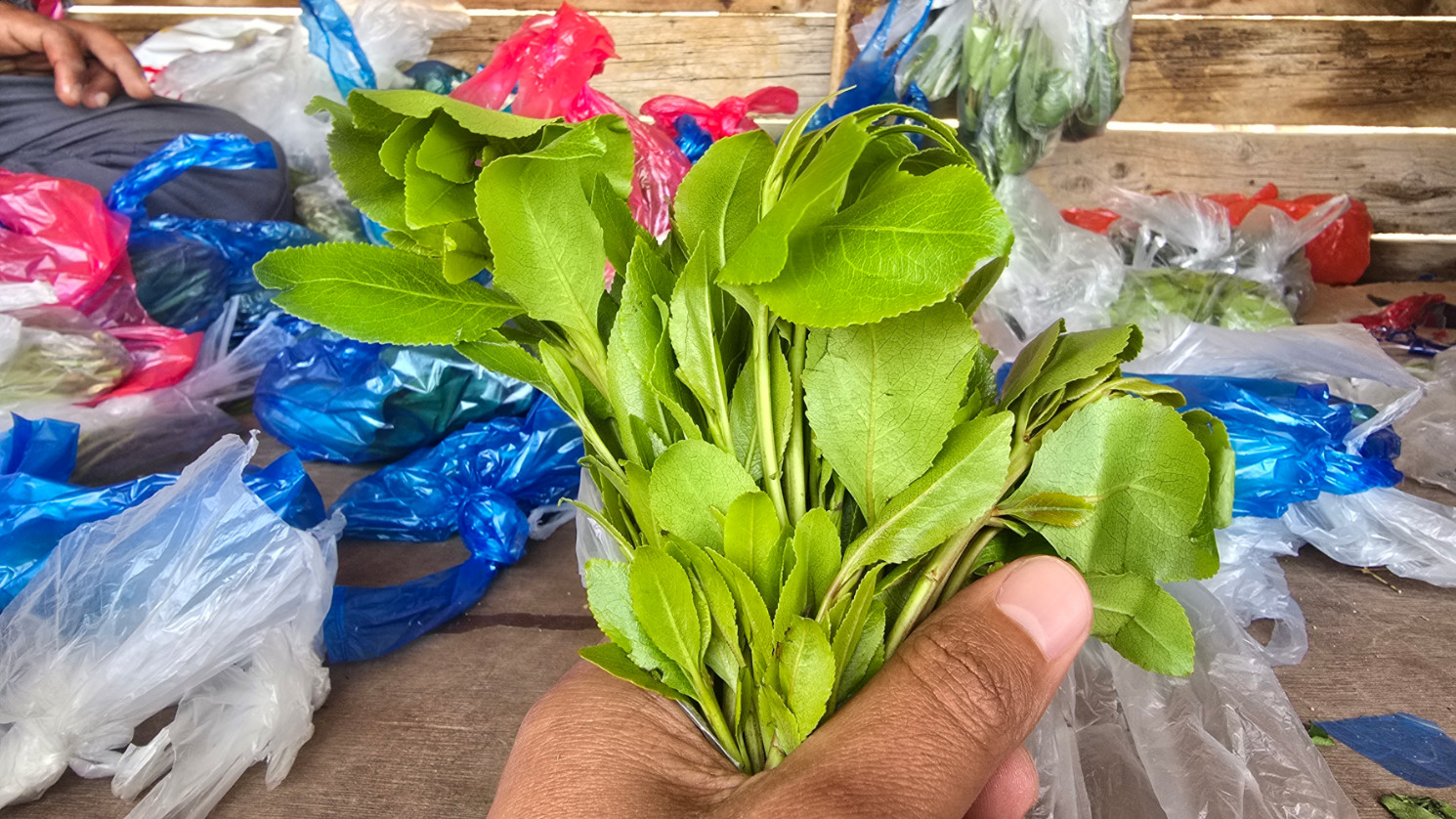
    Khalid describes the smuggling trek across the rugged border highlands as a “death journey” that demands extreme physical stamina. Smugglers often walk more than 20 kilometers carrying up to 40 kilograms of qat on their backs, a feat that only the most fit can complete. As a low-level courier for a large smuggling ring, Khalid earns 5,000 Saudi riyals (around $1,330) per successful run – a sum that no legal, civilian job in Yemen can match for ordinary laborers. When spotted by Saudi border guards, smugglers are ordered to halt; those who run face deadly gunfire. “Many Yemenis have been arrested and face severe penalties in Saudi Arabia, so I prefer to run. For me, it was either make it across or die,” he said. He recalled one incident in which 10 smugglers came under fire, and only six made it to safety, with the fates of the other four unknown.

    Khalid counts himself among the extremely lucky: after one year of smuggling, he earned enough to open a small grocery store in Lahij and build a home for his family, and he has left smuggling behind for good. “One year was enough for me to achieve my dreams of owning a home and a grocery shop. Now, I will focus on running this business together with my sons,” he said. “I don’t want my sons to ever do the same job. I encourage them to grow this grocery business and make it their future.” Even so, he recognizes why so many other Yemenis take the same risk he did: “If I hadn’t been desperate to provide for my family, I would never have risked my life, but I was forced to.”

    Economic analyst Sameer al-Dhobhani explains that the surge in qat smuggling is a direct symptom of Yemen’s collapsed economy and decades of stalled job growth. “The civil service has almost paused employing new university graduates since 2011, the economic situation has collapsed and the population is growing. All of these factors have forced Yemenis to seek out jobs that are hazardous or illegal,” he said. Qat smuggling across the border is not a new trade, but al-Dhobhani notes it has exploded in popularity over the course of the war: for young Yemenis, the risks of smuggling often compare favorably to the near-certain death of frontline fighting, and the pay is far better than any legitimate work.

    “Qat smuggling is one of the grim consequences of the war, as some people have broken the barrier of fear and no longer hesitate to take on dangerous work,” al-Dhobhani said. “However, we must not lose sight of the root cause, which is the catastrophic economic situation and the severe lack of legitimate job opportunities. If safe, legal, and well-paid jobs were available, Yemenis would not risk their lives smuggling qat. It is desperation, he said, that drives them to it.”

    Al-Dhobhani warns that the crisis will only worsen until Yemeni authorities prioritize economic recovery and job creation for young people. “Since 2015, every day has been worse than the last for Yemenis. They will not stop taking these dangerous jobs until the government takes this issue seriously and begins implementing solutions to revive the economy and provide the youth with civilian jobs,” he said. For Wafa and her children, that solution has come too late – a reminder that for millions of Yemenis, the search for a better future too often ends in tragedy on the border.

  • Watch: Community gathers as workers remain missing after chemical blast

    Watch: Community gathers as workers remain missing after chemical blast

    A devastating chemical explosion at a paper mill in the U.S. state of Washington has left one person confirmed dead and nine additional workers unaccounted for, according to official statements from local authorities. In the wake of the industrial accident, members of the surrounding community have come together to support emergency response teams and the families of those who remain missing, offering emotional comfort, practical resources, and coordinated assistance during the uncertain aftermath. First responders have been working around the clock to secure the site, conduct search and recovery operations, and assess the extent of damage caused by the blast. Local officials have not yet released detailed information about the cause of the explosion or the identities of the deceased and missing workers, as investigations remain in the early stages. The tragedy has prompted an outpouring of solidarity across the region, with community organizations and local residents stepping up to provide whatever support is needed to those affected by the incident.

  • Former US Attorney General Pam Bondi diagnosed with cancer

    Former US Attorney General Pam Bondi diagnosed with cancer

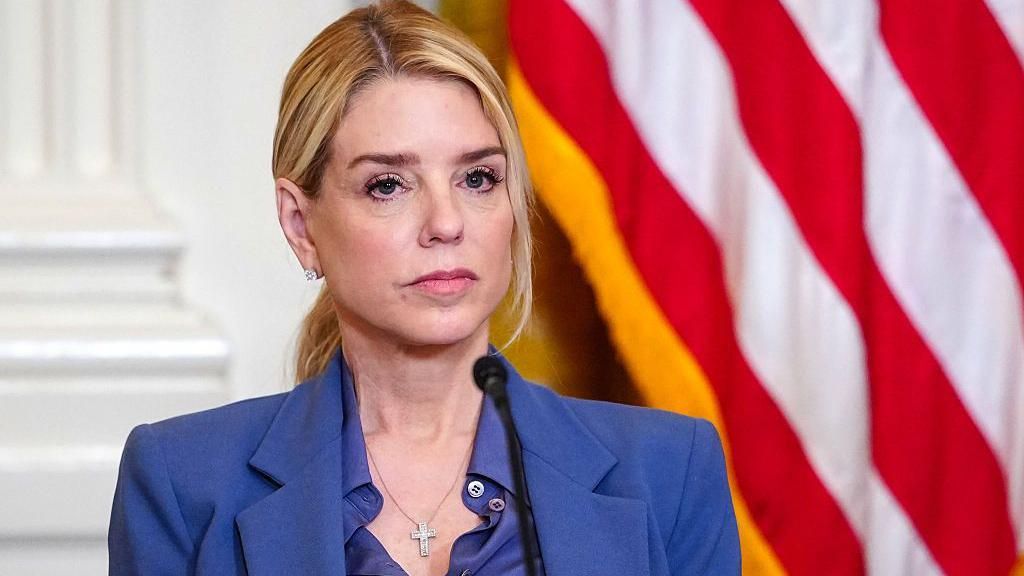
    Weeks after being removed from her position as the United States’ top law enforcement official, former Attorney General Pam Bondi has announced she has been diagnosed with thyroid cancer, multiple American media outlets have confirmed. The story of Bondi’s health diagnosis was first broken by Axios, which reported that the news of her illness came just a short time after former President Donald Trump removed her from the Department of Justice post.

    At 60 years old, Bondi shared with CNN that she is currently undergoing active treatment for the cancer, and is still in the recovery period from a surgical procedure she underwent several weeks prior. Despite the diagnosis, she confirmed she is “doing well” and has no plans to step back from professional work. In a revealing new development, Bondi will join the newly formed White House advisory panel focused on artificial intelligence: the Presidential Council of Advisors on Science and Technology, commonly known as PCAST.

    Katie Miller, a podcast host and former White House advisor, publicly shared her support for Bondi on social media, writing that “Pam has been quietly kicking cancer’s ass the last few weeks” and noting that Bondi “has a heart of gold”.

    When Bondi departed the Department of Justice in early April, she stated at the time that she was looking forward to moving into a role in the private sector. Her appointment to PCAST marks the first public confirmation of her ongoing professional work following her exit from the Justice Department.

    Vice President JD Vance issued an official statement praising Bondi’s new role, saying: “Pam has been an enormously valuable asset to the president’s team, and I’m thrilled for her and for all of us that she’s going to remain involved in confronting some of the most important issues the administration faces.”

    PCAST was established by Trump via executive order in January 2025, with the formal mission to “unite the brightest minds from academia, industry, and government to guide our Nation through this critical moment by charting a path forward for American leadership in science and technology”. The first full slate of council members was not publicly announced until March 2026, and the group includes some of the most prominent leaders in the global science and technology sectors: Google co-founder Sergey Brin, Meta CEO Mark Zuckerberg, Oracle co-founder Larry Ellison, and Nvidia CEO Jensen Huang are all counted among its members.

  • WHO warns of ‘catastrophic collision’ of Ebola and war in DR Congo

    WHO warns of ‘catastrophic collision’ of Ebola and war in DR Congo

    The head of the World Health Organization (WHO) issued a stark public warning this Wednesday, highlighting how persistent armed conflict in the Democratic Republic of the Congo (DRC) is severely undermining global and local efforts to curb a fast-growing, deadly Ebola outbreak. As the crisis intensifies, neighboring Uganda has moved swiftly to close its entire border with the DRC in a bid to stop cross-border transmission.

    Since the outbreak was officially declared in mid-May, WHO data has documented more than 1,000 combined confirmed and suspected Ebola cases across the country, with 10 confirmed deaths and 223 additional deaths linked to suspected infections. WHO Director-General Tedros Adhanom Ghebreyesus emphasized that decades of persistent insecurity in eastern DRC, a region roiled by ongoing clashes between dozens of armed groups, has created an almost insurmountable barrier to effective outbreak containment.

    In a post on the social platform X, Tedros spelled out the severity of the unfolding crisis: “Eastern DRC now faces a catastrophic collision of disease and conflict with the Ebola outbreak in Ituri province outpacing the response.” This current outbreak, the 17th recorded Ebola event in DRC’s history, is driven by the Bundibugyo strain of the virus – a variant for which no targeted vaccine or specific treatment currently exists.

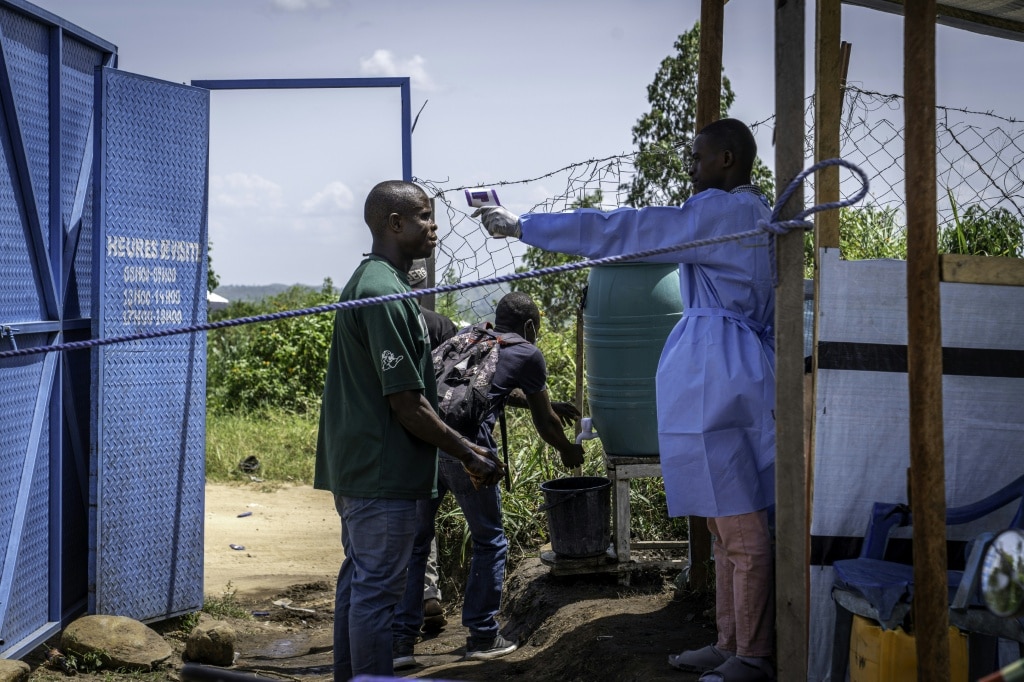
    Ituri province, the rural region where the virus was first detected, has operated with almost no functional state services for more than 30 years, leaving local health systems drastically underprepared to respond. On a visit to Rwampara, one of the outbreak’s current epicenters, an AFP reporting team witnessed a symptomatic Ebola patient carried to the local hospital on the back of a motorbike, squeezed between the driver and her own sister, as no emergency ambulances are available in the area.

    Local health worker Dieudonne Sezabo confirmed to reporters that with no formal medical transport infrastructure in place, “people make do with motorbikes.” After the patient, who presented with classic Ebola symptoms including high fever and nose bleeding linked to the virus’s characteristic hemorrhagic fever, was checked in, Sezabo urgently sprayed chlorine to decontaminate the bike and driver. The driver, who only wore a basic surgical mask with no other protective gear against the virus, which spreads through direct contact with bodily fluids, faced unprotected exposure during the trip. While the hospital has managed to set up a basic temporary isolation ward, it is still waiting for critical medical and protective equipment to arrive.

    Uganda, which shares a long border with eastern DRC, has already recorded one confirmed Ebola death and six additional confirmed cases, prompting the government to announce an immediate full border closure. In addition to the border shutdown, Uganda is imposing a mandatory 21-day quarantine for any individual crossing into the country from DRC, to be overseen by the national Ministry of Health and local district surveillance teams.

    While WHO officials have reported that the current case fatality rate sits below 25 percent – a far lower figure than many recent Ebola outbreaks in the region – public health experts warn the virus was likely spreading undetected for weeks or months before the outbreak was declared, meaning the true scale of the crisis remains unknown.

    Tedros detailed how ongoing fighting is worsening the public health emergency at every turn, explaining that “clashes are driving mass displacement, pushing exposed contacts into overcrowded camps and severing critical containment corridors.” He added that frontline health workers are putting their lives at grave risk every day to respond, but repeated attacks on already fragile health facilities have made tracking infected cases and monitoring their close contacts nearly impossible.

    “We cannot build community trust or isolate the sick while bombs are falling,” Tedros said, issuing an urgent appeal for “all warring parties to agree to an immediate ceasefire to contain this outbreak.”

    International responses are beginning to take shape beyond the region: The Wall Street Journal reported Tuesday that the United States is moving forward with plans to establish a dedicated quarantine facility in neighboring Kenya, primarily to accommodate U.S. citizens who need to evacuate the DRC quickly and complete a required monitoring period. Kenyan health authorities have already screened more than 55,000 travelers crossing into the country from Uganda, and as of the latest update, no confirmed Ebola cases have been detected within Kenya’s borders.

  • ‘I don’t buy into the narrative at all’: Nathan Cleary shuts down Origin concerns with stunning second-half performance

    ‘I don’t buy into the narrative at all’: Nathan Cleary shuts down Origin concerns with stunning second-half performance

    For years, a persistent cloud has hung over Nathan Cleary’s elite rugby league career: while he is widely regarded as one of the greatest club players of his generation, critics have argued he has failed to consistently deliver when the brightest lights are on the biggest representative stages, most notably the State of Origin. On Wednesday night at Sydney’s Accor Stadium, the Penrith Panthers halfback erased every last doubt in sensational fashion, producing a masterclass that delivered a stunning comeback victory for the New South Wales Blues and will leave Queensland Maroons and Brisbane Broncos supporters reliving the heartbreak for months to come.

    Queensland got off to a blistering start, racing out to a commanding 20-0 lead that left the home crowd stunned into silence. The momentum shifted dramatically, however, after Queensland star Kalyn Ponga was sent from the field for a high tackle. Wet, slippery conditions did nothing to slow the Blues’ fightback, sparked by the electric form of NSW’s halves combination. When the final siren sounded, the hosts had pulled off one of the most remarkable turnarounds in recent Origin history, snatching a 22-20 win.

    While rookie five-eighth Ethan Strange turned heads with a standout performance that included one scored try and another disallowed for obstruction, it was Cleary who claimed the prestigious man of the match award, pulling every playmaking trick from his playbook to turn the tide of the match. The four-time NRL premiership winner set up the Blues’ first try with a perfectly weighted grubber kick, nailed a clutch 40/20 to gain critical field position, crossed for a try of his own to cut Queensland’s lead to just four points, and then put up a perfectly placed bomb that set up captain James Tedesco’s match-winning final try.

    The performance echoed Cleary’s iconic role in Penrith Panthers’ record-breaking 2023 NRL Grand Final comeback victory – a win that also played out at Accor Stadium, against the Brisbane Broncos, at the same end of the ground. That parallel has not been lost on fans or teammates, who have long pushed back against the narrative that Cleary’s playing style is ill-suited to the bruising, high-intensity nature of State of Origin football. Compounding the magnitude of Cleary’s performance was the added pressure he faced: regular halves partner Mitch Moses was ruled out of the series opener just days before kickoff with a hamstring injury, forcing Cleary to take on all playmaking responsibility, a challenge he met by landing 21 of the Blues’ 25 total kicks throughout the match.

    Blues skipper and Cleary’s Panthers club teammate Isaah Yeo said he never bought into the critics’ narrative. “The 40/20 was massive for us while we were chasing points, he comes up with a try there, and had just a calm head. He attacked the game. I feel like he’s done that in so many big games before so it feels like it’s not new for me,” Yeo told reporters after the match. “I love to see him own those moments, and I thought he was outstanding tonight when we needed him most. He stepped up and provided for us, so super stoked for him. I don’t agree with some of the stuff that gets said, and there’s no bigger fan than me.”

    Blues coach Laurie Daley also hit back at the criticism of Cleary, saying his performance was no surprise to those who have worked with him closely. “Not that I wanted to see it (him take full control), but I just get disappointed with the narrative that is driven,” Daley said. “He’s a champion, he’s still got a lot of footy left to play, and it was reminiscent of the grand final. He was phenomenal for us.”

    Dale faces a selection headache ahead of the second game of the series, scheduled for next month in Melbourne. Moses is expected to be fit enough to return to the starting side, but Strange’s exceptional performance after being elevated from the bench for game one makes a strong case for the rookie to retain his spot. “The guys that played tonight were exceptional,” Daley said. “You know what Origin’s like, you just never know who’s available so you’ve just got to make sure you’ve got the right people and they’re playing well. I think Mitch is a big part of our team. It’s not a bad hammy so we expect him to play. If he plays then he’ll be a part of the squad for sure.”

  • Spanish police raid HQ of governing Socialists as corruption probe escalates

    Spanish police raid HQ of governing Socialists as corruption probe escalates

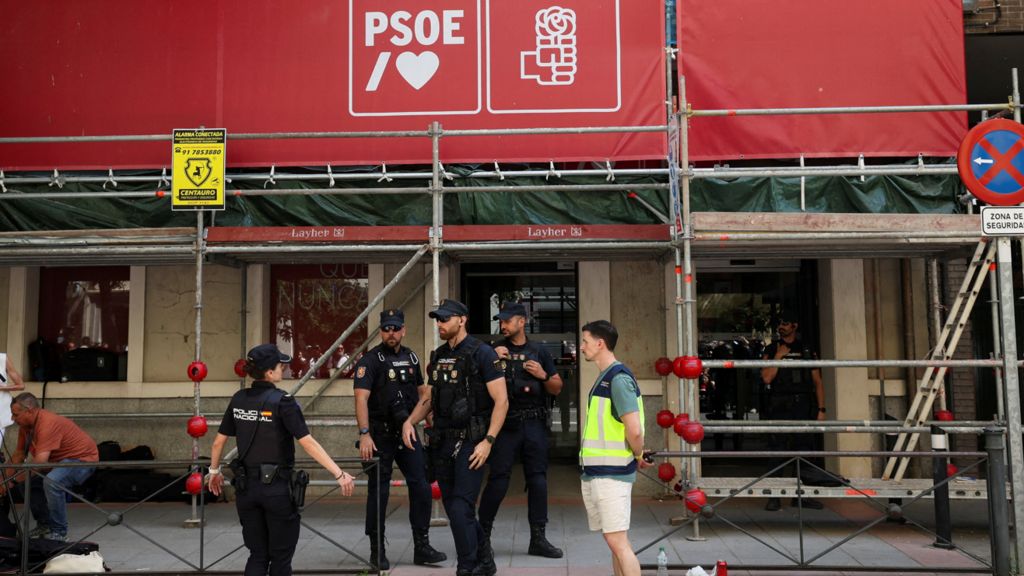
    In a dramatic development that has sent shockwaves through Spanish politics, law enforcement agencies have executed a raid on the Madrid headquarters of Prime Minister Pedro Sánchez’s governing Socialist Workers’ Party (PSOE), seizing confidential documents linked to an ongoing probe into alleged obstruction of judicial proceedings. The operation marks the latest escalation in a cascade of corruption scandals that have plagued Sánchez’s administration in recent months, putting intense political pressure on the embattled prime minister.

  • Man found with AI-generated child pornographic material fined €400

    Man found with AI-generated child pornographic material fined €400

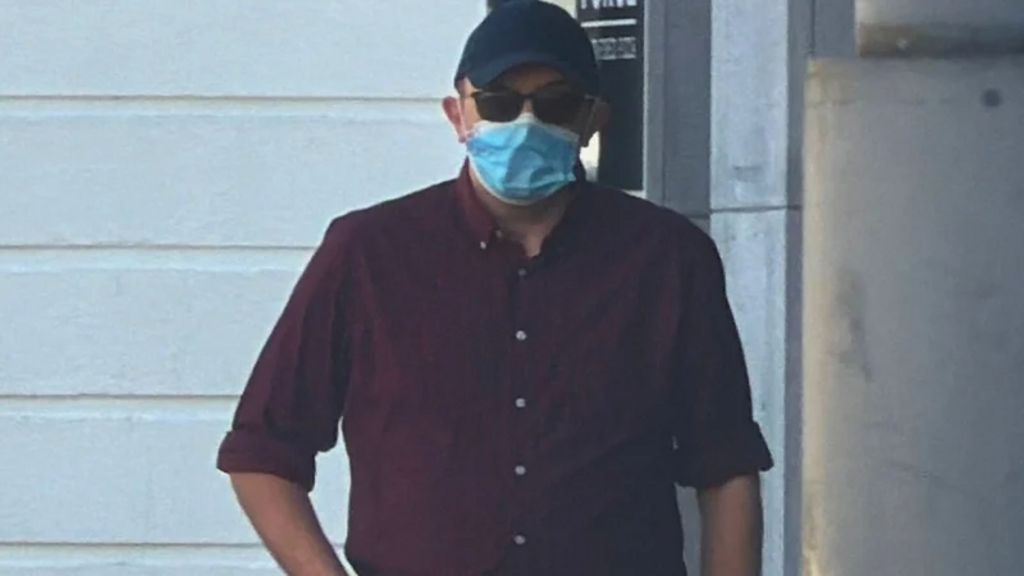
    In a landmark legal milestone for the Republic of Ireland, a 47-year-old man has become the first person in the nation to receive a conviction for offenses linked to AI-generated child sexual exploitation material. Stephen Buckley, who appeared before Tralee District Court in County Kerry, accepted full responsibility for possession of four illicit images created entirely or in part using artificial intelligence technology.

    The investigation into Buckley’s activities traces back two years, when the United States’ National Center for Missing & Exploited Children flagged suspicious activity linked to his devices and issued an alert to the Garda’s Dublin-based Online Exploitation Unit. Following the initial tip, detectives in Tralee moved to secure a search warrant in February 2024, entering Buckley’s home to carry out the court-ordered search. During the operation, officers seized multiple mobile devices from the property and conducted an official interview with Buckley, according to reporting from Irish public broadcaster RTÉ.

    Forensic analysis of the seized devices uncovered the prohibited content: one digitally altered image of a young girl created using an AI-powered editing application, alongside three animated, cartoon-style videos depicting underage teenagers. Buckley was subsequently taken into custody and formally charged with possession of AI-generated child pornography.

    In court proceedings, Buckley’s defense solicitor Pat Mann noted that his client had no prior criminal history on record. Mann emphasized that the case had already taken a severe toll on Buckley’s personal life, and argued that a recorded criminal conviction was unnecessary, pointing to Buckley’s full cooperation with investigators and his completion of more than 30 professional counselling sessions to address his harmful behavior.

    However, Judge David Waters rejected the request to avoid a recorded conviction, stressing that the offense carries serious implications for child protection. The judge noted that the downloading of the material demonstrated clear premeditation and intentional action, pushing back against claims that the presence of the content on Buckley’s phone was accidental. In his final ruling, Judge Waters officially convicted Buckley and ordered him to pay a €400 fine, marking the first conviction of its kind in the Republic of Ireland.

  • What critical infrastructure is Russia ‘relentlessly targeting’?

    What critical infrastructure is Russia ‘relentlessly targeting’?

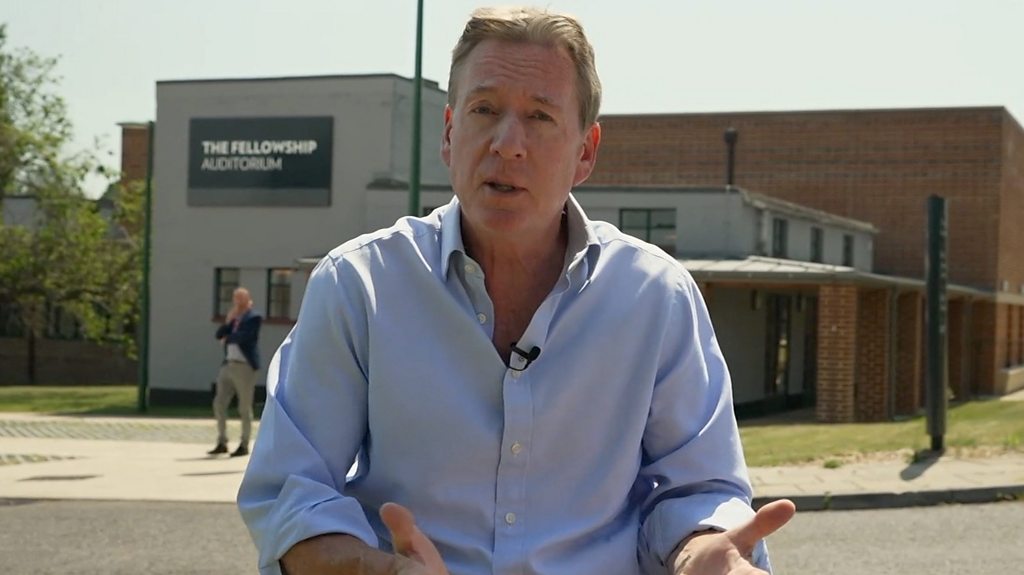
    In a recent high-stakes announcement that has sent ripples through global security circles, the UK’s Government Communications Headquarters (GCHQ) has pulled back the curtain on what intelligence officials describe as a sustained, aggressive campaign of targeting by Russia against critical international infrastructure. Speaking after the release of GCHQ’s alert, the BBC’s long-serving security correspondent Frank Gardner has broken down the full scope of the threat, unpacking the details of what infrastructure is in Moscow’s crosshairs and what the targeting means for nations around the world.

    According to the intelligence laid out in GCHQ’s statement, Russian intelligence operatives and cyber units have been relentlessly focused on two broad categories of critical infrastructure that underpin daily life and national security across Western nations and allied states: energy networks and maritime transportation systems. These are not random targets; intelligence assessments show Russian actors have been conducting prolonged reconnaissance operations, mapping out network vulnerabilities, and positioning malware that could be activated to disrupt operations at a moment’s notice.

    Gardner’s analysis notes that the campaign aligns with broader patterns of Russian aggressive intelligence activity in the wake of the full-scale invasion of Ukraine. GCHQ’s assessment stresses that while much of the activity so far has been pre-positioning rather than active disruption, the level of risk remains elevated, as the Russian state has shown a willingness to use cyber tools to create widespread disruption to civilian infrastructure during periods of heightened geopolitical tension.

    The GCHQ announcement also calls on private operators and national security agencies across affected countries to boost defensive measures, patch critical vulnerabilities, and increase monitoring for suspicious activity on their networks. Gardner points out that the public disclosure of this intelligence is unusual for GCHQ, a signal that the agency considers the threat severe enough to warrant public warning rather than quiet behind-the-scenes mitigation.

  • Biden sues US justice department to block release of recordings

    Biden sues US justice department to block release of recordings

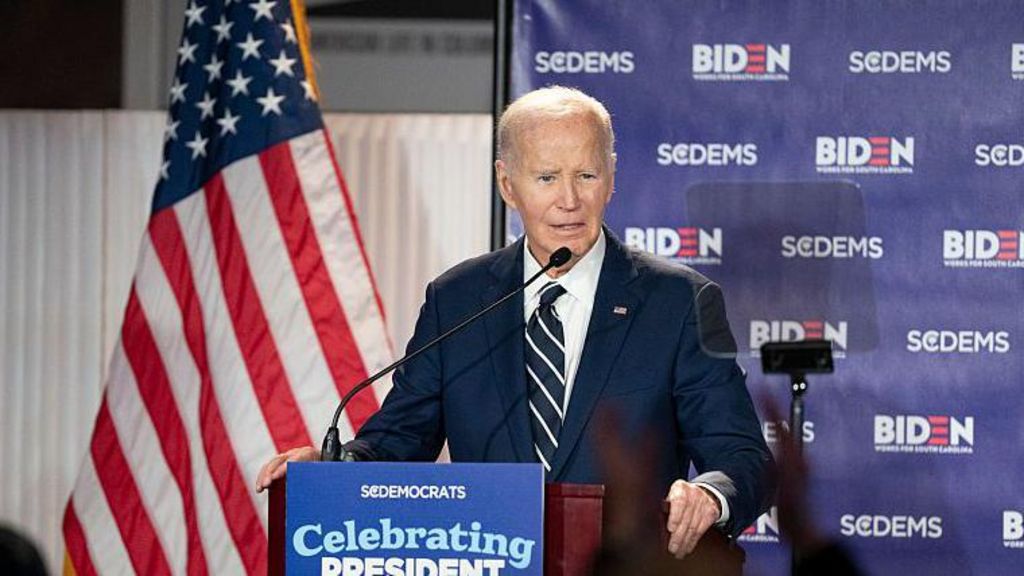
    The long-simmering debate over Joe Biden’s cognitive fitness has reignited in a dramatic legal clash, as the former US president has filed a lawsuit against the federal government to stop the planned release of private interview recordings he conducted with his memoir’s ghostwriter. The materials, which have already sparked fierce political controversy over the past two years, have been at the center of a battle between the Biden legal team, the new Trump-era Department of Justice, and congressional Republicans seeking to shed light on what they claim is evidence of significant mental decline.

    The interviews in question date back to 2016, when Biden worked with co-writer Mark Zwonitzer to draft his 2017 memoir *Promise Me, Dad*, a reflective work centered on the 2015 death of his elder son Beau Biden. The recordings and transcripts of these conversations were obtained by Special Counsel Robert Hur during his 2023-2024 investigation into Biden’s improper retention of classified documents after he left the vice presidency.

    Hur’s final 2024 report, while declining to recommend criminal charges against Biden, included damning observations about the former president’s memory that upended American politics. Citing the ghostwriter interviews, Hur wrote that the exchanges were “painfully slow, with Mr Biden struggling to remember events and straining at times to read and relay his own notebook entries.” The report also noted that Biden referenced personal vice-presidential notes during the interviews, some of which contained classified material, and explicitly pointed to “significant limitations” in Biden’s recollection. The findings triggered a nationwide conversation about Biden’s age and health, intensified after a poor performance in a 2024 general election debate eroded confidence from his own Democratic Party. Ultimately, Biden withdrew his bid for re-election that year.

    In the months following the release of Hur’s report, House Republicans leading three congressional impeachment investigations into Biden submitted requests to obtain the full interview records. The Heritage Foundation, a prominent conservative Washington think tank, also launched a parallel legal battle to force the materials into the public domain.

    The trajectory of the release shifted dramatically after Donald Trump won the 2024 presidential election and took office. The Department of Justice, which previously blocked disclosure of the interviews on privacy grounds during Biden’s presidency, reversed its position and announced plans to release all records by June 15.

    In an official statement defending the reversal, Justice Department spokesperson Natalie Baldassarre directly attacked the prior Biden administration’s handling of the materials. “Joe Biden’s Justice Department tried to hide audio recordings that clearly demonstrate a significant decline in his cognitive abilities as far back as 2016,” Baldassarre said. “We will fight to ensure the American people can hear these recordings and draw their own conclusions about the former President’s mental acuity before he sought the presidency.”

    Biden’s legal team has pushed back hard against the planned release in their federal lawsuit, arguing that the private conversations between the former president and his ghostwriter are protected under the US Privacy Act. They also accuse the current Justice Department of violating the Administrative Procedure Act, the federal law that sets binding rules for government agency conduct. The lawsuit claims the DOJ is relying on a false legal justification to disclose the sensitive materials, with the explicit improper goal of public exposure of Biden’s private conversations for political gain.

  • A warmer world creates bigger and more damaging hailstones, study says

    A warmer world creates bigger and more damaging hailstones, study says

    As human-caused climate change continues to reshape extreme weather patterns across the globe, a groundbreaking new study published in the journal *Nature* has uncovered a worrying consequence of rising global temperatures: a dramatic increase in the frequency of large, destructive hailstorms by the end of the 21st century.

    Led by a research team with lead authors based in China, the study uses advanced three-dimensional modeling of hail formation – a method that fills key gaps in previous hail research, which mostly focused on the United States and only examined changes in storm frequency rather than hail size – to project how shifting atmospheric conditions will alter hail activity worldwide.

    The core link between a warming planet and larger hail lies in two key atmospheric changes driven by greenhouse gas emissions from burning coal, oil, and natural gas. Warmer air holds more water vapor: roughly 4% more moisture for every one degree Fahrenheit increase in temperature, or 7% per degree Celsius. This extra moisture injects more energy into storm systems, generating stronger updrafts – the upward currents of air required to form and sustain hail. At the same time, higher atmospheric temperatures mean smaller hailstones are more likely to melt before reaching the ground, while larger, heavier stones survive the descent. “We’ve seen record hailstones in recent years. I find this extremely concerning because we’re not really building our environment to be resilient to hail,” said study co-author John Allen, a meteorology professor at Central Michigan University, in an interview from Guymon, Oklahoma, where he was joining field researchers who penetrate active hailstorms to study their inner mechanics.

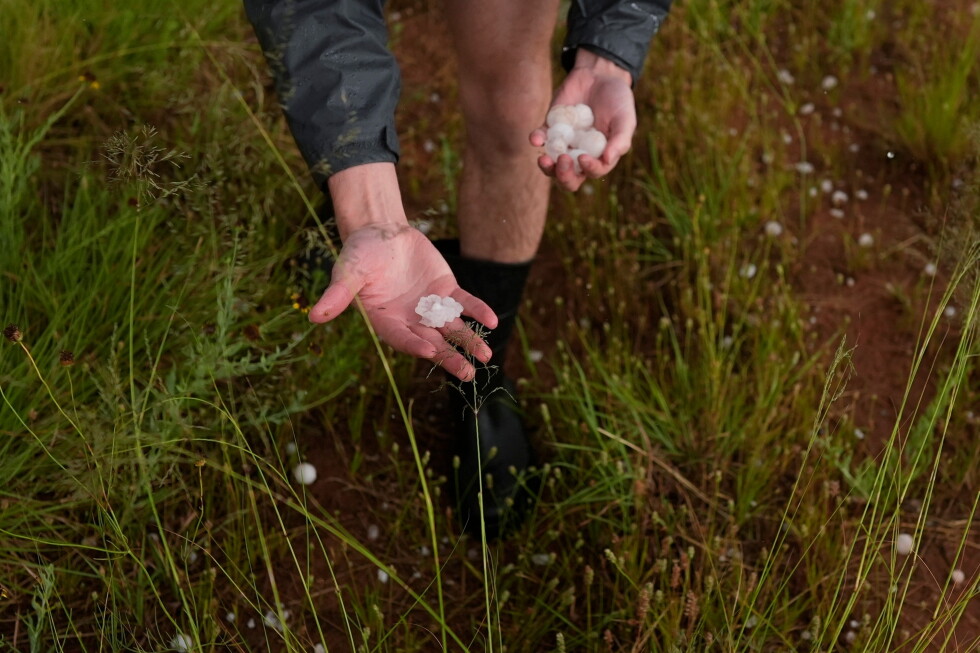
    Depending on the volume of future heat-trapping greenhouse gas emissions, the study projects that global occurrences of hail larger than 1.2 inches (30 millimeters) – roughly the size of a U.S. half-dollar coin, between a large marble and a golf ball – will jump by between 38% and 47% by 2100. By contrast, storms producing smaller hail will decline by 4% to 8% globally.

    Geographically, the most pronounced increases in large hail are expected to hit Argentina, Western Europe, Canada, and the U.S. Northern Plains. Meanwhile, many tropical regions will see an overall reduction in hail as smaller stones melt more frequently in warmer upper-atmosphere temperatures.

    Unlike many other extreme weather events, hail rarely causes direct human fatalities, but its economic toll is already staggering. The study estimates annual hail damage costs hit roughly $10 billion in the U.S. and $80 billion globally – figures that already outpace average annual damage from tornadoes, and rival the cost of multiple hurricane events each year. Larger hailstones deliver exponentially more destructive force: they weigh more, fall faster, and hit with far greater impact than smaller stones. While small hail mostly harms crops, hailstones measuring 2 inches (5 centimeters) or larger can punch through vehicle bodies, destroy roofs, damage solar energy infrastructure, and cripple other built assets, explained Andreas Prein, a climate scientist at ETH Zurich who was not involved in the research. Where a single large hailstone may only leave a repairable hole in a roof, a full hailstorm of large stones typically requires a complete, costly roof replacement, Allen noted.

    Outside experts emphasized that while climate change is increasing the risk of more large hail, total future damage will not be shaped by weather patterns alone. “This is a meaningful climate signal,” said Walker Ashley, a meteorology professor at Northern Illinois University who did not participate in the study. “But disaster losses are not driven by the peril alone.” As population and development expand into hail-prone regions – including the rapid construction of residential properties and utility-scale solar farms in high-risk areas – total risk will rise even faster. “Climate change may be increasing the potential for larger, more damaging hail in some regions, but the future loss signal will also depend heavily on where people build, what they build, how resilient those structures are, and how land use changes,” Ashley added.

    The Associated Press received financial support from private foundations for its climate and environmental coverage, and retains full editorial control over all content. Full details on AP’s standards for philanthropic partnerships, a list of supporters, and coverage areas are available on AP.org.