作者: admin

  • Democrats were already scrambling in California’s governor race. Then Swalwell dropped out

    Democrats were already scrambling in California’s governor race. Then Swalwell dropped out

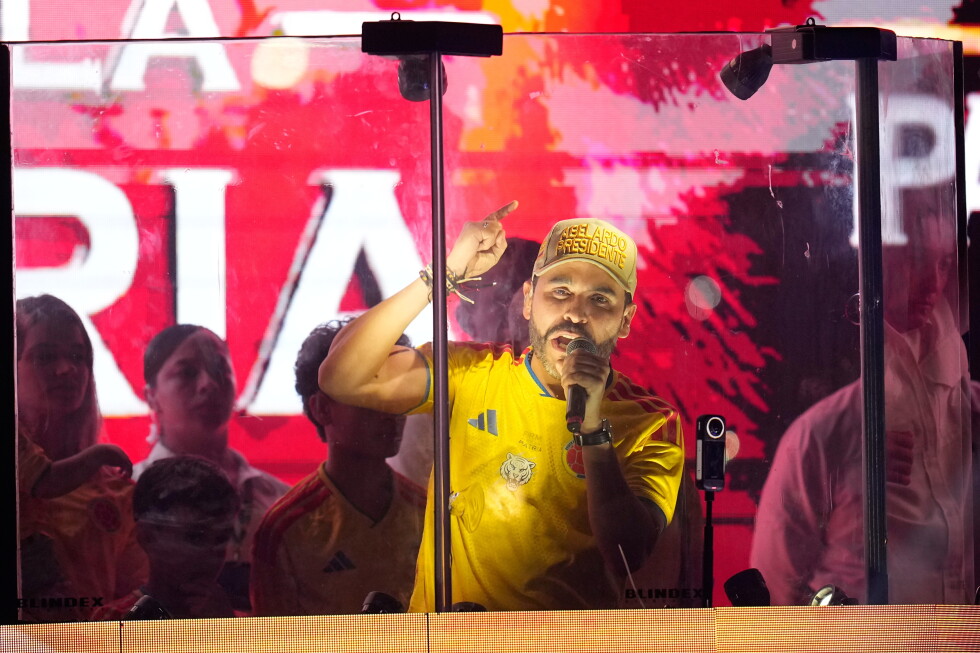
    The 2026 California gubernatorial election, a contest Democrats have long considered a safe win for their party, has been thrown into unprecedented turmoil following the sudden exit of its leading Democratic contender. Representative Eric Swalwell announced his withdrawal from the race Sunday, mere days after multiple women published sexual assault and misconduct allegations against him through major outlets including the San Francisco Chronicle and CNN. Swalwell has forcefully denied all serious false accusations, though he acknowledged poor judgment in past decisions. Hours after the U.S. House Ethics Committee launched a formal investigation into the claims Monday, Swalwell also announced he would resign his congressional seat entirely.

    Swalwell’s departure has amplified a cascade of pre-existing problems that have plagued California’s Democratic party for months in the lead-up to the June primary. Term limit rules bar incumbent Democratic Governor Gavin Newsom from seeking re-election, and high-profile, widely recognized state politicians – including former Vice President Kamala Harris – have opted not to enter the race. That has left a crowded field of eight lesser-known Democratic candidates, all struggling to build name recognition and traction across California’s massive, costly media market. Even before Swalwell’s exit, the fragmented field had split the Democratic base, alarming party strategists.

    A March opinion poll from the University of California, Berkeley Institute of Governmental Studies sent shockwaves through state political circles when it found two Republican candidates leading all contenders in voter support, thanks to the fractured Democratic vote. Under California’s unique nonpartisan primary system, the top two vote-getters advance to the November general election regardless of partisan affiliation. That means a June primary outcome could leave Democrats completely shut out of the general election ballot – a nearly unthinkable scenario in one of the most reliably blue states in the U.S., which has not had a Republican governor since Arnold Schwarzenegger left office in 2011.

    Political experts warn that such an outcome would represent an unforced error of historic proportions for Democrats, particularly in a state where former President Donald Trump’s approval rating hovers below 30%. Beyond the state’s borders, the results of this gubernatorial race carry national weight: California is the fifth-largest economy in the world, and its pioneering policies on climate change, consumer protection, and technology often shape regulatory frameworks across the entire country.

    Before his exit, Swalwell had begun to build momentum, pulling ahead of the rest of the crowded Democratic field and positioning the party to lock down a spot in the general election. With his sudden exit, no clear candidate has emerged to absorb his support. Veteran Democratic strategist Garry South, who has managed four gubernatorial campaigns across California, described the current state of the race as unlike anything he has ever witnessed. “The Democratic field was already pretty muddled, even after Swalwell took a small lead,” South noted. “Now, it’s just an outright morass.”

    Two candidates are widely seen as the top contenders to pick up Swalwell’s supporters: former Congresswoman Katie Porter and billionaire climate activist Tom Steyer. Neither, however, is a guaranteed lock to win a spot in the general election. Porter has previously faced public reports of alleged staff mistreatment, though she has pledged to improve how she supports her team. Steyer has poured $89 million into campaign advertising across the state, according to the San Francisco Chronicle, but has yet to see a corresponding jump in poll numbers.

    The remaining Democratic field includes former U.S. Health and Human Services Secretary Xavier Becerra, San Jose Mayor Matt Mahan, California Superintendent of Public Instruction Tony Thurmond, former Los Angeles Mayor Antonio Villaraigosa, and former State Controller Betty Yee. None of the current candidates, however, have the statewide star power political analysts say the party needs to cut through the clutter, and many voters report struggling to distinguish between the crowded slate of contenders.

    For many California voters, the lack of name recognition has left them undecided just two months out from the June 2 primary. Joko Tamura, a 58-year-old Santa Monica resident and registered Democrat who plans to vote in the election, says she does not even recognize half the candidates running. While she has heard of Steyer and Porter, she says she lacks enough information to settle on a favorite, with homelessness and the state’s crippling cost of living topping her list of policy concerns. Jacob Casey, a 42-year-old physician, says his busy schedule has left him unable to follow the race closely, and he is still waiting for a candidate to break through.

    Mark DiCamillo, who led the March UC Berkeley poll that first exposed Democrats’ weakness, called the current state of the race unprecedented. “I haven’t seen a primary election for governor with this level of indecision, and lack of voter enthusiasm, with less than two months to go before voting starts to take place,” DiCamillo told the BBC, adding that “voters really don’t have a clear picture of any one of the candidates.”

    In the wake of Swalwell’s exit, both Porter and Steyer have moved quickly to fill the political vacuum. Porter has centered her messaging on California’s ongoing housing affordability crisis, framing policy proposals to speed up construction approvals and cut through red tape to lower building costs and expand access to diverse, affordable housing for state workers. Steyer has also leaned into cost of living issues, releasing a social media video outlining his plan to lower living costs for California residents, and attacking former President Trump over the ongoing conflict in Iran, arguing working-class Californians are bearing the financial brunt of the conflict. That messaging has resonated with some undecided voters like Leila Salem, a 28-year-old independent Los Angeles voter who staunchly opposes the war, though she says she still plans to research candidates before making her choice.

    While Democrats grapple with internal chaos, California’s Republican party is also facing its own divisions. The two leading GOP candidates are former Fox News host and one-time British Prime Minister David Cameron advisor Steve Hilton, and Riverside County Sheriff Chad Bianco. The March poll found Republican voters evenly split between the two candidates, and with Democrats holding a 2-to-1 voter registration advantage in the state, locking the Democratic party out of the general election remains the GOP’s only plausible path to a November victory.

    Many political analysts expected that Trump’s recent endorsement of Hilton would shift momentum in the GOP race, consolidating Republican support behind Hilton and pushing him ahead of at least one Democratic candidate. However, neither candidate secured the official endorsement of the California Republican Party during its recent convention, leaving the two evenly matched among the party’s base.

    Wesley Hussey, a political science professor at Sacramento State University, notes that Democrats have clear reason for anxiety after the collapse of their presumptive front-runner. Still, he added that a conventional general election matching one Democrat and one Republican remains possible if Swalwell’s supporters consolidate behind Porter, Steyer, or even a last-minute entry into the race. “It’s going to take a few days for the dust to settle in this new version of the race,” Hussey said.

  • Trump administration agrees to keep Pride flag at Stonewall monument

    Trump administration agrees to keep Pride flag at Stonewall monument

    Months after a controversial removal sparked widespread public outcry and legal action, the iconic rainbow Pride flag is set to return permanently to the official federal flagpole at New York’s Stonewall National Monument, following a court settlement reached by the Trump administration with LGBTQ+ advocacy and historic preservation groups.

    Widely recognized as the symbolic birthplace of the modern global LGBTQ+ rights movement, the Stonewall site sits across the street from the Stonewall Inn, the Greenwich Village gay bar where the 1969 Stonewall Uprising began. The uprising, sparked by a discriminatory police raid on the venue, ignited a decades-long fight for queer equality that has reshaped civil rights discourse around the world.

    The dispute traces back to February, when the U.S. National Park Service removed the Pride flag from the monument’s main flagpole. The agency justified the action by citing Department of the Interior rules that restrict flying non-designated flags on official federal flagpoles at National Park Service-managed sites, except for flags that carry specific historical context. The rainbow flag had originally been installed at the site during the administration of former President Joe Biden, after the 7.7-acre monument was first designated by former President Barack Obama in 2016.

    The flag’s removal immediately drew fierce backlash from LGBTQ+ communities, activists and public officials across the country. Critics of the action held impromptu demonstrations at the monument, and raised unofficial private Pride flags at the site in protest. A coalition of nonprofit organizations, including the Gilbert Baker Foundation — named for the queer artist who created the original rainbow Pride flag in 1978 — and several historic preservation groups responded by filing a lawsuit against the administration to challenge the removal.

    Details of the settlement, which was outlined in court documents filed Monday, show the Trump administration has agreed to reinstall the Pride flag to the monument’s official flagpole within seven days of judicial approval, and commit to keeping it displayed at the site permanently. Under the terms of the agreement, three flags will fly together on the federal flagpole: the U.S. national flag, the National Park Service flag, and the rainbow Pride flag.

    Charles Beal, president of the Gilbert Baker Foundation, celebrated the settlement in a public statement released Monday, calling the rainbow banner a global symbol that carries far more than symbolic weight. “It is a global emblem of hope, visibility, and the ongoing struggle for equality,” Beal said. “Its presence at Stonewall, the birthplace of the modern LGBTQ+ rights movement, is both historically and culturally indispensable. Restoring the flag affirms the truth of our history and the legitimacy of our continued fight for dignity and inclusion.”

    New York Mayor Zohran Mamdani also hailed the outcome as a landmark win for the LGBTQ+ community and all New Yorkers. In a post on X, the mayor wrote that the flag’s return is “a victory for the LGBTQ+ community and for our entire city. It’s a reminder that New Yorkers won’t let our history be rewritten.”

    The settlement still requires final approval from a federal judge to go into effect, but activists across the country have already marked the outcome as a critical win for protecting queer history and ensuring equal visibility for the LGBTQ+ rights movement at its most iconic site.

  • Top Iran diplomat: Deal ‘inches away,’ Trump team sabotaged talks

    Top Iran diplomat: Deal ‘inches away,’ Trump team sabotaged talks

    High-stakes negotiations between U.S. and Iranian delegations in Pakistan’s capital Islamabad collapsed over the weekend, with Iran’s top diplomat accusing the Trump administration of tanking a near-final preliminary ceasefire agreement through unrealistic, overreaching demands that brought an end to marathon talks aimed at ending a six-week open conflict.

    Abbas Araghchi, Iran’s foreign minister, outlined the breakdown in a public post to social media Sunday, noting that the weekend discussions marked the first high-level direct engagement between the two nations in 47 years. Araghchi emphasized that Iran entered the bargaining process in good faith to end the ongoing war, but as negotiators closed in on a finalized Islamabad Memorandum of Understanding, the U.S. side shifted its demands, insisted on maximalist positions, and maintained its economic blockade on Iran. “Zero lessons earned,” Araghchi wrote. “Good will begets good will. Enmity begets enmity.”

    This failed talks mark the second time in just two months that U.S. negotiators have been accused of sabotaging a potential deal that was widely seen as within reach. In late February, just hours before U.S. and Israeli forces launched airstrikes on Iranian targets, Oman’s top diplomat—who had mediated earlier rounds of negotiations—confirmed that substantial progress toward a negotiated settlement had already been reached.

    The U.S. negotiating team in Islamabad was led by Vice President JD Vance, alongside special envoys Steve Witkoff and Jared Kushner, the son-in-law of former President Donald Trump. During the talks, the U.S. delegation laid out a series of non-negotiable red lines, including demands that Iran permanently end all uranium enrichment activities and dismantle its core civilian nuclear energy infrastructure. Nuclear non-proliferation experts widely note that Iran retains the legal right to conduct civilian uranium enrichment under the terms of the Treaty on the Non-Proliferation of Nuclear Weapons.

    Speaking to reporters after the talks collapsed, Vance pushed back against Iran’s accusations, claiming the U.S. side had approached negotiations with significant flexibility. “We just could not get to a situation where the Iranians were willing to accept our terms,” Vance said.

    President Trump echoed that framing in his own social media statement, arguing that most negotiating points had been agreed upon, but the core issue of Iran’s nuclear program remained unresolved. “The meeting went well, most points were agreed to, but the only point that really mattered, NUCLEAR, was not,” Trump wrote.

    Iran’s lead negotiator, Parliament Speaker Mohammad Bagher Ghalibaf, echoed Araghchi’s criticism, adding that decades of conflict with the U.S. have left Iran with no reason to trust American negotiating commitments.

    Within hours of the single-day talks faltering, Trump announced that the U.S. would implement a naval blockade of the Strait of Hormuz, a strategic waterway that carries roughly a fifth of the world’s daily oil trade. Critics have universally labeled the blockade an illegal act of war that risks dragging both nations into a far wider, more destructive conflict.

    Ryan Costello, policy director at the National Iranian American Council, warned that the U.S. approach continued to prioritize dictating terms over good-faith negotiation. “It is concerning that Vance already suggests that the U.S. has put forward a final and best offer, suggesting that the U.S. is still trying to dictate terms rather than negotiate a better future,” Costello said. “We urge President Trump to walk back his blockade threat and for the U.S. and Iran to reengage and consider implementing practical steps where there is agreement to lower tensions and build on this fragile pause to the war.”

    The Wall Street Journal reported Sunday that the Trump administration is also considering resuming limited military strikes against Iran targets to complement the Hormuz blockade, which is scheduled to go into effect at 10 a.m. ET. The outlet noted that a full-scale return to a sustained bombing campaign remains on the table, though anonymous administration officials said that option is currently less likely.

    U.S. Representative Pramila Jayapal, a Washington Democrat, issued a scathing rebuke of Trump’s actions Sunday, calling the ongoing conflict with Iran illegal, immoral, a war crime, and a catastrophic threat to American public interests. Jayapal called for urgent action to remove Trump from office, saying that impeachment, invocation of the 25th Amendment, or a push for voluntary resignation are all on the table. “This is so grave of a situation,” Jayapal told MSNBC’s *MS NOW*.

  • Woman in court after puppies dumped by river

    Woman in court after puppies dumped by river

    A high-profile animal cruelty case in South Australia has drawn public criticism after a 53-year-old woman escaped a permanent criminal conviction for abandoning seven vulnerable puppies along the banks of Port Adelaide’s Port River.

    Barbara Anderson, a resident of Athol Park, entered a guilty plea to a single charge of animal ill-treatment during a hearing this week at Port Adelaide Magistrates Court, following a months-long investigation led by the Royal Society for the Prevention of Cruelty to Animals (RSPCA) South Australia. The disturbing incident dates back to March 30, 2024, when a local fisherman made a startling discovery: seven young red heeler puppies left stranded near the water’s edge.

    By the time authorities arrived, several of the defenseless pups had wandered into the shallow Port River waters, forcing police officers to wade into the current to retrieve all seven animals. Investigators later used local CCTV footage to trace the abandonment back to a Great Wall ute registered to Anderson. Following a public appeal to identify the puppies’ owner, Anderson presented herself at the Port Adelaide Police Station on May 7 to claim responsibility.

    Anderson gave conflicting accounts of the events to investigators: in court, she claimed she had brought her adult dog Missy and the seven puppies to the river for an outing, only to realize Missy was missing after she unloaded the puppies from her vehicle. She told the court she left the puppies unattended while she searched for Missy, and forgot to return them to her car before they went missing. She never filed a missing animal report with either police or the RSPCA, contradicting an earlier statement she gave to 7News claiming the dogs had escaped from her vehicle and were taken by an unknown third party.

    In a decision that has disappointed animal welfare advocates, Magistrate Briony Kennewell ruled against recording a permanent criminal conviction against Anderson. Instead, the 53-year-old was handed a 12-month good behaviour bond. She is permitted to keep her three current dogs, on the strict condition that the animals are desexed and properly registered with local authorities, but she is permanently banned from acquiring any new pets for her household. The court also ordered Anderson to pay $3000 in legal costs to the RSPCA, which rescued and successfully rehomed all seven abandoned puppies.

    Andrea Lewis, head of animal welfare at RSPCA South Australia, shared the organization’s reaction to the court’s ruling in a statement following the hearing. “Although we are disappointed with the outcome of this case, we are thankful that the puppies were safely rescued and unharmed as they could have easily drowned in the river,” Lewis said. The case has reignited public debate over animal cruelty sentencing standards in South Australia, with many community members questioning the leniency of the penalty for the abandonment of vulnerable animals.

  • Australia to join 40 countries in talks to potentially deploy defensive naval coalition to Strait of Hormuz

    Australia to join 40 countries in talks to potentially deploy defensive naval coalition to Strait of Hormuz

    A multilateral diplomatic push to reopen the strategically critical Strait of Hormuz, closed following cross-border attacks against Iran, is set to move forward this week with 41 nations including Australia participating in high-stakes international negotiations hosted by the United Kingdom and France.

    The waterway, one of the world’s most vital chokepoints for global energy trade, was effectively shut down by Tehran in late February after the U.S. and Israel carried out strikes on Iranian targets. The closure has sent shockwaves through global energy markets, disrupting crude oil exports from the Middle East — the planet’s largest oil-producing region — and driving widespread supply uncertainty that impacts economies worldwide.

    French President Emmanuel Macron has framed the potential multinational response to the crisis as a strictly defensive, neutral initiative focused on reestablishing unimpeded navigation through the strait. In a social media statement released overnight, Macron emphasized that the proposed defensive naval mission would remain independent of the ongoing conflict between warring parties, with deployment possible as soon as conditions on the water allow. He described the effort as a “peaceful multinational” undertaking aligned with international rules governing free maritime passage.

    Australia’s formal participation in this week’s summit was confirmed Tuesday by Federal Defence Industry Minister Pat Conroy, who reaffirmed Canberra’s commitment to a diplomatic resolution to the standoff. Speaking to the Australian Broadcasting Corporation, Conroy noted that Australia has already been involved in ongoing diplomatic efforts to reopen the strait, and said the federal government welcomes the UK and France’s convening of the new multilateral talks.

    “Australia will most definitely participate in that summit, we are very keen to see an opening by diplomatic means, on the Strait of Hormuz,” Conroy said.

    The minister also reiterated Australia’s longstanding call for de-escalation in the region, stating that the Australian government supports extending the current two-week ceasefire and pushing for permanent peace talks between the U.S. and Iran. “We’d like to see Iran and United States return to the negotiating table, and a permanent peace achieved, with the Strait of Hormuz open, so that traffic flows through,” Conroy added. “We think the US has achieved its war aims, and we should continue to encourage a diplomatic opening of the Strait of Hormuz.”

    The latest diplomatic push comes after weekend peace talks mediated by Pakistan failed to produce a breakthrough. Overnight, former U.S. President Donald Trump confirmed that a U.S. military blockade of the waterways is now in effect, raising new concerns about further escalation of tensions in the Persian Gulf region. This is a developing story, with more details expected to emerge from this week’s multilateral talks.

  • Eric Swalwell resigns from Congress after sexual misconduct claims

    Eric Swalwell resigns from Congress after sexual misconduct claims

    In a stunning development that has upended California political circles, long-serving Democratic U.S. Representative Eric Swalwell has formally stepped down from his congressional seat, capping a turbulent week that saw him abandon his bid for California governor amid mounting public and political pressure over multiple sexual misconduct allegations.

    The 12-year House incumbent, who represented a Bay Area district adjacent to San Francisco after first winning election in 2012, announced his resignation in a public letter published to the social platform X. In the statement, Swalwell acknowledged poor past judgment while pushing back against the most severe claims leveled against him. “I am deeply sorry to my family, staff, and constituents for mistakes in judgement I’ve made in my past,” the statement read. “I will fight the serious, false allegation made against me. However, I must take responsibility and ownership for the mistake I did make.”

    The crisis that led to Swalwell’s exit erupted last week, when four women came forward with accusations of misconduct spanning a range of behavior, from unwanted sexual advances to rape. The claims triggered an official ethics inquiry by the U.S. House of Representatives, which was already underway when Swalwell made the decision to resign. Prior to his departure from Congress, the lawmaker had already suspended his campaign for the California governorship amid plummeting support from voters and growing calls from within his own party to step aside.

    This is an ongoing breaking news story, with additional details expected to emerge in the coming hours and days. Readers can access real-time updates through the BBC News mobile application, or by following the official BBC Breaking News account on X for the latest alerts.

  • How Orban’s loss could damage the British right

    How Orban’s loss could damage the British right

    For nearly two decades, Viktor Orban turned Hungary from a relatively quiet central European state into a global hub for transnational conservative politics, building a sprawling interconnected network of think tanks, academic institutions, and ideological initiatives designed to unite right-wing movements across Europe and North America while expanding Budapest’s soft power influence across the Western world. Following 16 years in office, Orban stepped down last weekend after opposition candidate Peter Magyar, a conservative newcomer, secured a decisive election victory with more than 53% of the popular vote – a result that has cast the entire future of Orban’s ideological project into major doubt.

    At the core of Orban’s network are two flagship institutions: the Danube Institute, a Budapest-based think tank focused on engaging Anglophone conservative thinkers, and the Mathias Corvinus Collegium (MCC), widely described as Orban’s purpose-built ideological training center. Founded by John O’Sullivan, a former speechwriter for British Prime Minister Margaret Thatcher, the Danube Institute has become a key meeting point for right-wing intellectuals from the United Kingdom, funded entirely by the Hungarian government through the state-managed Batthyany Lajos Foundation. The institute primarily hosts British and American visiting fellows, who regularly contribute to leading conservative publications across the Anglosphere including *The Spectator* and UnHerd.

    Gavin Hayes, a British visiting fellow at the institute, told Middle East Eye that the center has become more connected to the British right-wing intellectual scene than many domestic London-based institutions. “It’s an intellectual turnstile,” Hayes explained, “I’ve met more prominent right-wing thinkers from London here in Budapest than I ever did in London.” The institute has helped spread interest in the so-called “Orban model” of socially populist, nationalist politics across the British right, he added, providing a space for hard-right British figures to exchange ideas with ideological allies who share their skepticism of mainstream progressive policy. Back in 2019, Tim Montgomerie, former social justice advisor to ex-British Prime Minister Boris Johnson, even used a Danube Institute speech to call for a new “special relationship” between London and Budapest.

    The MCC, for its part, has grown into one of the most well-funded nodes of Orban’s ideological network, receiving major state assets during his premiership – including 10% stakes in two large Hungarian companies, among them regional energy giant MOL. The institution has actively cultivated ties with prominent British right-wing figures, including Matt Goodwin, a Reform UK candidate who lost a February Greater Manchester by-election to the Green Party and was scheduled to deliver a talk at MCC just one day after Orban’s election defeat. MCC hosts an annual summit at King’s College London, and has directed more than half a million pounds – over 90% of its total funding – to the Roger Scruton Legacy Foundation (RSLF), an organization named after the late prominent British conservative philosopher.

    The RSLF counts former UK Conservative minister Michael Gove, current editor of *The Spectator*, among its board members, and one of its directors is James Orr, a Cambridge theologian who also serves as a senior advisor to Reform UK leader Nigel Farage. Orr praised Orban’s government during an appearance at a 2023 Hungarian political festival, framing it as a needed counterpoint to what he called the anti-national heritage ideology dominating mainstream British politics. That same event drew a host of other high-profile right-wing figures, including US billionaire Peter Thiel, former Boris Johnson advisor Dominic Cummings, and Goodwin, who hailed Orban’s administration as a rebuke of what he described as “national self-loathing” in British public life.

    Orban’s pan-European conservative project has long found particularly fertile ground in the UK, especially within the rapidly rising right-wing party Reform UK, which currently leads national opinion polls ahead of the next UK general election. Farage, Reform’s leader, has repeatedly praised Orban over the years, rejecting criticisms of the Hungarian leader’s authoritarian tendencies and framing him as the future of European politics. “He actually believes in things. He does not sheepishly, slavishly go along with the European project… he firmly believes in the concept of the nation-state,” Farage said of Orban in 2019, and headlined a 2024 National Conservatism conference in Brussels alongside Orban, an event sponsored by MCC’s Brussels office.

    Orban’s brand of hardline nationalist politics has also drawn support from leading right-wing figures across the Atlantic, and just last month he shared the stage with Argentinian President Javier Milei at a Conservative Political Action Conference held in Budapest, while former US President Donald Trump and Israeli Prime Minister Benjamin Netanyahu delivered pre-recorded video addresses to the crowd. Despite the network’s rapid growth over the past decade, its future is now unclear, as Magyar’s Tisza Party ran on an explicit platform that promised to end the use of public funds to build transnational political networks.

    The party has pledged to draw a clear line between nonpartisan education and ideological propaganda, and has promised to take back state assets currently held by MCC. “No one knows what will happen,” Hayes said of the Danube Institute. “Effectively this is an arm of Hungarian public diplomacy, so the new government could come in and decide there’ll always be the place for an Anglophone institute.” But if the new government follows through on its campaign promises, Orban’s sprawling Budapest-based conservative network will be forced to find new sources of funding and new patrons to sustain its transnational ideological work.

  • Ghana appoint ex-Man Utd assistant Queiroz as coach

    Ghana appoint ex-Man Utd assistant Queiroz as coach

    Veteran football tactician Carlos Queiroz, a familiar name in top-tier global football management, has been named the new head coach of Ghana’s men’s national team, the Black Stars, as they prepare for the 2026 FIFA World Cup co-hosted by the United States, Canada and Mexico this summer. The 73-year-old Portuguese coach steps into the role vacated by Otto Addo, who was dismissed from the position on March 31 following underwhelming results that included back-to-back friendly losses to Germany and Austria, as well as a stunning failure to qualify for the 2025 Africa Cup of Nations.

    Queiroz brings decades of elite coaching experience to the Ghanaian side, with a resume that includes two separate stints as assistant manager to Sir Alex Ferguson at English Premier League giants Manchester United. His first spell at Old Trafford ran from 2002 to 2003, and he returned to the club between 2004 and 2008, a tenure that separated his time as head coach of Spanish powerhouse Real Madrid. Most recently, Queiroz held the top job with Oman’s national team, but he departed the role last month after the side failed to secure a spot at the 2026 World Cup.

    Born in Mozambique, Queiroz is no stranger to the World Cup stage: if he leads Ghana through this summer’s tournament, it will mark his fifth appearance as a national team head coach at football’s biggest global event. He previously guided Portugal to the round of 16 at the 2010 World Cup, and led Iran at the past three consecutive editions of the tournament. Beyond these roles, Queiroz has held senior coaching positions with national teams across four continents, including stints with Egypt, Japan, Colombia and South Africa, and he first took charge of the Portuguese national team in the early 1990s.

    In a statement announcing his appointment, Queiroz emphasized his commitment to the new role, saying: “I accept this mission with the same passion and commitment that have guided me throughout my career. Ghana is a nation of talent, pride, and footballing soul. I arrive with respect for its history and belief in its future.”

    Ghana has been drawn into Group L for the 2026 World Cup, and will kick off its tournament campaign against Panama on June 17. The side will then face back-to-back tough matches against England on June 23 and Croatia on June 27 as it vies for a spot in the knockout stage of the competition.

  • Brazil’s fugitive ex-spy chief detained by US immigration

    Brazil’s fugitive ex-spy chief detained by US immigration

    In a high-profile development that advances a major anti-coup investigation in Brazil, US Immigration and Customs Enforcement (ICE) officers took Alexandre Ramagem, the fugitive former head of Brazilian intelligence and close ally of ex-president Jair Bolsonaro, into custody on Monday. Ramagem had evaded Brazilian authorities for months after being convicted on charges tied to a failed 2022 coup plot aimed at preventing leftist leader Luiz Inacio Lula da Silva from taking office following his electoral victory.

    The 53-year-old former police officer led Brazil’s primary intelligence agency, ABIN, during Bolsonaro’s far-right presidency, and later won a seat as a federal legislator — a position he was forced to relinquish after his September conviction. A Brazilian court sentenced him to 16 years in prison for three grave offenses: armed criminal association, attempted coup d’état, and the attempted violent abolition of the rule of law. Rather than surrender to serve his sentence, Ramagem slipped across Brazil’s northern border into Guyana, skipping official immigration checks, before traveling to the United States using a diplomatic passport.

    Brazilian federal police confirmed the detention in an official statement Tuesday, framing the arrest as a successful outcome of cross-border law enforcement collaboration between Brazilian federal authorities and their US counterparts. An anonymous police source confirmed to Agence France-Presse that the detainee held in ICE custody, as listed on the agency’s public website, is indeed Ramagem. Brazil formally submitted an extradition request for Ramagem to US authorities back in December.

    The case has sparked immediate comment from Bolsonaro-aligned figures in the US. Paulo Renato Figueiredo, a pro-Bolsonaro influencer and grandson of the last military dictator to rule Brazil during the 1964–1985 authoritarian period, wrote on social media platform X that Ramagem was initially pulled over for a minor traffic violation before immigration officials took him into custody. Figueiredo claimed Ramagem held legal immigration status in the US at the time of detention and had a pending asylum application, adding that supporters expected a quick release and did not anticipate immediate deportation.

    Ramagem’s legal troubles extend far beyond the 2022 coup plot. He is currently the target of a separate federal investigation into allegations that he led a criminal ring that carried out illegal surveillance of political opponents and members of the Brazilian judiciary, on behalf of Bolsonaro and his inner circle. The operation reportedly used sophisticated Israeli surveillance software to target critics. Brazilian federal investigators have already recommended that prosecutors file formal criminal charges against Ramagem and more than 30 other co-conspirators, including Carlos Bolsonaro, one of the former president’s sons.

    The broader conspiracy case has already ended in a conviction for Jair Bolsonaro himself, who received a 27-year prison sentence for his role as the alleged mastermind of the coup attempt. Prosecutors have noted the plot failed only because top military commanders refused to back the putsch. The former president is currently serving his sentence under house arrest, after being moved from prison to a hospital last month for treatment of bronchopneumonia, with officials granting the home confinement arrangement on health grounds.

    The conviction of the former president has not ended the Bolsonaro family’s political ambitions: Bolsonaro has tapped his eldest son, sitting Senator Flavio Bolsonaro, to challenge incumbent Lula in Brazil’s October general election. New polling from the Datafolha Institute, published just one day before Ramagem’s detention, shows a razor-thin lead for Flavio Bolsonaro in a hypothetical head-to-head runoff, with 46% of intended voter support versus 45% for Lula.

  • Hungary’s next PM would pick up if Putin calls and tell him to stop Ukraine war

    Hungary’s next PM would pick up if Putin calls and tell him to stop Ukraine war

    One day after delivering a historic political upset that ended Viktor Orbán’s 16 consecutive years in power as Hungary’s prime minister, Péter Magyar, leader of the newly victorious Tisza party, laid out his bold domestic and foreign policy agenda during a marathon three-hour press conference on Monday.

    Magyar opened his remarks by revealing that he had already held introductory conversations with 10 European leaders in the immediate aftermath of his landslide victory, signaling a sharp shift away from Orbán’s often Euroskeptic and Russia-aligned agenda. On the topic of Russia, which had maintained a close partnership with Orbán’s outgoing administration, Magyar struck a clear, firm tone: he would not be the one to initiate contact with Russian President Vladimir Putin, though he would take the call if Putin reached out. “If Vladimir Putin calls I’ll pick up the phone,” Magyar told assembled reporters. “I don’t think it’ll happen, but if we did talk I’d tell him to please, after four years, put an end to the killing and end this war.”

    The Kremlin responded to Magyar’s victory with a measured statement, saying it respects the election outcome and expects to maintain pragmatic bilateral relations with the new Budapest government.

    Magyar mirrored his stance on another high-profile relationship, saying he would not reach out to former U.S. President Donald Trump, who had openly endorsed Orbán’s re-election bid and received public backing from U.S. Vice President JD Vance during a two-day campaign stop in Hungary last week. If Trump contacts him, however, Magyar said he would affirm that the two are strong NATO allies and extend an invitation to Hungary for the 70th anniversary of the 1956 Hungarian uprising against Soviet occupation, scheduled for next October.

    A one-time insider within Orbán’s own Fidesz party, Magyar launched his political movement as a grassroots campaign centered on rooting out systemic corruption and cronyism that had flourished under Orbán’s long tenure. Preliminary official election results, adjusted after an initial count, give Tisza 136 seats in Hungary’s parliament — still a comfortable two-thirds supermajority, enough to allow the new government to amend the national constitution. With roughly 400,000 ballots still left to tally, Magyar said he remained optimistic his party would pick up additional seats in the final count. He emphasized that Sunday’s result was far more than a routine change of government: it was a mandate for complete regime change.

    European Commission President Ursula von der Leyen, one of the 10 leaders Magyar had already spoken to on Monday, summed up the bloc’s reaction in one line: “Hungary has chosen Europe.” Magyar doubled down on that sentiment, stressing that Hungary’s place is firmly within the European Union regardless of the outgoing government’s past positioning, and that joining the eurozone is a core national interest for his country. He also outlined his first round of diplomatic visits, which will take him to Poland, Austria, and Germany — three nations he said Hungary shares deep historical and political ties with.

    The contrast between Magyar’s agenda and Orbán’s outgoing administration could not be clearer on the war in Ukraine. For years, Orbán has blamed the EU and Ukrainian President Volodymyr Zelenskyy for prolonging Russia’s full-scale invasion, a narrative he repeated throughout his election campaign. Last month, Orbán blocked a proposed €90 billion EU aid package for Kyiv, drawing widespread accusations of disloyalty from fellow EU member states.

    Magyar rejected that framing outright, telling reporters: “Every Hungarian knew that Ukraine was the victim of the war with Russia.” He added that the war is also senseless from Russia’s perspective, noting “tens of thousands of Russians have lost their lives, and tens or even hundreds of thousands of Russian families have been destroyed”, including Russian-speaking communities living in Ukraine. He joked that any call with Putin would likely be brief, adding “I don’t think he’d end the war on my advice.”

    Orbán’s government has long faced questions over its close ties to Moscow, with scrutiny intensifying in recent months after Hungarian Foreign Minister Péter Szijjártó admitted he shared information about EU sanctions discussions with Russian officials both before and after EU meetings. A leaked recording also alleged Szijjártó told Russian Foreign Minister Sergei Lavrov “I am at your service”, a revelation that prompted Orbán to order a domestic wiretapping investigation into the leak.

    Midway through Monday’s press conference, Magyar was handed an urgent note that led him to make a fresh allegation: Szijjártó’s foreign ministry was actively shredding confidential documents related to the government’s dealings with Russia and sanctions policy on the very same day. As of the press conference, the outgoing foreign ministry had not issued any comment responding to the claim.