作者: admin

  • Aussie shoppers offered free One Pass membership and delivery to help with fuel crisis, cost of living relief

    Aussie shoppers offered free One Pass membership and delivery to help with fuel crisis, cost of living relief

    As Australia continues to navigate spiraling cost-of-living pressures amplified by the global fuel crisis, five of the nation’s largest retail brands under the Wesfarmers umbrella have launched a landmark consumer relief initiative to ease household financial strain. From Tuesday, new members of the group’s shared OnePass subscription program will gain access to six months of completely free delivery with no minimum purchase requirements, plus waived membership fees for the duration of the trial.

    The offer applies to customers of iconic Australian brands Bunnings Warehouse, Kmart, Target, Officeworks and Priceline, and is open to all new sign-ups completed before the May 14 deadline. After the six-month trial period concludes, monthly memberships will automatically resume at the existing rate of just $4 AUD per month, with no hidden fees or unexpected price hikes locked into the terms.

    For Australian households and small business owners already stretched thin by rising fuel and everyday commodity costs, the initiative has already been met with widespread enthusiasm. Anthony Koutroulis, a Melbourne-based restaurant owner and father of three, shared that he will immediately sign up for the offer, noting that overlapping business operating costs and rising household bills have created unprecedented financial stress in recent months. “By the end of each month you can see which bills you have to pay, but it is tougher to co-ordinate which ones to pay first and which ones to pay a week later,” Koutroulis explained. “Anything that can help at the moment we would love. You have to be strong, but there’s some days when you’re mentally not there, but you just have to pull through and do it for the family.”

    Melbourne mother Angelique Oliver echoed those sentiments, saying her family has already adjusted their lifestyle to cut non-essential spending amid rising costs, including reducing unnecessary driving to save on fuel. For Oliver, who lives a 30-minute drive from the nearest Kmart location, the free delivery benefit directly cuts down on both fuel and delivery expenses that have eaten into her family’s monthly budget. “It suits us,” she said.

    Retail leaders behind the initiative say the program is a targeted response to the growing financial strain felt across Australian communities. Bunnings Managing Director Michael Schneider noted that free, no-minimum delivery is one of the most direct ways large retail brands can help stretch household budgets further. “We know that every dollar counts right now. Being able to shop online and have your order delivered for free makes a real difference to the weekly household budget,” Schneider said.

    Aleks Spaseska, Managing Director of Kmart Group, added that the relief package complements the group’s longstanding commitment to everyday low prices across Kmart and Target, providing additional practical support when household budgets are at their tightest. “We know many families are facing ongoing cost pressures. Alongside our commitment to delivering everyday low prices across Kmart and Target, this is another practical way we can help our customers,” Spaseska said.

  • North Korean leader supervises missile tests from his naval destroyer

    North Korean leader supervises missile tests from his naval destroyer

    In a fresh demonstration of Pyongyang’s accelerating military modernization push, North Korean leader Kim Jong Un supervised a new series of missile launches from the country’s newly commissioned 5,000-ton-class destroyer Choe Hyon over the weekend, state media confirmed Tuesday. The test activity marks the third round of weapons trials from the recently unveiled warship, as Kim doubles down on his pledge to turn the North Korean navy into a nuclear-capable force capable of projecting power across regional waters.

    According to North Korea’s official Rodong Sinmun newspaper, Sunday’s test involved the launch of two strategic cruise missiles and three anti-ship missiles from the Choe Hyon, a vessel first publicly unveiled in April 2025. The outlet reported that the strategic cruise missiles flew for more than two hours along pre-planned flight paths over North Korea’s western sea, while the anti-ship missiles completed a 30-plus-minute flight before both types of weapons hit their designated targets with pinpoint accuracy. The Korean Central News Agency (KCNA), another state-run media outlet, published visual footage of the test, showing Kim and senior military officials observing from a nearby pier as a missile trailed smoke while arcing away from the destroyer’s deck.

    This latest test comes just one month after Kim oversaw two prior rounds of missile launches from the Choe Hyon, when he first announced plans to accelerate the nuclear arming of North Korea’s naval forces. Following Sunday’s successful trials, Kim reaffirmed that his administration remains committed to the “limitless expansion” of the country’s nuclear deterrent forces. He also issued new, unspecified directives to enhance Pyongyang’s nuclear strike capacity and rapid response readiness, and reviewed development blueprints for two additional 5,000-ton-class destroyers currently under construction, Rodong Sinmun reported.

    Kim has repeatedly framed the development of the Choe Hyon-class destroyers as a transformative milestone for North Korea’s military, saying the vessels will drastically extend the operational range and preemptive strike capabilities of his armed forces. State media outlines that the warship is engineered to carry a full suite of combat systems, including surface-to-air defense weapons, anti-ship armaments, and both nuclear-capable ballistic and cruise missiles. While South Korean government officials and independent defense analysts suspect the destroyer program benefited from technical assistance from Russia amid deepening military cooperation between Moscow and Pyongyang, many experts have raised questions about whether the Choe Hyon is already fully combat-ready.

    The troubled history of North Korea’s second Choe Hyon-class vessel, the Kang Kon, has added to these outside doubts. The ship was first unveiled in May 2024, but it sustained serious damage during a botched launch ceremony at the Chongjin port in the country’s northeast, triggering a public rebuke from an angered Kim Jong Un. While Pyongyang announced the Kang Kon was successfully relaunched in June 2024 following repairs, independent defense analysts have not confirmed the vessel is fully operational today.

    Per North Korean state media, construction of the third Choe Hyon-class destroyer is ongoing at the Nampo shipyard on the country’s western coast, with completion targeted for October to coincide with the founding anniversary of the ruling Workers’ Party of Korea.

    Sunday’s test adds to an unprecedented surge in North Korean weapons testing activity this year, as Pyongyang pushes to expand its arsenal of nuclear-capable systems targeting South Korea against a backdrop of steadily deteriorating inter-Korean relations and a years-long stalemate in diplomatic talks over denuclearization. Just last week, North Korea conducted a separate slate of tests that state media confirmed included trials of new ballistic missiles fitted with cluster-bomb warheads, while senior Pyongyang officials issued harsh public remarks mocking South Korea’s recent overtures for improved cross-border ties.

    Diplomatic dialogue between North Korea, the United States and South Korea has been frozen since 2019, when talks between Kim Jong Un and then-U.S. President Donald Trump collapsed with no agreement on denuclearization. Kim has since adopted an uncompromising hard-line stance toward Seoul, redefining South Korea as Pyongyang’s “most hostile” adversary, and rejected offers from the second Trump administration to resume dialogue, demanding that Washington drop its insistence on denuclearization as a precondition for any new negotiations.

    In recent years, Kim has prioritized deepening strategic ties with major global powers aligned against the U.S.-led international order. North Korea has supplied thousands of troops and large volumes of conventional weapons to support Russia’s full-scale invasion of Ukraine, while Pyongyang has also strengthened its longstanding alliance with China, North Korea’s primary economic lifeline. Last week, Kim held talks with Chinese Foreign Minister Wang Yi and publicly voiced full backing for Beijing’s stated goal of building a “multipolar world.”

  • Consumer expo draws global exhibitors keen on China’s vast market

    Consumer expo draws global exhibitors keen on China’s vast market

    The sixth iteration of the China International Consumer Products Expo (CICPE) officially opened its doors on Monday in Haikou, the capital city of China’s southern Hainan Province, bringing together more than 3,400 brands from more than 60 countries and regions around the world who are eager to tap into China’s enormous consumer market.

  • ‘Bad news’? Vance comes up empty-handed on Iran and Hungary, for now

    ‘Bad news’? Vance comes up empty-handed on Iran and Hungary, for now

    US Vice President JD Vance has emerged from a high-stakes diplomatic and political tour facing two major, immediate setbacks, leaving his ambitions as a likely frontrunner for the 2028 Republican presidential nomination facing new uncertainty.

    Last week carried two clear, high-profile assignments for the 41-year-old former Ohio senator: broker a lasting peace agreement to end the war with Iran during negotiations hosted in Pakistan, and shore up support for incumbent Hungarian Prime Minister Viktor Orban, a key Trump-aligned far-right leader, ahead of the country’s general election. By the end of the trip, neither goal had been achieved.

    Vance departed Islamabad on Sunday after 21 hours of marathon, overnight negotiations with Iranian representatives, leaving without a final deal to convert a temporary two-week ceasefire into a permanent end to the conflict. A self-described anti-interventionist who was one of the most outspoken opponents of the Iran war within Trump’s cabinet, Vance delivered a blunt assessment of the outcome at a short, tightly controlled press conference, where he took only three questions before boarding his return flight to Washington. In remarks to reporters, he confirmed no binding agreement had been reached.

    Before Vance even landed back on US soil, a second defeat arrived. Just days after Vance joined Orban for a high-energy campaign rally in Budapest, the long-serving Hungarian prime minister conceded election loss, despite an all-out push by the Trump administration to keep his government in power.

    The twin losses delivered a blunt reality check for Vance, who political analysts widely name as a top contender to inherit Donald Trump’s political legacy as the Republican Party’s presidential nominee in 2028. As one of the Trump administration’s most vocal advocates for backing far-right, anti-immigration parties across Europe, Vance was viewed as the natural pick to campaign for Orban, who he has previously praised as a “model” for European governance, thanks to Orban’s close ties to both Trump and Russian President Vladimir Putin. Orban’s defeat marks the first major high-profile setback for the administration’s formal national security strategy of aligning with right-wing Euroskeptic parties across the continent, and tied the White House directly to the election loss.

    In comments to Fox News’ *Special Report with Bret Baier* on Monday, Vance pushed back on framing the trip as a total failure, arguing that standing by ideological allies even in defeat was a meaningful exercise. “It wasn’t a bad trip at all, because it’s worth standing by people even though you don’t win every race,” Vance said. “We didn’t go because we expected him to cruise to an election victory. We went because we thought it was the right thing to do.”

    On the Iran talks, Vance struck a similarly mixed tone, acknowledging the lack of a final deal but highlighting incremental progress. “I wouldn’t just say that things went wrong, I also think things went right,” he told Fox. “We made a lot of progress.”

    The future of the US-Iran negotiations remains unclear. Trump has confirmed that Iranian representatives have maintained contact and still expressed interest in reaching a deal, even as the US continues to enforce a naval blockade on Iranian ports. Vance said the “ball is in Iran’s court” for resuming formal talks, but did not rule out future negotiations to reach an agreement.

    The political impact of the two setbacks on Vance’s 2028 presidential aspirations remains unconfirmed. The race for the 2028 Republican nomination is set to begin in earnest following November 2024 midterm elections, where Vance is expected to face a primary challenge from Secretary of State Marco Rubio. While his role as vice president has given him unprecedented national name recognition and access to party infrastructure, it also ties him directly to Trump’s policy agenda, which has grown increasingly unpopular with general election voters in recent months.

  • Advocates slam Angus Taylor’s immigration pitch slammed as Trumpian and anti-migrant

    Advocates slam Angus Taylor’s immigration pitch slammed as Trumpian and anti-migrant

    Australia’s opposition leader Angus Taylor has faced widespread backlash from advocacy groups and the ruling Labor government after unveiling a deeply divisive, hardline immigration policy platform for the center-right Coalition, with critics accusing him of embracing the same fear-driven, exclusionary politics that defined former U.S. President Donald Trump’s approach to migration.

    Taylor outlined the controversial “Australian Values Migration Plan” during a scheduled address to the conservative Menzies Research Centre in Sydney on Tuesday, laying out three core pillars for the policy: centering so-called Australian values in all migration screening, cutting off access for anyone deemed to be abusing the country’s immigration system, and drawing a firm line against radicals seeking entry.

    In his remarks, Taylor framed all potential migrants as falling into one of two distinct categories: a vast majority he described as having “noble, patriotic” character, and a smaller subset he claimed harbored “subversive intent” against Australia. Going a step further, the opposition leader argued that migrants fleeing authoritarian, extremist-ruled states are inherently less likely to embrace Australian societal norms than those coming from established liberal democracies.

    Taylor specifically called out a group of Palestinian refugees who fled intense Israeli bombardment in the Gaza Strip, who arrived in Australia between the outbreak of the Israel-Hamas war in October 2023 and August 2024, labeling the entire cohort “high-risk to our nation”. To advance his policy agenda, Taylor proposed amendments to Australia’s federal Migration Act and the creation of a dedicated cross-agency taskforce focused on deporting foreign nationals who have overstayed their visas.

    The policy immediately drew fierce condemnation from refugee and migrant advocacy organizations. Jane Favero, deputy chief executive of the Asylum Seekers’ Resource Centre (ARSC), described the proposal as horrifying, calling it a hateful, targeted attack on Australia’s migrant communities. Favero emphasized that the plan directly undermines the country’s longstanding refugee protection framework and the fundamental right to seek asylum, arguing that it unfairly demonizes families escaping war and political persecution.

    “This is grotesquely out of touch at a moment when the world watches an unprecedented humanitarian catastrophe unfold in places like Gaza, Iran and Lebanon,” Favero said in a formal statement. She directly tied Taylor’s rhetoric to Trump’s signature political style, noting that the opposition leader was following the former U.S. president’s playbook of blaming migrants for systemic problems created by sitting politicians, rather than working to solve those issues. Trump’s own immigration legacy is defined by mass deportation campaigns, sweeping crackdowns on both legal and unauthorized migration, and two controversial executive orders banning entry to the U.S. from multiple Muslim-majority nations.

    Favero added that the Coalition’s policy is not just objectionable but dangerous, designed to deepen divisions within Australian society and stoke mutual fear at a time when national unity is most needed. She also noted that the party’s divisive fear-mongering around migration was soundly rejected by Australian voters at the most recent federal election, held in May 2025. At that election, former opposition leader Peter Dutton’s hardline migration agenda was widely cited as one of the key policy failures that led to a historic landslide defeat for the Coalition, with Liberal Party insiders since acknowledging the party paid a severe political price for blaming migrants for the country’s housing crisis.

    The ruling Labor government has also joined the criticism, with Defence Industry and Pacific Island Affairs Minister Pat Conroy dismissing Taylor’s plan as nothing more than desperate dog-whistling designed to win over far-right voters. Conroy argued that the Coalition has no credibility on immigration policy, pointing out that the party oversaw a massive explosion in net migration in the period after COVID-19 lockdowns ended. He accused Taylor of deliberately racing to the bottom to compete with the far-right One Nation party for support, amid sinking poll numbers for the Liberal-National Coalition.

    As Minister responsible for Pacific migration arrangements, Conroy highlighted that Australia’s economy and critical social services rely heavily on tens of thousands of migrant workers from Pacific Island nations, filling gaps in sectors ranging from commercial agriculture to aged care. He challenged the Coalition to be transparent with Australian voters about which industries would be left without critical labor under their proposed policy. “Who’s going to lose doctors, who’s going to lose nurses, who’s going to lose aged care workers?” Conroy asked in an interview with the ABC.

    Conroy contrasted the Coalition’s plan with Labor’s own approach to migration, noting that the current government has already cut net migration by 40% and is gradually returning numbers to pre-pandemic levels in a measured, orderly way. Addressing the question of ensuring new migrants align with Australian values, Conroy said existing screening measures, including formal values tests, are already in place to meet that goal. He noted that at the citizenship ceremonies he regularly attends, he only encounters new migrants eager to build their lives in Australia, contribute to local communities, and embrace their new national identity.

    “What we see here is a desperate distraction from Angus Taylor, who’s desperate for relevance in a world where he’s seeing his vote being eroded by One Nation,” Conroy added.

  • Can this man broaden the appeal of a South African party seen by some as ‘too white’?

    Can this man broaden the appeal of a South African party seen by some as ‘too white’?

    On Sunday, South Africa’s main opposition Democratic Alliance (DA) ushered in a new political chapter with the election of 39-year-old Geordin Hill-Lewis as its national leader, tasking him with solving a decades-old impasse that stumped all three of his immediate predecessors: breaking the party’s longtime reliance on narrow core support drawn primarily from white voters and other racial minority groups.

    Nearly 30 years after the formal end of apartheid in 1994 and the birth of South Africa’s multiracial “Rainbow Nation” project, deep racial fault lines still shape the country’s political landscape. For the DA to eventually claim national power, Hill-Lewis — who succeeded outgoing leader John Steenhuisen — must build bridges across these divides and win meaningful support from the country’s Black majority, who make up roughly 80% of the total population.

    Since the 2014 general election, the DA’s national vote share has stagnated at roughly 20%. The 2024 national election marked a major political shift, as long-ruling African National Congress (ANC) saw its support drop below 50% for the first time since the end of apartheid, forcing the party into a fragile national coalition government that includes the DA and eight smaller political parties. However, the DA’s entry into national power masked its persistent demographic gap: the party still only secured just under 22% of the national vote.

    Hill-Lewis has openly acknowledged the party’s trust deficit with majority Black voters. In an interview with public broadcaster SABC on Monday following his election, he emphasized that closing this trust gap would be his top priority. Speaking to reporters shortly after, he made clear that winning the confidence of more Black South Africans would be a “main focus of mine.”

    The new DA leadership ticket offers a notable shift from previous iterations: Hill-Lewis was elected alongside senior Black politicians including Gauteng provincial party leader Solly Msimanga, Siviwe Gwarube and Solly Malatsi, creating what Hill-Lewis described as “by far the most diverse and young group of leaders the DA has had in its history.” Notably, Gwarube is the only woman to secure a senior leadership position, leaving significant gender imbalance unaddressed in the new party hierarchy.

    This push for greater racial diversity comes after a high-profile failed effort a decade prior. The party’s first Black leader, Mmusi Maimane, resigned from his post in 2019 after just four years in office, claiming the DA was “not the vehicle best suited to take forward the vision of building” a united South Africa.

    Hill-Lewis argued that longstanding rigid racial political silos in South Africa are beginning to fracture, a trend he called encouraging. On policy, the new leader has not yet released a new policy platform designed to broaden the party’s base, but he has signaled he will double down on messaging around government competence and addressing South Africa’s crippling crime crisis. He also clarified the DA’s stance on the ANC’s flagship Black Economic Empowerment (BEE) policy: the party remains opposed to the current framework, but is committed to demonstrating it is genuinely invested in advancing the economic interests of Black South Africans.

    Political observers have framed the new leadership lineup as a promising turning point for the DA. Dr Levy Ndou, a political analyst, noted that Hill-Lewis’ election alongside a cohort of young, diverse leaders “ushers in a new era” and could prove to be a “very good thing” for the party. Ndou added that while race has always been a defining challenge for the DA, the new leadership slate finally “resembles a party that is multiracial.”

    A notable break from his predecessor’s path, Hill-Lewis — who currently serves as mayor of Cape Town — has chosen not to accept a cabinet position in the current ANC-led coalition government, opting to retain his local government post. This unusual positioning puts him in a unique political position: he must navigate the DA’s fraught working relationship with the ANC in national government while leading the party into upcoming local government elections, expected to take place between late 2026 and early 2027, where the DA will campaign directly against the ANC across much of the country.

    The DA has long been a fierce critic of the ANC on economic and foreign policy, and the uneasy national coalition has already faced multiple major hurdles, though both parties have so far managed to maintain the power-sharing arrangement.

    A veteran of DA politics who joined the party at just 18 years old, Hill-Lewis has been groomed for top leadership within the organization for nearly two decades. Fellow political analyst Sandile Swana described him as a product of the DA’s internal leadership pipeline. Hill-Lewis first made political history in 2011, when he was elected to parliament at 24, becoming the youngest lawmaker in South Africa at the time. A decade later, he again made history when he was elected as Cape Town’s youngest ever mayor.

    While he has ruled out a cabinet post for himself, Hill-Lewis made clear he intends to maintain strict oversight of DA politicians serving in the coalition cabinet, announcing that performance reviews will be carried out in the coming months. “No-one is entitled to any office or position. It must be earned through performance,” he said, adding that leadership changes will be made if performance does not meet expectations.

  • Former Brazilian intelligence chief was arrested by ICE, senator says

    Former Brazilian intelligence chief was arrested by ICE, senator says

    A high-profile development in the aftermath of Brazil’s 2023 attempted coup has crossed international borders, as former Brazilian intelligence chief and ex-lawmaker Alexandre Ramagem has been taken into custody by U.S. Immigrations and Customs Enforcement, a Brazilian senator confirmed this Monday. Ramagem was already convicted over his role in the anti-government uprising staged by supporters of former Brazilian president Jair Bolsonaro, receiving a 16-year prison sentence back in September. He fled Brazil shortly before he was scheduled to begin serving his sentence, leaving Brazilian authorities searching for him across international jurisdictions.

    Brazilian federal police confirmed earlier this Monday that a fugitive convicted by the country’s top supreme court on the same three charges tied to the coup attempt had been arrested in Orlando, Florida, though the agency stopped short of naming Ramagem publicly. ICE’s online detainee registry has since listed Ramagem as being in agency custody as of Monday, though the facility where he is being held and the specific grounds for his detention have not been disclosed to the public.

    Senator Jorge Seif, an ally of the former Bolsonaro administration, announced via his social media platforms that he has formally filed a request with the U.S. Embassy in Brasilia pushing for Ramagem to be granted political asylum in the United States. Seif argued that Ramagem is the target of political retribution, rather than being subject to legitimate criminal prosecution, and claimed that he should therefore not remain in ICE custody. Seif added that the submitted document lays out what his team frames as justifications for granting asylum to both Ramagem and his family.

    “The political persecution against President Bolsonaro, his sons and his allies is now hitting an elected lawmaker in foreign soil,” Seif said in his public statement.

    Ramagem’s conviction over the coup plot led to his removal from Brazil’s Congress in December, just three months after his September sentencing, following institutional procedures to strip convicted public officials of their elected seats. As of Monday evening, neither ICE officials nor Ramagem’s personal legal counsel have responded to requests for comment from The Associated Press on the custody situation and asylum request.

  • Hospital at centre of child HIV outbreak caught reusing syringes in undercover filming

    Hospital at centre of child HIV outbreak caught reusing syringes in undercover filming

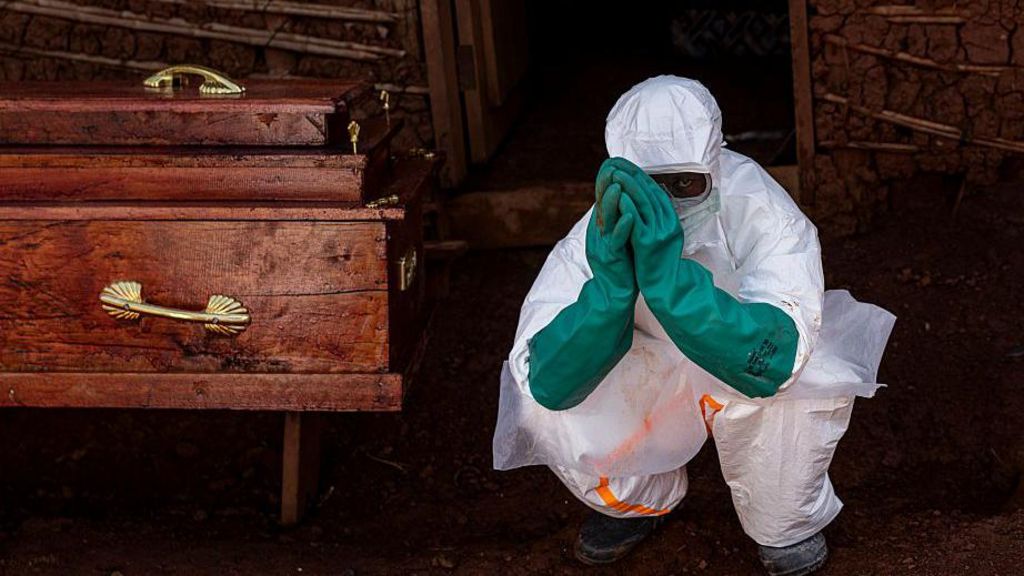
    In the quiet graveyard of Taunsa, a city in Pakistan’s Punjab province, 10-year-old Asma kneels beside the fresh grave of her 8-year-old brother Mohammed Amin. Amin died in agonizing pain after testing positive for HIV, his fevers so severe that he begged to sleep in cold rain, his body twisting in torment “like he had been thrown into boiling oil”, recalls his mother Sughra. Today, Asma carries the same virus that killed her brother – a diagnosis that has upended her childhood, even as Sughra herself has tested negative for HIV.

    Asma and Amin are not isolated tragedies. An 11-month investigation by BBC Eye has documented a large-scale HIV outbreak among children in Taunsa, with at least 331 minors testing positive for the virus between November 2024 and October 2025. The overwhelming majority of these cases cannot be linked to mother-to-child transmission: of 97 infected children whose families received testing, just four of their mothers tested positive. Public health data explicitly lists contaminated needles as the transmission route for more than half of all confirmed cases, pointing to unsafe medical practices at Taunsa’s government-run Tehsil Headquarter (THQ) Hospital as the source of the outbreak.

    Local private physician Dr Gul Qaisrani first sounded the alarm in late 2024, after he noticed a sharp spike in pediatric HIV cases passing through his clinic. Nearly 70 of the children he diagnosed had received routine care at THQ Taunsa, he says. Multiple families told Qaisrani that hospital staff reused single-use syringes across multiple children, including one account of a syringe used for an HIV-positive cousin that was then reused for other patients. One father reported confronting nursing staff over the dangerous practice, only to be ignored.

    In response to growing public pressure, Punjab provincial authorities promised a “massive crackdown” on unsafe practices in March 2025, and suspended THQ Taunsa’s then-medical superintendent Dr Tayyab Farooq Chandio. But BBC Eye can reveal that Chandio was back treating children within three months, working as a senior medical officer at a rural health center on Taunsa’s outskirts. In an interview, Chandio denied the hospital was the source of the outbreak, claiming he took all required safety measures as soon as the first case was identified.

    Chandio’s replacement, Dr Qasim Buzdar, took over in March 2025 and promised a “zero tolerance” policy for unsafe infection control, saying he had implemented mandatory training for all hospital staff on safe injection practices. But 32 hours of undercover filming conducted by BBC Eye at THQ Taunsa in late 2025 – eight months after the government’s intervention – exposes that dangerous, infection-spreading practices remained rampant.

    The undercover footage captures 10 separate instances of staff reusing syringes to access multi-dose medicine vials, a practice that contaminates the entire vial’s contents. In four of these cases, medicine from the contaminated vial was then administered to other children. While it is unknown whether any of the patients involved were HIV-positive, infectious disease experts confirm that this creates a direct, high risk of viral transmission. “Even if they attach a new needle, the body of the syringe retains the virus, so transmission will still occur,” explained Dr Altaf Ahmed, a leading Pakistani microbiologist and infectious disease consultant, after reviewing the footage.

    The investigation also documented widespread failures in basic infection control: over the filming period, 66 instances of medical staff – including at least one doctor – administering injections without wearing sterile gloves were captured. One nurse was filmed rummaging through a medical waste disposal bin with bare hands, a violation of every core principle of safe medical practice, Ahmed notes. Used injection equipment was left out on non-sterile countertops alongside open vials of medication, and one nurse was filmed pulling a used syringe with leftover patient liquid from under a counter and passing it to a colleague for reuse.

    When presented with the footage, Buzdar refused to acknowledge its authenticity, claiming either that it was recorded before he took office or that it was staged. He insisted to BBC Eye that THQ Taunsa is a safe facility for children, telling local parents: “I can say with certainty and confidence that you should get your treatment done here.” The local government echoed this position, stating that no validated epidemiological evidence has conclusively linked THQ Taunna to the outbreak, and pointing to unregulated private care and unscreened blood transfusions as potential contributing factors. But a leaked April 2025 joint inspection report from UNICEF, the World Health Organization, and Pakistan’s regional health department reached conclusions that align with BBC Eye’s findings: the report specifically flagged dangerous conditions in THQ Taunsa’s pediatric emergency department, noting missing essential medications, widespread unsafe injection practices, poor hand hygiene, and reused intravenous equipment.

    Health experts say the ongoing risks at THQ Taunsa are not isolated failures, but the product of deep systemic flaws in Pakistan’s public health system. Pakistan has one of the highest rates of unnecessary therapeutic injections in the world, driven by both public demand and provider习惯 that prioritize injections over oral medication for mild conditions. A chronic shortage of medical supplies, paired with quota-based allocation of equipment to government hospitals, also incentivizes dangerous cost-cutting like syringe reuse. “They have a fixed number of supplies to last an entire month, so corner-cutting becomes inevitable, even when it puts patients at deadly risk,” explained Dr Fatima Mir, a professor of pediatrics at Karachi’s Aga Khan University Hospital.

    This is not the first time such systemic failures have led to a large pediatric HIV outbreak in Pakistan. In 2019, over 1,500 children tested positive for HIV in Ratodero, Sindh province, in an outbreak that was also linked to reused syringes in public health facilities; new infections continue to be recorded there today. More recently, an 84-case outbreak of pediatric HIV in Karachi’s SITE Town area was publicly confirmed by Pakistan’s federal health minister to have been caused by syringe reuse at the local government-run Kulsoom Bai Valika Hospital, despite the facility’s superintendent denying such practices could occur.

    When contacted about BBC Eye’s findings, a spokesperson for Pakistan’s national government said it had acted promptly to investigate concerns and roll out updated infection control guidelines to all health facilities in March 2025.

    For the families affected by the Taunsa outbreak, however, these policy changes come too late. Asma now faces a lifetime of HIV treatment, her health already declining as she loses weight unexpectedly. She faces deep social isolation from HIV-related stigma: neighborhood parents bar their children from playing with her, leaving her lonely as well as sick. She often asks her mother, “What is wrong with me?”

    Standing at her brother’s grave, Asma says she misses him every day. “He’s with God now,” she says. Despite the pain and uncertainty of her future, she still holds onto a dream: “I work hard at school. When I grow up, I want to become a doctor.”

  • AFL 2026: Collingwood star Steele Sidebottom is out with injury but it won’t open the door for Bobby Hill

    AFL 2026: Collingwood star Steele Sidebottom is out with injury but it won’t open the door for Bobby Hill

    As a critical season-defining showdown with Carlton looms on Thursday night, AFL side Collingwood will be forced to take the field without one of its most experienced steadying influences, veteran Steele Sidebottom. The club confirmed Tuesday that Sidebottom will miss the high-stakes clash after sustaining a corked hip, more specifically a hip pointer injury, during Collingwood’s recent Gather Round defeat to Fremantle.

    Coach Craig McRae opened up about the veteran’s injury status in comments to reporters, confirming the damage proved severe enough to rule Sidebottom out just days out from the game. “You might have saw it right before halftime, he got a heavy knock in the back so he’s limited in movement,” McRae explained. “He had quite a lot of bleeding yesterday, so he won’t play. When you sort of have a shorter turnaround with a six-day break between matches, this week’s training has just been about getting the body moving, so a comeback wasn’t on the cards.”

    Sidebottom’s absence has compounded existing pressure on the Magpies, who have already struggled through a rocky start to the 2025? season with a 2-3 win-loss record, largely held back by persistent scoring woes in front of goal. Outside of a solid attacking performance in their recent win over GWS, Collingwood has only managed low scoring totals of 78, 79, 65, and 39 points across their other four matches, leaving fans and analysts calling for a shake-up to the forward line.

    Many supporters have pushed for the club to call an early return for exciting small forward Bobby Hill, who has been working through a structured, long-term pre-season rehabilitation plan. But McRae made clear Tuesday that the club will not abandon its carefully laid timetable for Hill, even with Sidebottom out and attacking options thin.

    McRae noted that Hill has already made impressive progress through his pre-season regime, with his agility and match sharpness improving week after week. “No, Bobby is on a plan, he’s on a pre-season mode that we’ve got the eye on long term,” McRae said. “You watch him train today and he looks lively and exciting, the agility is back. We’ll just stick to the plan, it’s just exciting to see him improve session after session.”

    The coach added that the club is closing in on setting a timeline for Hill to make his return via the VFL competition, as he has now built up three to four weeks of solid pre-season training behind the scenes. “I won’t say (a VFL timeline) at the moment, but we’re getting close to making one, because the body of work is starting to build up now. He’s doing a lot you don’t see out here because he’s in pre-season mode.”

    Instead of rushing Hill back, McRae confirmed the club is looking at in-house options to cover Sidebottom’s absence and shore up the forward line. The coach revealed he is considering shifting utility Jeremy Howe into an attacking role, and is also prepared to add young talent Reef McInnes to the senior side after McInnes plays his first full VFL match of the season this weekend.

  • ‘I’ve looked up to him since I was in school’: Taniela Paseka to clash with his idol before attention turns to Tongan redemption

    ‘I’ve looked up to him since I was in school’: Taniela Paseka to clash with his idol before attention turns to Tongan redemption

    For Manly Sea Eagles prop Taniela Paseka, Jason Taumalolo has been a hero since his schoolyard days. But this Thursday night, the 6-foot-something forward will set his long-standing admiration aside to lock horns with his Tongan national teammate in one of the most anticipated heavyweight matchups of the rugby league round.

    Taumalolo’s legacy stretches far beyond individual club matches. Nearly 10 years ago, the hard-running forward reshaped international rugby league alongside fellow star Andrew Fifita, when the pair made the groundbreaking decision to represent their ancestral home of Tonga, rather than higher-profile tier-one nations at the 2017 Rugby League World Cup. That call sparked what became known as the Tongan revolution, drawing a wave of top Polynesian-born talent to commit to the tiny Pacific nation, and injecting new life and energy into the international rugby league ecosystem.

    Decades later, that revolution has carried Paseka onto the national squad, where he earned three Test caps alongside his childhood idol at the 2024 Pacific Championships. This week’s club clash is far from the only Tongan connection on the card: Paseka is one of four standout Tongan-born players in the current Manly line-up, joining Haumole Olakau’atu, Tolu Koula and Lehi Hopoate, all set to take the field against one of the most influential figures in modern Tongan rugby.

    Taumalolo has shown no signs of slowing down as he enters the latter stages of his career. To open the 2026 club season, the veteran forward has turned in some of the best performances of his entire career, posting his highest average yardage totals since the 2020 campaign. Most recently, he racked up a mammoth 219 running metres against Brisbane in a match that underlined his enduring dominance in the middle of the field.

    For Paseka, the 2026 season marks a welcome return to form after a career-derailing injury. A devastating Achilles rupture forced him to miss nearly all of the 2025 campaign, leaving the big prop working for months to regain his match fitness and power. Now healthy, he is gearing up to go head-to-head with the man he once dreamed of sharing a field with.

    In an interview with NewsWire, Paseka opened up about the full-circle moment of facing his idol. “Playing against Jason, I’ve literally looked up to him since I was in school,” he said. “I remember the first time playing against him, I went home and told my family, ‘I’m playing against Jason Taumalolo!’

    So it’s always good to play against your fellow Tongans, but also it’s a good challenge for us to try and put it on top of them and try and win the game. I’m not thinking too much about individuals; I’m just thinking about me doing my job for my team and that’s it. It used to be weird playing against him. But now I’ve been in the game for a fair bit, it’s just another game to me. I don’t look at individuals too much, but he is a pretty cool player to play against and with.”

    While the pair will go to battle for their clubs this week, they are widely expected to reunite as Tongan teammates for the 2026 Rugby League World Cup later this year. Tonga is gearing up to bounce back after a disappointing 2025 Pacific Championships campaign, and still carries lingering disappointment from its 2022 World Cup run, where a breakout performance from Samoa prevented the side from advancing as far as many predicted it would.

    Paseka, however, says discussions about national team selection have not yet entered the conversation. “No, we’ve had no chat. Nothing’s been mentioned yet (about the World Cup),” he said. “It’s all club footy at the moment. Maybe when it gets closer to the end of the year, there might be a bit of chat, but I think this is very early. First of all, you’ve got to make the team. I don’t want to say I’ve made the team, but first play good footy and then hopefully make the team.”