作者: admin

  • Hi Five China: Life beyond retirement in Hainan

    Hi Five China: Life beyond retirement in Hainan

    Against the backdrop of China’s rapidly aging population, the southern island province of Hainan has carved out a new reputation as the nation’s leading destination for mobile retirees, drawn by its year-round mild climate and rapidly expanding elder-focused healthcare and wellness infrastructure. To investigate the shifting landscape of eldercare in China and examine how the sector is adapting to meet surging demand from an aging demographic, China Daily reporter Yan An joined a senior wellness travel group to experience life on the bustling island first-hand.

    What the reporter uncovered during her visit challenges common outdated stereotypes about retirement. Far from marking a quiet end to active, purposeful life, retirement in Hainan is increasingly framed as a fresh beginning — a new chapter where older adults can pursue personal growth, social connection, and self-fulfillment, all backed by a fast-growing, consumer-centric senior service industry that caters to the evolving needs of modern retirees.

    This trend reflects a broader national shift in how older Chinese approach retirement, as growing affluence and improved senior-focused infrastructure allow millions to choose active, location-independent post-work lifestyles rather than remaining in their lifelong hometowns. Hainan’s rise as a preferred retirement hub also signals growing opportunities for the eldercare and senior tourism sectors, as businesses and policymakers work to keep pace with the changing demands of China’s aging population.

  • New Bunnings dog hoodies to raise funds for pets needing forever homes

    New Bunnings dog hoodies to raise funds for pets needing forever homes

    Australian hardware retail giant Bunnings Warehouse is stepping outside its core business to launch an unexpected limited-edition canine clothing line, part of a new charity campaign aimed at supporting the country’s stretched pet rescue sector, which is currently facing its highest rate of animal abandonment in two decades.

    This year marks another iteration of Bunnings’ annual Stores for Paws initiative, a long-running collaboration with national pet adoption platform PetRescue that has already delivered transformative results for animal welfare across Australia. Since the campaign launched, it has raised more than AU$500,000 for local animal welfare organizations and helped more than 700 vulnerable pets find permanent, loving homes. This year’s three-day event, scheduled to run from April 17 to 19, will center on the nationwide tradition of Bunnings sausage sizzle fundraisers, with all proceeds going to support local pet shelters.

    For the first time in the campaign’s history, the event will feature the launch of a limited-edition Bunnings-branded hoodie designed exclusively for dogs. The streetwear-style garment, which comes in sizes ranging from small to XX-large, is priced at AU$10, with AU$2 from every single sale donated directly to PetRescue. Beyond the new pet apparel and sausage sizzles, participating Bunnings locations across the country will host a range of complementary activities, including in-store pet adoption days, interactive pet-themed DIY workshops for children, and meet-and-greets with adoptable rescue animals.

    The campaign arrives at a critical juncture for Australia’s pet rescue sector. New data released by PetRescue shows that the number of abandoned pets currently waiting for adoption is at a 20-year high, with more than 8,300 animals listed on the platform awaiting forever homes. The surge in abandonments has been linked to ongoing financial pressures, housing instability, and major life shifts impacting Australian households, factors that have left rescue organizations stretched far beyond their operational capacity.

    Patima Tantiprasut, chief executive officer of PetRescue, explained that the organization and its partner shelters spend an estimated AU$280,000 every day just to cover basic care for the cats and dogs in their networks. “The rescue community is completely stretched,” Tantiprasut said. “They’re getting put in the impossible position of deciding which pets they can save versus which they don’t have the capacity to take in. This initiative comes at such a crucial time, it’s important for the rescue sector to have this kind of support behind them and the recognition.”

    Funds raised through the 2024 Stores for Paws campaign will go directly toward covering essential care costs for pets waiting for adoption, including housing, daily food, and urgent veterinary care. Michelle Walter, head of community at Bunnings Warehouse, noted that the initiative builds on the longstanding culture of customers bringing their own dogs into Bunnings stores, turning that shared love of pets into tangible support for rescue animals. “At Bunnings, we love pets. Our customers love bringing their dogs into our stores, and Stores for Paws is about turning that love into real support for rescue pets,” Walter said. “This initiative celebrates the incredible work local rescue groups do, while helping more pets find safe, loving homes.”

    Tantiprasut added that even a small increase in adoption rates would have an extraordinary impact on the current backlog of homeless pets: if just one percent of Australian households chose to adopt, every pet currently in PetRescue’s care would have a home for the next three and a half years. To date, more than one million vulnerable pets have found permanent homes through PetRescue’s national adoption network.

  • Senior CPPCC official charged for bribery

    Senior CPPCC official charged for bribery

    In a formal announcement released on Tuesday, China’s top prosecuting body confirmed that Bi Jingquan, a former senior official of the country’s top political advisory body, has been officially indicted on bribery charges by prosecutors from Shandong Province. The case against Bi was first investigated and concluded by the National Commission of Supervision, China’s top anti-corruption watchdog, before being handed over to prosecuting organs for mandatory review and the filing of formal legal charges. Jurisdiction over the case was assigned to prosecutors based in Jinan, the capital city of Shandong Province, who have now submitted their official indictment to the Jinan Intermediate People’s Court to move the legal process forward. According to the indictment details, Bi is alleged to have abused authority across multiple senior positions he held throughout his decades-long career. These roles include former head of the National Medical Products Administration, former deputy head of the State Administration for Market Regulation, and former deputy head of the Committee on Economic Affairs of the National Committee of the Chinese People’s Political Consultative Conference (CPPCC), China’s top political advisory body. Prosecutors claim Bi exploited these positions to secure improper benefits for third parties in exchange for accepting large sums of money and high-value valuables, which meets the legal criteria for criminal bribery. Prosecutors emphasized that throughout the entire review and prosecution procedure, Bi was fully informed of all his legal rights as a defendant, and the legal arguments and defense positions submitted by Bi’s legal representation were formally reviewed and considered ahead of the indictment being filed. Bi, now 70 years old, is a native of Heilongjiang Province in northeast China. He joined the Communist Party of China in March 1978 and entered official public service in February 1982. Over his four-decade career, he held senior leadership roles across multiple key national regulatory and economic bodies, including the former national price bureau, the National Development and Reform Commission, the National Medical Products Administration, and the State Administration for Market Regulation. In August 2020, Bi took up his post at the Committee on Economic Affairs under the CPPCC National Committee, and later also held key positions at the China Center for International Economic Exchanges, a leading national economic think tank. The indictment marks a key step forward in the country’s ongoing anti-corruption campaign, which targets misconduct by public officials at all levels across government and political advisory bodies.

  • Xi puts forward four-point proposal on promoting Middle East peace, stability

    Xi puts forward four-point proposal on promoting Middle East peace, stability

    BEIJING — In a high-profile bilateral meeting held in the Chinese capital on Tuesday, President Xi Jinping laid out a structured four-point proposal designed to advance lasting peace and long-term stability across the Middle East. The talks took place during a working visit by Sheikh Khaled bin Mohamed bin Zayed Al Nahyan, Crown Prince of Abu Dhabi of the United Arab Emirates.
    Against a backdrop of ongoing regional tensions and unresolved conflicts that have rippled across the globe, President Xi’s proposal outlines four core guiding principles to steer future peace efforts. First, it calls for universal adherence to the fundamental principle of peaceful coexistence between all regional states, regardless of differing political systems, religious traditions or strategic outlooks. Second, it emphasizes unwavering respect for the inviolable principle of national sovereignty, a cornerstone of modern international relations that underpins the territorial integrity of every nation in the region. Third, it prioritizes consistent commitment to the rule of law in international affairs, establishing clear, shared norms to govern interactions between states and resolve disputes through peaceful, rule-based channels. Finally, the proposal calls for coordinated, integrated advancement of development initiatives and security frameworks, recognizing that sustained economic progress and collective security are mutually reinforcing pillars of stable societies.
    The proposal comes as China expands its diplomatic engagement in the Middle East, positioning itself as a neutral broker committed to de-escalation and inclusive dialogue between regional actors. The meeting between President Xi and the Abu Dhabi Crown Prince also underscores the deepening bilateral ties between China and the United Arab Emirates, spanning trade, energy, security and cultural cooperation.

  • Xi calls for full respect for sovereignty, security, territorial integrity of countries in Middle East, Gulf region

    Xi calls for full respect for sovereignty, security, territorial integrity of countries in Middle East, Gulf region

    BEIJING – In a high-profile bilateral meeting held in Beijing on Tuesday, Chinese President Xi Jinping held talks with Sheikh Khaled bin Mohamed bin Zayed Al Nahyan, Crown Prince of Abu Dhabi of the United Arab Emirates, and laid out China’s core stance on regional stability in the Middle East and Gulf region. During the discussion, President Xi emphasized that the fundamental principles of international relations must be upheld in the region, starting with the full and unwavering respect for the sovereignty, national security, and territorial integrity of all countries in the Middle East and Gulf. Beyond core state interests, Xi also called for effective protection of the safety of foreign personnel, infrastructure, and official institutions of all nations operating within the region. This meeting comes amid ongoing geopolitical tensions that have shaken confidence in regional security, and China’s stance reflects its long-standing commitment to a balanced, rules-based approach to Middle East affairs. As a major global power with extensive economic and diplomatic ties to the Gulf region, China has consistently pushed for a collective security framework that centers the interests and agency of regional countries, rather than external interference. The discussion between Xi and the Abu Dhabi Crown Prince also aligns with China’s broader call for building a common, comprehensive, cooperative, and sustainable security architecture for the Middle East and Gulf region, a position the country has promoted in multiple multilateral forums. This diplomatic engagement underscores the deepening bilateral relations between China and the United Arab Emirates, while reaffirming China’s role as a responsible stakeholder in global peace and security efforts.

  • Thousands gather in Poland for the annual March of the Living on Holocaust Remembrance Day

    Thousands gather in Poland for the annual March of the Living on Holocaust Remembrance Day

    On Tuesday, Holocaust survivors from across the globe converged on the former site of the Auschwitz concentration camp in southern Poland to take part in the March of the Living, an annual pilgrimage to honor the memory of the 6 million Jews systematically murdered by Nazi Germany and its collaborators during the Second World War. This year’s observance fell on Holocaust Remembrance Day on the Jewish calendar, marking the 38th iteration of the event that draws participants from every corner of the world.

    Fifty survivors joined this year’s march, with many making the journey to Poland from Israel despite significant travel disruptions. Organizers confirmed that airspace restrictions linked to the ongoing Iran conflict created logistical hurdles that did not stop survivors from attending the commemoration.

    The 3-kilometer trek starts at the Auschwitz camp and ends at the adjacent Birkenau site, the largest of the Nazi death camps built during the occupation of Europe. It was at Birkenau where hundreds of thousands of Jews from across the continent were unloaded from deportation trains and immediately executed in purpose-built gas chambers. Today, both sites stand as preserved memorials to the atrocities of the Holocaust.

    This year’s gathering comes at a moment of surging anti-Jewish hatred across the globe, a trend organizers and participants have warned echoes the conditions that allowed the Holocaust to unfold. Revital Yakin Krakovsky, deputy chief executive of the International March of the Living, the group that organizes the annual event, stressed that the lessons of the Holocaust have not been fully absorbed by the modern world. “Since Oct. 7, anti-Semitism has surged and is spreading everywhere,” she said. “The scale and normalization of this hatred echoes the dark times we have seen before and, today of all days, we know how it ended.”

    Among the special guests at this year’s march were survivors of recent anti-Semitic attacks, including survivors of the December mass shooting at a Hanukkah celebration on Sydney, Australia’s Bondi Beach that left 15 people dead. Hannah Abesidon, whose father Tibor Weitzen — a 78-year-old Holocaust survivor — was killed in that attack, shared her family’s story with march participants. “My father didn’t make it because he was a Jew,” Abesidon said. “It starts with the Jews but it doesn’t end with the Jews,” she added, emphasizing the broader threat that unchecked prejudice poses to all global communities.

    For nearly four decades, the March of the Living has brought together thousands of participants each year, including not just Holocaust survivors, but also Jewish youth, community leaders, and elected officials from across the world. The event remains one of the most high-profile global efforts to educate the public about the Holocaust and push back against rising anti-Semitism and historical revisionism.

  • Middle East conflict to fuel higher inflation in Australia, IMF warns

    Middle East conflict to fuel higher inflation in Australia, IMF warns

    Global economic watchdog the International Monetary Fund (IMF) has issued a stark, long-term forecast for Australia’s economy, warning that skyrocketing cost of living pressures will continue plaguing household budgets until the end of 2027, driven largely by volatile oil prices stemming from ongoing military conflict in the Middle East.

    In its most recent regional economic outlook, the IMF projects that Australia’s inflation will stay well above the Reserve Bank of Australia (RBA)’s 2-3% target band for more than two years. Forecasts put national inflation at 4% in 2026, with only a gradual cooling to 3.2% by 2027. Alongside persistent price growth, the fund also predicts a marked slowdown in real GDP growth, which strips out inflation to measure underlying economic expansion. Real output is expected to dip to 2% in 2026 before falling further to 1.7% in 2027.

    The root cause of this extended economic pressure, officials and analysts agree, is the disruption to global oil markets triggered by the Middle East conflict between US-aligned Israel and Iran, which has threatened traffic through the Strait of Hormuz — a strategic chokepoint that carries roughly one-fifth of the world’s daily oil supply. Six weeks before the conflict began, global crude traded at roughly US$56 (AU$80) per barrel; today, prices hover around US$100 (AU$143) per barrel. For Australian motorists, every US$10 per barrel increase in crude translates directly to an extra 10 cents per litre at the petrol pump, squeezing household budgets that are already stretched thin.

    Treasurer Jim Chalmers has framed the crisis as an imported external shock, noting that Australian households are paying a steep price for instability thousands of kilometers away. “The costs and consequences of the conflict in the Middle East will be felt for some time, in Australia and around the world,” Chalmers said. Outlining the federal government’s policy response, he added: “We’re taking decisive action to address this global fuel challenge, by halving the fuel excise to help with the cost of living, holding petrol companies to account, working to secure more fuel and get it to where it’s needed in our economy, and engaging internationally.”

    The IMF’s warning extends far beyond Australia, emphasizing that the conflict has already tested the resilience of the global economy that has only just begun recovering from a series of overlapping shocks in recent years. “The global economy has, to date, withstood a series of shocks, yet another one — this time a military conflict engulfing the Middle East since the end of February — is testing this resilience,” the fund said in its report. “The conflict has already inflicted humanitarian costs, damaged critical infrastructure, and severely disrupted maritime and air traffic in the affected region.”

    For global economies including Australia, the spillover effects come through multiple channels: direct upward pressure on commodity prices, secondary ripple effects that push up long-term inflation expectations (which are particularly sensitive to shifts in energy and food prices), and market volatility triggered by risk-off investor sentiment.

    Domestically, the RBA has signaled that the oil price shock could derail progress on taming inflation, forcing potential adjustments to interest rates that would add further pressure to Australia’s 1.5 million mortgage holders. RBA deputy governor Andrew Hauser acknowledged that policymakers lack high confidence that current interest rate settings are sufficiently restrictive to bring inflation down to target. “I wouldn’t say we have high confidence that we’ve set interest rates at the right level because you never do have that high confidence. But we’re going to have to monitor this new shock pretty carefully,” Hauser said. “I think it is easy to see that upside inflation pressure. More important for us now is to think through what the medium-term impact might be.” Hauser added that the current energy price spike from the Gulf conflict amounts to a “big income shock for Australia”, at a time when inflation is already “too high”.

    Before the conflict erupted on February 28, Australia’s inflation had shown early signs of easing, with the Consumer Price Index falling to 3.7% in February, down 0.1 percentage point from January. But that progress is now at risk, and already the shock has gutted economic sentiment across both households and businesses. Two of Australia’s largest four banks have released new surveys showing dramatic drops in confidence in the weeks since the conflict began.

    The monthly Westpac-Melbourne Institute Consumer Confidence Index plummeted 12.5% to 80.1 in April, a reading deep in pessimistic territory — any score below 100 signals that more consumers hold negative expectations for the future than positive. National Australia Bank’s (NAB) monthly business survey found an even starker drop: business confidence fell 29 points to minus 29 index points, marking the second largest monthly fall in the survey’s 37-year history. Only the 2008 Global Financial Crisis and the 2020 onset of the COVID-19 pandemic have seen steeper one-month drops in business confidence.

    Gareth Aird, head of Australian economics at NAB, noted that while the shock has so far had limited impact on actual business activity, the collapse in sentiment signals significant uncertainty ahead. “The outbreak of the conflict in the Middle East saw business confidence fall 29 points to minus 29 index points, the second largest monthly fall in the survey’s history, with falls of this magnitude previously only seen in the GFC and the onset of Covid,” Aird said. “Business conditions fell only one point to six index points in March, reflecting that while the global news backdrop has impacted sentiment, it is still early days in terms of the flow through to activity.”

  • Fuel protests have Ireland’s government facing possible no-confidence vote

    Fuel protests have Ireland’s government facing possible no-confidence vote

    DUBLIN, Ireland – A week of widespread fuel protests that paralyzed critical national infrastructure has pushed Ireland’s ruling coalition government to the brink, with a scheduled no-confidence vote in parliament set to unfold Tuesday. The unrest, rooted in skyrocketing fuel prices triggered by conflict-related disruption to global oil supplies through the Strait of Hormuz, has exposed deep divisions over the government’s crisis response and brought Irish politics to a moment of high stakes.

    The wave of demonstrations began on April 7, when slow-moving convoys of frustrated industry operators first clogged major roadways. Organized largely through social media, the movement quickly swelled, drawing truckers, farmers, taxi drivers, and bus operators who blockaded key transport links, oil infrastructure, and central thoroughfares in Dublin, the nation’s capital. Protesters cut off access to Ireland’s only oil refinery in Whitegate, County Cork, and blockaded the country’s major ports, leading to widespread fuel shortages that left more than a third of the nation’s gas pumps dry and created massive gridlock across the country. Demonstrators’ core demands were straightforward: urgent government intervention, either through permanent price caps or immediate tax cuts, to offset soaring fuel costs that they warned threatened to put thousands of small operators out of business.

    The supply shock that sparked the protests traces back to escalating conflict between the U.S.-Israel bloc and Iran, which disrupted shipping through the Strait of Hormuz—one of the world’s most critical chokepoints for global crude oil exports. The sudden spike in international oil prices filtered directly to Irish fuel pumps, pushing costs to unaffordable levels for transport and agricultural industries that depend heavily on diesel and gasoline.

    After days of allowing demonstrations to proceed largely unimpeded, Irish authorities moved to clear blockades over the weekend. Police used pepper spray to clash with protesters in some locations, while an army vehicle removed a large log barricade at Galway Port. Outlining the government’s decision to clear infrastructure, Prime Minister Micheál Martin emphasized that the country’s ports and refineries are non-negotiable economic lifelines for Ireland, which exports roughly 90% of its domestically produced goods. “If the ports were blockaded for any length of time, people would have lost jobs, production would have ceased, and it would have been very, very serious,” Martin said, while also defending the overall response from police and military forces. He acknowledged that the government could draw lessons from the unrest.

    To de-escalate the crisis, Martin recently announced a new €505 million ($595 million) fuel support package designed to ease cost-of-living pressures and address protester demands. The package includes targeted direct payments to truckers and school bus operators, alongside fuel subsidies for the agricultural and fishing sectors. This new relief comes on the heels of a €250 million tax break approved just three weeks earlier, and the Irish parliament is scheduled to vote on the new package the same day as the no-confidence motion.

    Despite the government’s last-minute concessions, opposition parties have rejected the response as too little, too late. Sinn Féin, the country’s largest opposition party, formally called for the no-confidence vote scheduled for Tuesday evening. Six other opposition parties—The Social Democrats, Labour, People Before Profit, Aontú, the Green Party, and Independent Ireland—have all committed to supporting the motion. Sinn Féin has also criticized the ruling Fianna Fáil-Fine Gael coalition for failing to recall parliament during a recent holiday break to address the crisis and for offering what it calls ineffective half-measures to protect households and businesses from the fuel price spike.

    In a tactical move to pre-empt the opposition’s motion, Martin’s coalition has scheduled an earlier parliamentary vote on its own motion of confidence. If the government secures enough support to pass its confidence motion, the opposition’s no-confidence motion will become moot before it even goes to a vote. If the no-confidence motion were to pass, the current government would be forced to resign, triggering either a parliamentary process to select a new prime minister and form a replacement government or a snap general election for the entire Irish parliament. Many protesters have already claimed a partial victory, noting that their demonstration forced the sitting government to make major policy concessions it would not have otherwise considered.

  • Lebanon, Israel to hold direct talks as Trump blockades Iran

    Lebanon, Israel to hold direct talks as Trump blockades Iran

    Decades of frozen diplomatic relations between Israel and Lebanon are set to see a rare breakthrough this Tuesday, as the two neighboring Middle Eastern nations prepare to sit down for their first direct in-person talks since 1993, hosted in Washington. The high-stakes meeting comes against a backdrop of spiraling regional turmoil, anchored by the Trump administration’s newly imposed naval blockade of Iranian ports that has raised the stakes of the ongoing U.S.-Iran standoff at the Strait of Hormuz.

    Ahead of the talks, Israeli Foreign Minister Gideon Saar struck a cautiously constructive tone, stating that Israel remains committed to pursuing peace and full normalization with Lebanon. However, he doubled down on the government’s longstanding position that the Iran-aligned militant group Hezbollah is the core obstacle to any lasting agreement. The decades-long technical state of war between the two countries erupted into open conflict after Hezbollah launched attacks on Israeli territory, pulling Lebanon into the broader regional crisis. The subsequent Israeli ground incursion and airstrikes—including a massive April 8 strike on central Beirut—have killed more than 2,000 people and forced over a million Lebanese residents to flee their homes, according to casualty and displacement figures.

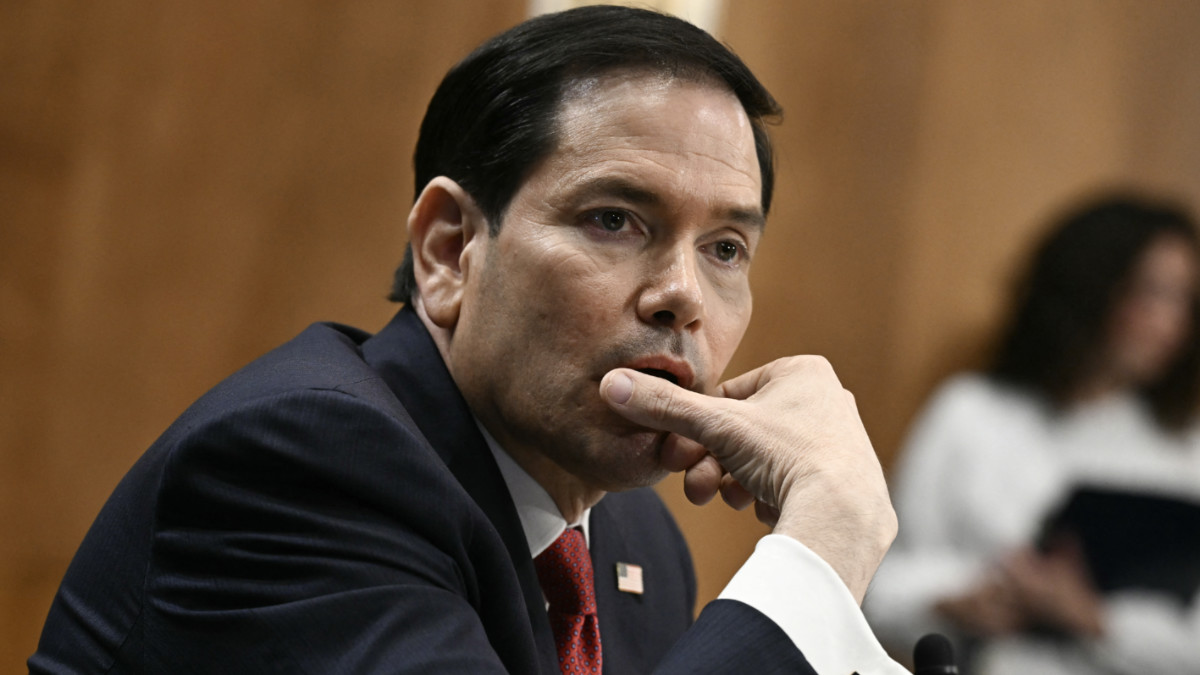
    Lebanese President Joseph Aoun has voiced hope that the Washington meeting will produce a workable truce agreement and pave the way for full formal negotiations between the two states, though expectations of a major breakthrough remain muted. Hezbollah’s leader Naim Qassem has already rejected the talks outright, labeling them a futile exercise and calling for them to be canceled before they even convene. The U.S. Secretary of State Marco Rubio will mediate the discussions, which will feature the Israeli and Lebanese ambassadors to the United States as the lead negotiators.

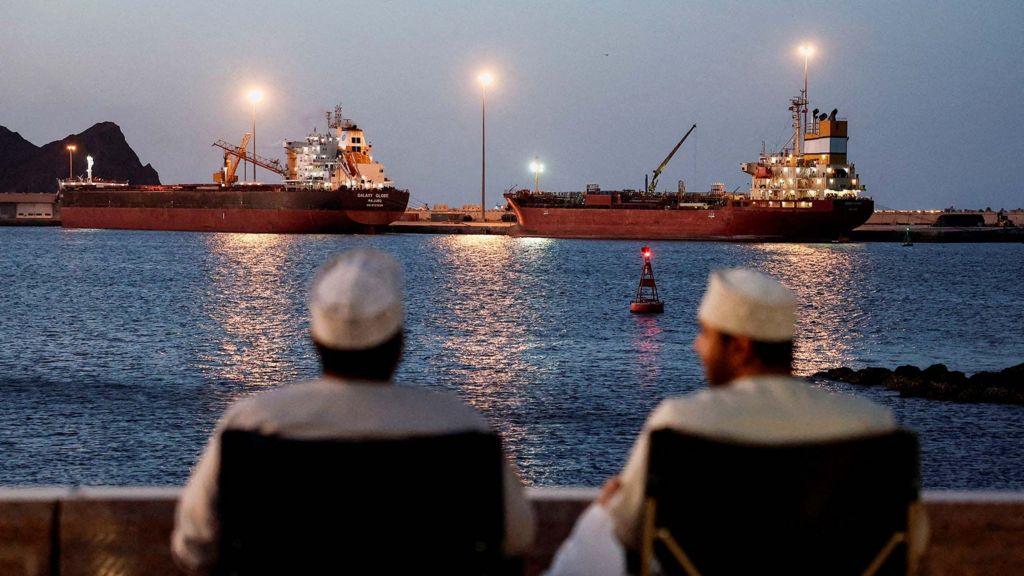
    While the international community turns its attention to the Israel-Lebanon border crisis, the Trump administration has ramped up pressure on Tehran with a strict naval blockade covering all vessels entering or exiting Iranian ports and coastal areas along the Strait of Hormuz. The strategic waterway, which carries roughly one-fifth of the world’s global oil supply during peacetime, had already been effectively closed to commercial traffic by Iranian military actions prior to the U.S. blockade, disrupting global shipping networks.

    Despite the sweeping announced restrictions, maritime tracking data from analytics firm Kpler shows that at least two vessels operating out of Iranian ports successfully transited the strait on Monday, suggesting gaps in the enforcement of the new blockade. Iranian military leaders have condemned the U.S. move as an act of outright piracy, issuing a stark warning that if the security of Iranian harbors is threatened, all ports across the Persian Gulf and Arabian Sea will no longer be safe. Security analysts note that the blockade is intended to cut off critical oil export revenue for Iran while also pressuring China—Tehran’s largest crude oil buyer—to leverage its influence to force Iran to reopen the Strait of Hormuz. The Chinese government has already issued a sharp rebuke, calling the blockade dangerous and irresponsible, particularly after Trump threatened to sink any vessel attempting to enter or leave Iranian ports.

    Surprisingly, the heightened standoff at the strait has not shaken global market confidence: Asian equity markets rallied this week, and global oil prices have continued a downward trend, defying widespread expectations of a price spike from supply disruptions. France and Britain have announced plans to co-host a video conference this Friday for nations willing to contribute to a purely defensive security mission to reopen and secure navigation through the Strait of Hormuz.

    Notably, the fragile two-week ceasefire between the U.S. and Iran that took effect last Wednesday remains intact despite the escalation, even after an initial round of U.S.-Iran talks hosted in Pakistan failed to produce any breakthrough. President Trump told reporters outside the Oval Office that Iranian representatives have reached out to Washington since the inconclusive Islamabad meeting, claiming that Tehran is very eager to reach a new deal. Pakistani Prime Minister Shehbaz Sharif confirmed Monday that full diplomatic efforts are ongoing to secure a lasting end to hostilities, and senior Pakistani sources told AFP Tuesday that Islamabad is working to arrange a second round of direct talks between U.S. and Iranian negotiators.

    Speaking in a phone call with French President Emmanuel Macron, Iranian President Masoud Pezeshkian reiterated that Tehran will only continue diplomatic negotiations within the framework of international law. Macron for his part urged both Tehran and Washington to restart stalled talks to end the U.S.-Iran war, which Trump launched after accusing Iran of pursuing a nuclear weapons program—an allegation Iran has repeatedly denied. Trump has insisted any final agreement must permanently block Iran from acquiring a nuclear device.

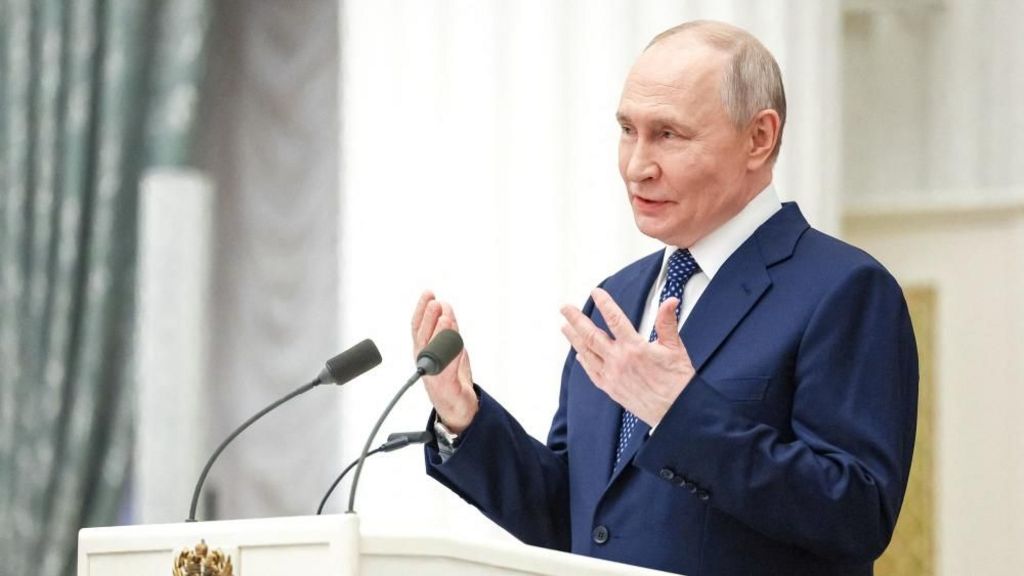
    Recent media reports have shed light on the gaps in the nuclear negotiation position: U.S. negotiators have proposed a 20-year full suspension of Iran’s uranium enrichment program, while Iran has only offered a five-year pause, a proposal U.S. officials have already rejected. Diplomatic activity is also picking up among other global powers: Russian Foreign Minister Sergey Lavrov met with Chinese counterparts in Beijing on Tuesday, just hours after he held talks with his Iranian counterpart. Moscow has put forward a proposal to store Iran’s enriched uranium on Russian territory as part of any potential nuclear deal, while Chinese President Xi Jinping has vowed that Beijing will play a constructive role in advancing peace talks across the Middle East.

  • Peru faces presidential runoff as election count drags on after ballot delays

    Peru faces presidential runoff as election count drags on after ballot delays

    LIMA, Peru — A historic presidential election in Peru has entered its third day of vote counting, with the Andean nation now confirmed to face a June runoff after no candidate secured the absolute majority required for an outright win. As of Tuesday morning, final identities of the two advancing contenders were still pending official confirmation from electoral bodies, though partial tallies point to a surprise showdown between two right-wing candidates.

    The April general election was thrown into disarray almost immediately after polls opened, when widespread failures in ballot distribution to voting stations across the country and abroad left thousands of registered voters unable to cast their ballots on Sunday. Electoral authorities responded by extending voting into Monday, a last-minute adjustment that affected more than 52,000 Lima-based voters as well as Peruvians registered to vote at two U.S. polling locations in Orlando, Florida and Paterson, New Jersey.

    With 72% of all ballots processed as of Tuesday, updated figures from Peru’s National Office of Electoral Processes place conservative candidate Keiko Fujimori in the lead with 16.92% of voter support. Fujimori, who is making her fourth bid for the presidency, is the daughter of disgraced former Peruvian president Alberto Fujimori, whose legacy continues to divide national public opinion. Trailing in second place at 12.95% is Rafael López Aliaga, an ultra-conservative former mayor of Lima, the country’s capital. If the current standings hold, the two right-wing candidates will compete for the presidency in the June 7 runoff, a turn that highlights the dramatic shift in Peru’s political landscape amid widespread public anger with established institutions.

    Under Peruvian electoral law, a candidate must win more than 50% of the popular vote to claim the presidency outright. The winner of the June runoff will make history as the country’s ninth presidential administration in just 10 years, a statistic that underscores the extreme political instability that has gripped the South American nation in recent years — Peru has already seen three different presidents hold office since October alone.

    Voting is a legal requirement for all Peruvian citizens between the ages of 18 and 70, with non-participation carrying a fine of up to $32, a penalty that has added stress to voters already frustrated by logistical failures. Many Peruvians who waited hours to vote on Monday expressed deep dissatisfaction with the chaotic electoral process. “I’m fed up,” said 56-year-old Iris Valle, who cast her ballot at a Lima public school on Monday, noting she feared losing pay from her employer after missing work to fulfill her mandatory voting obligation.

    The election unfolded against a backdrop of rising violent crime and persistent corruption scandals that have eroded public trust in political leaders. Polling conducted ahead of the vote found that a large majority of Peruvian voters view all 35 candidates — the largest field in the country’s history — as either dishonest, unprepared for the presidency, or both.

    Despite deep political uncertainty and a surge in criminal activity, Peru’s economy has outperformed many expectations, posting annual growth of more than 3% in both 2024 and 2025. The country’s strong performance has been largely driven by its status as one of the world’s top copper exporters, a key commodity for global manufacturing and clean energy transition. While this growth is lower than the 5% to 6% annual expansion Peru recorded during the 2000s commodity boom, it has defied predictions that repeated political turnover would tank economic activity.

    Will Freeman, a Latin American Studies fellow at the Council on Foreign Relations, attributed the country’s steady economic growth to the enduring institutional stability of Peru’s central bank. “Although Peru has had all these presidents, it has had only one central bank president since the mid-2000s, Julio Velarde,” Freeman explained. “He’s been a real source of stability and given investors some confidence that there is an institutional core that remains from one presidency to the next in Peru.”

    Even so, Freeman warned that the country cannot rely on existing institutional stability to sustain long-term growth. Recent policy decisions passed by Peru’s Congress reflect a shift toward more conservative economic populism, he said, and current growth rates still lag far behind the boom years of the 2000s.

    Both leading candidates have centered their campaigns on promises of aggressive anti-crime action, a platform tailored to widespread public anxiety over rising violence. Fujimori has pledged an iron-fisted crackdown on criminal activity, though her political party has backed recent legislative changes that legal experts argue make it far harder to prosecute and convict offenders. The reforms, supported by Fujimori’s bloc in Congress, eliminated preliminary detention for certain offenses and raised the legal bar for law enforcement to seize assets connected to criminal activity. If elected, Fujimori has proposed allowing criminal trial judges to serve anonymously and requiring incarcerated people to work in exchange for food rations.

    Her closest rival López Aliaga has put forward an even harderline agenda, proposing to construct new high-security prisons in Peru’s remote Amazon region, also backing anonymous judge protections, and promising to expel all undocumented foreign residents living in the country.

    Beyond the presidential race, Sunday’s election also marked a historic shift in Peru’s legislative system: for the first time in more than 30 years, voters elected members of a new bicameral Congress, following recent reforms that grant substantial new powers to the newly created upper legislative chamber. The outcome of congressional elections will also shape the next administration’s ability to pass policy, regardless of who wins the presidency in June.

    This report was contributed by Cristina Garcia Cano from Caracas, Venezuela. Associated Press coverage of Latin American and Caribbean affairs can be found at https://apnews.com/hub/latin-america.