作者: admin

  • Accusers seek justice after unwanted explicit messages from Congressman Eric Swalwell

    Accusers seek justice after unwanted explicit messages from Congressman Eric Swalwell

    Long-serving Democratic U.S. Representative Eric Swalwell, who represented a Northern California district near San Francisco for over a decade, has announced his resignation from Congress and withdrawn from the California gubernatorial race following a cascade of sexual misconduct allegations from multiple women. Two of his accusers, Annika Albrecht and Ally Sammarco, have gone on record with CBS News, the U.S. partner of the BBC, saying they feel vindicated by his sudden exit after years of alleged unpunished behavior.

    Albrecht, who had not previously revealed her identity publicly, shared her account with reporters: she first met Swalwell during a college class trip, where he connected with her under the pretense of offering professional political mentorship. Over time, she said, he sent sexually inappropriate photos via Snapchat, the ephemeral messaging platform that automatically deletes content after viewing, and ultimately invited her to meet him in a hotel room. “I keep thinking about how lucky I am that I didn’t go to that hotel,” Albrecht told CBS, adding that learning other women shared similar experiences has been deeply upsetting.

    Sammarco, who first went public with her claims last week, met Swalwell in 2018 when she was 24 years old and reached out to him on Twitter to discuss a career in politics. She told reporters he sent her unsolicited nude images through the same Snapchat platform. Both women say Swalwell operated for years with a belief that he was untouchable, free from any accountability for his behavior toward women.

    Last week, the dam broke when four women came forward with allegations ranging from persistent sexual harassment to violent rape. The revelations triggered an official ethics inquiry by the U.S. House of Representatives, with bipartisan discussions underway to forcibly expel Swalwell if he did not step down. Sammarco characterized his decision to resign as a forced move to salvage what remains of his public reputation. “He was pushed into a corner, essentially, because they were planning to expel him … so I think he resigned to save face a little,” Sammarco said. “But I also felt very vindicated that he realized it was over for him.”

    In his official public statement released Monday, Swalwell acknowledged poor past judgment and issued an apology to his family, staff, and constituents. He admitted to making unspecified mistakes, offering a mea culpa that stopped short of validating the most serious claims against him. “I will fight the serious, false allegation made against me,” he wrote. “However, I must take responsibility and ownership for the mistakes I did make.” The representative, first elected to Congress in 2012, also apologized to his wife for the personal and professional scandal.

    The allegations do not end with the two public accusers. Democratic social media influencer Cheyenne Hunt, who first brought the collective allegations to wide public attention with a viral video detailing multiple women’s claims, told CBS that more than 30 different women have reached out to her to report varying forms of misconduct by Swalwell since she posted her first video. Additionally, the Manhattan District Attorney’s Office has launched a formal investigation into a sexual assault accusation from an unnamed former staff member, first reported by the *San Francisco Chronicle*. That staff member alleges she was assaulted by Swalwell in a New York hotel room in 2019, waking up naked with no clear memory of the previous night after sharing drinks with the congressman.

    For Albrecht, the resignation is only a first step toward meaningful accountability. “For me, justice won’t be until he can’t ever harm a woman ever again, and he has faced the consequences for the women that he has harmed,” she said.

    Congress is set to return from its scheduled recess this Tuesday, where the House Ethics Committee will proceed with inquiries into two separate congressional misconduct cases: Swalwell’s, and that of Texas Republican Representative Tony Gonzales, who dropped his re-election campaign last month after admitting to an extramarital affair with a member of his congressional staff.

  • US, Iran to hold peace talks in Islamabad later this week: sources

    US, Iran to hold peace talks in Islamabad later this week: sources

    After years of escalating tensions and intermittent diplomatic backchanneling, high-stakes peace negotiations between the United States and Iran are set to convene in Islamabad, Pakistan later this week, multiple anonymous sources confirmed in a report shared by Reuters on Tuesday. The development, first updated publicly by Xinhua News Agency on April 14, 2026, marks a rare step toward de-escalation between two long-standing adversarial powers that have been at odds over regional security, nuclear policy, and geopolitical influence for decades. Pakistan, a country that maintains diplomatic and economic ties with both Washington and Tehran, has stepped into the role of neutral host for the talks, leveraging its regional standing to facilitate face-to-face dialogue between the two negotiating teams. While details surrounding the specific agenda, key delegates, and expected outcomes of the closed-door discussions remain tightly under wraps, the confirmation of the meeting itself signals a potential shift away from the heightened confrontation that has defined US-Iran relations in recent years. Diplomatic observers note that hosting high-level talks between the two nations also underscores Pakistan’s growing role as a mediator in regional conflicts, balancing its own strategic partnerships to create space for peaceful negotiation. As of Tuesday, neither the US State Department nor Iranian foreign ministry officials have issued an official public statement confirming or denying the scheduling of the talks.

  • JD Vance defends backing ‘great guy’ Orbán after landslide defeat

    JD Vance defends backing ‘great guy’ Orbán after landslide defeat

    Five days after Hungarian opposition leader Péter Magyar’s landslide election victory ousted long-serving Prime Minister Viktor Orbán, U.S. Vice President JD Vance has publicly defended his controversial pre-vote campaign visit to back the incumbent, while signaling willingness to cooperate with the incoming government.

    Vance, who traveled to Hungary to campaign for Orbán just five days before polling day, told Fox News that the visit was fully justified. He described Orbán as a “great guy” who delivered a “very good job” for Hungary, and praised him as one of the only European leaders willing to push back against what he called bureaucratic overreach from the European Union based in Brussels. Though Vance said he was disappointed by Orbán’s electoral defeat, he stressed he remained confident that the U.S. would build a productive working relationship with Magyar and his new Tisza Party administration.

    Magyar, who led Tisza to an unexpected landslide win that ended Orbán’s 12-year consecutive rule, had previously criticized Vance’s intervention, warning ahead of the vote that no foreign nation had the right to interfere in Hungary’s domestic electoral process. But in a conciliatory shift on Monday, Magyar acknowledged that the U.S. remains a critical and powerful NATO ally, and confirmed he would be open to holding talks with U.S. President Donald Trump or any other American official who reaches out.

    In the aftermath of the election, Hungarian politics is moving rapidly toward a transition of power. Orbán will remain in office in a caretaker capacity until Magyar is formally sworn in, and President Tamás Sulyok has called the three party leaders that won parliamentary seats to a meeting scheduled for Wednesday. Under Hungarian constitutional rules, Sulyok is tasked with convening the new parliament and nominating the next prime minister by May 12. However, Magyar has publicly called on Sulyok — whom he has labeled a puppet of the Orbán administration — to carry out these duties as quickly as possible and then step down from office. The incoming prime minister has indicated he expects to take office around May 5, and possibly even earlier. Sulyok’s office has publicly rejected calls for his resignation, but confirmed the meeting Wednesday will focus on setting a timeline for convening the National Assembly and nominating the new head of government.

    In one of his first major policy moves since the election, Magyar announced plans to overhaul Hungary’s state-controlled media landscape. Revealing that he was never granted airtime on public television during his time leading the opposition until an invitation extended Monday morning, just days after he swept Orbán’s Fidesz party from power, Magyar turned down the initial invitation. He pledged to suspend all news programming on Hungary’s public radio and television until structural reforms can guarantee unbiased, independent coverage. Magyar outlined his vision for an independent governing board to oversee state media, modeled on the framework used by the BBC and other established independent public broadcasters across Europe.

    Based on the latest preliminary election results, Tisza secured a two-thirds legislative supermajority with 135 out of 199 parliamentary seats — a threshold that gives the new government the power to amend the constitution and roll back the wide-ranging policy changes enacted during Orbán’s tenure. Magyar has said he expects Tisza’s final seat count will grow once all ballots are counted, expanding its supermajority even further.

    Magyar has laid out an aggressive first 100-day policy agenda rooted in combating the widespread corruption he says flourished under Orbán. He described Hungary as the poorest and most corrupt member state of the European Union, and announced plans to launch two new government bodies: an Anti-Corruption Office and a National Asset Recovery and Protection Office. He also pledged to begin the process of joining the EU’s European Public Prosecutor’s Office, a step Orbán consistently refused to take during his time in office. Under Orbán’s administration, Hungary gained international notoriety for a system of cronyism that directed hundreds of millions in public contracts to politically connected allies, while independent judicial oversight was systematically eroded to undermine the rule of law. Magyar has repeatedly argued that the country was “robbed bare” under Orbán, with billions of euros in public funds disappearing from state contracts, and corruption operating at an industrial scale.

    Magyar’s top immediate priority is unlocking tens of billions of euros in frozen EU funding that was suspended over concerns about rule of law breakdown and democratic backsliding during Orbán’s tenure. An estimated €17 billion in cohesion funding is currently suspended, and Hungary is also awaiting approval for an additional €16 billion in defense-related loans. European Commission President Ursula von der Leyen confirmed Tuesday that she had spoken with Magyar following his election victory, saying the bloc stood ready to begin swift work to restore the rule of law and bring Hungary back into alignment with shared European values.

    The international community is also pushing for a shift in Hungary’s policy on aid to Ukraine, after Orbán imposed a veto on a €90 billion aid package for Kyiv in the weeks leading up to the election. Magyar has indicated the veto is no longer relevant to the incoming government, noting that Hungary already opted out of the latest Ukraine loan package alongside two other EU member states last December. German Chancellor Friedrich Merz has publicly called for the Ukraine aid to be unblocked “very quickly” following the Hungarian government transition. Merz met with Magyar earlier this year in Munich, and Magyar has confirmed Berlin will be one of his first foreign destinations after taking office.

  • Israeli envoy to Italy calls magazine antisemitic over settler violence coverage

    Israeli envoy to Italy calls magazine antisemitic over settler violence coverage

    A heated diplomatic controversy has ignited across European and Middle Eastern media circles after Israel’s ambassador to Rome, Jonathan Peled, launched a scathing attack on a leading Italian current affairs magazine, labeling its recent cover highlighting systematic violence against Palestinian communities in the occupied West Bank as antisemitic and manipulative.

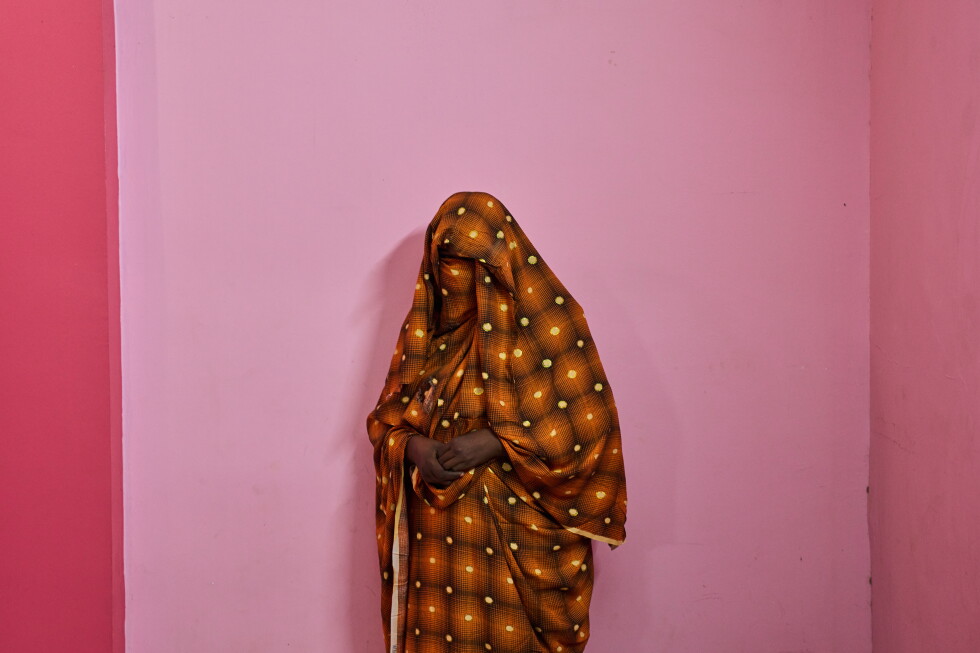
    The April 10 print edition of L’Espresso featured a striking image captured by award-winning Italian photojournalist Pietro Masturzo, paired with the blunt headline “Abuse.” The spread was paired with a months-long investigative project examining the rapid expansion of Israeli settler movements in the occupied territories and its devastating cumulative impact on Palestinian civilian life. The specific photograph at the center of the debate was taken on October 12, 2025, the opening day of the annual olive harvest in Idhna, a small Palestinian village located west of Hebron, as part of Masturzo’s long-form documentary project chronicling daily life under Israeli occupation.

    In a public post on X, Peled condemned the publication’s choice of cover, arguing that the image deliberately distorts the on-ground reality of Israeli security operations. He claimed the spread perpetuates harmful anti-Jewish stereotypes and fuels sectarian hatred, writing that “responsible journalism must be balanced and fair” when covering the Israeli-Palestinian conflict. Going further, the ambassador insinuated without providing any supporting evidence that the image could have been digitally altered to misrepresent events.

    Masturzo, the photographer behind the image, has pushed back forcefully against Peled’s claims, releasing a detailed contextual breakdown of how the photograph was captured. He explained that moments before he took the shot, a group of armed Israeli settlers – one of whom, the figure visible in the frame, was disguised in an Israeli army uniform – backed by active-duty Israeli soldiers with obscured faces, had entered the village to block local Palestinian farmers from accessing their olive groves for the annual harvest. The settler’s confrontational gesture captured in the frame, Masturzo added, was a deliberate act of dehumanization: the man mimicked the call a shepherd uses to gather livestock, speaking to the Palestinian farmers as if they were animals rather than people.

    Variations of the image and other photographs of the same confrontation have already appeared in multiple international outlets, confirming the authenticity of the reporting and the consistency of documentation of settler violence in the region. In an Instagram post defending the decision to publish the image, Masturzo emphasized that the frame captures a widespread reality that global media too often chooses to ignore. He noted that the project is not only intended to expose human rights violations against Palestinians but also to stand in solidarity with Palestinian photojournalists who risk their lives daily to document abuses against their communities.

    The investigative reporting inside the magazine, written by journalist Alae Al Said, draws on first-hand testimonies from Palestinian residents across the Jordan Valley, where settlers backed by Israeli military forces carry out near-daily attacks on civilian communities. One resident, a father of six, described how dozens of settlers stormed his village, destroying local infrastructure, assaulting civilians, demolishing residential structures, and stealing community livestock. In another high-profile case documented in the piece, settlers seized full control of a critical natural water spring that supplies multiple Palestinian villages, with one resident noting that “they’ve colonized all the water sources.”

    The reporting also calls out the international community for its inaction, specifically criticizing recent statements from U.S. Secretary of State Marco Rubio, who voiced vague “concern” over settler violence last month. The magazine dismisses such statements as empty rhetorical gestures that do nothing to hold Israel accountable for its policies in the occupied territories, concluding that the United States remains the primary global backer of the ongoing colonization of Palestinian land, allowing systematic violence to proceed slowly, silently, and relentlessly.

    Online, the controversy has drawn widespread backlash against Peled’s criticism, with thousands of social media users arguing that the image accurately reflects the daily reality of occupation that Palestinians have endured for decades. Many commentators have highlighted the power of the image to convey systemic dehumanization more effectively than longer written reports. One user noted that “With this one photograph you somehow told the story of contempt and impunity more effectively than thousands of existing images of brutal violence. It’s a reminder of the power that photography can still wield, despite everything.” Others have sarcastically echoed the ambassador’s claim, joking that simply documenting on-ground reality in the West Bank is now labeled antisemitic.

    The controversy comes amid a sharp escalation of violence across Palestinian territories since Israel launched its military campaign in Gaza in October 2023. Official data from the Palestinian Health Ministry puts the total number of Palestinians killed in Gaza at more than 72,329, with over 172,000 wounded. In the occupied West Bank alone, Israeli forces and settlers have killed at least 1,050 Palestinians since the war began, according to ministry data. The most recent fatal incident documented came just days ago, when Israeli soldiers beat a 68-year-old Palestinian woman to death during a military raid on her home in Jayyous, a town in the northern West Bank.

  • Brazil’s former spy chief detained by ICE agents in US

    Brazil’s former spy chief detained by ICE agents in US

    In a significant development in Brazil’s high-profile anti-coup investigation, Alexandre Ramagem — the former head of Brazil’s national intelligence agency Abin and a close ally of incarcerated ex-President Jair Bolsonaro — has been taken into custody by U.S. Immigration and Customs Enforcement (ICE) agents in Orlando, Florida. The detention marks a major milestone in cross-border law enforcement cooperation after Ramagem spent months as a fugitive following his conviction on coup plotting charges.

    Ramagem was among eight people, including Bolsonaro himself, found guilty in a Brazilian Supreme Court trial of orchestrating a plan to stage a military coup to overturn the results of the 2022 Brazilian presidential election, which Bolsonaro lost to current President Luiz Inácio Lula da Silva. Handed a 16-year prison sentence, Ramagem never appeared to hear the guilty verdict: he fled Brazil by car to neighboring Guyana shortly before the ruling was issued, then flew to the United States to evade custody.

    ICE confirmed Monday that Ramagem is currently in their custody, but has declined to share additional details on the circumstances of his arrest. Brazilian federal police confirmed only that a Brazilian national convicted of coup conspiracy by the Supreme Court had been detained in Orlando, crediting the arrest to coordinated international police collaboration between Brazilian federal authorities and U.S. law enforcement. Multiple regional law enforcement sources familiar with the case tell BBC News Brasil that Brazilian officials expect Ramagem will be deported back to Brazil following a hearing before an American immigration judge.

    Ramagem’s legal team has already signaled it will fight extradition, arguing that the conviction against him is politically motivated. Legal analysts expect his attorneys will formally apply for political asylum in the U.S. if that application has not already been submitted.

    Beyond his coup conviction, Ramagem, who led Abin from 2019 to 2022 during Bolsonaro’s presidency, is also facing separate investigation for allegedly misusing his intelligence agency post to conduct illegal surveillance on political opponents of the former president — allegations Ramagem has repeatedly denied.

    After Ramagem fled Brazil, Brazilian judicial authorities officially labeled him a fugitive and formally requested his extradition from the U.S. through diplomatic channels back in December 2025. In a pre-detention interview with a pro-Bolsonaro journalist, Ramagem defended his decision to flee, claiming he would have been wrongfully imprisoned in Brazil and that he felt secure on U.S. soil. He also claimed he had been welcomed by U.S. authorities upon arrival, saying, ‘What I can tell you is that the American authorities received me very well, and that’s exactly what they said: “It’s very good to have a friend safe here with us.”‘

    The case has already drawn cross-border political attention, with former U.S. President Donald Trump dismissing the entire investigation that led to the convictions of Bolsonaro, Ramagem and their co-conspirators as a politically motivated ‘witch hunt’. When Bolsonaro was sentenced to 27 years in prison for his role in the plot, Trump called the sentence ‘very surprising’. Shortly after the verdict was issued, the Trump administration imposed economic sanctions on Supreme Court Justice Alexandre de Moraes, who led the investigation, but later reversed the sanctions, citing that the restrictions were ‘inconsistent with US foreign policy interests’.

  • New trial over Diego Maradona’s death resumes in Argentina against 7 health care professionals

    New trial over Diego Maradona’s death resumes in Argentina against 7 health care professionals

    BUENOS AIRES, Argentina – Nearly 12 months after a high-profile misconduct scandal derailed the first proceeding, the long-awaited negligence trial against seven medical professionals charged in the 2020 death of Argentine soccer icon Diego Maradona officially restarted Tuesday.

    Widely celebrated as one of the most talented soccer players in history, Maradona passed away at 60 from cardiac arrest, while he was recovering from emergency brain surgery to remove a blood clot. His death at his private residence outside Buenos Aires, just two weeks after his hospital discharge, sparked immediate outrage and investigations into the quality of care he received in his final days.

    The seven defendants, which include Maradona’s longtime personal physician Leopoldo Luque, psychiatrist Agustina Cosachov, and psychologist Carlos Díaz, face charges of culpable homicide – an offense comparable to involuntary manslaughter under Argentine law. Prosecutors argue the medical team knowingly acted recklessly and failed to address the life-threatening risks they created for Maradona, and if convicted, each could face prison sentences between 8 and 25 years.

    The case centers on allegations that the group of care providers failed to deliver adequate monitoring and treatment to Maradona in the weeks leading up to his death. A 2021 investigative report compiled by a 20-member independent medical panel accused Maradona’s care team of acting “inappropriately, deficiently and recklessly,” leaving the legend in severe pain without medical assistance for more than 12 hours before his cardiac arrest.

    Maradona had battled severe chronic health complications for decades, many exacerbated by years of substance and alcohol use. He had already survived near-death episodes in both 2000 and 2004, according to court records. Defense attorneys for the defendants reject all criminal allegations, arguing Maradona’s death was the natural outcome of his multiple pre-existing serious conditions, and no unlawful conduct contributed to his passing.

    The original 2024 trial collapsed into a mistrial after presiding judge Julieta Makintach stepped down amid intense public and legal criticism. Makintach faced backlash after footage revealed she had appeared prominently in *Divine Justice*, a documentary covering the Maradona case, raising unresolvable questions about judicial impartiality. In her resignation letter submitted to judicial authorities last June, Makintach wrote: “I present my resignation with serenity, without renouncing the right to exercise my defense in the appropriate arenas.”

    For the resumed trial, hearings are scheduled to take place twice weekly on Tuesdays and Thursdays. Roughly 100 witnesses are expected to give testimony over the coming months, including Maradona’s family members, close associates, independent medical experts, and law enforcement officials. The new three-judge panel overseeing the case – lead by Alberto Gaig, Alberto Ortolani and Pablo Rolón – is expected to issue a final verdict in early June 2025.

    Fernando Burlando, the lead attorney representing Maradona’s two eldest daughters Dalma and Giannina, who are co-plaintiffs in the case, told reporters outside the courtroom ahead of Tuesday’s opening session that his legal team has full confidence in the new judicial panel. “We place enormous trust in them,” Burlando said. “They are judges with extensive experience and backgrounds.”

    Burlando added that Maradona’s daughters have endured extreme emotional fatigue in the nearly five years since their father’s death, still waiting for answers about what led to his passing. “It is very difficult,” he said. “They are Maradona’s daughters, and that alone is not easy, and the fact that they cannot even have a moment of relief to know what happened to their father … although we are convinced of what happened.”

  • Xi urges enhancing China-Spain cooperation for more fruitful results

    Xi urges enhancing China-Spain cooperation for more fruitful results

    BEIJING — In a high-profile bilateral meeting held at the Great Hall of the People on April 14, 2026, Chinese President Xi Jinping welcomed visiting Spanish Prime Minister Pedro Sanchez, who is currently conducting an official visit to China, and outlined a clear vision for deepening collaboration across multiple priority sectors between the two nations. During the meeting, Xi emphasized that China and Spain should ramp up cooperative efforts in key areas that include cross-border trade, renewable new energy, and the fast-growing intelligent economy, while also stepping up people-to-people exchanges in culture, education, scientific research, and sports. Noting that the two countries share a solid foundation for bilateral ties and multiple overlapping development interests, Xi pointed out that both sides should fully capitalize on existing opportunities to pursue innovation-driven growth. He added that advancing the China-Spain comprehensive strategic partnership to deliver more substantial, tangible outcomes will ultimately translate into greater well-being and shared prosperity for the populations of both nations.

  • Separatists in Cameroon announce a 3-day pause in fighting for pope’s visit

    Separatists in Cameroon announce a 3-day pause in fighting for pope’s visit

    YAOUNDE, Cameroon – In a surprising gesture ahead of Pope Leo XIV’s upcoming visit to the Central African nation, coalitions of English-speaking separatist insurgents have declared a 72-hour pause in hostilities to open secure passage for civilians, religious pilgrims, and official delegations during the papal trip.

    The Unity Alliance, a umbrella organization bringing together multiple separatist factions operating in Cameroon’s restive western regions, released an official statement late Monday confirming the ceasefire. The announcement notes the temporary halt to fighting honors the “profound spiritual importance” of Pope Leo XIV’s visit, prioritizing the safety of all those planning to participate in papal events.

    As of Tuesday, Cameroon’s national government has not issued an immediate formal response to the ceasefire declaration, following a request for comment from the Associated Press. Last week, government spokesperson René Sadi reaffirmed that state officials had completed “all necessary arrangements” to guarantee a safe and successful visit for the pontiff.

    Decades of underlying tension erupted into open armed conflict in 2017, when separatist groups launched an independence rebellion seeking to carve out a sovereign state for Cameroon’s English-speaking minority, separated from the country’s French-speaking majority. Since the conflict began, fighting has plagued the North-West and South-West regions, leaving more than 6,000 people dead and forcing more than 600,000 residents to flee their homes, according to data from the International Crisis Group, an independent non-profit conflict analysis organization.

    Pope Leo XIV launched a four-nation tour of Africa earlier this week, starting his journey in Algeria before moving on to Cameroon, where he is scheduled to land in the capital Yaoundé on Wednesday. On Thursday, he will lead a high-profile peace gathering in Bamenda, the urban center that has become the epicenter of the separatist conflict.

    Unity Alliance spokesperson Lucas Asu emphasized in the statement that the ceasefire “reflects a deliberate commitment to responsibility, restraint, and respect for human dignity, even in the context of ongoing conflict.” Asu also clarified that the papal visit should be framed exclusively as a spiritual event, and should not be interpreted as an endorsement of any Cameroonian political faction or governing authority.

    While the frequency of deadly separatist attacks has declined in recent years, the long-running conflict remains far from resolved. Brokered peace talks mediated by international third parties have stalled in recent months, with both the Cameroonian government and separatist leaders repeatedly accusing one another of negotiating in bad faith.

    The roots of the current crisis stretch back to Cameroon’s colonial legacy. After World War I, the former German colony of Cameroon was split into two administrative zones, controlled by France and the United Kingdom respectively. In a 1961 UN-supervised referendum, the British-administered English-speaking regions voted to reunify with French Cameroon to form a single independent nation. Separatist leaders argue that since unification, English-speaking communities have faced systematic political and economic marginalization at the hands of the Francophone-dominated national government.

    This report includes contributions from correspondent Banchereau, who reported from Dakar, Senegal.

  • Xi says China, Spain should strengthen cooperation to oppose ‘law of jungle’

    Xi says China, Spain should strengthen cooperation to oppose ‘law of jungle’

    BEIJING, April 14, 2026 – In a high-profile diplomatic meeting with visiting Spanish Prime Minister Pedro Sanchez on Tuesday, Chinese President Xi Jinping has called for strengthened bilateral cooperation between China and Spain to push back against a global retreat toward the coercive “law of the jungle” that threatens international order.

    Sanchez is in Beijing for an official working visit, marking the latest high-level exchange between the two nations aimed at deepening diplomatic and economic ties amid shifting global dynamics. During the talks, Xi highlighted that the contemporary international system is facing unprecedented instability, with a growing confrontation between two competing approaches to global governance: one rooted in the rule of law, and another that prioritizes the brute “rule of power” favored by larger nations seeking unilateral advantage.

    Against this backdrop, Xi urged both China and Spain to stand together in upholding the principles of genuine multilateralism, an approach that centers equal participation from all nations regardless of size, rather than the hegemonic order that allows stronger powers to dictate terms to smaller states. The call aligns with China’s long-standing diplomatic position of advocating for a multipolar global order and rejecting unilateralism, power politics, and the aggressive expansion of influence that harkens back to the “law of the jungle” where might makes right.

    The meeting comes as many European and Asian nations face growing pressure to align with competing global blocs, making bilateral cooperation between major economies like China and Spain a critical factor for maintaining regional and global stability. Both sides are expected to continue discussions across trade, climate action, cultural exchange and other areas in the coming days of Sanchez’s visit, with a shared focus on preserving a rules-based international system that benefits all nations.

  • Three-time World Cup finalist the Netherlands faces Japan, Sweden and Tunisia in Group F

    Three-time World Cup finalist the Netherlands faces Japan, Sweden and Tunisia in Group F

    For decades, the Netherlands has stood as one of international men’s soccer’s most enduring nearly men. Three times the Oranje have marched all the way to the FIFA World Cup final, and three times they have fallen short of lifting the sport’s most prestigious trophy—back-to-back defeats in 1974 and 1978, followed by a heartbreaker in 2010. This year, the three-time runners-up get a new chance to rewrite their legacy, drawn into Group F alongside rising Asian powerhouse Japan, resurgent Sweden, and African hopeful Tunisia, all hungry to upend the pre-tournament projections.

    Pioneers of the revolutionary ‘total football’ framework that redefined the global game in the 1970s, the Netherlands has always produced sides celebrated for their dynamic, aesthetically pleasing style—yet that magic has consistently evaporated when the final whistle of the World Cup final blows. This cycle, the Dutch are led by head coach Ronald Koeman, who is in his second stint at the helm of the national team and is desperate to end his country’s decades-long title drought. Koeman already knows what it takes to win major honors with the Netherlands, having lifted the UEFA European Championship as a player in 1988, and he reached the UEFA Nations League final during his first tenure in charge back in 2019. Today, his squad draws heavily from English Premier League talent, including defensive anchor Virgil van Dijk, dynamic midfielders Ryan Gravenberch and Tijjani Reijnders, and dynamic attacker Cody Gakpo. While the current cohort is solid, analysts widely note it lacks the elite generational talent that defined some of the Netherlands’ most iconic squads of past tournaments. Even so, the Oranje enter Group F as heavy favorites to finish top of the table and advance to the knockout round—but they are not without potential pitfalls, the most notable being 2022’s giant-killers Japan.

    Japan is making its eighth consecutive World Cup appearance this year, targeting a third straight advancement out of the group stage. The Blue Samurai were also the first team outside of this year’s three co-host nations to secure their spot in the tournament, booking their qualification with three group matches still left to play. At the 2022 Qatar World Cup, Japan authored two of the biggest upsets in modern World Cup history, knocking off both Germany and Spain on their way to topping their group—a run that sent shockwaves through the global soccer community. Still, the nation has never advanced past the round of 16, leaving its squad hungry to break that new barrier this cycle. A majority of Japan’s current national team players compete in top European club competitions, including Bayern Munich defender Hiroki Ito and Brighton & Hove Albion dynamic winger Kaoru Mitoma, both of whom have built strong reputations for outperforming expectations against elite competition.

    For Sweden, the road to this year’s World Cup was far from straightforward. The side finished bottom of its direct qualifying group without recording a single win, and only secured a spot in the qualifying playoffs thanks to its strong performances in the 2024-2025 UEFA Nations League, granting it an unexpected second chance to qualify. Under new head coach Graham Potter, who stepped into the role looking to rebuild his managerial reputation following successive club exits from Chelsea and West Ham United, Sweden defied predictions to knock out both Ukraine and Poland in the playoffs to claim its spot in the 24-team field. The side boasts elite offensive talent that makes it a dangerous outlier in the group, including in-form Newcastle United striker Alexander Isak and Sporting Lisbon forward Viktor Gyökeres, two of the most clinically finishing strikers in European soccer. Additional key talent includes young midfield star Lucas Bergvall and Manchester United winger Anthony Elanga. Sweden has its own historic World Cup memories tied to co-host nation the United States: the side finished as runners-up in 1958, and reached the semi-finals the last time the U.S. hosted the tournament in 1994, giving the side a layer of historical confidence heading into this year’s competition.

    Completing Group F is Tunisia, making its seventh World Cup appearance and still chasing its first ever advancement out of the group stage. The North African side came heartbreakingly close to breaking that streak in Qatar four years ago, beating defending champion France 1-0 and holding Denmark to a draw, only to miss out on knockout qualification by a single point. Following a disappointing early exit from the 2023 African Cup of Nations at the round of 16, Tunisia hired former head coach Sabri Lamouchi to lead the side through this World Cup cycle. A rising young star to watch for the Carthage Eagles is 21-year-old Khalil Ayari, who earned a transfer to Paris Saint-Germain ahead of this season and has recently broken through into the senior national team, bringing new energy to Tunisia’s bid to make history.

    As Group F prepares to kick off, all eyes will be on the Netherlands as it chases the title that has eluded it for half a century—with three motivated opponents all ready to turn the group’s dynamics upside down.