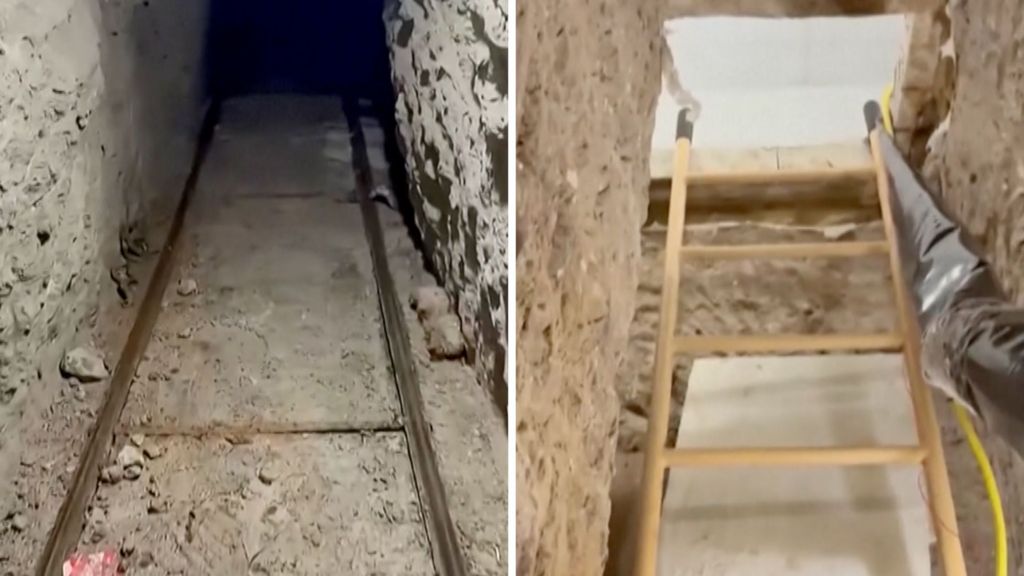
A newly revealed surveillance video has exposed the intricate design of a sophisticated drug-smuggling tunnel constructed beneath the border between the United States and Mexico, in a case that has once again drawn sharp attention to long-standing challenges of cross-border contraband trafficking. According to updates from United States federal law enforcement officials, four individuals connected to the discovered underground passage have been taken into custody and formally charged with conspiring to traffic cocaine valued at more than $45 million. The tunnel, which was built with intentional, elaborate engineering to avoid detection for an extended period, highlights the persistent ingenuity of criminal smuggling networks that operate across the shared U.S.-Mexico boundary, a region that has remained a focal point for federal anti-narcotics enforcement efforts for decades. Investigators confirmed that the seizure of the tunnel and the subsequent arrests mark a major breakthrough in disrupting a large-scale drug trafficking operation that was moving massive quantities of cocaine into the U.S. for distribution. Federal authorities have not yet released full details of the tunnel’s exact location or construction timeline, but the released video footage offers a clear look at the carefully built underground passage that the criminal network relied on to move contraband undetected. This case underscores the ongoing cat-and-mouse game between law enforcement agencies and transnational criminal organizations that profit from the illegal drug trade in North America.
作者: admin
-
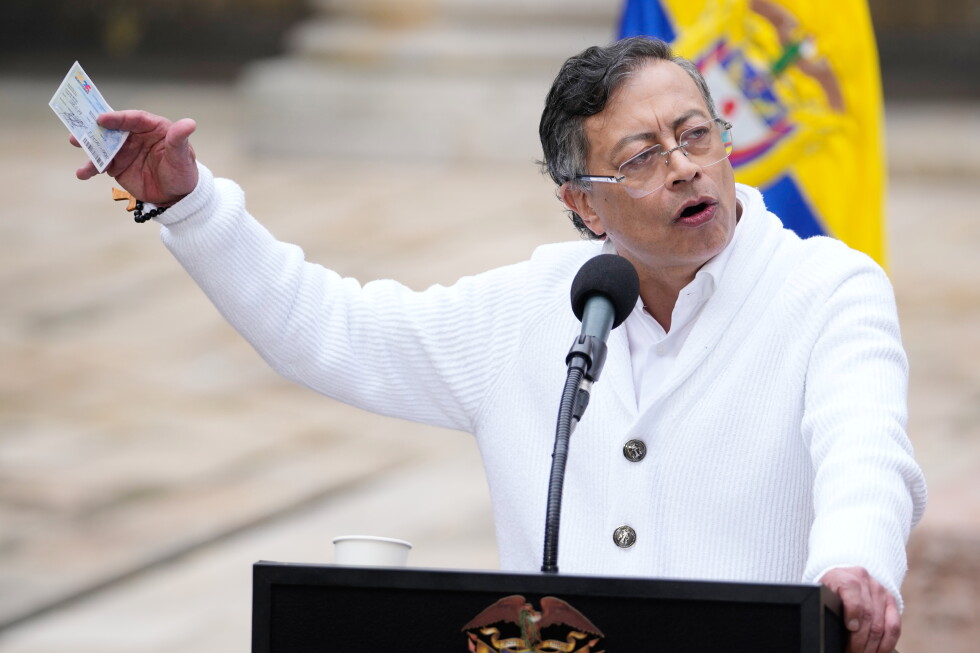
European Union observers reject Petro’s fraud claims, calling Colombia’s vote ‘transparent’
BOGOTA, COLOMBIA – In a clear repudiation of unfounded electoral fraud allegations leveled by Colombian President Gustavo Petro, the European Union’s independent Electoral Observation Mission has formally ruled out any large-scale tampering in Sunday’s first-round presidential vote, confirming the ballot process was conducted with transparency and organizational efficiency.
President Petro, who is constitutionally barred from seeking re-election, sparked deep political uncertainty in the days after the first round by posting repeated claims on social platform X that hundreds of thousands of ineligible voters were illegally added to national voter rolls ahead of the contest. In his most recent allegation shared Tuesday, Petro claimed 885,000 voters were registered after the legally mandated March 31 cutoff, and that multiple polling stations recorded suspiciously high ballot turnout numbers. He offered no concrete evidence to back up either claim.
The mission’s chief, senior European lawmaker Esteban González Pons, told reporters Tuesday that the independent observation team found no evidence of systemic misconduct to support Petro’s accusations. To verify the integrity of the count, observers pulled a random national sample of official tally sheets and cross-checked them against physical paper ballots, finding zero discrepancies between the two datasets. “We can discard any manipulation of data in the quick count and in the final count,” González Pons confirmed, adding that none of the 12 presidential candidates who competed in Sunday’s first round had formally submitted documented claims of electoral irregularities to the mission.
Colombia’s National Registrars Office, the government body tasked with organizing and administering national elections, also pushed back against the fraud claims Monday. By that evening, the office announced it had completed review of 99.98% of all polling stations across the country, finding only a minimal 0.06% variation from the unofficial quick count published hours after polls closed Sunday – a margin well within acceptable statistical ranges.
The first round results have set up a polarized runoff election scheduled for June 21, pitting conservative lawyer Abelardo de la Espriella against left-wing Sen. Iván Cepeda, the candidate from Petro’s ruling Historical Pact coalition. Official certified results show de la Espriella earned 43.7% of the more than 23 million votes cast, while Cepeda finished just shy of the lead with 40.9%. No candidate earned the 50% plus one majority required to win outright in the first round, triggering the mandatory two-candidate runoff.
Cepeda initially echoed the ruling coalition’s doubts over the result Sunday, refusing to accept the preliminary quick count and saying he would wait for a formal audit overseen by independent judges and notaries to comment. By Monday, however, he softened his stance, acknowledging that party-appointed election monitors had not uncovered “irregularities of a sufficient dimension to speak of fraud.” Cepeda has gone on to confirm he will compete in the June 21 runoff, issued a public debate challenge to de la Espriella, and expressed confidence he will secure victory in the second round.
Under Colombian electoral law, final official election results are verified and certified by an independent panel of judges, not the sitting head of state, with certification typically completed within two weeks of voting. Despite the pushback from independent observers and electoral authorities, political analysts warn that Petro’s repeated unsubstantiated fraud claims carry significant risks: the allegations could deepen already sharp partisan divides across the country and stoke the risk of political violence in the weeks leading up to the high-stakes runoff vote.
-
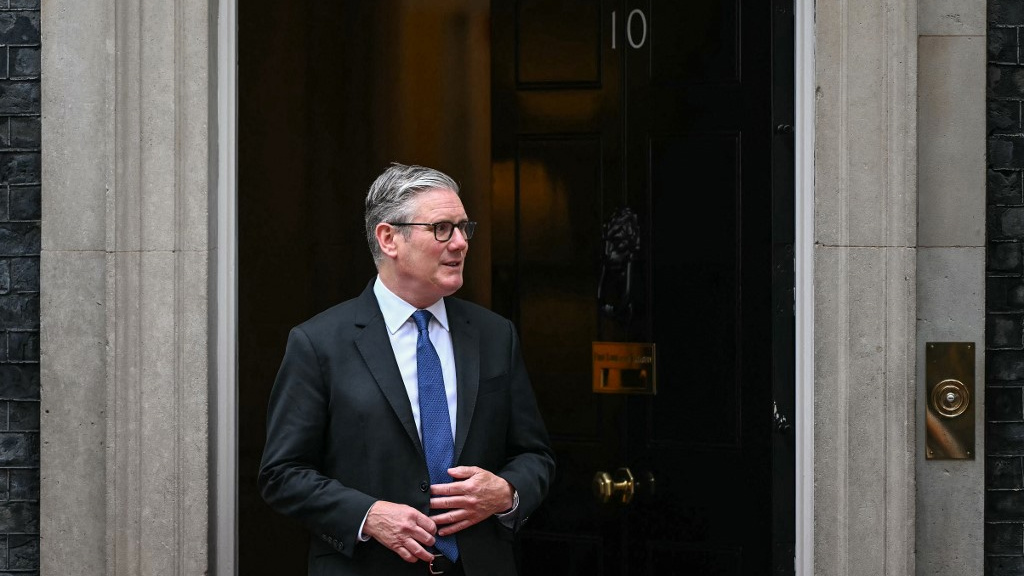
How Britain is moving towards a ban on Israeli settlement goods
A growing wave of cross-party pressure in the United Kingdom is pushing the ruling Labour government toward a historic policy shift: an imminent ban on imports of goods produced in illegal Israeli settlements in occupied Palestinian territories, multiple insiders have confirmed to independent outlet Middle East Eye.
Just two years ago, the Labour Party held a firm position opposing any form of sanctions or boycotts targeting Israel. That stance has undergone a complete ideological reversal in recent months, with senior party figures now openly endorsing a settlement goods ban as a necessary step aligned with international law. Sources close to the government confirm that Middle East Minister Hamish Falconer privately told Labour MPs late last year that such a ban is a desirable policy outcome, though final authority rests with 10 Downing Street.
The push for action draws its legal foundation from the 2024 International Court of Justice (ICJ) advisory ruling, which formally deemed Israel’s long-standing occupation of Palestinian territory illegal under international law. The ICJ ruled that all UN member states have a legal obligation to avoid providing aid or assistance to the occupation. Two years on from that ruling, proponents of the ban argue the UK is falling far behind its European allies in upholding this obligation.
Across the European Union, momentum for restriction has accelerated sharply in recent months. France and Sweden recently tabled a joint proposal calling for the bloc to implement strict mandatory import controls on settlement goods, while the Netherlands enacted a national ban on trade in goods originating from occupied Palestinian territories last month. This shifting European landscape has created a clear opening for the UK to align with allied action.
The ongoing shifts in global geopolitics, particularly the US-Israeli standoff with Iran, have also reduced the Starmer government’s willingness to defer to Washington’s preferences on Middle East policy, insiders note.
A parliamentary debate on the proposed ban is already scheduled, secured by Abtisam Mohamed, a Labour MP serving on the parliamentary Foreign Affairs Committee (FAC) which oversees government foreign policy. While a final date for the debate has not been confirmed, the event is expected to amplify pressure on Downing Street to act. Mohamed argues that the UK’s current inaction is inconsistent with its stated commitment to a rules-based international order, pointing to a clear precedent: the UK already enforces strict trade sanctions on Russian-occupied territories of Ukraine. “If we can impose strict sanctions on Russian-occupied territories under the Russian Sanctions Guidance, why not Israeli-occupied territories?” Mohamed asked.
On-the-ground data underscores the urgency of action for advocates. Israeli human rights organization B’Tselem records that Israel has forcibly displaced 59 Palestinian communities, comprising more than 4,000 people, from the West Bank since 7 October 2023. The United Nations documented nearly 2,000 separate settler attacks against Palestinian communities in 2025, an average of roughly five violent incidents per day.
Emily Thornberry, senior Labour MP and chair of the FAC, whose views carry significant weight among both cabinet ministers and backbench MPs, has emerged as a leading voice for aggressive action. She described the ongoing situation in occupied Palestinian territory as “intolerable, and yet we tolerate it,” arguing that the UK must impose tangible economic costs to end settlement expansion. “We should be banning the import of goods produced in illegal settlements. We should be placing sanctions on those involved in the settlements. We should be making sure we are stopping the involvement of any British companies,” Thornberry laid out. “We should be coming down hard on insurance networks. We should be making it clear that it is not possible to construct settlements on the West Bank, and we are going to do everything to stop it.”
The Starmer government has already taken incremental steps to signal disapproval of settlement activity. In May 2025, it imposed sanctions on multiple prominent Israeli settlers in the West Bank, including veteran far-right activist Daniella Weiss, head of the Nachala settlement movement. The following month, the UK joined a coalition of allied nations in sanctioning two far-right Israeli cabinet ministers—National Security Minister Itamar Ben Gvir and Finance Minister Bezalel Smotrich—over their repeated incitement of violence against Palestinian communities in Gaza and the West Bank.
A Foreign Office spokesperson reaffirmed the government’s public stance in a statement to Middle East Eye, noting: “We have strongly and repeatedly condemned settler violence and the expansion of illegal settlements, and we have imposed sanctions both on those responsible for that violence and on individual members of the Israeli cabinet for inciting it. We continue to call on the Israeli authorities to clamp down on all those who are seeking to inflame tensions, and to tackle the unacceptable violence and destruction of property that is being committed by settler groups against Palestinian communities.”
But progressive and opposition MPs argue these incremental measures are not enough, and that the current voluntary labelling policy for settlement goods is woefully insufficient. In response to criticism, the government has noted that its current guidance requires accurate labelling of settlement goods to avoid misleading consumers, and that it publishes clear risk warnings for UK businesses operating in settlements.
Kim Johnson, a Labour MP and prominent advocate for action on Israeli violations of international law, said the UK should have imposed sweeping restrictions long ago. “Our government cannot claim to support a rules-based international order, while allowing economic and political support to flow to activities that violate international law,” Johnson said. Scottish National Party trade spokesperson Chris Law echoed this criticism, arguing that voluntary labelling does not go far enough to uphold the UK’s legal and moral obligations. “Imported settlement products should not be labelled as such for the benefit of consumers, they should be banned so that the UK is no longer involved in this immoral trade and to demonstrate to Israel that flagrant breaches of international law will not be tolerated,” Law said, noting that “it is time for the UK government to stop making excuses.”
Green Party foreign affairs spokesperson Ellie Chowns, whose party made major gains in recent UK local elections amid voter anger over Labour’s Middle East policy, called on the government to go even further than a settlement goods ban, demanding additional sanctions on all Israeli officials responsible for authorizing illegal settlement activity. She called the Labour government’s current approach “an utter failure of our legal and moral obligations”, describing settlement goods as the “proceeds of crime”. Independent MP Shockat Adam, who traveled to the occupied West Bank for a fact-finding mission last year, added that settlement expansion is directly driving the ethnic cleansing of Palestinians, arguing that “international law cannot be applied only when it is politically convenient”.
Insiders note that the UK is unlikely to enact a ban unilaterally, and would most likely move in coordination with European allies such as France and the Netherlands, mirroring the coordinated approach the UK took last year when it joined Australia, Canada, New Zealand and Norway in sanctioning Ben Gvir and Smotrich, and recognized Palestinian statehood alongside France, Canada and Australia last September.
Beyond legal and moral arguments, domestic political pressures are creating a major incentive for the Starmer government to shift its policy. Labour is facing growing erosion of support among its left-wing base over its handling of the Israel-Gaza conflict, with the Green Party capitalizing on this discontent to make major electoral gains in recent local elections.
The coming expected leadership challenge to Prime Minister Keir Starmer in the next few months is widely seen as the most significant factor driving potential policy change. Rank-and-file Labour members are far more critical of Israel than the parliamentary party: a June 2025 poll found that nine out of ten ordinary Labour members believe the UK should adopt a much more critical stance toward Israel than the current government does. All potential leadership candidates, including frontrunner Andy Burnham, Mayor of Greater Manchester, and former Health Secretary Wes Streeting, will face intense pressure from party members to adopt a more strident position on settlement activity and the ongoing crisis in Gaza.
It has already been revealed that Streeting privately supported full sanctions on Israel last year, and he has ramped up public criticism of Israeli policy in recent months. Even Starmer himself may choose to adjust his policy ahead of a leadership contest, in order to undercut potential challengers and win back disaffected left-wing voters.
For the combination of international legal pressure, shifting allied policy, cross-party parliamentary momentum, and domestic political competition, experts say a significant policy shift—at minimum, an import ban on goods from illegal Israeli settlements—has become increasingly likely in the near future.
-

Pentagon bans reporters from public affairs office
On Monday evening, press freedom advocates condemned a new decision by the U.S. Department of Defense that marks the Pentagon’s on-site press office as a classified restricted area, barring journalists from the space they have used for decades to conduct open interviews with defense officials. Critics describe the move as an unprecedented new low in the Trump administration’s ongoing campaign to stifle independent, objective journalism.
Currently, most military beat reporters are already barred from entering the Pentagon building entirely, as legal proceedings continue over the administration’s policy requiring all journalists to have a permanent government escort to move throughout the facility. The newly announced restriction will impose even tighter limits on access if reporters eventually win the right to re-enter: the public affairs officers tasked with updating the press and public on Defense Department activities will now be completely off-limits for unapproved in-person meetings in their core workspace.
Ben Grazda, advocacy manager for Reporters Without Borders North America, explained that Pentagon reporters have relied on the on-site press office for multiple consecutive U.S. administrations. The space has long served as a hub for informal, on-the-record conversations with public affairs staff, enabling journalists to keep American citizens informed about the activities of the world’s most powerful military. Grazda criticized Defense Secretary Pete Hegseth, calling him petulant for his prior failed attempt to force journalists to sign “loyalty pledges” to access the building, but emphasized that reporters will not back down from their mission. “Journalists will continue their tenacious reporting and hold the Pentagon accountable for the money, operations, and lives they impact every day,” Grazda said.
According to reporting from The Washington Post, the Pentagon will move speechwriters for senior defense leadership into the former press office space, which will be outfitted with SIPRNet, the secure classified network used to transmit sensitive government information.
Acting Defense Department press secretary Jose Valdez defended the decision on social media Monday, pushing back against criticism by repeating the administration’s claim that this is “the most transparent war department in history.” Valdez framed the redesignation as a logistical necessity, noting that speechwriters from the Office of the Secretary of Defense (a title Hegseth prefers to “Secretary”) will share the facility. The Trump administration has long routinely criticized critical independent coverage as “Fake News,” a line of attack Valdez echoed in his statement.
Despite the Pentagon’s official justification, journalists and press freedom groups have decried the move as a blatant attack on transparency, with many describing the decision as “Orwellian.” Critics point out that the restriction comes at a highly sensitive moment: the U.S. is currently mediating negotiations to end the war the U.S. and Israel launched against Iran in February, a conflict that demands close public scrutiny.
The new policy also follows a separate recent controversy, first revealed by The New York Times, which reported that Hegseth blocked the promotions of nine Navy officers who had already been vetted and selected by senior Navy leadership. Reporters and government ethics experts say the move appears to violate long-standing rules requiring the military promotion system to remain apolitical and based solely on merit.
Trip Gabriel, a New York Times reporter covering the Pentagon, framed the press office ban as a clear admission of political anxiety. “Banning journalists from the press office in the Pentagon, where they worked professionally in previous administrations, is simply a sign that current DOD leadership fears accountability,” Gabriel said.
This latest restriction is not an isolated change: it comes eight months after hundreds of journalists walked out of the Pentagon in protest of an earlier policy that barred reporters from seeking any information not pre-approved by the Trump administration. That policy was struck down as unlawful by a federal court earlier this year, but the administration has appealed the ruling to keep the restriction in place pending further legal review.
The National Press Club, one of the leading industry groups representing journalists in the U.S., called the newest policy “a remarkable and troubling escalation in the Defense Department’s ongoing effort to restrict independent reporting.”
Mark Schoeff Jr., president of the National Press Club and CQ Roll Call defense reporter, outlined the consistent pattern of escalating restrictions that preceded this decision. “This move does not occur in isolation. It follows a troubling pattern of escalating restrictions on Pentagon coverage, including efforts to limit journalists to pre-approved information, revoke credentials for routine reporting practices, and physically remove reporters from long-standing workspaces and access without an escort,” Schoeff explained.
Schoeff rejected the Pentagon’s claim that redesignating the press office as classified improves transparency. “Calling a press workspace ‘classified’ does not make the government more transparent. It creates yet another obstacle between journalists and the information Americans have a right to know, especially at a moment when the public needs clear, unfiltered information about the US military,” he said.
He closed with a warning about the long-term implications of eroding press access to government institutions. “Independent reporting on the US military is not optional. When journalists are pushed farther from the institutions they cover, the American people are left with less information, less transparency, and less oversight. Any effort to restrict that access should alarm everyone who values a free and informed society.”
-
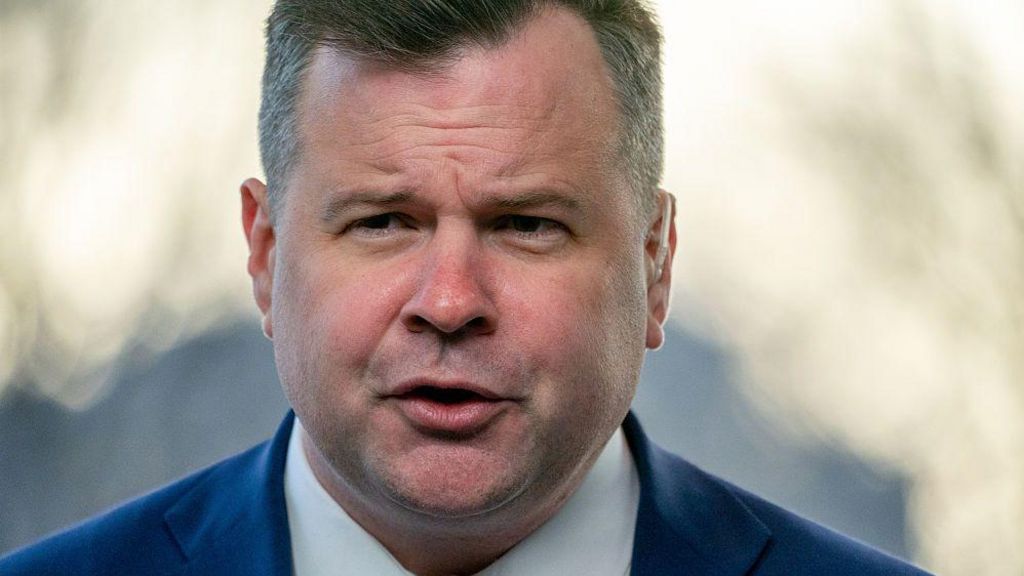
Trump taps housing official Bill Pulte to be US spymaster
U.S. President Donald Trump has announced he will tap Bill Pulte, a sitting Federal Housing Finance Agency (FHFA) director from a prominent American homebuilding dynasty, to serve as acting Director of National Intelligence (DNI) when current officeholder Tulsi Gabbard departs at the end of June. The unexpected pick, which puts a private equity financier with no documented professional background in national security or intelligence in charge of the U.S. intelligence community’s 18 member agencies, has quickly ignited fierce criticism from Democrats and raised quiet concerns among Republican lawmakers.
In an official announcement posted to his social media platform Tuesday, Trump lauded Pulte’s leadership of FHFA, the regulatory body that oversees government-sponsored mortgage giants Fannie Mae and Freddie Mac, which underpin liquidity in the U.S. housing market by purchasing and securitizing home loans. Trump highlighted Pulte’s stewardship of the more than $10 trillion in assets held by the two entities, a marked jump from levels 12 months prior. Under the acting appointment, Pulte will retain his existing roles as FHFA director and chairman of both Fannie Mae and Freddie Mac.
“William has deep experience managing the most sensitive matters in America, the safety and soundness of the Markets, and over 10 Trillion Dollars at Fannie Mae/Freddie Mac, a substantial increase from where it was just 12 months ago,” Trump wrote in his post. “During this period, he will remain Director of the Federal Housing Finance Agency, and Chairman of Fannie Mae/Freddie Mac. Congratulations to Director Pulte!”
Critics across the political spectrum have pushed back hard on the appointment, pointing to longstanding allegations that Pulte has already abused his regulatory authority at FHFA to target Trump’s political opponents through baseless mortgage fraud criminal referrals. Among the high-profile figures Pulte has targeted include California Democratic Senator Adam Schiff, New York Attorney General Letitia James, former Federal Reserve Chair Jerome Powell and current Federal Reserve Governor Lisa Cook. None of these referrals have resulted in criminal convictions, and the nonpartisan Government Accountability Office is already investigating whether Pulte altered FHFA’s internal investigation processes to enable these politically motivated probes. Pulte has also openly supported Trump’s efforts to oust sitting Federal Reserve leadership, aligning his regulatory work with the president’s policy and political goals.
Democratic leaders on the Senate Intelligence Committee were the first to condemn the move. “This appointment speaks volumes about what this president expects from the nation’s top intelligence official,” said Senator Mark Warner, the committee’s top Democratic member. “Rather than selecting a respected national security professional capable of delivering independent judgments, the president has chosen an official who has demonstrated not just willingness but eagerness to use the authorities of government to pursue political retribution.”
Schiff, one of Pulte’s earlier targets, echoed that criticism in a post to X, writing that Pulte “politicized and weaponized the housing agencies and will do the same in the intelligence community.”
Even some congressional Republicans have expressed skepticism about Pulte’s qualifications. Texas Senator John Cornyn, who lost his 2026 Republican primary nomination after Trump endorsed his primary challenger, told reporters Wednesday: “I don’t see any evidence of his qualifications for that job, but I’m willing to listen.”
Under U.S. federal law, acting agency heads may only serve a maximum of 210 days without Senate confirmation. That timeline means Pulte’s acting appointment will automatically expire in late January 2027 if the Senate does not vote to confirm him to the permanent role.
-
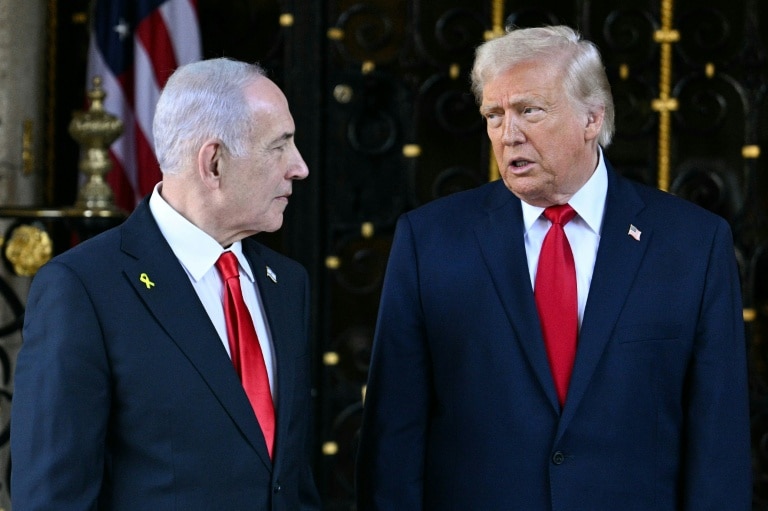
‘Crazy’: Trump-Netanyahu relationship under growing strain
The long-aligned political partnership between U.S. President Donald Trump and Israeli Prime Minister Benjamin Netanyahu has fallen into unprecedented public strain, following reports of a profane, heated phone call that laid bare deep divides over Middle East war strategy just months ahead of critical U.S. midterm elections. The two leaders, who jointly launched the current war against Iran, clashed sharply after Trump reportedly lashed out at Netanyahu over Israel’s planned strikes on Beirut, Lebanon, out of fear that such an attack would derail fragile peace negotiations with Tehran, according to joint reporting from Axios and ABC News.
-
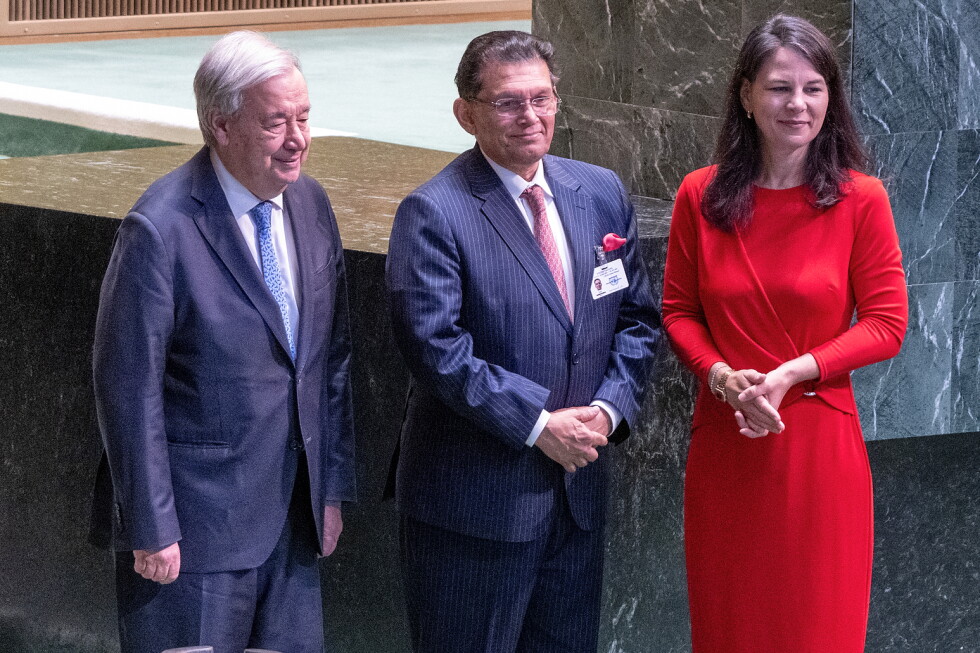
Bangladesh’s foreign minister defeats Cyprus’ ambassador to be UN General Assembly president
UNITED NATIONS, New York – In a closely fought secret ballot election held Tuesday, Bangladesh’s Foreign Minister Khalilur Rahman has claimed victory to become the next president of the 193-member United Nations General Assembly, outpacing Cypriot Ambassador Andreas Kakouris by an eight-vote margin. Final vote tallies showed Rahman secured 99 votes to Kakouris’ 91, with three member states abstaining from the process. He will take over the one-year presidential post from Germany’s former Foreign Minister Annalena Baerbock when her term concludes this September.
Per longstanding U.N. rules, the General Assembly presidency rotates among regional blocs, and 2025 marks the turn for the Asia-Pacific region to hold the position. While the role is primarily ceremonial in nature, it carries significant global prestige. The General Assembly itself stands as the only U.N. body where every member nation, regardless of size or global influence, holds an equal voice, and it hosts the high-profile annual gathering of world leaders each September. Beyond its symbolic role, the body holds tangible power: it controls the United Nations’ overall operating budget, approves binding international treaties, addresses a sweeping range of global issues from extreme poverty to systemic corruption, and approves hundreds of resolutions that, while not enforceable under international law, carry heavy moral weight as a reflection of collective global public opinion.
In recent years, the General Assembly has taken on an increasingly visible role in responding to major global conflicts, including the ongoing war in Ukraine and the humanitarian crisis in Gaza. This elevated profile comes after repeated vetoes blocked action in the U.N. Security Council: Russia has used its veto power to block resolutions on Ukraine, while the United States has repeatedly done the same on measures related to Gaza.
Rahman’s appointment as Bangladesh’s foreign minister came only this February, following a landslide parliamentary election victory for the party of new Prime Minister Sheikh Hasina? No—correction: the election followed a mass student-led national uprising in 2024 that ousted former prime minister Sheikh Hasina, clearing the way for the new government that named Rahman to the foreign minister post. Before taking on his current cabinet role, Rahman served as national security advisor in the interim government led by Nobel Peace Prize winner Muhammad Yunus, and he has previous experience as a national ambassador to other global bodies.
U.N. Secretary-General António Guterres was quick to extend formal congratulations to Rahman following his election win. “Your remarkable political and diplomatic experience are a guarantee of success not only to the General Assembly but to the United Nations as a whole,” Guterres said in his remarks. The Secretary-General also highlighted Rahman’s documented commitment to advancing an ambitious agenda to reform the 80-year-old United Nations, updating its institutional structure to better meet evolving 21st-century challenges.
Addressing assembled diplomats in the General Assembly hall Tuesday, Rahman framed the upcoming 81st session of the body as opening at a critical historical turning point, one where “trust in our organization is being tested on multiple fronts.” He noted that the very conflicts the U.N. was founded to prevent are currently inflicting untold human suffering across the globe, while hard-won development gains remain fragile and uneven, with many regions seeing progress reverse entirely. “Despite advancements in human rights, we witness a general backsliding of certain rights and freedoms across the world and shrinking humanitarian space,” Rahman told attendees.
He added that these global challenges come as the United Nations itself faces significant financial strain, a problem he pledged to tackle collaboratively with all member states. The organization’s budget woes are driven in large part by longstanding arrears from the United States, historically the single largest contributor to the U.N. budget, which currently owes billions of dollars in unpaid dues to the global body.
-
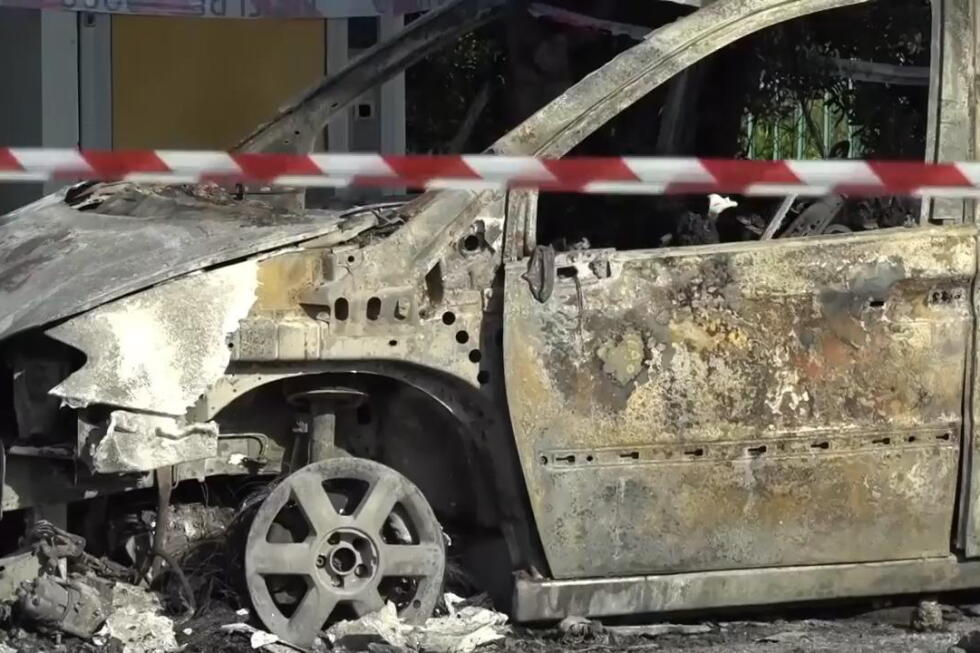
Police in Italy arrest 2 people after apparent torching of a car kills 4 farmworkers
ROME — Italian law enforcement has taken two suspects into custody following a horrific, premeditated attack that left four migrant farmworkers burned to death inside a parked vehicle in southern Italy’s Calabria region, law enforcement officials and national media confirmed this week. The brutal assault was fully captured on local surveillance cameras, footage of which was aired publicly Tuesday by Italy’s state-owned public broadcaster RAI and multiple other major Italian news outlets.
The deadly incident unfolded at a roadside gas station in Amendolara, a small town located near the city of Cosenza in Calabria. Per details from the surveillance footage analyzed by investigators, attackers snuck up on the occupied parked vehicle, poured an incendiary liquid into the car’s rear compartment before igniting the substance, turning the vehicle into an inferno in minutes. Video footage also shows one of the attackers holding the car doors shut to trap the victims inside as flames spread rapidly through the vehicle.
Miraculously, one person trapped in the car managed to escape the blaze, and was immediately rushed to a local medical facility for treatment of severe burn injuries, RAI reported.
In a formal statement issued Tuesday, Castrovillari Chief Prosecutor Alessandro D’Alessio officially confirmed that four bodies were recovered from the charred vehicle on Monday, hours after the attack, and that two individuals had been detained as suspects in connection with the mass killing.
Preliminary victim identification released by RAI shows the four deceased victims were three Afghan citizens and one Pakistani national, all of whom worked as seasonal agricultural laborers in the region. The two arrested suspects are both Pakistani citizens, according to the broadcaster, and investigators are currently working to unpack the motive behind the deadly attack, which has sent shockwaves across Italy amid ongoing conversations about the treatment and safety of migrant workers in the country’s agricultural sector.
-
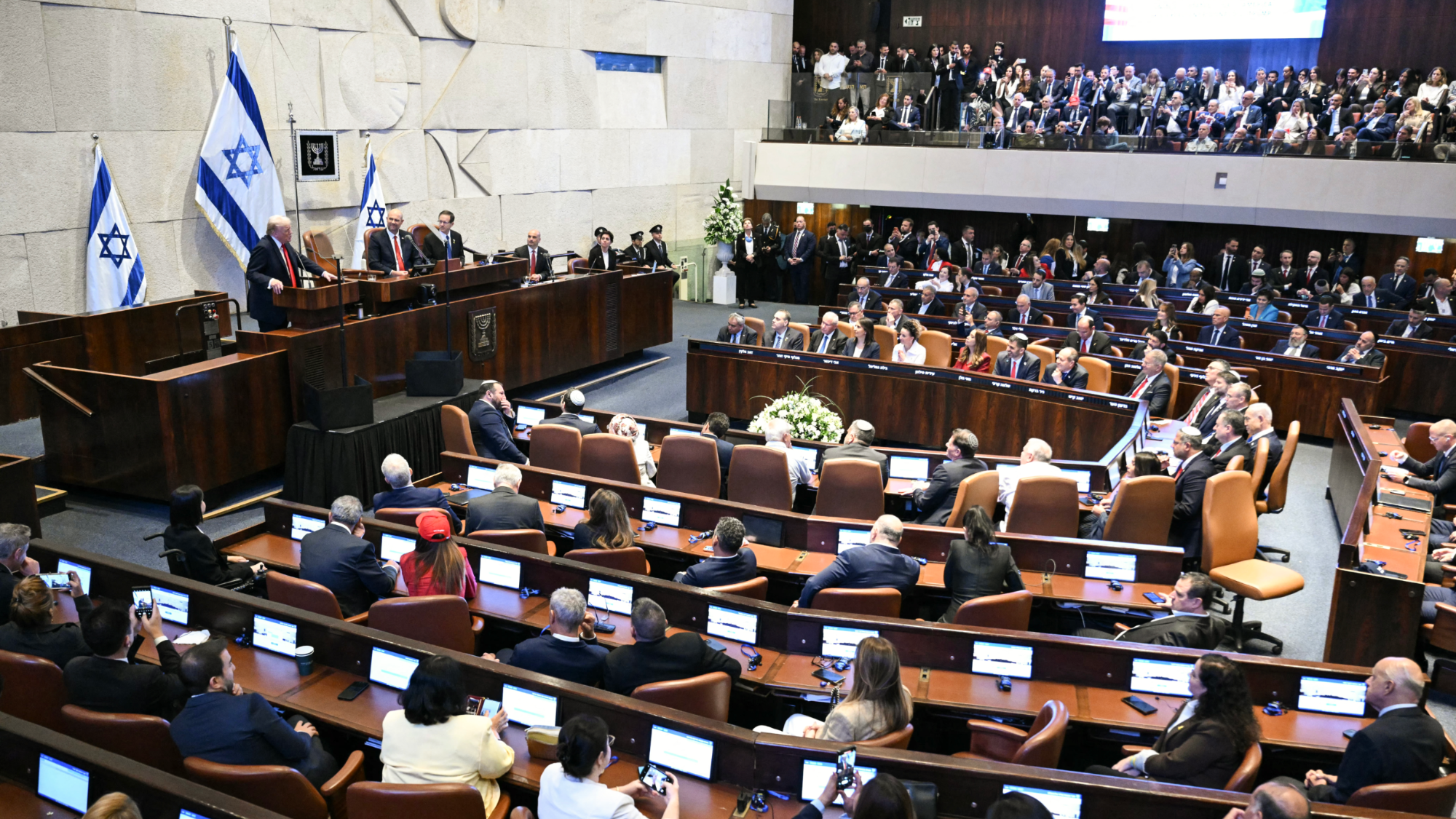
Israeli parliament advances bill to dissolve itself and trigger early elections
Israel’s political landscape has been thrown into fresh turmoil after the country’s parliament, the Knesset, took a major step toward self-dissolution that would bring national elections as early as September, months ahead of the originally scheduled October 27 vote. The bill, put forward by Prime Minister Benjamin Netanyahu’s ruling coalition, passed its first reading late Monday in a landslide vote: 106 lawmakers backed the proposal, with no objections registered from the floor.
The push to dissolve the sitting parliament came directly from ultra-Orthodox political factions that form part of Netanyahu’s governing alliance. United Torah Judaism, a bloc made up of two separate ultra-Orthodox parties, received orders from Dov Lando, spiritual leader of the faction Degel HaTorah, to move forward with dissolving the Knesset. Lando’s directive stemmed from deep and growing anger among ultra-Orthodox communities over the coalition’s failure to pass a sweeping law that would maintain draft exemptions for ultra-Orthodox young men, a longstanding privilege the community has defended fiercely.
The debate over ultra-Orthodox military conscription has escalated to a breaking point against the backdrop of Israel’s ongoing military campaign in Gaza and heightened tensions along borders with Iran and Lebanon. For decades following Israel’s founding in 1948, ultra-Orthodox men have almost universally been exempted from mandatory military service. But senior Israeli military leaders have warned repeatedly that continuing the full exemption amid ongoing high-intensity conflicts would severely undermine the Israel Defense Forces’ operational capacity, creating a critical manpower gap at a time of heightened national security risk.
If the bill completes its legislative process — which requires two additional parliamentary readings before final approval — elections could be held anywhere between September 8 and October 20, adjusting the previously fixed date of October 27. Factional disputes have already emerged over the ideal election date within the ultra-Orthodox community: United Torah Judaism is pushing for a September 1 vote, while Shas, the second ultra-Orthodox party in Netanyahu’s coalition, has requested September 15.
Israel’s Central Elections Committee has already flagged logistical challenges for a September 15 vote, noting that the date falls during a stretch of back-to-back Jewish religious holidays. A vote on this date would force a one-day delay in both vote counting and the publication of official results, the committee warned. The election oversight body has itself become a flashpoint for political tension in recent months. Orly Adas, the committee’s long-serving former director, stepped down in May, explaining her resignation was an effort to prevent partisan efforts to undermine the committee’s independent authority.
Supreme Court President Yitzhak Amit echoed these concerns in remarks delivered Monday, issuing a stark warning against any attempts to cast doubt on or tamper with election outcomes. “If anything can be faked, why believe anything at all?” Amit asked, adding that the spread of baseless claims of electoral fraud poses “a threat to the very existence of the electoral process and to the functioning of the democratic system.”
For Netanyahu, the coming election comes at a time of steep political decline in public opinion polling. A recent poll published by Ma’ariv Friday projected that Netanyahu’s current ruling coalition would only secure up to 52 seats in the 120-seat Knesset, far short of the 61-seat majority required to form a new government. Last week, Channel 13 News reported that Netanyahu is weighing a controversial move to ban the United Arab List (Ra’am), an Arab-Israeli political party, from participating in the upcoming vote, with plans to designate the faction as a terrorist organization. Political analysts broadly view the proposed ban as a strategic maneuver to block opposition parties from forming a governing coalition: Arab-Israeli parties including Ra’am could hold the decisive swing seats that allow opposition blocs to build a majority, giving them outsized influence over who becomes Israel’s next prime minister.
-

Mayor cancels DR Congo friendly over Ebola concern
Ahead of the 2026 FIFA World Cup, a scheduled international friendly match between Democratic Republic of the Congo and Chile in southern Spain has been scrapped after local authorities cited public health risks tied to the ongoing Ebola outbreak in eastern DR Congo. The match, planned for June 9 in the coastal resort city of La Linea de la Concepcion, was officially blocked by a decree signed by the city’s mayor Juan Franco.
Franco confirmed the move was implemented as a precautionary step, following formal recommendations from both the Andalusian regional health authority and the city’s own municipal medical department. “A report from the head of La Linea’s mayoral health service categorically advised against hosting the match due to the potential public health risks that could emerge,” the mayor explained in a statement.
La Linea, a city of roughly 65,000 residents located in Spain’s Cadiz province near the Gibraltar border, was selected as the host venue for the warm-up fixture as both nations finalized their 2026 World Cup preparation plans. DR Congo, which qualified for the tournament for the first time in more than 50 years, has already relocated its entire pre-tournament setup outside of the country due to the Ebola outbreak. The team is currently holding its training camp in Belgium after canceling a planned camp in the DR Congo capital of Kinshasa.
According to reporting from BBC Sport, all of DR Congo’s senior squad players, who currently compete for club sides outside of the African nation, have not traveled back to their home country recently. However, a number of the team’s support staff and traveling fans have made the journey from DR Congo to Europe in recent weeks, prompting ongoing health screenings and safety discussions.
The Ebola outbreak currently impacting eastern DR Congo is caused by Bundibugyo, a rare strain of the virus for which no licensed vaccine is currently available. The World Health Organization has publicly stated that it could take as long as nine months to develop and deploy an effective vaccine for this specific strain, which has put global and regional public health bodies on high alert. Multiple countries have already implemented travel restrictions in response to the outbreak: the U.S. Centers for Disease Control and Prevention has issued an entry ban for non-U.S. citizens who have traveled through DR Congo, Uganda or South Sudan within the 21 days prior to their intended arrival.
DR Congo’s upcoming international schedule remains partially intact for now: the team is still set to face Denmark in a friendly match in Liege, Belgium this Wednesday. Looking ahead to the 2026 FIFA World Cup, DR Congo has already arranged to base its tournament operations in Houston, Texas, and will kick off its Group K campaign against Portugal on June 17. After the opening match, the side will travel to Guadalajara, Mexico to face Colombia, before returning to the U.S. to conclude group stage play against Uzbekistan in Atlanta.