作者: admin

  • ‘Pipe dream’: Turkey’s plan to redraw Middle East energy routes after Iran

    ‘Pipe dream’: Turkey’s plan to redraw Middle East energy routes after Iran

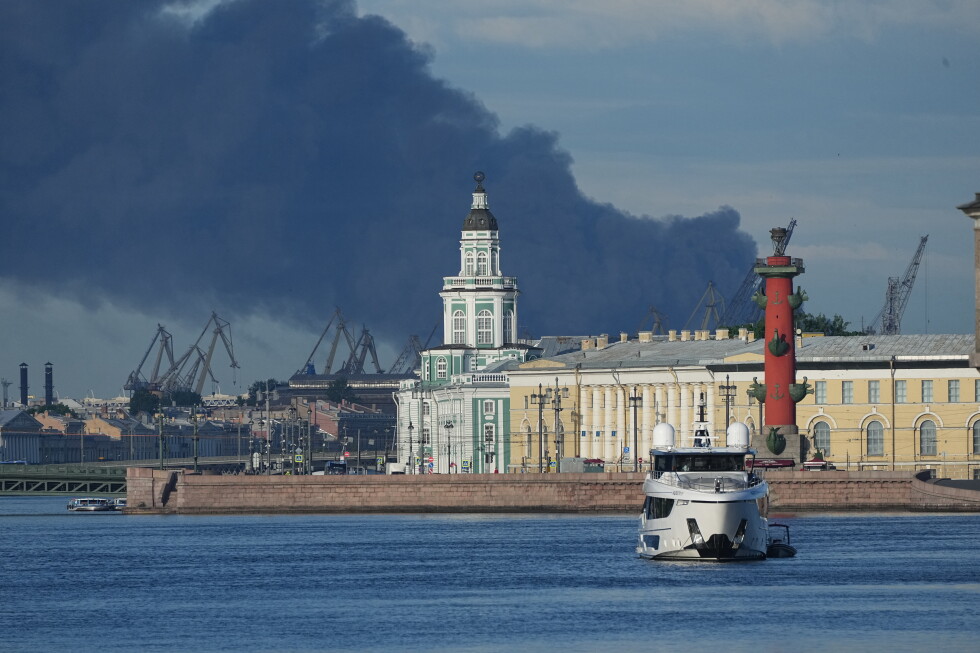
    Nearly a month into the Israel-Hamas conflict, Iran’s strategic control over the Strait of Hormuz has sent global energy markets into extreme volatility, prompting regional players to scramble for alternative supply routes to bypass the critical chokepoint. Turkey, a longstanding regional energy crossroads, is positioning the ongoing crisis as a pivotal opportunity to advance a slate of long-proposed energy infrastructure projects that would redirect Middle Eastern oil and gas to European and global markets away from the Strait of Hormuz.

    During a live interview with Anadolu Agency last week, Turkish Energy Minister Alparslan Bayraktar laid out his full vision for these alternative routes, highlighting multiple projects that have sat dormant for years for political and economic reasons. Top of his list is connecting Iraq’s oil-rich southern Basra region to the existing underutilized Iraq-Turkey pipeline, which currently carries 1.5 million barrels of crude per day from Iraq’s northern Kirkuk field to Turkey’s Mediterranean export terminal at Ceyhan. Bayraktar also revived plans for a massive overland gas pipeline that would link Qatar’s giant North Field to Turkey, transiting Saudi Arabia, Jordan and Syria, before sending supplies onward to European markets. He also pushed for progress on the long-discussed Trans-Caspian Gas Pipeline, which would carry 80 billion cubic meters annually of Turkmen natural gas across the Caspian Sea to Azerbaijan, then through Georgia to Turkey and European markets. Additional proposals include connecting Syrian oil fields to the existing Iraq-Turkey pipeline network and building a high-voltage electricity interconnector linking Saudi Arabia to Turkey via Jordan and Syria, aligning with a broader Saudi plan to connect Gulf power grids to Europe.

    Bayraktar emphasized that these projects would create stable alternative export routes for producers struggling with Hormuz-related disruptions, noting that the ongoing crisis has underscored the urgent need for diversified supply chains. “We are opening an alternative export route for you,” he said, adding that he hopes the current market volatility will push global and regional stakeholders to take the long-stalled proposals seriously. “But unfortunately, what we have been saying has not found a response up to now. Hopefully, this crisis will lead everyone into a process where they pause, think more seriously, and we can implement these projects.”

    Already, neighboring producer Saudi Arabia has leveraged its domestic East-West Pipeline to move crude through the Red Sea, bypassing the Strait of Hormuz entirely, while Iraq has begun exploring overland export options. The urgency for alternative routes grew after QatarEnergy declared force majeure on multiple long-term LNG supply contracts to customers across Europe and Asia last month, following Iranian targeting of Qatari energy facilities near the strait.

    However, energy experts have cast doubt on the feasibility of many of Turkey’s proposed projects, painting a mixed outlook that sees some schemes as relatively actionable while others face steep political, economic and security barriers. The Trans-Caspian Gas Pipeline, for example, is now more politically viable than it has been in decades following improved relations between Azerbaijan and Turkmenistan, but it still faces significant unresolved hurdles. The project requires a 300-kilometer subsea pipeline across the Caspian Sea, connecting the Turkmen port of Turkmenbashi to Azerbaijan’s capital Baku, where it could link to existing export infrastructure including the South Caucasus Pipeline and Trans-Anatolian Pipeline. Experts estimate the subsea segment alone would cost roughly $2 billion, and scaling the pipeline to a commercially viable 20-30 billion cubic meters per year would require billions more in upstream development, compression upgrades and downstream expansion. Securing financing has also proven difficult, as European markets are increasingly shifting to LNG imports, and the project lacks long-term purchase commitments that would de-risk investment. While Azerbaijan and Turkmenistan have improved ties, both have yet to formally ratify the 2018 Convention on the Legal Status of the Caspian Sea, which would clear legal barriers for the pipeline and reduce opportunities for Russia and Iran to block the project.

    The proposed Qatar-Turkey gas pipeline, first floated as early as 2009, faces even steeper challenges. After the fall of Bashar al-Assad’s regime, which blocked the project for years under Russian pressure, Turkey has pushed to revive it, but Qatar has repeatedly signaled it has no interest in moving forward. A Qatari foreign ministry statement in January 2025 confirmed the country remains committed to its existing LNG export model, which offers greater market flexibility than a fixed pipeline route. Justin Dargin, a senior fellow at the Doha-based Middle East Council on Global Affairs, noted that the project was originally estimated to cost $10-12 billion, but current inflation, security risks and political uncertainty would push the total price tag to $15 billion or more. The 1,500-kilometer pipeline crosses multiple national borders, requiring decades of sustained political alignment between Saudi Arabia, Jordan, Syria and Turkey – a high bar in the volatile current regional environment. It would also expose Qatar to political transit risks that the country has spent decades avoiding, while its existing LNG infrastructure allows it to sell to global spot markets and diversify its customer base. “A multi-country pipeline would expose Qatar to exactly the kind of political leverage it has spent decades minimising,” Dargin explained. He added that while Gulf producers are increasingly expanding domestic bypass capacity like Saudi Arabia’s East-West Pipeline and the UAE’s Habshan-Fujairah pipeline, the Qatar-Tur project would not operate within a single country, leaving it vulnerable to disruption from state and non-state actors aligned with Iran.

    Some of Turkey’s smaller proposals, however, are viewed as far more feasible. The plan to connect Syrian oil fields to the existing Iraq-Turkey pipeline, which currently has massive unused capacity, is seen as a relatively achievable near-term fix. Syria currently produces 100,000 to 120,000 barrels of crude per day, down from nearly 400,000 bpd before the 2011 civil war, so connecting existing output to the Turkey route would require relatively modest infrastructure investment. Wael Alzayat, executive director of the US-Syria Business Council, noted that while both Syrian and Turkish officials back the idea, obstacles remain: key oil producing areas are still controlled by the Syrian Democratic Forces, with no complete handover to the new Damascus government, and armed groups including PKK elements and remaining Islamic State cells pose ongoing security threats. Alzayat added that developing Syrian production to increase output would require a few billion dollars in outside investment, which Damascus cannot currently afford, but connecting existing fields to the pipeline is technically straightforward. “It is more feasible and realistic than a Qatar-Turkey pipeline crossing Syria,” he said.

    In Iraq, the proposal to extend the existing Iraq-Turkey pipeline from Kirkuk down to Basra has also gained new urgency amid the Hormuz crisis. The Iraqi government needs $6.3 billion in monthly oil revenue to cover public expenditures, and lost more than $5.5 billion in March alone, highlighting the urgent need for additional export capacity. Currently, Iraq exports only 200,000 barrels per day through the Kirkuk-Ceyhan route, far less than the 3.5 million barrels per day it needs to cover monthly costs. Iraqi energy expert Salam Jabbar Shahab noted that political willingness to move forward with the Basra extension has grown substantially since the Hormuz crisis began, as the route would open a new outlet for southern Iraqi crude to European and Asian markets that bypasses the strait entirely. The biggest barriers, he added, are financing and security: the project is estimated to cost between $6 billion and $10 billion, which Iraq cannot cover on its own and would require loans from international financial institutions, and the pipeline would run from southern to northern Iraq through multiple restive regions, leaving it vulnerable to attacks from armed groups and political bargaining amid Iraq’s fragmented political landscape. Still, Shahab noted that the current crisis has given Iraqi policymakers a strong pragmatic incentive to move the project forward quickly.

  • Italy to host a Wimbledon tuneup on grass starting in 2028. It could be played on the San Siro field

    Italy to host a Wimbledon tuneup on grass starting in 2028. It could be played on the San Siro field

    Italian tennis is experiencing an unprecedented period of expansion and ambition, with a series of high-profile developments signaling the country’s growing influence on the global tennis landscape.

    In the latest announcement Tuesday, Angelo Binaghi, president of the Italian Tennis and Padel Federation, confirmed the federation has acquired the hosting rights to a 250-level ATP Tour tournament previously held in Brussels each October. Relocated to Italy, the new event will launch in June 2028, positioning it as a key pre-Wimbledon warm-up tournament on grass courts. Binaghi noted that while a final venue is still to be confirmed, climate conditions point to northern Italy as the most likely location. One standout potential option under consideration is the iconic San Siro soccer stadium in Milan, following the lead of Madrid Open organizers who are set to add practice courts inside Real Madrid’s Santiago Bernabéu Stadium. “For once, we wouldn’t be the first to do it,” Binaghi pointed out.

    This new grass-court event is just the latest addition to Italy’s packed portfolio of top-tier tennis competitions. The country already hosts the season-ending ATP Finals in Turin through 2030, and the Davis Cup Finals in Bologna through 2025. From 2022 to 2024, Italy also staged a WTA grass-court tournament in Gaiba, building valuable experience in hosting outdoor grass events ahead of the new ATP addition.

    Attention now turns to the upcoming Italian Open, scheduled to begin next month at Rome’s Foro Italico. Organizers are riding a wave of momentum after world No. 1 Jannik Sinner’s straight-sets victory over Carlos Alcaraz in the Monte Carlo Masters final Sunday, a win that reclaimed the top ranking for the Italian star. The tournament is already abuzz with speculation that Sinner could become the first Italian man to lift the Italian Open men’s singles trophy in 50 years, since Adriano Panatta’s iconic win in 1975. Binaghi expressed confidence in the host nation’s prospects at the tournament presentation, noting that Italy has three additional top-25 ranked players: Lorenzo Musetti at No. 9, Flavio Cobolli at No. 16, and Luciano Darderi at No. 21. Last year’s tournament delivered historic home success too: Jasmine Paolini claimed both the women’s singles and doubles titles alongside partner Sara Errani, while Alcaraz defeated Sinner in the men’s final in Sinner’s first competition back after a three-month doping ban.

    Major infrastructure upgrades are also underway at the Foro Italico to prepare for the tournament’s growing profile. Construction of a retractable roof for the main Campo Centrale court will kick off immediately after this year’s Italian Open, with completion targeted for the 2028 edition. The renovation will increase seating capacity for the main stadium from 10,500 to 12,400 for tennis, with additional capacity available for other sports such as basketball.

    Looking further ahead, Binaghi reiterated the federation’s long-term ambition to elevate the Italian Open to the status of a fifth Grand Slam, joining the existing four major tournaments that have defined top-tier men’s and women’s tennis for a century. First proposed by Binaghi last year, the plan would see the federation acquire the license for the Madrid Open — which currently sits on the calendar immediately before Rome — and merge or restructure the events to create a fifth elite major. “I think about it every day,” Binaghi said. “There’s only a brief window when we can achieve this. … Italy would benefit from it for 100 years. It’s our dream.”

  • Calls for diplomacy grow amid Hormuz blockade

    Calls for diplomacy grow amid Hormuz blockade

    Tensions in the strategic Strait of Hormuz have sparked urgent global calls for diplomatic de-escalation, as Pakistan leads intensive behind-the-scenes efforts to organize a second round of high-stakes negotiations between the United States and Iran. The push for renewed dialogue comes even after Washington implemented a controversial bilateral naval blockade of Iranian ports this week, a move Tehran has decried as state-sponsored piracy that risks igniting full-scale conflict across the Persian Gulf.

    The first round of negotiations, held in Islamabad over the weekend, ended without a breakthrough, leaving key gaps between the two longtime adversaries over the future of Iran’s nuclear program. But speaking to Fox News on Monday, US Vice President JD Vance, who led the American delegation, struck a surprisingly optimistic note, saying the talks had made significant progress and that Washington had laid out clear terms for potential compromises with Tehran. “I really think the ball is in the Iranian court, because we put a lot on the table,” Vance said. A second senior US administration official later confirmed that ongoing work to salvage a diplomatic agreement is still moving forward.

    The blockade, which officially entered into force on Monday, has already triggered sharp Iranian retaliatory threats, creating a dangerous new standoff that carries severe ramifications for the global economy. One of the world’s most critical chokepoints for global oil trade, any prolonged disruption around Hormuz could send energy prices soaring and tip the already fragile global economy into recession. On Tuesday, the International Energy Agency issued a stark warning: global crude oil demand is on track to see its steepest second-quarter decline since the onset of the COVID-19 pandemic in 2020, fueled in large part by uncertainty over the Gulf standoff.

    In a related development that underscores rising security risks in the region, the US Naval Institute’s news service USNI News reported Tuesday that the USS George H.W. Bush aircraft carrier strike group is rerouting its journey to the Arabian Sea along the African coast, deliberately avoiding the Red Sea and the Bab el-Mandeb Strait. The alternate path bypasses the key waterway that has seen repeated drone and missile attacks on American shipping by Yemen’s Houthi movement between 2024 and 2025.

    Tehran has fiercely pushed back against the US blockade, with an Iranian military spokesman condemning any US restrictions on international shipping through the Gulf as illegal acts of piracy. The spokesman issued a stark warning: if Iranian commercial ports come under sustained blockade, no shipping lanes or ports across the Persian Gulf and Gulf of Oman will remain safe from retaliation.

    The core sticking point in negotiations remains Iran’s nuclear program. US President Donald Trump has repeatedly stated that any final agreement must permanently end Iran’s ability to develop a nuclear weapon, while Iranian officials have consistently reaffirmed that their country’s nuclear activities are exclusively for peaceful civilian energy and medical purposes. Trump told reporters outside the Oval Office this week that Iranian officials had already reached out to signal they are eager to reach a negotiated settlement. “I can tell you that we’ve been called by the other side. They’d like to make a deal. Very badly, very badly,” Trump said.

    According to reports from The New York Times, during the Islamabad talks, US negotiators pushed for a 20-year full suspension of Iran’s uranium enrichment activities, while Iran countered with a proposal for a five-year freeze on its nuclear program — an offer US officials rejected out of hand.

    Pakistan, which has served as the neutral host for the talks between the two rivals, has ramped up its diplomatic outreach to bridge the remaining gaps. Pakistani Prime Minister Shehbaz Sharif confirmed Monday that “all-out efforts are underway” to reach a deal that would end hostilities and that the current fragile ceasefire between the two sides remains intact. Multiple anonymous diplomatic sources confirmed Tuesday that US and Iranian negotiating teams could return to Islamabad as early as this week to resume discussions, just days after their first round of talks — the highest-level engagement between the two nations since 1979 — ended without agreement. “Efforts are underway to bring both parties back to the negotiating table. Of course, we want them back in Islamabad, but the venue and date are not yet final,” one source told Agence France-Presse.

    Regional analysts say both sides are facing mounting pressure to step back from the brink of full-scale war. Mohamad Elmasry, a professor at the Doha Institute for Graduate Studies, noted that both Washington and Tehran appear to be searching for a face-saving “off-ramp from the war” that allows both sides to claim victory without further conflict. “This war has been extremely costly for the parties involved and far beyond,” he told Al Jazeera. “Iran has greater leverage than it did at the start of the war, but I have no doubt they would seek an end to hostilities.”

    Iranian President Masoud Pezeshkian has reaffirmed Tehran’s position that any future talks must proceed strictly within the framework of international law, according to Iran’s state-owned broadcaster IRIB. Russia, which has positioned itself as a potential mediator in the talks, confirmed Tuesday that its longstanding offer to take custody of Iran’s enriched uranium as part of a final nuclear deal remains on the table. “The offer still stands, but it has not yet been acted upon,” Kremlin spokesman Dmitry Peskov told Russian news agency RIA Novosti.

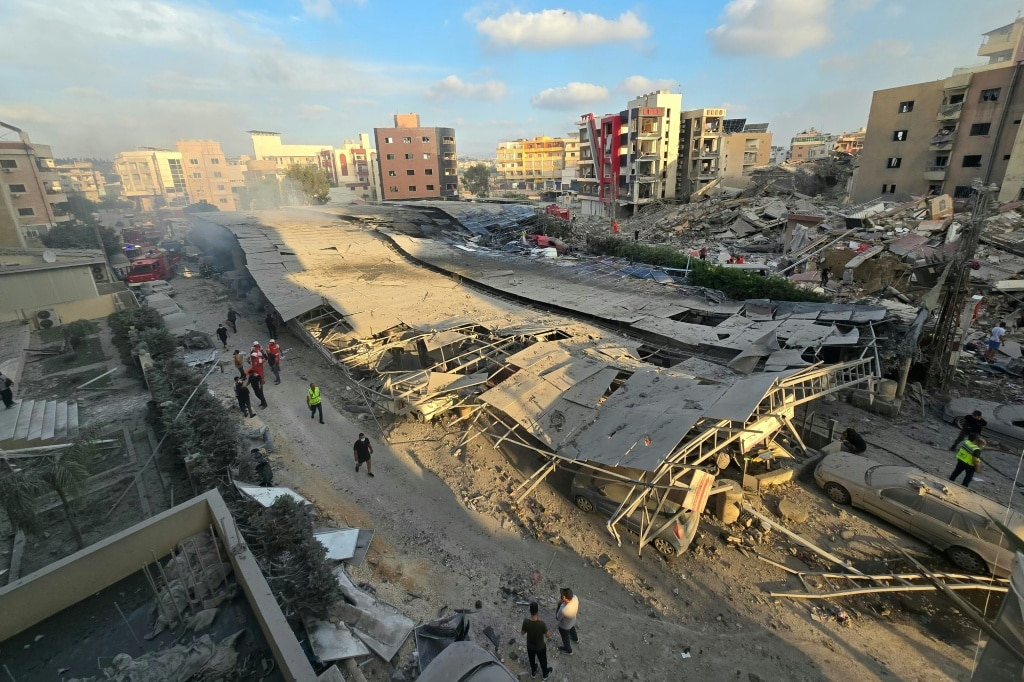
    Elsewhere in the Middle East, tensions remain high along the Lebanon-Israel border. Hezbollah leader Naim Qassem urged Lebanese officials on Tuesday to cancel a planned diplomatic meeting with Israeli representatives in Washington, reaffirming the group’s longstanding rejection of any direct negotiations with Israel. The call comes amid sustained Israeli airstrikes on southern Lebanon that have killed more than 2,000 people in the country since late February.

  • Paris engineer wins Picasso painting at charity auction

    Paris engineer wins Picasso painting at charity auction

    On a livestreamed ceremony hosted by iconic auction house Christie’s in Paris Tuesday, a 58-year-old Paris-based engineer walked away with a priceless original Pablo Picasso artwork as the grand prize of a high-profile charity fundraiser dedicated to Alzheimer’s disease research.

    Ari Hodara, a self-described art enthusiast, only purchased his raffle ticket a few days before the draw over the weekend, beating out more than 119,999 other participants from 52 countries around the globe. The piece up for grabs, titled *Tête de femme* (translated to Woman’s Head), is a 1941 gouache portrait in moody shades of ink gray and blue, depicting Dora Maar — one of Picasso’s most famous muses and creative partners. The work is valued at over one million euros, and was acquired specifically for the raffle from private art dealer Opera Gallery.

    When auction house representatives called to notify Hodara of his win, the shocked engineer initially questioned if the announcement was an elaborate prank. This is the third such charity raffle organized since 2013, led by French journalist Peri Cochin with official backing from the Picasso family and the Picasso Foundation. The first two events, held in 2013 and 2020, awarded the iconic artist’s work to a 25-year-old from Pennsylvania, United States, and an Italian accountant from Ventimiglia who received her ticket as a Christmas gift from her son, respectively.

    Each of the 120,000 sold tickets was priced at 100 euros (equivalent to roughly $118), generating a total of 12 million euros in proceeds. All funds will be donated to the Alzheimer’s Research Foundation to accelerate critical research into the neurodegenerative condition.

    Olivier de Ladoucette, head of the Alzheimer’s Research Foundation, emphasized the urgent need for broader investment in Alzheimer’s work during Tuesday’s ceremony. He noted that current funding for research into the disease remains severely inadequate, even in wealthy developed nations, arguing that the public has yet to recognize Alzheimer’s as a pressing public health crisis that demands collective action. “This Picasso initiative is one more building block so that one day Alzheimer’s will be nothing more than a bad memory,” he added.

  • CAS Space launches 12th Kinetica 1 rocket

    CAS Space launches 12th Kinetica 1 rocket

    China’s leading commercial aerospace manufacturer CAS Space has marked another key milestone in its domestic commercial launch program, successfully conducting the 12th flight mission of its Kinetica 1 solid-fuel rocket series on April 14, 2026.

    Liftoff of the mission was timed for 12:03 p.m. Beijing Time, lifting off from the Jiuquan Satellite Launch Center located in the vast Gobi Desert of northwestern China. After a smooth ascent sequence, the rocket accurately inserted eight remote-sensing satellites into their pre-planned target orbits, completing all planned mission objectives. This launch also stands as China’s 24th orbital space launch mission carried out in 2026, underscoring the country’s steady, high-frequency pace of space activity this year.

    Since the Kinetica 1 program entered operational service, CAS Space has accumulated an impressive track record across its 12 missions. To date, the rocket model has enabled the company to deploy a total of 92 satellites for a wide range of commercial and institutional clients, with the aggregate mass of all deployed payloads exceeding 12 metric tons.

    As a workhorse solid-fuel launch vehicle designed for small-to-medium satellite deployment missions, the Kinetica 1 has well-defined specifications tailored to commercial market demands. The rocket measures 30 meters in total length, with a core diameter of 2.65 meters and a liftoff mass of 135 tons. It is capable of transporting a combined payload mass of up to 1.5 tons into a standard 500-kilometer sun-synchronous orbit, a common orbital plane used for most remote-sensing and Earth observation satellites.

    Beyond its technical capabilities, CAS Space has scaled up production and response capacity to meet growing commercial demand for launch services. Meng Xiangfu, deputy project manager for the Kinetica 1 program, noted that the company’s existing production lines support an annual output of more than 10 Kinetica 1 rockets. From the point a client submits a launch order to full mission preparation, the company can complete all pre-launch preparations in as little as six months, offering flexible, fast-turnaround services that align with the rapid growth of the global small satellite market.

  • Irish government wins confidence vote over fuel protests

    Irish government wins confidence vote over fuel protests

    DUBLIN — Ireland’s sitting government has emerged with a narrow win in a critical confidence vote, but the political fallout from last week’s widespread fuel price protests has left the administration significantly weakened, with two ruling coalition lawmakers abandoning the government mid-vote. The crisis unfolded after widespread public demonstrations over soaring fuel costs led to disruptive blockades at national fuel depots, critical motorway routes, and key infrastructure across Ireland, grinding cross-country travel to a halt and sparking intense public anger at the ruling coalition’s response.

    The largest opposition party, Sinn Féin, tabled a no-confidence motion on Tuesday targeting the government over its handling of the protests. In a procedural move common in Irish parliamentary politics, the government introduced its own pro-confidence motion to override the opposition’s challenge, setting the stage for hours of fiery debate inside the Dáil, Ireland’s national parliament.

    When the final vote was counted, the government secured a 92-78 majority. The victory was overshadowed, however, by a high-profile rebellion from the Healy-Rae brothers, two TDs (Irish members of parliament) who had previously backed the coalition as part of a post-election confidence and supply agreement. The breakaway cost the government one junior cabinet minister: Kerry TD Michael Healy-Rae resigned his post in the Department of Agriculture immediately after voting against the administration.

    Speaking to reporters outside the Dáil following his resignation, Healy-Rae condemned Taoiseach Micheál Martin’s debate speech as condescending, arguing the ruling government had fundamentally lost touch with Irish voters. “I could not be true to the people of Kerry and stand behind this government,” he said, raising his fist in solidarity with protesters gathered outside the parliamentary chamber during the vote.

    The debate itself was marked by bitter partisan clashes, with government and opposition lawmakers trading sharp criticism over the government’s response to the fuel crisis. Addressing the chamber, Taoiseach Martin defended his administration’s track record, noting that since 2022, targeted government measures have shielded Irish consumers from the worst impacts of global fuel price hikes. He pushed back hard against Sinn Féin’s claim that the Irish state is the “biggest profiteer” from elevated fuel costs, calling the assertion “flat out untrue.”

    “Right now, the government is spending far more on support for household fuel costs than it is collecting in additional fuel taxes,” Martin said. He also condemned last week’s blockades as inherently destructive, rejecting protesters’ claims to speak for the Irish public. “Nobody has the right to appoint themselves as the voice of the people,” he stated, adding that he condemned threats against gardaí, lorry drivers, and elected officials, warning that “we should all be concerned with the attempts to import extreme ideologies here.”

    Deputy Prime Minister Tánaiste Simon Harris doubled down on the government’s defense, noting that Ireland’s response to global economic shocks has outpaced action from other regional administrations, including the devolved government in Northern Ireland. “We entered 2026 with strong relative economic fundamentals, and while growth will be slower than previously projected, the Irish economy is still on track to expand this year,” Harris said, echoing Martin’s rejection of blockades as an illegitimate protest tactic. “Nobody in this Republic gets the right to restrict the movement of anybody else,” he added, as Sinn Féin lawmakers heckled from the opposition benches.

    For the opposition, Sinn Féin leader Mary Lou McDonald used the debate to call for an immediate general election, arguing the current government had lost all mandate to rule. “It is your time to go,” McDonald told the coalition. “This crisis did not start last week. The seeds were sown in your Budget last October.” She criticized the government for allowing the Dáil to adjourn for a 20-day Easter recess as fuel prices climbed, arguing Martin was “completely out of touch” with the struggles of ordinary households. “People everywhere are calling for real action and real leadership, and this government has failed to deliver,” she said.

    Sinn Féin’s finance spokesperson Pearse Doherty further expanded on the opposition’s criticism, arguing the government had shown “no real leadership” on the growing cost of fuel. “When struggling people took to the streets to protest last week, this government’s instinct was not to listen — it was to threaten them,” Doherty said. Even with the confidence vote win, the rebellion of two sitting coalition lawmakers and the sustained public anger over fuel costs leave Martin’s administration facing a deeply uncertain political future heading into the next general election cycle.

  • From chants on trams to a parliament rave, young Hungarians provided a soundtrack for Orbán’s defeat

    From chants on trams to a parliament rave, young Hungarians provided a soundtrack for Orbán’s defeat

    BUDAPEST, Hungary — For an entire generation of young Hungarians, growing up meant never experiencing a national government led by anyone other than Viktor Orbán, who held the office of prime minister for 16 consecutive years. But when Hungarians headed to the polls for a historic national election on Sunday, it was this very generation that stood at the forefront of a dramatic political shift that ended Orbán’s long tenure in office.

    In the hours after pro-European opposition candidate Péter Magyar secured his victory, hundreds of thousands of jubilant supporters flooded Budapest’s streets to celebrate the landmark result. The sounds of songs from Hungary’s most popular, openly Orbán-critical musicians drifted through the crowds, as teenagers climbed the city’s iconic Chain Bridge to blast revolutionary anthems that had long encapsulated young Hungarians’ simmering frustration with the ruling regime. On public transit across the capital, young revelers led chants and shared AI-generated fan tracks created in honor of Magyar, while outside the country’s grand neo-Gothic parliament building, a collective calling itself “More Techno to Parliament!” marked Orbán’s defeat with a high-energy rave.

    These widespread, youth-led celebrations are far more than just spontaneous outpourings of joy: they highlight the outsized, decisive role young voters played in ending what critics have long described as Orbán’s autocratic rule. Pre-election polling from the independent 21 Research Center underscored this generational shift, revealing that 65% of all Hungarian voters under the age of 30 threw their support behind Magyar’s Tisza Party, compared to just 14% who backed the incumbent Orbán.

    The story of 26-year-old Budapest architect Marcell Szabó-Temple mirrors the political journey of many young Hungarians who catalyzed this change. Raised on the capital’s outskirts in a household where adults avoided discussing politics in front of children, Szabó-Temple cast his first vote in the 2018 election — a race that Orbán won by a wide margin — and left the experience feeling disconnected and ambivalent toward the entire political process.

    That apathy shifted when he enrolled in university, where he experienced a sudden political awakening. Even as a student at one of Hungary’s top engineering institutions, he was shocked by the deteriorating state of the country’s higher education system. Studying from an outdated curriculum in a crumbling campus building left him questioning the outcomes of 12 years of Orbán-led governance, he said, and convinced him the country needed new leadership.

    More disillusionment followed in 2022, when the Orbán administration pushed through a controversial overhaul that placed control of more than 20 Hungarian universities under public foundations led by government-appointed loyalists. As a result of the restructuring, those institutions lost eligibility for the European Union’s Erasmus+ student exchange program. Critics widely condemned the move as a deliberate power grab designed to tighten state control over academia and suppress independent critical thought, and widespread student and faculty protests failed to block the policy change.

    Barred from the opportunity to study abroad and demoralized by Orbán’s another lopsided election victory that same year, Szabó-Temple withdrew from political engagement for years. “It felt like the world went silent after that,” he recalled. “I stopped caring about politics again, just like when I was in high school. I didn’t even want to hear the news.”

    That all changed when Péter Magyar — a former insider within Orbán’s own Fidesz Party — emerged on the Hungarian political scene in 2024. For Szabó-Temple and countless other young Hungarians, Magyar’s candidacy ignited a sense of hope for meaningful change that had been missing for years.

    Magyar centered his campaign on two key priorities: repairing Hungary’s strained relationship with the European Union, and restoring the country’s traditional Western alignment, which had shifted steadily closer to Russia under Orbán’s tenure. Over the course of the campaign, he prioritized connecting with young voters, holding hundreds of rallies across the country where he repeatedly urged young people to take ownership of Hungary’s future.

    Alongside Magyar’s political rise, a new wave of young musical artists — most of whom built their fanbases through social media and digital platforms — began producing openly political content that challenged the Orbán regime. As economic stagnation and deepening social divisions eroded young Hungarians’ quality of life and future prospects, this music became a rallying point for discontent. Anti-government chants regularly broke out during festival performances, drawing scoldings from government officials who condemned the displays of disrespect.

    This youth-driven cultural movement reached its peak just two days before the election, when more than 100,000 people packed a large central Budapest square for a “system-breaking” concert featuring more than 50 artists, all of whom urged attendees to vote for political change.

    In the wake of Orbán’s historic defeat, Szabó-Temple — who is currently completing a work exchange in Portugal — says he plans to move back to his home country. He explained that for years, young Hungarians have grown increasingly convinced that if they could not unseat Orbán’s regime this election cycle, many would have no choice but to leave Hungary for good. “I certainly felt that way,” he said.

    Like most of the young voters who delivered Tisza Party its victory, Szabó-Temple holds high expectations for the new administration. “We put our faith in them, and we expect them to deliver on their promises,” he said. “If they do, I’ll put down roots here and build a life and a family in Hungary.”

  • Partner of US influencer who died in Zanzibar speaking to police as witness

    Partner of US influencer who died in Zanzibar speaking to police as witness

    A 31-year-old American social media influencer, Ashly Robinson (known online by her handle Ashlee Jenae), has died while on a celebratory engagement trip to Tanzania’s Zanzibar Archipelago, triggering an ongoing official investigation that has left her family searching for clarity. Local law enforcement confirmed last week that Robinson’s travel partner and fiancé, 45-year-old Joe McCann, has had his passport temporarily withheld as investigators continue to piece together the details of her death. To date, no arrests have been made, and officials have stated publicly that McCann is not considered a suspect in any wrongdoing, only cooperating with authorities as a key witness.

    Zanzibar North Unguja Police Chief Benedict Mapujira told the BBC that initial local assessments indicate Robinson died following an attempted suicide. McCann has not released any public comment on the case since Robinson’s death was announced.

    The tragedy unfolded in early April, after what police described as a verbal misunderstanding between the couple that led the Zuri Zanzibar resort management to move the pair into separate guest accommodations, a detail the resort has declined to publicly confirm. Resort staff alerted local police late Wednesday, April 8, after raising concerns that Robinson may be at risk of self-harm. She was found unconscious in her private villa and rushed to a local medical facility, where she was pronounced dead on Thursday, April 9, according to official records. Her family confirmed this timeline in an official statement released Sunday.

    For Robinson’s family, the sudden death comes as a devastating and unexplainable shock. Robinson had just turned 31, and the trip to Tanzania was meant to be a celebratory dream vacation that ended with her accepting McCann’s marriage proposal. In an interview with CBS News, the BBC’s US partner, Robinson’s mother Yolanda Endres described her daughter as a warm, luminous presence who had every reason to be happy on the trip. “She had just celebrated her birthday and had got engaged during the trip, and then she is just gone,” Endres said. “We are confused about how that could change so drastically.”

    Robinson’s parents say they only received word of the incident from McCann 11 hours after it began, with few details about what had occurred. They only learned of their daughter’s death after being contacted directly by the Zuri Zanz resort management. The family has publicly stated that Robinson’s death “doesn’t make any sense” and they are pushing for full transparency as the investigation moves forward, confirming they are cooperating fully with Tanzanian authorities to get clear answers.

    In a statement provided to the BBC, a spokesperson for Zuri Zanzibar said the resort was deeply saddened by the tragic death of its guest. The resort confirmed it is fully cooperating with local law enforcement and the US diplomatic mission in Tanzania, but declined to share additional details, citing guest privacy protections and a commitment to preserving the integrity of the ongoing investigation.

    Authorities have not yet released a final cause of death, noting that they are still awaiting the results of an official medical autopsy to confirm how Robinson died. “Investigations into the case are ongoing, including awaiting the official medical examination report from doctors,” local police said in an official update.

    The US Department of State has confirmed the death of an American citizen in Zanzibar and extended official condolences to Robinson’s family. “We can confirm the death of a US citizen in Zanzibar, Tanzania. We extend our deepest condolences to the family. We have no higher priority than the safety and security of Americans overseas,” a department spokesperson said.

    In the days leading up to her death, Robinson kept her Instagram followers updated on her trip, sharing photos and videos from her travels across Tanzania, including a stop at a wildlife park near Mount Kilimanjaro. Following news of her death, hundreds of followers have left condolence messages on her social media pages, honoring her memory.

  • Husband of US woman missing in Bahamas released, says he will keep looking

    Husband of US woman missing in Bahamas released, says he will keep looking

    A months-long missing person case that has captured transatlantic attention has taken a new turn, as Brian Hooker, the Michigan man detained by Bahamian law enforcement after his wife Lynette disappeared during a sailing trip, has been released from custody — and he remains firm in his commitment to finding her, insisting he believes she is still alive.

    The incident unfolded on the evening of April 4, when the Hookers, both experienced sailors who regularly shared their nautical adventures on social media, were out exploring Bahamian waters on an 8-foot hard-bottom dinghy, separate from their larger main sailing vessel. According to Brian Hooker’s account, Lynette fell overboard alongside the dinghy’s keys, and strong ocean currents quickly swept her away before he could reach her. The 59-year-old has repeatedly denied any involvement in his wife’s disappearance, calling all suggestions of foul play unfounded.

    Four days after Lynette went missing, on April 8, Brian Hooker was taken into Bahamian police custody for questioning. During that detention period, he even joined search efforts while handcuffed, and ended up needing rescue himself after falling overboard in rough, choppy sea conditions, according to local reports. Last week, Bahamian authorities announced that their initial search and rescue operation had been reclassified as a recovery mission, a shift that signaled growing pessimism about finding Lynette alive.

    But following his release on the evening of Monday, Brian Hooker told CBS News — the U.S. partner of the BBC — that he has no intention of abandoning his search. “I won’t be able to stop looking,” he said. When asked if he believed Lynette could still be alive more than a week after her disappearance, Hooker responded: “I want to.” He went on to note that there are documented cases of people surviving for days or even weeks after going overboard in Bahamian waters, pointing to the region’s hundreds of small islands, sandbars, and isolated atolls that could offer shelter to a stranded person. “There are so many islands, there are so many sandbars, little atolls and spits of land. Of course you think about alternatives to that, but I’m not really capable of just turning away from this,” he added.

    Hooker’s attorney, Terrel Butler, told NBC News that her client needs time to decompress after what she described as an incredibly traumatic experience. During his detention, Butler noted, Hooker was completely devastated by the disappearance and distraught at being kept from continuing his own search for Lynette. The BBC has reached out to Butler for additional comment following Hooker’s release, and has not yet received a response.

    The case is already marked by significant family division: Lynette’s daughter, Karli Aylesworth, who is Brian Hooker’s stepdaughter, has publicly said she does not accept his account of the incident. Aylesworth emphasized that her mother is an experienced sailor and strong swimmer, casting doubt on the version of events Brian has presented.

    A formal criminal investigation into Lynette’s disappearance remains open, led jointly by U.S. and Bahamian authorities. A U.S. Coast Guard representative confirmed the investigation’s existence to the BBC but declined to share any further details, including information about potential persons of interest in the case.

  • New footage shows moment Orion capsule hatch is opened at sea

    New footage shows moment Orion capsule hatch is opened at sea

    Freshly unveiled video footage has pulled back the curtain on a long-awaited milestone in NASA’s Artemis program, capturing the exact second that the hatch of the Orion capsule, designed to carry the Artemis II crew, swings open following a successful ocean splashdown. The short but emotionally charged clip shows the immediate aftermath of the capsule’s return, where the four mission astronauts are greeted by recovery teams, breaking into smiles and warm celebration as the barrier between their deep-space test flight vessel and the outside world is finally removed.

    This footage offers the public an unprecedented, up-close look at one of the most critical steps of any crewed space mission: the safe recovery of astronauts after their journey. As the Artemis program continues to push toward humanity’s return to the lunar surface, tests of crew recovery procedures like the one documented in this video are key to validating the safety protocols that will support the first crewed lunar mission in more than 50 years. The joyful energy captured in the clip underscores the collaborative spirit of the thousands of engineers, technicians, and recovery personnel who have worked for years to make the Artemis program a reality, building on the legacy of the original Apollo missions while integrating cutting-edge new technology to expand human exploration deeper into the solar system.