作者: admin

  • Hong Kong tech expos spotlight cutting-edge innovation, forge partnerships

    Hong Kong tech expos spotlight cutting-edge innovation, forge partnerships

    HONG KONG – Two of Hong Kong’s most high-profile annual technology industry events, InnoEX and the Spring Edition of the Hong Kong Electronics Fair, launched their 2026 iterations on April 14, bringing together thousands of innovators, industry leaders and investors from across the globe to showcase cutting-edge advances and build new collaborative ties. Centered on breakthroughs in artificial intelligence and next-generation electronic products, the dual expos will run over four days, packing more than 100 industry-focused events across their exhibition floors.

    Across both shows, a total of 2,800 exhibitors hailing from 27 different countries and regions have set up displays, marking one of the largest gatherings of global tech stakeholders in the Asia-Pacific region this year. In remarks delivered at the official opening ceremony on April 15, Sun Dong, Secretary for Innovation, Technology and Industry of the Hong Kong Special Administrative Region Government, framed the twin expos as far more than a product showcase. He emphasized that InnoEX, in particular, fulfills three critical connecting roles: it bridges early-stage startups with global venture capital, links academic research outputs to commercial industrial applications, and connects homegrown Hong Kong enterprises to both mainland Chinese and international markets, while cementing Hong Kong’s position as a leading international innovation and technology hub.

    Sophia Chong, Executive Director of the Hong Kong Trade Development Council, which organizes the events, noted that InnoEX has matured into one of Asia’s most iconic flagship tech platforms. The event has consistently drawn a growing roster of participants, bringing together world-leading research institutions, global R&D centers and pioneering tech entrepreneurs to unveil game-changing innovations and lock in long-term strategic partnerships that drive industry progress, she added.

    Gerd Müller, Director General of the United Nations Industrial Development Organization, also voiced strong support for the collaboration, saying he is eager to deepen partnership with Hong Kong to turn cutting-edge laboratory innovations into usable industrial productivity. This work, he noted, will ensure that more transformative technological breakthroughs deliver tangible benefits to industries and communities across the world.

    This year’s InnoEX operates under the core theme “Innovate, Automate and Elevate,” with curated displays focused on five high-growth priority sectors: AI+, advanced robotics, the emerging low-altitude economy, and two additional fast-developing tech fields. The Hong Kong Electronics Fair, meanwhile, has long been recognized as a leading global hub for electronics trade. The 2026 spring iteration welcomes exhibitors from 15 countries and regions, with four new markets – Australia, France, Macao and Thailand – making their debut participation this year.

    The electronics fair showcases a wide range of consumer and commercial tech innovations, spanning connected smart home ecosystems, portable health monitoring devices, and even smart products designed for pet care. Around 60 newly developed products will make their first global public appearance at the event, giving attendees an early look at the next generation of consumer and industrial electronics hitting global markets.

  • Hungary’s Magyar says new government could take power at beginning of May

    Hungary’s Magyar says new government could take power at beginning of May

    BUDAPEST, Hungary – Just three days after his center-right Tisza Party secured a historic landslide victory that ended Viktor Orbán’s 16-year hold on Hungary’s premiership, opposition leader Péter Magyar has confirmed an accelerated timeline for the handover of power, with the new government set to take office in the first week of May. Magyar’s win came on the back of broad voter support that delivered Tisza a two-thirds supermajority in Hungary’s parliament – a threshold that gives the incoming administration the legal power to rewrite the constitution and dismantle core elements of Orbán’s long-standing political framework. In a press briefing outside the Budapest presidential palace Wednesday, Magyar told reporters that following a closed-door meeting with Hungarian President Tamás Sulyok, the head of state has committed to scheduling the new parliament’s inaugural session for either May 6 or 7, putting the transition nearly a week ahead of the legal deadline of May 12 required by Hungarian election law. Sulyok, who was appointed to the presidency by Orbán’s outgoing parliamentary majority, also confirmed he will nominate Magyar as the country’s next prime minister, a formal step required to confirm his appointment. “All parties agree that after such a clear, overwhelming mandate from Hungarian voters, it serves the best interests of the nation for this government and regime change to take place as quickly as possible,” Magyar told reporters Wednesday. The accelerated transition caps a dramatic political upset that saw Orbán, one of Europe’s longest-serving incumbent leaders, ousted from power after 16 consecutive years in office, with youth turnout and widespread discontent with Orbán’s governance driving the opposition’s historic win. Since Sunday’s result, Magyar has moved quickly to lay out his policy and institutional overhaul plans, including a commitment to restructure Hungary’s cabinet system to reestablish standalone ministries for health, environmental protection, and education – three portfolios that were merged into larger government departments under Orbán’s administration. In his first appearance on Hungary’s public state broadcaster in nearly two years Wednesday morning, Magyar announced a sweeping immediate change to the outlet’s operations: once his government takes office, all existing news programming will be suspended until new, independent governance structures can be put in place to guarantee objective, unbiased coverage. For over a decade, the public broadcaster has been widely criticized as a propaganda mouthpiece for Orbán’s Fidesz party, a flaw Magyar has made a core target of his reform agenda. “One of the central promises of our campaign is that this factory of lies will be shut down the moment the Tisza government is formed,” he told the broadcaster’s host Wednesday. Magyar has also called on Orbán’s outgoing administration to serve only as a caretaker government during its final weeks in office, warning the departing leadership against making any last-minute policy decisions that could harm national interests or create obstacles for the incoming government. A key point of tension between the incoming leadership and the presidency remains Sulyok’s future in office: Magyar has formally asked Sulyok to step down once the new government is installed, arguing the president, as an appointee of the Orbán regime, is unfit to represent national unity and uphold the rule of law. Sulyok has said he will consider the resignation request. If Sulyok refuses to step down voluntarily, Magyar confirmed Wednesday that his supermajority-controlled parliament will pass constitutional changes to remove Sulyok along with other political appointees installed by Orbán’s government. “I reiterated to the president that he is unworthy of embodying the unity of the Hungarian nation, and unfit to be the guardian of the law,” Magyar said. The early inauguration schedule clears the way for Magyar’s administration to begin its wide-ranging reform agenda sooner than initially expected, marking a definitive end to Orbán’s era of populist governance in Hungary.

  • Trump warns that UK trade deal ‘can always be changed’

    Trump warns that UK trade deal ‘can always be changed’

    In an exclusive interview with Sky News on Wednesday, U.S. President Donald Trump opened up about mounting tensions between the United States and the United Kingdom, hinting that the bilateral trade agreement reached between the two nations could be revised in the near future. The comments come after weeks of sustained criticism directed at UK Prime Minister Sir Keir Starmer, who drew Trump’s backlash after refusing to join the U.S.-led military coalition against Iran alongside Israel back in late February.

    When asked to assess the current state of the decades-long “special relationship” between the two allies, Trump’s response highlighted the depth of the current rift. After an initial clarifying question from the reporter, the president struck a blunt tone: “It’s the relationship where when we asked them for help, they were not there. When we needed them, they were not there. When we didn’t need them, they were not there. And they still aren’t there.”

    Elaborating on the state of ties, Trump added that the relationship “has been better, but it’s sad.” He emphasized that the trade deal the U.S. extended to the UK was far more favorable than required, noting that “we gave them a good trade deal, better than I had to, which can always be changed.”

    The current trade framework dates back to May of last year, when the UK became the first nation to secure a new tariff agreement with Trump following his return to the Oval Office. The deal cut import duties on key goods including automobiles, steel, and aluminium, marking a key post-Brexit economic win for the UK government.

    Even as he criticized Starmer’s foreign policy choices, Trump clarified that the diplomatic tensions would not overshadow King Charles III and Queen Camilla’s upcoming state visit to the United States, scheduled for late April. The president said he has a long-standing positive relationship with the British monarch, noting that Charles is not involved in partisan political disputes between the two governments.

    “I’ve known the King for a long time, and he’s not involved in that process,” Trump explained. When asked what he anticipates most from the visit, he added: “Just being with him. I’ve known him for a long time. He’s wonderful.”

    Beyond disagreements over the Middle East conflict, Trump also touched on domestic policy, acknowledging that he holds personal affection for Starmer but slamming the UK government’s current immigration and energy frameworks as “insane.” For weeks, Trump has publicly attacked Starmer’s refusal to back the U.S.-Israel campaign against Iran, even drawing a comparison to Britain’s iconic World War II leader earlier this month by dismissing Starmer as “no Winston Churchill.”

  • Conflict takes toll on historic sites

    Conflict takes toll on historic sites

    As armed clashes between US-Israeli forces and regional opponents intensify across the Middle East, a growing global outcry has emerged over the widespread destruction of irreplaceable historic and cultural sites that form part of humanity’s collective shared memory. Leading cultural experts warn that the scale of damage goes far beyond what can be dismissed as unavoidable collateral damage of war, marking a deliberate, systematic erasure of centuries of civilizational history.

    According to Iran’s Minister of Cultural Heritage, Tourism, and Handicrafts Seyed Reza Salehi-Amiri, at least 131 historical and cultural monuments spanning 20 of Iran’s provinces have sustained damage from US-Israeli airstrikes. The capital Tehran has borne the brunt of the destruction: 63 sites in the city have been impacted, including the Golestan Palace, a world-renowned architectural masterpiece combining Safavid and Qajar era design, and the 100-hectare Sa’dabad Palace complex, which houses 20 separate museums. In central Isfahan province, 23 sites have been damaged, among them Chehel Sotoun Palace, a UNESCO World Heritage Site. Western Kurdistan province has recorded 12 damaged historical monuments.

    Neda Zoghi, an Iranian artist and civilization scholar with a doctorate in Islamic art based at Kuala Lumpur’s Asia West East Centre, emphasized that the destruction is not merely damage to empty structures. “Every tile-work panel, every inscribed archway, every manuscript cabinet represents a node in a living network of human knowledge that took centuries to construct and cannot be reconstructed in any lifetime,” she explained. Zoghi added that the layered artistic traditions of Iranian heritage mean that a single damaged site can erase multiple irreplaceable strands of human history at once, noting that these sites predate modern political conflicts by centuries and millennia. The targeting of these spaces, she argued, violates explicit international prohibitions on cultural violence during armed conflict.

    UNESCO has repeatedly called for the protection of cultural heritage across the region, reminding all parties that cultural property is protected under the 1954 Hague Convention for the Protection of Cultural Property in the Event of Armed Conflict and the 1972 World Heritage Convention. As of late March, the organization confirmed that multiple UNESCO-listed sites across Iran, Israel, and Lebanon have already sustained damage, and it has warned of growing risks to cultural sites in more than a dozen neighboring countries across the Middle East and West Asia.

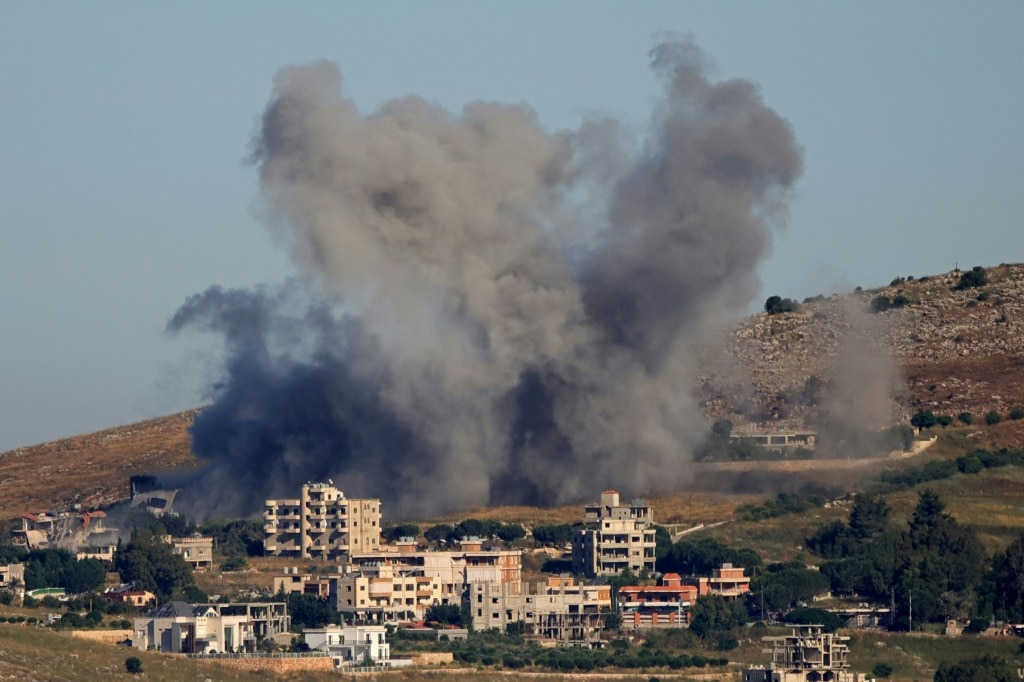
    The threat extends far beyond Iran, most acutely to Gaza and Lebanon. In Gaza, which has faced three years of intense Israeli bombardment, remote satellite monitoring led by UNESCO has confirmed verified damage to 164 cultural sites between October 2023 and March 2026. This toll includes 14 religious sites, 128 buildings of historic or artistic importance, two museums, and eight archaeological sites. In Lebanon, where Israeli bombardment has escalated in recent months, growing fears center on damage to iconic sites including the Roman temple ruins of Baalbek and the ancient coastal city of Tyre, both UNESCO World Heritage Sites. Even when sites are not directly hit, experts note that shockwaves from nearby airstrikes can destabilize ancient foundations and stone structures, causing irreversible long-term damage.

    Following a formal request from the Beirut government, UNESCO held an extraordinary meeting in early April to coordinate emergency protection for Lebanese cultural heritage. The body approved provisional enhanced protection for 39 key cultural properties and allocated more than $100,000 in emergency funding for on-the-ground protection efforts. Nabil Najjar, a member of the executive committee for the world-famous Baalbeck International Festival, held annually at the archaeological site, said that while the festival has not yet been canceled, a postponement or full cancellation for 2026 looks increasingly likely. He noted that in 2024, a strike on the site’s perimeter wall prompted immediate protective measures from UNESCO, which has since rolled out similar protective marking for other at-risk sites across the country.

    Legal experts note that while UNESCO’s enhanced protection framework carries important legal weight, its on-the-ground impact is limited. Arie Afriansyah, a law professor at the University of Indonesia, explained that the 1999 Second Protocol to the Hague Convention grants the highest level of international legal protection to listed sites, banning attacks and military use of these properties and requiring criminalization of violations. “Its real value is deterrence, clearer no-strike identification, documentation, and stronger accountability later. But it is not a physical shield,” Afriansyah said, adding that protection is weakened in Lebanon because Israel is not a party to the 1999 Second Protocol, even though the broader 1954 Hague Convention remains binding.

    Zoghi highlighted a deeper systemic flaw in global enforcement of cultural heritage protection: selective application of international law. She noted that when Iran retaliates militarily, the international community moves quickly to condemn the action, but the initial US-Israeli strikes that damaged sites ranging from mosques and synagogues to ancient Zoroastrian landmarks have not faced equivalent international censure. “This asymmetry is not merely politically inconvenient. It is legally corrosive. It teaches every future aggressor that the Convention is a shield available only to the powerful,” she said. Zoghi stressed that this critique is not a justification for any particular military action, but a defense of the principle that international humanitarian law only works if it applies universally. “The moment it becomes a tool selectively deployed against one party, it ceases to function as law and becomes instead a form of geopolitical rhetoric dressed in legal language. That is dangerous for every civilization on Earth, not only for Iran.

    She also pushed back against widespread framing of the current conflict as a religious war, noting that Iranian and broader Persianate civilization has always been a pluralistic space shared by Muslim, Christian, Jewish, Zoroastrian, and secular communities. “To reduce this heritage and this conflict to a simple religious binary is to commit violence against history itself,” Zoghi said. “You may wage war against a government, but history will never forgive you for waging war against civilization.”

  • Chinese scientists decipher centuries-old puzzle of human handedness

    Chinese scientists decipher centuries-old puzzle of human handedness

    For hundreds of years, one of the most persistent unanswered questions in human biology has confounded researchers across the globe: why do approximately 90% of people worldwide naturally favor their right hand? This long-elusive puzzle has finally been cracked by a team of Chinese scientists from the Chinese Academy of Sciences (CAS), whose groundbreaking findings were recently published online in the *Journal of Genetics and Genomics*.

    To unpack the origins of hand preference, the research team designed a series of controlled animal experiments that challenged existing assumptions about handedness being an innate human trait. Their work led to the proposal of a new framework: the Hypothesis of Acquired Conservation of Right-Hand Preference, which redefines how we understand the development of limb preference.

    In initial observations, the team confirmed that untrained laboratory mice show no inherent bias toward using one paw over the other when feeding, demonstrating equal usage of both limbs. To test how preference develops, scientists engineered a specialized experimental cage with a food access hole positioned in a way that forced mice to reach for food using only a single designated paw — either the left or the right.

    Within just five to seven forced feeding trials, the mice developed a lasting preference for the trained paw. Mice trained to use their right paw retained this “right-pawed” bias for more than a month even after all movement restrictions were lifted, and the same pattern held for mice trained on the left. This experiment provided clear evidence that limb preference can be formed rapidly through repeated practice rather than being present from birth.

    A subsequent follow-up experiment uncovered a critical asymmetry that mirrors real-world human handedness distribution. After mice had established a solid paw preference, researchers attempted to force them to switch their habits. What they found was striking: right-paw preferences were far more persistent and resistant to change, while left-paw preferences could be readily redirected to right-paw use.

    Even when mice were forced to alternate between paws repeatedly over the course of the experiment, the vast majority ultimately settled into a stable right-paw preference, leaving only a small minority of consistent left-paw users. This outcome almost exactly replicates the 9-to-1 split of right- to left-handedness seen in human populations worldwide.

    Drawing on these consistent experimental results, the research team concluded that human handedness is not a genetically predetermined innate trait, but instead is established quickly during early childhood through repeated, consistent use of one hand for daily tasks. “A right-hand preference, once formed, is more stable and easier to sustain than a left-hand one, granting it a cumulative advantage in individual development,” explained Sun Zhongsheng, a lead researcher from the CAS Institute of Zoology. “Reinforced by a right-hand-dominant social environment, where tools, infrastructure, and social norms are built around right-handed use, this cumulative tendency ultimately creates the predominantly ‘right-handed world’ we see today.”

    Beyond resolving a centuries-old behavioral mystery, the study opens new avenues of research into broader questions of human brain asymmetry and the plasticity of human behavioral traits, offering a new foundational perspective for future work in developmental biology and neuroscience.

  • Boy, 12, dies in hospital days after five cars collide in horror crash on Melbourne’s Monash Freeway

    Boy, 12, dies in hospital days after five cars collide in horror crash on Melbourne’s Monash Freeway

    A 12-year-old boy has died in a Melbourne hospital, days after sustaining critical injuries in a five-vehicle pile-up on one of the city’s busiest arterial freeways. The catastrophic collision unfolded just after 2 p.m. local time this past Sunday on the Stud Road off-ramp of the Monash Freeway, located in the Dandenong North suburb, triggering an immediate large-scale response from state emergency services.

    Aerial footage captured by 7News’ helicopter reveals the devastating aftermath of the crash, with one passenger vehicle bearing visible, extensive structural damage from the impact. Among those hurt most severely were a 36-year-old woman from Sunbury and the 12-year-old boy, both occupants of a Mazda 3 that was caught in the collision. The pair was airlifted and rushed to area hospitals for urgent care immediately after first responders arrived at the scene.

    Victoria Police confirmed the child’s death in an official statement released Wednesday, verifying that he passed away from his critical injuries on Tuesday. The 36-year-old woman who was traveling with him remains in hospital in an ongoing care regime as of Wednesday. An 8-year-old girl, also a passenger in the same Mazda 3, was transported to hospital with only minor injuries following the crash.

    Three people from a second vehicle, a blue Mitsubishi, were also admitted to hospital for treatment. The group includes a 68-year-old woman from Campbellfield, a 39-year-old woman from Glenroy, and a 6-year-old girl, all of whom sustained injuries that are not considered life-threatening. No other injuries were reported among the occupants of the remaining three vehicles involved: a BMW, a Volkswagen Tiguan, and a white Mitsubishi.

    The 34-year-old Berwick man who was operating the Volkswagen at the time of the collision was taken into custody by police following the incident, but has since been released from custody pending the completion of further investigative inquiries. Detectives assigned to the Victoria Police Major Collision Investigation Unit are still working to piece together the full sequence of events that led to the crash, and have not yet released any preliminary findings on fault or contributing factors.

  • Vietnam’s new leader meets China’s Xi on his first overseas trip

    Vietnam’s new leader meets China’s Xi on his first overseas trip

    BEIJING – In a high-profile diplomatic meeting that underscores the deepening strategic alignment between the two neighboring socialist nations, Chinese President Xi Jinping laid out a clear roadmap for expanded China-Vietnam collaboration during talks with Vietnam’s newly inaugurated President To Lam on Wednesday, Chinese state broadcaster CCTV reported.

    To Lam’s four-day visit to China, which launched on Tuesday, marks his first international travel since winning the presidential election just one week prior. This milestone trip sends a strong signal of Vietnam’s foreign policy priorities, highlighting the Communist Party-led government’s commitment to forging closer bilateral ties with its northern neighbor.

    During the closed-door discussions, President Xi emphasized that protecting the socialist system and upholding the ruling status of the Communist Party in both nations stands as the two parties’ most significant shared strategic interest. He added that the two sides should maintain unwavering confidence in their respective development paths and governing systems, and stay committed to advancing reform without deviating from core strategic direction.

    Looking ahead to practical cooperation, Xi called for Beijing and Hanoi to place top priority on advancing cross-border infrastructure connectivity projects. Beyond traditional areas of collaboration, he pushed for deeper joint work in high-growth emerging sectors, including artificial intelligence and semiconductor development.

    For his part, To Lam reaffirmed Vietnam’s commitment to the bilateral relationship, noting that expanding ties with China meets Vietnam’s development objectives and represents a clear strategic priority for Hanoi. The Vietnamese president added that his country stands ready to elevate cooperation across a broad range of key areas, spanning cross-border trade, direct investment, railway development and other core infrastructure projects, according to CCTV’s official coverage.

  • EU says age-check app ‘ready’ in push to protect children online

    EU says age-check app ‘ready’ in push to protect children online

    European Commission President Ursula von der Leyen announced Wednesday that a bloc-developed age verification mobile application, designed to protect minors from harmful online content, has reached full technical readiness, marking a key milestone in the EU’s years-long push to strengthen digital protections for children.

    The push for a standardized age-check tool comes as policymakers across the bloc face growing public pressure to enact tougher regulations on digital platforms, with multiple member states already advancing domestic legislation to set minimum age limits for social media use. The project originated last year, when five founding member states — including France and Italy — launched pilot trials to test the tool’s functionality and user experience.

    Von der Leyen, speaking to reporters in Brussels, drew a comparison to the age verification protocols used in brick-and-mortar retail for age-restricted purchases like alcohol. “This app will allow users to prove their age when accessing online platforms. Just like shops ask for proof of age for people buying alcoholic beverages,” she explained. The app draws on the technical framework developed for the EU’s digital COVID-19 vaccine certificate, a widely adopted system that enabled cross-border travel during the pandemic’s reopening phase.

    For end users, the process will be straightforward: once launched, the app can be downloaded from major app stores, linked to a national passport or government-issued ID card, and then used to confirm a user meets a platform’s minimum age requirement. To address widespread privacy concerns that have derailed past age verification efforts, von der Leyen emphasized the tool is built with full anonymity to prevent user tracking across websites. It also runs on open-source code, meaning non-EU countries are free to adapt the system for their own use if they choose.

    “Online platforms can easily rely on our age verification app. So there are no more excuses,” von der Leyen said. “Europe offers a free and easy to use solution that can shield our children from harmful and illegal content.”

    Pressure for coordinated EU action has mounted significantly since Australia implemented its landmark ban on social media use for children under 16 last year. France has emerged as a leading advocate for tighter rules, alongside Denmark, Greece and Spain, and is currently debating a domestic ban on social media for users under 15 that is working its way through the French national parliament. Even if the legislation passes, however, implementing the ban without a standardized verification system has long been seen as a major logistical hurdle. The new EU app is designed specifically to help member states enforce whatever national age limit rules they ultimately adopt, as long as those rules align with existing EU legislation, with the bloc taking on formal enforcement responsibilities.

    Despite the progress, policy experts and policymakers alike acknowledge outstanding challenges. Even with formal age limits and a verification system in place, concerns persist that tech-savvy minors will circumvent checks by using virtual private networks (VPNs) to hide their location or shift to smaller, unregulated platforms that do not enforce age rules. The EU already enforces some of the world’s strictest digital regulations, with ongoing regulatory probes into the harms that major platforms including Instagram and TikTok pose to children.

    Von der Leyen has publicly supported moving toward a bloc-wide mandatory minimum age for social media use, but has said the commission will wait for expert input before formalizing that proposal. A special expert panel convened to study additional regulatory measures is set to release its final recommendations by this summer.

    “It is our duty to protect our children in the online world, just as we do in the offline world, and to do that effectively, we need a harmonised European approach,” she said.

  • Two ships transit Hormuz for Iranian ports despite US blockade: media

    Two ships transit Hormuz for Iranian ports despite US blockade: media

    The long-running maritime standoff in one of the world’s busiest strategic waterways took a new turn this week, as two commercial vessels bound for Iranian ports successfully completed a transit through the Strait of Hormuz despite a sweeping U.S. blockade designed to cut off seaborne traffic to and from the Islamic Republic, according to a new report from leading British shipping industry outlet Lloyd’s List.

    The U.S. military confirmed just this Tuesday that it has deployed over 10,000 troops to carry out the blockade order, which applies to all vessels seeking to enter or depart Iranian ports regardless of their flag or country of origin. In response to this enforcement, shipping observers have documented a growing pattern among vessels targeting Iranian ports: altering their publicly broadcast Automatic Identification System (AIS) destination data to obscure their final intended stop before moving through the strait.

    Per Lloyd’s List’s on-the-ground industry tracking, the two Iran-flagged container ships in question originally set their AIS transponders to indicate a final destination of Bandar Abbas, Iran’s key southern commercial and military port on the Persian Gulf. Shortly after the U.S. blockade entered into force, the vessels updated their AIS destination to the far broader, less specific label “PG Ports” — short for Persian Gulf ports — hiding their specific intended endpoint from general tracking systems. After the ships cleared the Strait of Hormuz without incident, they reoriented their course directly toward Bandar Abbas and continued their journey on Tuesday, the report confirmed.

    Maritime analysts cited in the report note that this common adaptive tactic creates new, unplanned complications for the U.S. blockade’s implementation. By obfuscating their final destinations via AIS adjustments, vessels force U.S. intelligence and surveillance operations to expend far more resources to track and confirm the actual destinations of Persian Gulf-bound traffic, extending the intelligence gathering phase of the blockade and slowing interdiction efforts.

    The Strait of Hormuz remains one of the most critical chokepoints for global energy trade, with roughly a fifth of the world’s total oil consumption passing through the waterway each day. The new development highlights growing frictions between U.S. sanctions and blockade enforcement and commercial shipping operators seeking to maintain trade links with Iran, raising new questions about the long-term effectiveness of the U.S. measure.

  • After three years of war, Sudan confronts devastation as donors gather in Berlin

    After three years of war, Sudan confronts devastation as donors gather in Berlin

    Three years after conflict erupted between Sudan’s regular army and the Rapid Support Forces (RSF) paramilitary group in April 2023, the northeastern African nation remains mired in one of the world’s worst humanitarian catastrophes, even as global attention has shifted to other crisis hotspots. As international stakeholders gathered in Berlin this week for a high-stakes donor conference, German officials are pushing to secure more than $1 billion in new humanitarian pledges — exceeding the total raised at the previous London-hosted conference — to address an unfolding emergency that has been largely overlooked by the international community.

    Speaking to public broadcaster Deutschlandfunk ahead of the conference opening, German Foreign Minister Johann Wadephul expressed cautious optimism that the funding target would be met, noting that new pledges were already flowing in ahead of the gathering. “Despite the fact that global diplomatic focus is currently absorbed by Ukraine and Iran, this massive humanitarian catastrophe in Africa cannot be pushed to the margins of global consciousness,” Wadephul emphasized.

    Unlike previous diplomatic gatherings, neither the Sudanese army nor the RSF — the two warring parties that have torn the country apart since 2023 — were invited to participate in the Berlin conference. Beyond rallying much-needed humanitarian funding, the gathering also carries a secondary diplomatic goal: to jumpstart stalled peace talks that have collapsed since last November. The so-called Quad diplomatic bloc, made up of the United States, Saudi Arabia, the United Arab Emirates and Egypt, has led international peace efforts to date, but those efforts have ground to a halt amid deep disagreements and accusations of foreign interference. Rival regional powers back opposing sides in the conflict: Saudi Arabia, Egypt and Turkey publicly support the Sudanese army, while the UAE has been widely accused of supplying arms to the RSF. All four nations deny direct involvement in the fighting, and talks collapsed after Sudanese army chief Abdel Fattah al-Burhan accused the Quad of pro-RSF bias due to the UAE’s membership in the group.

    Wadephul argued that even without the warring parties in the room, the Berlin conference can still advance the cause of peace by creating space for local Sudanese stakeholders to open dialogue with one another. But Luca Renda, the United Nations Development Programme’s representative in Sudan, struck a far more pessimistic tone. “There are many external actors involved in this war, and as long as this continues, unfortunately, the chances of peace are very slim,” Renda warned.

    The human cost of three years of continuous war is staggering. Tens of thousands of people have been killed since fighting began, with the United Nations recording nearly 700 civilian deaths from drone strikes alone since the start of 2025, as attacks have intensified in southern Kordofan and Blue Nile State. More than 11 million Sudanese have been displaced from their homes, and nearly 25 million — almost half the country’s population — face acute food insecurity. Famine was officially declared last year in El-Fasher, the capital of North Darfur, and Kadugli, the capital of South Kordofan, with 20 additional regions across the country at imminent risk of famine. The conflict has pushed more than 90 percent of Sudan’s population below the poverty line, and global humanitarian funding for the crisis currently meets only 16 percent of the UN’s requested target.

    For ordinary Sudanese who have lived through three years of violence, the toll has been crippling. “People are exhausted,” Amgad Ahmed, a 42-year-old resident of Omdurman, Khartoum’s twin city, told Agence France-Presse. “Three years of war have worn people down. We have lost work, savings and any sense of stability.”

    A fragile veneer of normality has begun to emerge in Khartoum after the Sudanese army retook full control of the capital last year. Roughly 1.7 million displaced residents have returned to the city, markets have reopened, traffic has returned to long-deserted streets, and national secondary school exams were held this week for the first time after two years of widespread school closures. But visible scars of war remain everywhere, and deadly hazards still lurk beneath the tentative recovery: authorities are still working slowly to clear tens of thousands of unexploded ordnance left scattered across the city by years of urban combat.

    Al-Basheer Babker al-Basheer, a 41-year-old Sudanese who returned to Khartoum twice this year after three years away, said the capital will require decades to fully recover from the destruction. “I was happy to come back,” he said. “But when I went into the city centre, it was heartbreaking. The road to the university where I studied is no longer the same. The walls are black. They are not the same places we used to go to.”

    The Berlin conference brings together more than 80 participants, including foreign government representatives, international aid agencies, and Sudanese civil society groups, marking the third high-level international donor gathering for Sudan after conferences hosted by London and Paris over the past two years. Organizers hope the new pledges will help scale up life-saving aid across the country, even as the ongoing conflict and lack of progress on peace leave the long-term future of the world’s third-poorest nation deeply uncertain.