作者: admin

  • Vote to stop Iran war fails in US Senate again as Democrats vow to keep trying

    Vote to stop Iran war fails in US Senate again as Democrats vow to keep trying

    A fourth legislative push to curb executive authority to engage in military hostilities against Iran has been defeated in the United States Senate, deepening partisan divisions over Washington’s ongoing military involvement in the region. The failed war powers resolution, which would have required immediate cessation of all U.S. military action against Iran without explicit congressional authorization, was rejected by a 52-48 vote on the chamber floor, with nearly all votes falling along established party lines.

    With the Senate currently under Republican majority leadership, nearly every GOP lawmaker united to block the measure. Only one Republican senator, Rand Paul of Kentucky, broke with his caucus to back the resolution for the fourth consecutive time, matching his position on earlier versions of the bill. On the Democratic side, one party member – Senator John Fetterman of Pennsylvania – crossed party lines to vote against the restriction on presidential war power.

    Democratic sponsors of the resolution have made clear they will not abandon their efforts, announcing plans to bring an identical or similar resolution to a vote every single moving forward, even if passage remains out of reach. According to Democratic Senator Tim Kaine of Virginia, this repeated voting strategy will ensure every legislator’s position on the conflict is formally recorded, making it clear to the American public which elected officials support ongoing military engagement. The 1973 War Powers Resolution, the federal legislation that forms the legal foundation of this push, was originally passed to curtail unilateral presidential war authority after the escalation of the Vietnam War under Richard Nixon. That law requires congressional approval for any military engagement lasting longer than 60 days, with a single 30-day extension allowed if the White House cites pressing national security concerns.

    U.S. strikes in collaboration with Israel against Iranian targets began on February 28, putting the 60-day deadline on track to expire mid-May. With that deadline approaching, some Republican lawmakers have signaled they may reconsider their position if the conflict is still ongoing after this month. Missouri Republican Senator Josh Hawley told the BBC that a rapid end to the conflict aligns with U.S. national interests, adding that he hopes diplomatic negotiations will produce a resolution within the coming days. “That would be ideal,” Hawley stated. Paul echoed the expectation of shifting Republican votes after the 60-day window, telling reporters he anticipates more GOP members will join him in supporting the resolution once the statutory deadline passes.

    President Donald Trump has offered contradictory timelines for the conflict’s duration. In an interview with Fox News that aired Wednesday, Trump claimed the conflict is “close to over.” To date, however, the administration has moved forward with its planned military blockade of Iranian ports, retaining broad, unified support from congressional Republicans for the president’s actions.

  • Shanghai to achieve full coverage of ‘scholarly campuses’ by next year

    Shanghai to achieve full coverage of ‘scholarly campuses’ by next year

    Shanghai is pressing forward with an ambitious education initiative that aims to bring a pervasive reading culture to every educational institution across the city, with a firm deadline of 2027 to achieve full coverage of what officials call “scholarly campuses”. This plan goes far beyond encouraging casual reading: it seeks to fundamentally reorient educational spaces and practices to nurture lifelong reading habits among young learners.

    Speaking at a press briefing marking the launch of China’s first National Reading Week on Wednesday, Yang Zhenfeng, deputy director of the Shanghai Municipal Education Commission, outlined the city’s core strategy: upgrade physical reading environments across campuses, expand access to high-quality digital reading resources, and embed consistent reading practice into daily school life. A “scholarly campus”, as defined by the initiative, is an institution that boasts a rich, immersive reading culture, purpose-built dedicated reading spaces, and a consistent calendar of community reading activities, all designed to shape both reading habits and positive personal character in students.

    Yang emphasized that intergenerational example is the foundation of successful reading education, noting, “If teachers and parents do not read, children will not learn to value reading.” To turn the vision into action, the commission’s textbook and language management division – the lead agency overseeing adolescent reading development in the city – has partnered with more than 20 municipal departments to build a holistic reading education framework that serves both educators and students.

    The initiative’s reading content is curated to reflect both local and national identity, covering three core themes: revolutionary Red culture, regional Jiangnan culture, and Shanghai’s modern urban development. To extend reading engagement beyond classroom walls, organizers have built a connected home-school-community reading network that draws students in through after-school reading clubs and interactive digital reading platforms.

    A key feature of the plan is its age-tailored approach, designed to avoid forcing developmentally inappropriate pressure on young learners. For preschool-aged children, the explicit priority is nurturing a natural love of reading, rather than pushing exam-focused reading drills. “Cultivating children’s reading interest and habits is the core of reading education in Shanghai’s preschools,” explained Xu Jiajie, deputy director of the Shanghai Municipal Education Commission’s preschool education department.

    Progress on the initiative is already well underway. More than 1,600 primary and secondary schools across the city have completed renovations of their campus reading spaces to make them more welcoming and accessible. Beyond K-12 institutions, the city has also called on local universities, public libraries, and independent brick-and-mortar bookstores to partner with schools and host deep, community-focused reading activities.

    In a sign of the initiative’s regional impact, Shanghai will team up with neighboring Jiangsu, Zhejiang, and Anhui provinces on April 19 to launch a joint cross-regional reading campaign centered on Jiangnan culture, expanding the reach of Shanghai’s reading promotion work across the Yangtze River Delta.

  • Global forum highlights China’s role in promoting peace

    Global forum highlights China’s role in promoting peace

    Against the backdrop of escalating ongoing conflict in the Middle East and a rapidly shifting global multipolar order, experts and policymakers from across the world gathered in Jakarta on April 14 for the Middle Powers Conference, where they centered discussion on China’s growing, critical role in advancing global peace and amplifying the collective voice of the Global South.

    Organized by the Foreign Policy Community of Indonesia (FPCI), the forum brought together analysts, scholars, and former leaders to examine how middle powers and Global South nations can reshape a more inclusive international system. Speaking via video link to attendees, Islamabad-based policy analyst and journalist Nasim Zehra outlined China’s active behind-the-scenes diplomatic efforts to de-escalate Middle East tensions. Zehra explained that China has strongly supported Pakistan’s ongoing mediation work between the United States and Iran, noting that Pakistan has launched daily diplomatic outreach to Washington while its foreign minister conducted an official visit to Beijing to coordinate on peace efforts. She also noted that other major middle powers including Egypt, Turkey, and Saudi Arabia have taken up similar complementary roles in pushing for conflict resolution.

    Jonathan Berkshire Miller, co-founder of Canada’s Pendulum Geopolitical Advisory, offered context for the evolving intersection of global diplomacy and economic cooperation, noting that modern nations increasingly structure diplomatic and commercial decisions around core national interests. Miller pointed out that traditional divides between economic engagement and security cooperation have dissolved in contemporary international relations. “The reality is now those sectors are blurred. People do not distinguish between the economic tools and the national security and defense tools,” he told the forum.

    FPCI founder and chairman Dino Patti Djalal expanded on the growing influence of middle powers in global governance, noting that any middle power that joins the BRICS bloc can strengthen the group’s capacity to shape the future of the emerging global order. Djalal raised a key open question for the community of middle powers: whether these nations can successfully mediate persistent conflicts and step into leadership roles to reform a strained multilateral system. Still, he emphasized that “one thing is clear: the role of middle powers is not preordained,” leaving space for new actors to carve out meaningful contributions to global governance.

    Haroldo Ramanzini Jr, an associate professor at the University of Brasilia’s Institute of International Relations, stressed that middle powers and Global South nations have emerged as leading advocates for a legitimate, inclusive multipolar international order that rejects selective exclusion. Ramanzini warned that a global system without universally agreed multilateral rules is fundamentally unstable and insecure for all nations. He called for deeper cross-regional cooperation between the Association of Southeast Asian Nations (ASEAN) and South America’s MERCOSUR trade bloc to strengthen support for initiatives led by the Global South and middle powers, highlighting existing collaborative efforts including India’s Global Biofuels Alliance launched at the 2023 New Delhi G20 Summit and Brazil’s Global Alliance Against Hunger and Poverty launched during its 2024 G20 presidency.

    Former Australian foreign minister Gareth Evans added that a growing network of regional trade and cooperation bodies already provide frameworks for nations to align on shared interests. He pointed to existing blocs including ASEAN, MERCOSUR, and the Asia-Pacific Economic Cooperation (APEC), as well as major multilateral trade agreements such as the Comprehensive and Progressive Agreement for Trans-Pacific Partnership (CPTPP) and the Regional Comprehensive Economic Partnership (RCEP) as examples of existing cooperative structures that can be leveraged to advance collective peace and prosperity.

    The forum’s discussion underscored a growing global recognition of China’s unique position as a bridge between major powers and the Global South, particularly as traditional multilateral institutions struggle to address protracted conflicts like that in the Middle East.

  • Trump says war ‘close to over’

    Trump says war ‘close to over’

    On April 15, 2026, United States President Donald Trump made a significant public statement suggesting that the active conflict between Washington and Tehran is rapidly approaching a conclusion, while signaling that a second round of direct negotiations between the two long-time adversaries could be hosted by Pakistan in the coming days.

    Speaking in an interview with Fox Business host Maria Bartiromo on the program *Mornings with Maria*, Trump emphasized, “I think it’s close to over … I view it as very close to being over.” He added that he believes Iran is deeply motivated to reach a negotiated settlement to end the standoff. As of April 15, Iranian officials had not issued any public confirmation or comment regarding the planned new round of talks, leaving the details of Tehran’s position unconfirmed.

    Pakistan’s Ministry of Foreign Affairs released an official statement on the same day confirming Prime Minister Muhammad Shehbaz Sharif’s multi-nation diplomatic tour taking place from April 15 to 18, which will include stops in Saudi Arabia, Qatar, and Turkiye. The statement clarified that his visits to Riyadh and Doha will focus on bilateral priorities, including deepening existing cooperation and discussing pressing questions of regional peace and security. During his time in Turkiye, Sharif will attend the Fifth Antalya Diplomacy Forum, where he is scheduled to hold one-on-one talks with Turkish President Recep Tayyip Erdogan and other senior global leaders. A cohort of senior Pakistani officials, including Deputy Prime Minister and Foreign Minister Mohammad Ishaq Dar, Information and Broadcasting Minister Attaullah Tarar, and Special Assistant to the Prime Minister Syed Tariq Fatemi, will accompany Sharif on the tour.

    United Nations Secretary-General Antonio Guterres told reporters during a briefing at UN Headquarters in New York on April 14 that following a phone conversation with Pakistan’s deputy prime minister, the UN has received indications that new US-Iran negotiations are highly likely to resume soon. Guterres voiced strong praise for Pakistan’s diplomatic initiative to de-escalate tensions in the Middle East, saying he has “enormous admiration” for the country’s leading role in facilitating dialogue. The UN chief also reaffirmed a core longstanding UN position: that the broader Middle East crisis can never be resolved through military means.

    “Serious negotiations must resume. The ceasefire must be preserved — and extended as necessary. And international navigational rights and freedoms — including in the Strait of Hormuz — must be respected by all parties,” Guterres stated. At present, the US is enforcing a full naval blockade of the Strait of Hormuz, one of the world’s most critical maritime chokepoints for global energy trade.

    On April 15, US Central Command announced via a post on the social platform X that US Navy guided-missile destroyers are core assets for the blockade operation targeting Iranian ports, adding that the measure is enforced equally against all vessels of any flag seeking to enter or exit Iranian coastal areas. The command noted that a standard guided-missile destroyer carries a crew of over 300 highly trained sailors specialized in both offensive and defensive maritime operations. Admiral Brad Cooper, head of US Central Command, confirmed that the blockade of Iranian ports has been “fully implemented as US forces maintain maritime superiority in the Middle East.” He added that roughly 90 percent of Iran’s national economy depends on seaborne international trade, and that in less than 36 hours after the blockade launched, US forces have completely stopped all maritime trade moving into and out of Iran.

    However, a report from Xinhua News Agency, citing British shipping industry publication *Lloyd’s List*, documented that at least two vessels successfully traveled through the Strait of Hormuz toward Iranian ports on April 14 by altering their Automatic Identification System (AIS) destination data. Both are Iran-flagged container ships that originally listed the major southern Iranian port of Bandar Abbas as their destination, before changing their AIS listings to the broader classification “PG Ports,” short for Persian Gulf ports. The ships continued their voyage toward Bandar Abbas uninterrupted that day. The Xinhua report notes that these kinds of AIS adjustments can complicate US intelligence gathering efforts for the blockade, requiring the US military to allocate additional resources to track and identify vessels involved in maritime traffic bound for or leaving Iranian ports.

    Reza Amiri Moghadam, Iran’s Ambassador to Pakistan, condemned the US naval blockade as “a reckless misstep meant possibly for a dignified exit and face-saving.” He argued the measure is designed to build domestic political credibility for Washington by reinforcing the narrative that the US is projecting force in the region, thereby justifying the military deployment, inflammatory rhetoric, loss of life, and heavy financial costs borne by US taxpayers. “Still, the miscalculation adds up to the inventory of faults with dire consequences for the whole region and beyond,” Moghadam added.

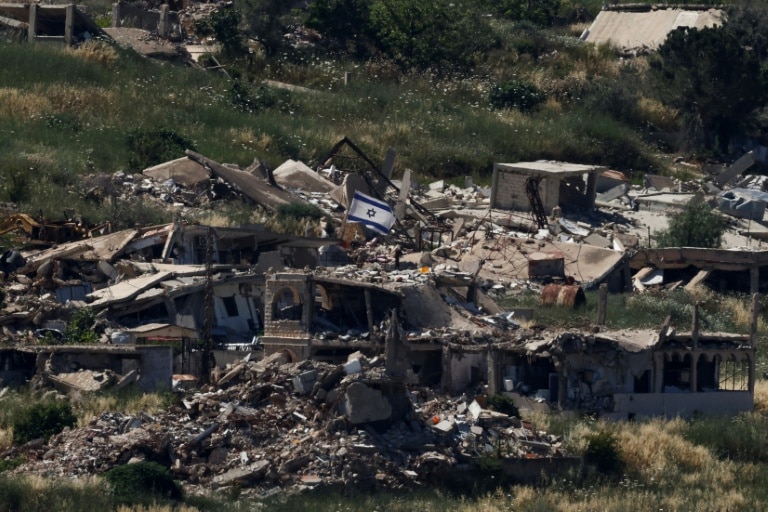
    As diplomatic teams work to finalize the exact date and logistics for the upcoming US-Iran talks, a group of 10 countries released a joint statement addressing the separate ongoing crisis in Lebanon. Canada, the United Kingdom, Australia, Japan, Brazil, Colombia, Indonesia, Jordan, Sierra Leone, and Switzerland said they remain “deeply concerned” by the worsening humanitarian situation and mass displacement crisis in Lebanon. “We welcome the ceasefire agreed between the United States, Israel, and Iran. We call for an urgent end to hostilities in Lebanon. Civilians and civilian infrastructure must be protected from the effects of hostilities,” the statement read. Currently, Israel and Lebanon are holding direct ambassador-level talks at the US State Department in Washington DC, focused on resolving tensions along their shared border.

  • German scientist’s book debuts in Chinese in Beijing

    German scientist’s book debuts in Chinese in Beijing

    On Monday, a Beijing-based academic seminar marked the official launch of the Chinese translation of *Questions of the Future*, a notable work by German molecular biologist Patrick Cramer, president of the Max Planck Society. This release marks the first time the book, originally published in German under the title *Zukunftswelten* in March 2024, has been adapted into a foreign language, bringing Cramer’s insights on global scientific progress to a new Chinese-speaking audience.

    Hosted under the theme “Interdisciplinary Dialogues for the Science of Tomorrow,” the event brought together leading scientific experts from across sectors to explore how collaborative research can answer pressing global challenges. During his keynote address, Cramer walked attendees through the core arguments of his book, sharing his perspectives on the future direction of scientific inquiry, the power of cross-disciplinary research, and the irreplaceable role of international partnership in advancing knowledge.

    Cramer stressed that foundational basic research, trailblazing original innovation, and open cross-border collaboration are non-negotiable for driving meaningful scientific progress. He further noted that a growing number of issues once considered far-off future concerns have now evolved into critical threats that will define the trajectory of human civilization. These pressing issues span the global transition to clean energy to reverse climate change, the far-reaching social disruption of rapid artificial intelligence advancement, and the systemic shifts required to accommodate aging populations worldwide amid modern medical progress.

    Attending experts reinforced Cramer’s views during a subsequent roundtable discussion, pointing out that no single academic discipline or individual nation has the capacity to independently solve shared transnational challenges, from climate change and population aging to responsible AI governance and biodiversity protection. They concluded that expanding cross-disciplinary dialogue, deepening coordinated investment in basic research, and fostering consistent international scientific and technological exchange are critical not only for pushing the boundaries of human knowledge, but also for building collective solutions to the challenges that unite all countries.

    The seminar was sponsored by the Bureau of International Cooperation of the Chinese Academy of Sciences, and organized by the Institute for the History of Natural Sciences of the Chinese Academy of Sciences.

  • Turkey rocked by two mass school shootings in two days, at least four dead

    Turkey rocked by two mass school shootings in two days, at least four dead

    Turkey is grappling with shock and grief after two successive school shooting incidents over a 48-hour period left four people dead and more than 30 others injured, in a rare outbreak of gun violence on Turkish educational campuses.

    The deadlier of the two attacks unfolded on Wednesday afternoon in the southeastern Turkish city of Kahramanmaras, where an eighth-grade student opened fire inside Ayser Calik Middle School. Speaking in a live public address, Kahramanmaras governor Mukerrem Unluer confirmed that the shooting left three students and one teacher dead before the teen attacker turned the gun on himself and took his own life.

    Initial investigations have found that the student smuggled five firearms and seven loaded ammunition magazines onto campus before carrying out the attack. The shooter fired intermittently into two separate classrooms, and the weapons he used are believed to belong to his father, a retired senior police officer, according to Unluer. In addition to the fatalities, 20 students were hurt in the attack, with four of those wounded remaining in critical condition and undergoing emergency surgery as of Wednesday evening.

    In response to the incident, Turkish Justice Minister Akin Gurlek announced that seven senior prosecutors have been appointed to lead the official investigation, and a temporary media broadcast ban has been ordered to prevent outside interference with the probe. Cabinet ministers overseeing education, internal affairs, and health were immediately deployed to Kahramanmaras to coordinate emergency response and support affected families.

    The Kahramanmaras attack came just one day after a separate school shooting in the southern Turkish province of Sanliurfa, which left 20 people wounded before the attacker also died by suicide. That attack was carried out by a 19-year-old man identified only by the initials O.K., a former student of Ahmet Koyuncu Vocational and Technical High School who told authorities he carried out the attack out of revenge for what he viewed as unfair treatment that led to his academic failures. He specifically targeted the school’s principal, according to local reports.

    Turkish daily newspaper Sabah later revealed that the 19-year-old failed to finish middle school due to prolonged absenteeism, before transferring to an online distance education high school that he also did not complete. Weeks before the attack, O.K. began sending explicit threats to the school community, even writing in one message, “Get ready, there will be an attack at this school in a few days.” He was taken into custody over the threats just 24 hours before the shooting, but was subsequently released, prompting questions over official oversight.

    School gun violence is extremely uncommon in Turkey, making the two back-to-back attacks all the more alarming. Local television commentators have raised the possibility that the incidents are linked as copycat attacks, noting that widespread national media coverage of the Sanliurfa shooting may have inspired the attacker in Kahramanmaras to carry out his attack just one day later. Turkish authorities have not yet confirmed that connection, but have pledged a full review of security protocols at schools across the country in the wake of the violence.

  • Polarization harms ordinary people, says former Thai official

    Polarization harms ordinary people, says former Thai official

    In a recent exclusive conversation with China Daily, a veteran former Thai political leader has sounded the alarm over deepening global divides, warning that the world’s most vulnerable populations bear the brunt of rising polarization and conflict. Bhokin Bhalakula, who previously served as president of Thailand’s National Assembly, made the remarks during an interview updated by the outlet on April 15, 2026, offering a clear-eyed assessment of today’s fractured international landscape.

    Bhokin emphasized that the current era of geopolitical polarization is unlike any the world has seen before, with every new escalation of tension and outbreak of conflict leaving everyday civilians to face the worst consequences. From disrupted livelihoods to lost lives and fractured communities, he argued, ordinary people who have no stake in power struggles between nations or blocs end up paying the highest price for rising division.

    Beyond his warning on polarization, Bhokin pushed back against the growing trend of great power unilateralism. He noted that a foreign policy framework that prioritizes the interests of a single nation over the sovereign rights and needs of other countries can never earn genuine respect from the global community. Such an approach, he implied, only deepens divides and fuels further instability.

    In contrast to unilateral, zero-sum approaches to global affairs, Bhokin highlighted the strength and resonance of China’s vision for global cooperation. The concept of “a community with a shared future for mankind,” first put forward by Chinese President Xi Jinping, effectively upholds the equal rights and interests of all nations in international governance, he said. This vision, Bhokin added, aligns perfectly with the widespread global desire for inclusive, peaceful development that benefits all people, not just a select few powerful states.

  • Expats get into Sanyuesan Festival spirit

    Expats get into Sanyuesan Festival spirit

    As anticipation builds for one of southern China’s most vibrant traditional cultural celebrations, international residents living in Guilin, Guangxi Zhuang Autonomous Region, have already begun immersing themselves in the joyful, culturally rich spirit of the Sanyuesan Festival.

    Falling on the third day of the third month of China’s traditional lunisolar calendar, Sanyuesan holds deep meaning for communities across Guangxi. Far more than a simple seasonal observance, the festival is a major interethnic gathering that brings together the region’s many diverse cultural groups in shared celebration. For the Zhuang people, Guangxi’s largest ethnic community, the day also carries an additional layer of historical and cultural significance: it is recognized as the group’s oldest traditional Valentine’s Day, rooted in centuries of folk custom.

    What began as a curious cultural observation for many of Guilin’s expat residents has quickly transformed into full, enthusiastic participation, as these international visitors step off the sidelines to join local communities in marking the occasion, transitioning from curious outside observers to active participants in the region’s cherished ethnic cultural traditions.

  • Lionel Messi accused of breaching $7 million contract by sitting out a Florida soccer friendly

    Lionel Messi accused of breaching $7 million contract by sitting out a Florida soccer friendly

    One of the most decorated soccer players in history, Lionel Messi, is facing a major legal battle after a South Florida-based events company filed a lawsuit alleging fraud and breach of contract connected to a canceled appearance at a 2023 international friendly. According to public court filings from Miami-Dade Circuit Court, the suit was brought last month by Vid Music Group, naming both the global soccer star and the Argentine Football Association (AFA) as defendants. The promoter claims the pair violated the terms of a $7 million agreement when Messi skipped one of the two scheduled exhibition matches last October, a development that cost the company millions in lost revenue. Neither Messi nor representatives from the AFA have issued an immediate public response to requests for comment on the allegations as of press time.

    Widely regarded as one of the greatest athletes to ever play the sport, Messi commands a massive premium on ticket prices for matches where he is expected to appear, whether he is suiting up for his Major League Soccer club Inter Miami CF or the reigning World Cup-winning Argentine men’s national team. The core of the legal dispute stems from an exclusive deal Vid signed with the AFA last summer, which granted the company full rights to organize, host, and market two October 2023 friendlies between Argentina and national sides Venezuela and Puerto Rico. In exchange for these rights, Vid retained all revenue generated from ticket sales, broadcast rights, and sponsorship deals. Per the terms outlined in the suit, the agreement explicitly required Messi to play a minimum of 30 minutes in each fixture, with an injury being the only acceptable exception to the clause.

    Court documents detail that rather than taking the pitch for the October 10 match against Venezuela at Hard Rock Stadium in South Florida, the 36-year-old attacker watched the 1-0 Argentine victory from a private suite inside the venue. Just one day after the Venezuela friendly, Messi took the field for Inter Miami, scoring two goals in the club’s 4-0 routing of Atlanta United in a crucial MLS regular season fixture. The result secured home-field advantage for Inter Miami in the first round of the 2023 MLS playoffs, a high-stakes outcome for the Florida-based club that made Messi’s absence from the international friendly all the more damaging for the promoter, per the suit.

    Messi did ultimately appear for Argentina in the second scheduled friendly against Puerto Rico on October 14, though the match itself was marked by organizational setbacks that further cut into Vid’s projected revenue. The fixture was originally slated to be hosted in Chicago, but organizers were forced to relocate it to a smaller venue in Fort Lauderdale, Florida after weak ticket sales. The low demand was tied to widespread public concern over ongoing, high-profile immigration raids by U.S. Immigration and Customs Enforcement agents in the Chicago area that had resulted in more than 1,000 arrests. Even after the move and a steep cut to ticket prices, dropping them as low as $25 per seat, the Fort Lauderdale venue failed to sell out. The AFA has publicly attributed the poor ticket sales for the Puerto Rico match to the immigration crackdown in the original host city.

    Vid has not publicly outlined a specific dollar amount for the damages it is seeking in the legal action, but the company confirms that it lost millions in total revenue from two connected issues: Messi’s no-show at the Venezuela friendly and the weak ticket sales for the relocated Puerto Rico match. The lawsuit comes amid a high-profile era for Messi in U.S. soccer, after his 2023 move to Inter Miami transformed the profile of MLS globally and drew record audiences to the league.

  • Middle East conflict drives fuel prices in Kenya

    Middle East conflict drives fuel prices in Kenya

    The ongoing geopolitical unrest in the Middle East is sending shockwaves through global energy markets, and one of its most immediate impacts is being felt by ordinary consumers in the East African nation of Kenya. On Tuesday, the country’s Energy and Petroleum Regulatory Authority (EPRA) confirmed what many had feared: a dramatic upward adjustment to fuel prices that will raise costs for transportation, commerce and households across the country.

    In its bi-monthly pricing review, covering the period from April 15 to May 14, 2026, the regulator announced steep increases across most fuel grades. Diesel, which powers the vast majority of Kenya’s freight transport, agricultural machinery and public transit vehicles, saw the largest jump at 24.1 percent. Super petrol rose by a smaller but still significant 16.2 percent. The adjustments pushed the retail price of both fuels above $1.59 per liter in the capital Nairobi, according to the new pricing schedule.

    In a statement signed by Joseph Oketch, EPRA’s acting director-general, the authority announced it would hold kerosene prices steady, capping the domestic cooking fuel at a maximum retail price of $1.18 per liter in Nairobi.

    The price hikes are directly tied to a sharp surge in global benchmark oil prices, which has been triggered by escalating conflict between the US-Israel alliance and Iran in the Middle East. As a country that relies entirely on imports for all its refined petroleum products, Kenya has no domestic refining capacity to insulate itself from global market volatility, leaving the nation fully exposed to external energy price shocks.

    Even as it enforced the new global-market-aligned prices, the Kenyan government moved quickly to roll out targeted measures to soften the blow for consumers. Oketch confirmed that the value-added tax (VAT) applied to super petrol, diesel and kerosene has been cut from 16 percent to 13 percent to reduce overall costs. To further stabilize retail pump prices, the government will draw approximately $48 million from the national Petroleum Development Levy Fund to offset part of the elevated landed cost of imported fuel products.

    Oketch moved to reassure Kenyans that the regulator remains committed to upholding fair competition in the energy sector, and will continue working to protect the interests of both consumers and industry investors amid the ongoing market instability.