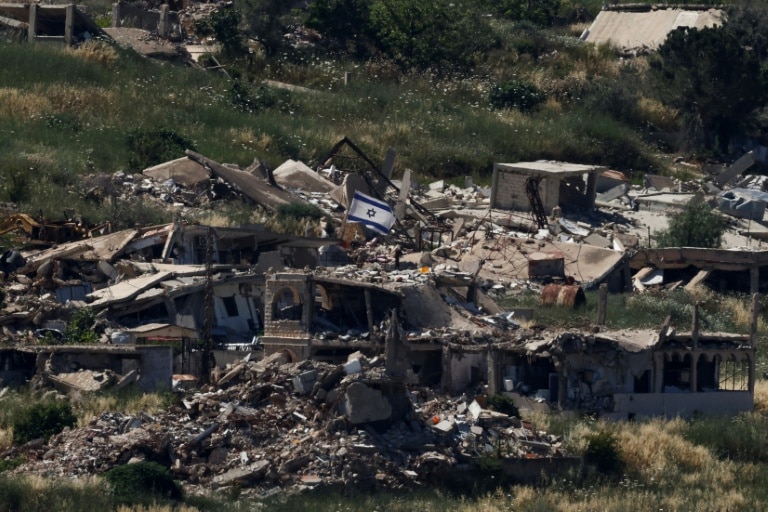
Escalating tensions across the Israel-Lebanon border boiled over on Friday, as the Israeli Air Force carried out an airstrike on a southern Lebanese village just hours after the military ordered mass evacuations of multiple population centers. The strike comes after Iran-aligned militant group Hezbollah rejected a conditional ceasefire agreement hammered out by Lebanese and Israeli negotiators in Washington this week, derailing a rare diplomatic push to de-escalate a conflict that has already claimed thousands of lives.
The cross-border violence erupted on March 2, when Hezbollah launched coordinated attacks on Israeli targets to avenge the killing of Iran’s supreme leader on February 28, dragging Lebanon into the broader regional war that Israel and its key ally the United States launched against Iran. Since that opening strike, Israel has pushed into southern Lebanon with its deepest ground incursion in 20 years, steadily expanding its military operations across the border region.
In the lead-up to Friday’s strike, Israeli military spokesman Avichay Adraee, who handles communications in Arabic, issued multiple urgent evacuation orders. First, he called on residents of three villages north of the Litani River to leave their properties immediately, before expanding the warning to six additional towns and villages, including the coastal town of Sarafand located between Tyre and Sidon. Posting on social platform X, Adraee emphasized the risk to civilian life, writing: “For your safety, you must evacuate your homes immediately and move away from the villages and towns by at least 1,000 metres into open areas. Anyone who is near Hezbollah operatives, their facilities, or their weapons endangers their life!”
Lebanon’s state-run National News Agency confirmed that thousands of civilians fled the three villages named in the initial warning, and later verified that an airstrike had hit the village of Arqoun. Overnight strikes across southern Lebanon’s coastal city of Tyre left seven people dead, a Lebanese civil defence source confirmed to Agence France-Presse. One of those strikes hit near Jabal Amel hospital in central Tyre, killing four people, wounding seven, and causing minor damage to the medical facility. A second strike on a nearby residential neighborhood killed three more people, including two children, and wounded five others. An AFP correspondent reporting from the scene found a local bank, one of only three operating in the city, left heavily damaged by the blast.
Hezbollah’s leader Naim Qassem explicitly rejected the Washington-brokered truce during a public address on Thursday, rejecting the conditional deal that required the group to halt all cross-border attacks on Israel. “The ceasefire must be comprehensive… without the Israeli enemy having the freedom to kill,” Qassem said, adding that he urged the Lebanese government to end “the farce and humiliation called direct talks” with Israel. The group has maintained its demand for a full, permanent ceasefire and a complete withdrawal of all Israeli military forces from southern Lebanon.
Israeli Defense Minister Israel Katz responded by confirming that military operations would continue uninterrupted. “At this stage, [the army] will continue its fire and ground operations… without the return of the population, while continuing to dismantle terrorist infrastructure,” Katz said, adding that Israeli forces retain full authority to strike targets as far north as the Lebanese capital Beirut if Hezbollah continues attacks on Israeli civilian communities.
The escalating airstrikes and evacuation orders have sparked a humanitarian crisis across southern Lebanon. After Israel ordered most of Tyre’s population to evacuate, hundreds of displaced residents fled to the city’s small, historic old town, which had not yet faced evacuation warnings or strikes and is home to Lebanon’s Christian community in the area. With all official shelters already filled to capacity, many displaced people have been forced to sleep in their cars or improvised tents. Earlier this week, the Israeli military claimed Hezbollah operatives were operating in the old town, threatening to order a full evacuation if the militants remain, pushing hundreds more residents to flee the area.
Hezbollah has held a unique position in Lebanese politics since the end of the 1975-1990 civil war, as the only militant faction that refused to disarm, arguing that its arsenal was necessary to oppose Israeli occupation of southern Lebanon. After Israeli troops fully withdrew from the region in 2000, international and domestic pressure for Hezbollah to disarm grew steadily, with current Lebanese President Joseph Aoun’s administration taking the hardest line to date on the issue. The Lebanese government has formally declared Hezbollah’s independent military activities illegal, and the Lebanese Army had been working to disarm the group in areas south of the Litani River near the Israeli border prior to the outbreak of the current conflict.
Since Hezbollah recommenced hostilities in March, joining the regional war against Israel alongside Iran, cross-border exchanges of fire have killed more than 3,500 people in Lebanon alone, according to official data from the Lebanese Ministry of Health. For civilians on both sides of the border, the collapse of the latest truce effort has erased any remaining hope of a quick end to the violence. “We can’t keep doing this,” a 60-year-old resident of Shlomi, a small town in northern Israel, told AFP. “This is not a life.”