作者: admin

  • China delivers world’s largest electric-powered intelligent container ship

    China delivers world’s largest electric-powered intelligent container ship

    In a landmark milestone for global maritime sustainable innovation, the world’s largest fully electric-powered intelligent container vessel was officially handed over to its operator during a delivery ceremony held in Shanghai on April 15, 2026. Christened “Ning Yuan Dian Kun”, the 740 TEU (twenty-foot equivalent unit) vessel stands as the first of its kind developed entirely in China, breaking new ground for zero-emission shipping worldwide.

    Designed and engineered entirely by the Shanghai Merchant Ship Design and Research Institute, with a custom-built electric propulsion system supplied by the Shanghai Marine Equipment Research Institute, the vessel is a 100% indigenous Chinese creation. Both design and manufacturing institutions are subsidiaries of the China State Shipbuilding Corp, underscoring the country’s growing integrated capability in advanced marine engineering.

    With an overall length of 127.8 meters and a beam of 21.6 meters, the container ship was purpose-built exclusively for Ningbo Ocean Shipping Co Ltd. Following delivery, it will enter regular commercial service on the coastal trade route linking Ningbo and Zhapu, two major ports in China’s eastern Zhejiang province.

    This delivery marks a pivotal turning point for the global shipping industry’s transition away from fossil fuel-powered vessels. As one of the world’s first large-scale all-electric intelligent container ships put into commercial operation, the “Ning Yuan Dian Kun” demonstrates that zero-emission container shipping is technically feasible for coastal trade routes, setting a new benchmark for sustainable maritime transportation around the world. The integration of intelligent navigation and operation systems also positions the vessel as a showcase for next-generation smart shipping technology, combining environmental performance with improved operational efficiency.

  • Fans overcharged by $1.72 each by ‘monopoly’ Ticketmaster owner

    Fans overcharged by $1.72 each by ‘monopoly’ Ticketmaster owner

    A federal jury has delivered a landmark ruling against entertainment conglomerate Live Nation Entertainment, finding that the company’s control of the live event ticketing space through its ownership of Ticketmaster constitutes illegal monopoly behavior that systematically overcharges music fans across the United States. The verdict comes after four days of closed-door deliberations in a high-stakes antitrust trial that industry analysts say could reshape the future of the $150 billion global live music sector. The case, first filed by the U.S. Department of Justice under former Attorney General Merrick Garland in May 2024, had long called for aggressive structural remedies, including forcing Live Nation to spin off parts of its business or fully separate from its Ticketmaster ticketing division.

    Prosecutors argued throughout the legal proceedings that Live Nation’s combined control of major concert venues, music festival brands, and primary ticketing infrastructure has created an insurmountable barrier to market entry for smaller competitors, driving up ticket costs and eroding service quality for millions of concertgoers. The jury’s specific findings included a determination that Ticketmaster overcharged customers by an average of $1.72 (approximately £1.27) per ticket sold, a figure that will serve as the baseline calculation for any future financial damages awarded in the case.

    Live Nation has consistently rejected the antitrust claims, maintaining during the trial that it faces fierce competition from a range of industry players, including independent sports teams, third-party concert promoters, and rival venue operators. The path to trial has been marked by unexpected procedural shifts: earlier this year, the Department of Justice announced it had reached a tentative settlement with Live Nation and Ticketmaster just two weeks before the trial was scheduled to begin. That sudden withdrawal drew sharp public criticism from presiding judge Arun Subramanian, who questioned the timing and substance of the deal. Along with the DOJ, three U.S. states — Arkansas, Nebraska, and South Dakota — also dropped out of the litigation following the settlement announcement.

    However, a bipartisan coalition of 36 state attorneys general chose to continue pushing the case to trial, rejecting the proposed federal settlement as insufficient to address the company’s anti-competitive practices. California Attorney General Rob Bonta, a lead figure in the state coalition, emphasized the significance of the jury’s decision in the face of reduced federal antitrust enforcement. “This verdict shows just how far states can go to protect our residents from big corporations that are using their power to illegally raise prices and rip-off Americans,” Bonta told reporters Wednesday. He added, “We are incredibly proud of today’s outcome — and especially proud of our coalition made up of red and blue states alike who understood we needed to come together to protect our consumers, businesses, and state economies from Live Nation’s illegal conduct.”

    The scrutiny of Live Nation’s market dominance exploded into public view in 2022, following the botched Ticketmaster ticket sale for Taylor Swift’s blockbuster Eras Tour. Unprecedented fan demand crashed the Ticketmaster platform, leaving millions of Swift’s loyal fans — known widely as Swifties — locked out of purchasing tickets and sparking widespread public outrage. Ticketmaster ultimately issued a public apology to both Swift and her fans, and the chaos led to a high-profile U.S. Senate hearing examining consolidation in the live music industry. As of Wednesday evening, Live Nation has not issued an official response to the jury verdict, and media requests for comment from the company have not yet been returned. Judge Subramanian will now preside over future proceedings to determine what remedies will be imposed, ranging from financial penalties to the forced break-up of the Live Nation-Ticketmaster merger.

  • RBA watching closely as first hard economic data released since the US/Israel war with Iran

    RBA watching closely as first hard economic data released since the US/Israel war with Iran

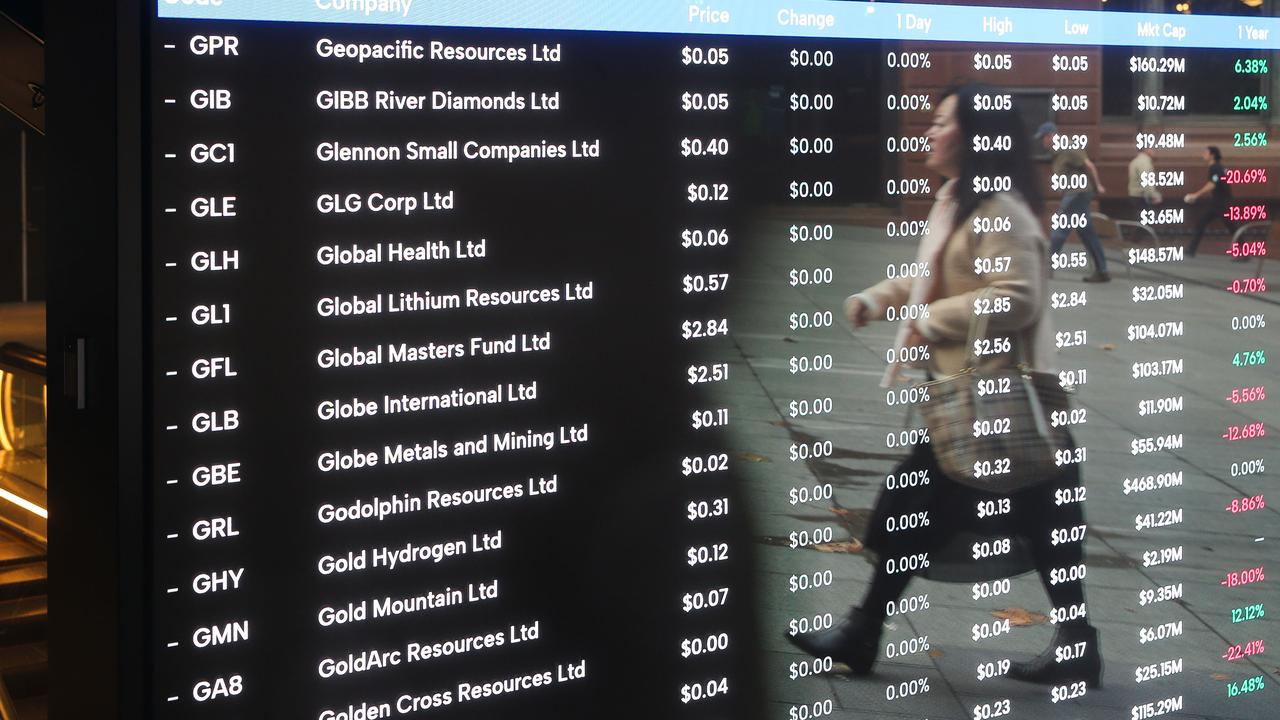
    Australia is set to release a landmark set of labor market data this Thursday, the first official hard economic indicator published since the escalation of the Israel-Iran conflict in the Middle East, a development that has sent global oil prices surging 60% in just four weeks. While leading projections point to a small decline in the national unemployment rate, dipping from February’s 4.3% to 4.2% for March, economists are sounding the alarm: the apparent improvement masks growing economic risks that have yet to fully register in official data.

    Westpac senior economist Ryan Wells explains that the March labor force figures only capture trends from the first fortnight of the conflict, which began on February 28. This means any tangible impacts from the oil price shock on Australian hiring trends will not appear in this release. “It is far too early to detect any meaningful shift in broad labour market conditions tied to the Middle East conflict,” Wells noted. Price shocks from energy markets work through the economy gradually, first hitting household disposable income, then eroding corporate margins, and finally prompting businesses to adjust their investment and staffing decisions. That cascade takes time to unfold, so the March jobs report will not reflect the full fallout of the conflict.

    The upcoming data follows a mixed set of labor outcomes in February. That month saw a surprisingly strong net gain of 48,900 new jobs, but nearly all of those gains came from part-time positions rather than full-time, stable roles. At the same time, labor force participation rose 22 basis points to 66.9% as more Australians re-entered the job search pool, a shift that pushed the official unemployment rate up from 4.1% in January to 4.3% in February.

    For the Reserve Bank of Australia (RBA), which holds a dual mandate of maintaining price stability between 2-3% inflation and delivering full employment consistent with low inflation, the labor data carries less immediate weight than persistent inflation pressures. RBA governor Michele Bullock has previously framed current risks as tilted toward rising inflation rather than rising unemployment. The central bank’s priority remains bringing inflation back to its target band without triggering a massive jump in joblessness or a recession, Bullock explained after lifting the cash rate to 4.10% earlier this year. “We don’t want to see a recession or a large rise in unemployment if we can avoid it,” she said, “but at the moment the risks just tip more to the inflation side given the position that the labour market is currently in.”
    With national inflation still sitting at 3.7%, well above the RBA’s 2-3% target band, Wells says the upcoming March jobs report is unlikely to shift the central bank’s near-term policy course. “Absent a significant surprise, March’s labour market data is not going to play a big role in the RBA’s next policy decision,” he added.
    Broader global economic risks are already mounting, with the International Monetary Fund (IMF) warning that the Middle East conflict has pushed the global economy to the edge of a new recession. In its latest Global Economic Outlook, the IMF has urged governments including Australia to hold back on large-scale fiscal stimulus to ease cost-of-living pressures, warning that expanded public spending makes it harder for central banks to tame persistent inflation. “While such measures are popular, evidence suggests they are often both poorly designed and very costly for the public purse,” said IMF chief economist Pierre-Olivier Gourinchas. “Avoiding fiscal stimulus is also critical when inflation is rising, so as not to complicate central banks’ task.”
    The IMF’s updated forecast paints a grim long-term picture for Australia, predicting that inflation will remain above the RBA’s target band for at least two more years, climbing to 4% in 2026 before cooling slightly to 3.2% in 2027. Real gross domestic product growth, which strips out inflation to measure actual economic expansion, is projected to slow to just 2% in 2026 and fall further to 1.7% in 2027.
    Australian Treasurer Jim Chalmers, who is traveling to Washington DC for the G20 and IMF Spring Meetings, has acknowledged that global events are already weighing heavily on Australian households. “The costs and consequences of the conflict in the Middle East will be felt for some time, in Australia and around the world,” Chalmers said in a statement. The Albanese government has already flagged potential new cost-of-living relief measures in its May 12 federal budget, responding to domestic price hikes driven by the global fuel shock. Chalmers outlined that the government is taking targeted action: halving the fuel excise to reduce consumer costs, holding petrol retailers accountable for price gouging, working to secure additional fuel supplies for domestic markets, and coordinating international action to address the supply crunch. The Treasurer stressed that the upcoming budget will remain fiscally responsible despite pressure to expand spending.

  • Japanese scholar warns of potential risks in military expansion

    Japanese scholar warns of potential risks in military expansion

    As the world sees growing shifts in global defense policy and a steady upward trend in military spending across many nations, one prominent Japanese academic has stepped forward to sound the alarm over the underrecognized long-term dangers that come with large-scale military expansion. Hiroshi Onishi, emeritus professor at Japan’s Keio University and vice-chairman of the World Association for Political Economy, drew direct parallels between contemporary moves to expand military capacity and Japan’s pre-World War II strategic choices that altered the course of global history. In his analysis, Onishi recalled that in the years leading up to World War II, Japan funded its dramatic military buildup through the issuance of massive volumes of government bonds, a fiscal choice that set the nation on a path of escalating aggression with catastrophic global consequences.

    Beyond the geopolitical risks of renewed militarization, Onishi has also laid out clear opposition to the current push for rising national defense budgets, highlighting the severe economic harm that increased military spending inflicts on broader public well-being and long-term national competitiveness. He emphasized that diverting an ever-larger share of national resources to military projects does not generate sustainable broad-based growth. Instead, the academic warned, significant increases in defense expenditure inevitably crowd out funding for civilian needs and gradually erode household consumption capacity, weakening domestic demand and undermining a nation’s overall economic strength over time. His warning comes amid growing global debate over defense budget priorities, as nations weigh security concerns against the need for investments in social welfare, infrastructure, and civilian economic development.

  • Belgium seizes arms shipment sent from Britain to Israel

    Belgium seizes arms shipment sent from Britain to Israel

    In a development that puts new scrutiny on cross-border arms transfers to Israel, Belgian authorities have seized two separate shipments of undeclared military components originating from the United Kingdom that were en route to Israel. The seizure comes after Belgium implemented a policy banning aircraft carrying military equipment bound for Israel from landing in its territory or transiting its airspace.

    The interception followed a formal alert sent to Brussels authorities last month by a coalition of transparency and advocacy groups: British investigative outlet Declassified, Belgian non-governmental organization Vredesactie, Irish news platform The Ditch, and the Palestinian Youth Movement. The groups tipped officials off to the weapons-bound shipments traveling from the UK to Israel via Belgium’s Liege Airport.

    According to tracking details, the two consignments departed the UK on March 23 and were intercepted at Liege Airport the following day. A specialized engineering inspection of the packages uncovered mislabeled cargo: fire control systems and spare parts designed for military aircraft, which had not been accurately declared on shipping documentation.

    Belgian federal authorities have confirmed they have opened a formal criminal investigation into the unauthorized shipments, but have declined to publicly identify the companies named in the initial complaint. However, the regional government of Wallonia, the southern Belgian region where Liege Airport is located, has publicly named one implicated firm as Moog, a U.S.-headquartered aerospace manufacturer that operates multiple production facilities across the United Kingdom.

    Investigative reporting from Declassified has uncovered additional context: a shipping postcode linked to Moog’s Wolverhampton, UK factory was used to send similar components to Israel via Belgium as early as December 2024. Moog produces key flight actuators for the M-346 trainer aircraft used by the Israeli Air Force to train new military pilots.

    Sources familiar with the shipment tracking process told reporters the components were exported from the UK under an Open Individual Export Licence, a mechanism that classified the goods as general aircraft parts rather than restricted military equipment. The same sources also confirmed that at least 17 separate consignments linked to Moog have been shipped from the UK to Liege Airport, all with final destinations in Israel.

    A freedom of information request filed by the tracking team further revealed that the UK Foreign Office holds no documented correspondence with Belgian authorities regarding the transit of UK-sourced military components to Israel via Belgian territory.

    The seizure comes months after the UK government implemented a partial suspension of arms sales to Israel in September 2024. At that time, UK officials halted 30 of 350 active arms export licenses to Israel, citing a “clear risk” that the equipment could be used to violate international humanitarian law in the ongoing Gaza conflict.

    In a formal statement responding to inquiries about the seizures, the UK’s Department for Business and Trade said: “We have suspended all licences for equipment for Israel that might be used in military operations in Gaza, with the exception of the special measures relating to the global F-35 programme. Exports of controlled equipment are subject to strict licensing requirements. It would be a criminal offence for an exporter not to have the required licences in place before exporting such items.”

    A Walloon government spokesperson told Declassified that the mislabeled goods unequivocally require a transit license under Belgian law, saying: “In our view, the goods do indeed require a transit licence… We have already contacted our lawyers. We wish to… take all necessary steps to ensure that the law is upheld.”

    A separate spokesperson for the Belgian federal government added: “No transit licence request was issued; if it had been, it would have been refused.”

    Middle East Eye, which first broke the full details of the seizure, has reached out to Moog for official comment on the allegations. The outlet provides independent, on-the-ground coverage of the Middle East, North Africa and broader global affairs.

  • US students visit Qingdao for Chinese culture immersion

    US students visit Qingdao for Chinese culture immersion

    A cross-cultural exchange initiative brought 40 teachers and students from California-based Vistamar School to Qingdao Changjiang School in Jimo District, Qingdao, Shandong Province, on Thursday, opening a day of hands-on immersion into traditional Chinese culture and people-to-people connection.

    Against the backdrop of growing interest in cultural exchange between young people from China and the United States, the visiting group got a rare opportunity to engage directly with centuries-old Chinese cultural practices. Participants tried their hand at two iconic Chinese folk arts: calligraphy, where they guided brush pens across rice paper to feel the rhythm and artistry of Chinese character writing, and paper-cutting, where they crafted intricate decorative patterns by hand. Later, they gathered to listen to and try playing the guzheng, a 2,500-year-old traditional Chinese string instrument known for its smooth, resonant tones that have shaped Chinese musical culture for millennia.

    Beyond cultural exploration, the event also fostered casual friendship-building between young people from both countries. American students teamed up with their local Chinese peers for friendly basketball matches and joined martial arts sessions, learning basic forms of the traditional practice that connects physical movement to mental discipline.

    The most anticipated and memorable part of the day was a joint dumpling-making session, where students from both nations gathered around tables, kneading dough, filling wrappers, and sharing stories and jokes as they worked. The casual, collaborative activity broke down cultural barriers, turning formal exchange into warm, personal connection.

    This event is part of a broader push for youth-focused cross-cultural exchange between China and the U.S., designed to give young people first-hand experience of Chinese culture beyond what is presented in international media, and build grassroots connections between the next generations of the two countries. A video recording of the exchange is available to view, capturing participants’ experiences and reflections on the day. Zhou Meihan and Liu Qing contributed reporting to this piece.

  • Hunan Museum and Martyrs’ Park merge into cultural space

    Hunan Museum and Martyrs’ Park merge into cultural space

    For seven decades, two iconic cultural landmarks in Changsha’s Kaifu District — the Hunan Museum and the adjacent Hunan Martyrs’ Park — have operated as separate sites, even as they sat meters apart. That decades-long separation came to an end this week, as the two institutions opened their newly merged, integrated cultural and public leisure space to the public on Tuesday, marking the completion of a high-priority provincial infrastructure project.

    Long a top destination for domestic and international tourists seeking to explore Hunan’s rich historical and cultural heritage, the Hunan Museum has grappled with critical space constraints for years. During peak tourism seasons, huge volumes of visitors would crowd the narrow area outside the museum’s entrance, forming long queues that stretched for blocks. Waiting visitors were left exposed to extreme sun or rain, with no adequate shade or shelter to make their wait more comfortable. Beyond visitor discomfort, chronic traffic congestion in the surrounding neighborhood has also plagued the area for years, creating headaches for both guests and local residents.

    The integration initiative is not a simple local adjustment: it was named one of Hunan Province’s key people’s livelihood projects for 2026, and was formally included in the provincial government work report released this past February. Construction kicked off in June 2025, with the core modification involving the removal of roughly 140 meters of the original boundary wall that separated the park from the museum. In its place, the project team built a new open-air public gathering area named Fusion Square, creating a seamless, interconnected flow between the museum’s exhibition spaces and the park’s green, recreational grounds.

    The newly launched combined space is designed to offer visitors a more holistic, enriching cultural experience, blending curated historical exhibitions with quiet green outdoor space for rest and reflection, while addressing longstanding accessibility and congestion issues that have affected the site for decades.

  • Brazil’s Lula defends Pope Leo in message to Catholics after Trump’s criticism

    Brazil’s Lula defends Pope Leo in message to Catholics after Trump’s criticism

    A sharp public dispute between Pope Leo XIV and United States President Donald Trump has drawn international political backing for the pontiff from Brazil’s leftist head of state, Luiz Inácio Lula da Silva. Speaking Wednesday in a pre-recorded video address to the national conference of Brazilian bishops, Lula publicly voiced his full solidarity with the first U.S.-born pope, calling for Leo to be defended against aggressive criticism from influential global actors.

    The 80-year-old Brazilian president, who is currently campaigning for a new term in national elections scheduled for October, framed the conflict as part of a long-running historical pattern. “Throughout mankind’s history, advocates for peace and for the oppressed have been attacked by powerful people who think they are deities to be adored,” Lula stated in his remarks. He added, “It’s better to have a heart full of love than the power of weapons and money.”

    The crossfire between the two world figures ignited after Pope Leo delivered sharp public pushback against the ongoing war in Iran. Specifically, the pontiff condemned Trump’s open threat to annihilate Iranian civilization as “truly unacceptable,” and stated that God does not grant blessing to leaders who order military bombing campaigns against civilian populations.

    In response, Trump has escalated his verbal attacks against the pope in recent days, repeatedly claiming that Leo takes unduly soft stances on domestic crime, is ideologically aligned with left-wing global movements, and even asserted that his own political influence helped the pontiff secure his position. Earlier on the same day Lula issued his statement, Pope Leo addressed the conflict during an official visit to Cameroon, reaffirming his core position. He emphasized that “the message the world needs to hear today” is centered on non-violence and diplomatic negotiation rather than military confrontation.

  • Chinese motorcycle brand ZXMOTO debuts at CICPE

    Chinese motorcycle brand ZXMOTO debuts at CICPE

    The 2026 China International Consumer Products Expo (CICPE), one of the country’s most high-profile global trade events for consumer goods, opened its doors this week, and among the standout domestic exhibitors making their first appearance at the prestigious gathering was Chinese motorcycle manufacturer ZXMOTO.

    At its exhibition booth, the brand drew steady crowds of industry observers, trade partners and motorcycle enthusiasts by showcasing three all-new production models, with the 820 RR — a track-focused sport bike that has already claimed championship titles in international racing competition — taking center stage as the brand’s flagship offering.

    The debut of ZXMOTO and its cutting-edge lineup marks a notable turning point for China’s two-wheeler industry. For decades, Chinese motorcycle manufacturers were largely seen as producers of low-cost, entry-level models for emerging markets, overshadowed by European, Japanese and American brands that dominated the premium and performance segments. Today, that narrative is shifting rapidly. From precision manufacturing processes and advanced material engineering to competitive results on global racing circuits, Chinese motorcycle brands have evolved enough to go head-to-head with the world’s most established motorcycle manufacturers on equal footing.

    Industry analysts note that this milestone extends far beyond the motorcycle sector. As Chinese manufacturing continues to move up the global value chain, appearances at high-visibility international expos like CICPE give homegrown brands a platform to showcase their upgraded technical capabilities, design innovation and competitive strength to a global audience. For ZXMOTO specifically, the CICPE debut is expected to open new doors for both domestic market expansion and international export opportunities, helping cement the reputation of Chinese high-performance two-wheelers among consumers worldwide.

  • Nigerian security forces on high alert for large-scale attack on airport and prison, memo says

    Nigerian security forces on high alert for large-scale attack on airport and prison, memo says

    ABUJA, Nigeria — Nigeria’s national security apparatus has been placed on heightened alert following a leaked internal intelligence memo that uncovered coordinated planned attacks by Islamist militant networks targeting critical public infrastructure across Abuja and neighboring Niger State. The confidential document, dated April 13 and obtained by the Associated Press from the Nigeria Customs Service on Wednesday, outlines specific high-value targets selected by the attackers: Nnamdi Azikiwe International Airport in Abuja, a federal prison in the capital, and a military detention facility located in Niger State.

    According to the memo’s text, the militants’ dual objectives are to free dozens of detained terror group members and cause catastrophic damage to Nigeria’s key aviation infrastructure. The warning draws a clear parallel to a deadly January assault on an air force base in Niamey, the capital of neighboring Niger Republic, noting that terror operatives are actively seeking to replicate that successful attack model within Nigeria’s borders. “An analysis of the report reveals a concerning correlation between the potential targeting of the Nnamdi Azikiwe Airport Abuja and recent large-scale attacks on aviation facilities in Niger Republic, notably in Niamey and Tahoua. This suggests a possible intent by terrorists to replicate the attack patterns within Nigeria,” the memo states.

    The Abuja prison referenced in the warning was the site of a major 2022 militant breakout, when an attack organized by the Islamic State West Africa Province (ISWAP) allowed 879 inmates to escape, including 64 confirmed ISWAP members. The latest planned operation is set to be executed by deep-cover sleeper cells belonging to two of Nigeria’s most active militant groups: Boko Haram and its offshoot ISWAP, the memo confirms.

    A senior Nigeria Customs Service official, who spoke on condition of anonymity due to restrictions on speaking to the media, confirmed that all branches of the military and national paramilitary forces have been placed on high alert and are actively preparing to disrupt the planned attacks. As of press time, neither the Nigeria Customs Service nor the Nigerian military has issued an official response to AP’s requests for comment on the intelligence alert.

    The revealed plot comes amid a long-running and evolving security crisis across Nigeria, Africa’s most populous nation. For more than a decade, insurgent violence has plagued the country’s northern regions, where multiple armed extremist groups operate, carrying out attacks, kidnappings for ransom, and community raids. Alongside Boko Haram and ISWAP, the IS-affiliated Lakurawa group has expanded its operations in northwestern Nigeria’s border regions adjacent to Niger Republic in recent years.

    The new terror warning also follows a recent security adjustment by the United States, which last week authorized the evacuation of non-emergency government staff and their family members from its Abuja embassy, citing a sharp rise in terrorist attacks, kidnapping incidents, and violent crime across northern Nigeria. The U.S. mission has since suspended regular public operations. Nigerian Information Minister Mohammed Idris downplayed the U.S. move, framing it as a standard precautionary step following internal security protocols, and stressed that the decision does not reflect the full security landscape across the country.