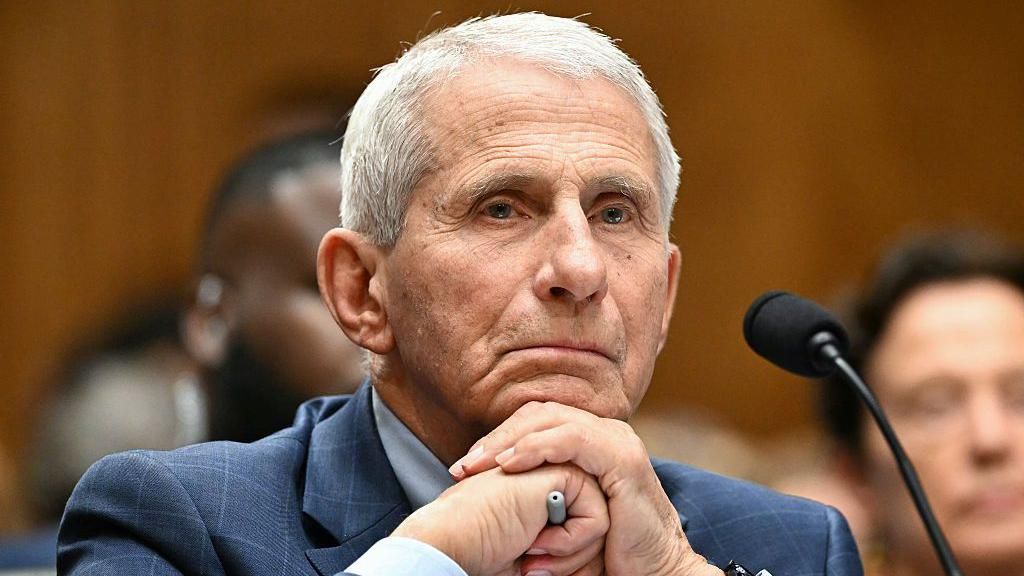
A high-stakes partisan showdown unfolded on Capitol Hill Wednesday, as former National Institute of Allergy and Infectious Diseases (NIAID) director Anthony Fauci declined to answer questions from a Republican-led Senate committee about COVID-19 origins, invoking his constitutional right against self-incrimination under the Fifth Amendment. The clash came just days after Republican Senator Rand Paul publicly released private diary entries written by Fauci, a move the former top health official framed as a targeted campaign to damage his reputation and seek criminal prosecution.
In his opening statement to the committee, Fauci acknowledged that his decision ran counter to his longstanding respect for the legislative branch, but confirmed he was acting on the advice of legal counsel. “Although it pains me to do so because of the respect I have for the legislative branch of government … under the advice of my attorneys, I will invoke my right under the Fifth Amendment of the constitution to refrain from answering your questions,” Fauci stated.
Fauci emphasized that his invocation of the Fifth Amendment was not an admission of any wrongdoing, noting that he has already testified under oath before multiple congressional panels on COVID-19-related matters. He argued that Paul’s long-stated public obsession with seeing him prosecuted created an unfair coercive environment that left him no other option. “The only conclusion I can reach is that the sole reason he is calling me before this committee is to get me to say something – anything – that could vindicate his repeated public pledges that I end up, in his words, ‘behind bars,’” Fauci added.
Legal experts clarify that invoking the Fifth Amendment is a constitutional protection, not an acknowledgment of guilt. The rule is designed to shield individuals from forced self-incrimination, coerced misstatements, and unfair procedural burdens.
Paul, a leading proponent of the unconfirmed theory that COVID-19 escaped from the Wuhan Institute of Virology in China, has long clashed with Fauci over pandemic policy and virus origins. He claims the newly released diary entries contradict Fauci’s public claims that the virus most likely originated via natural animal-to-human spillover. Paul argues that Fauci privately doubted the natural origin theory and leaned toward the lab leak hypothesis.
A review of the diary entries shows a more nuanced picture: at the start of the pandemic in early 2020, Fauci kept an open mind to both hypotheses, noting that there was no universal consensus among scientists on the origins of the novel virus. By later entries, he wrote that he was “almost certain that the virus evolved naturally from a species jump, even though… I keep an open mind about the possibility of a lab leak”. He also added that “just because two alternatives are possible that does not mean that they are equally probable”. To date, no conclusive scientific evidence has confirmed either the natural spillover or lab leak theory, though the majority of the scientific community leans toward the natural origin hypothesis.
The hearing quickly descended into tension after Fauci declined to answer questions. When one of Fauci’s attorneys attempted to interject multiple times during Paul’s questioning, Paul ordered Capitol security to remove the lawyer from the hearing room.
Democratic members of the committee rallied to Fauci’s defense, arguing the entire hearing was a partisan stunt designed to damage Fauci rather than uncover new information about COVID-19 origins. Senator Maggie Hassan of New Hampshire called the proceeding an attempt to “entrap” Fauci. Democrats also used the hearing to raise alarms about growing public health threats under current Health and Human Services Secretary Robert F. Kennedy Jr., noting rising cases of measles and cyclosporiasis, a parasitic gastrointestinal infection. Kennedy, a longtime critic of Fauci who has promoted controversial anti-vaccine views, confirmed over the weekend to Fox News that his administration spent eight months extracting Fauci’s diary entries from 11 separate government servers.
This latest confrontation is the culmination of years of partisan criticism targeting Fauci, who became one of the most public faces of the U.S. federal COVID-19 response. After retiring from NIAID in 2022, Fauci has continued to face vociferous attacks from Republicans over his support for mask mandates, lockdowns, and other public health restrictions implemented during the pandemic. He also repeatedly clashed with then-President Donald Trump over the administration’s handling of the pandemic, including over Trump’s promotion of unproven COVID-19 treatments. Fauci has also received hundreds of death threats since the start of the pandemic, a pattern that has continued into his retirement.