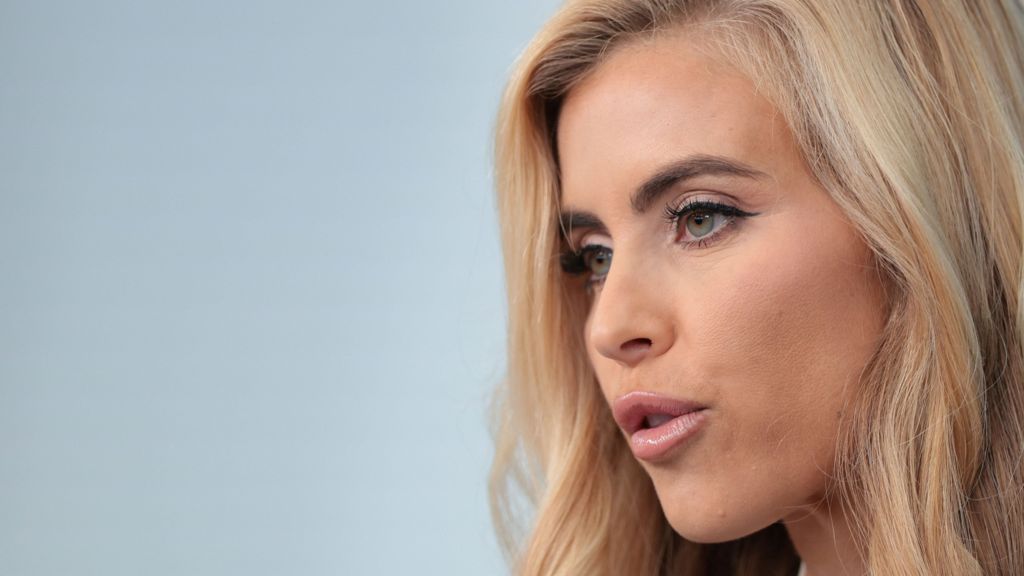
The role of White House press secretary is widely regarded as one of the most high-stakes, pressure-filled positions in American politics, even when the political landscape is stable. For Katie Zacharia, who stepped into the role just weeks before a contentious midterm congressional election that polling predicted would be bruising for former President Donald Trump and his Republican Party, stability was never on the table.
What followed was an unprecedented collapse: after just five days on the job, Zacharia was pushed out, her tenure cut short by a disastrous 14-minute debut press conference, uneven subsequent media appearances, and growing public scrutiny over alleged misrepresentation of her professional legal credentials. The end of her short time in the role came in characteristically unorthodox fashion, with Trump breaking the news indirectly to reporters gathered at the White House on Friday.
Recounting a conversation he had held with Zacharia earlier that day, Trump told reporters, “Honestly, if I were you, I’d reconsider. Katie, do you need this? I don’t think you need this.” He added shortly after that the position “is not for her.” The White House quickly confirmed to the BBC shortly after Trump’s remarks that Zacharia would begin “transitioning” out of the role, ending any speculation about her future in the post.
The shake-up comes at a precarious moment for the Trump White House, which is already navigating a growing wave of political headwinds ahead of the midterms. Across the country, Republican incumbents and candidates are fighting desperately to hold their congressional seats, with many increasingly choosing to distance themselves from Trump and his policy agenda. This split has exposed new rifts within a party that has remained largely unified around Trump’s leadership for years.
Compounding these political pressures, the administration has also been rocked by a string of high-profile controversies in recent weeks. These include corruption allegations that forced the resignation of U.S. Ambassador to Greece Kimberly Guilfoyle, as well as a last-minute cancellation of plans to publicly broadcast a military execution in December, a decision that came after widespread pushback from lawmakers on both sides of the aisle.
A seasoned, skilled press secretary is often critical for navigating these kinds of political landmines, helping the White House push its preferred messaging while managing intense media scrutiny. Karoline Leavitt, who held the press secretary role from the start of Trump’s second term until she resigned in August to focus on her family after welcoming her second child, earned consistent praise for her steady performance. She regularly defended the administration from the briefing room lectern, avoided public missteps, and maintained respectful, productive working relationships with White House press corps reporters.
Leavitt’s capable tenure set a high bar for Zacharia, a political strategist who had been a regular guest on conservative networks including Newsmax and Fox News before her appointment. As a relative newcomer to high-profile White House roles, she was never able to clear that bar – and many political observers note she was never given enough time to find her footing. Still, the speed of her departure is extraordinary, cementing her place as the shortest-serving White House press secretary in modern U.S. history.
Zacharia’s uneven debut at Tuesday’s press conference, paired with ongoing questions about her professional background, ultimately sealed her fate. Subsequent media appearances, including a tough interview with conservative commentator Sean Hannity on Thursday that Trump confirmed he watched, did nothing to reverse the growing consensus that she was unfit for the role.
For his entire presidency, Trump has largely functioned as his own de facto press secretary, making major policy announcements and shifting positions from any venue he occupies – whether that is the Oval Office, the White House lawn, or an airport tarmac after a campaign rally. Ironically, Zacharia herself acknowledged this dynamic before she was tapped for the job, writing on X, “President Trump does not need a spokesperson. He is his own best press secretary.”
Now, that long-running informal arrangement will become formal, at least temporarily. But Trump’s tendency to speak off-script has created consistent challenges for his press secretaries over the course of his two terms, with presidential off-the-cuff remarks often contradicting or undermining public statements made by his press team, and press secretaries frequently being left out of the loop on key policy decisions.
Effective press secretaries have long served a critical role for the administration: helping manage choppy political waters, smooth over tensions with the media, provide context to investigative journalists, and defuse emerging controversies before they escalate. Trump told Fox News on Friday that he is “in no rush” to appoint a new press secretary to fill the vacant role. But with the midterms just weeks away and political pressure mounting on his administration, Trump will be without the consistent, steady support that Leavitt provided during her tenure. Many political analysts expect he may come to regret moving so quickly to force Zacharia out without a replacement lined up.