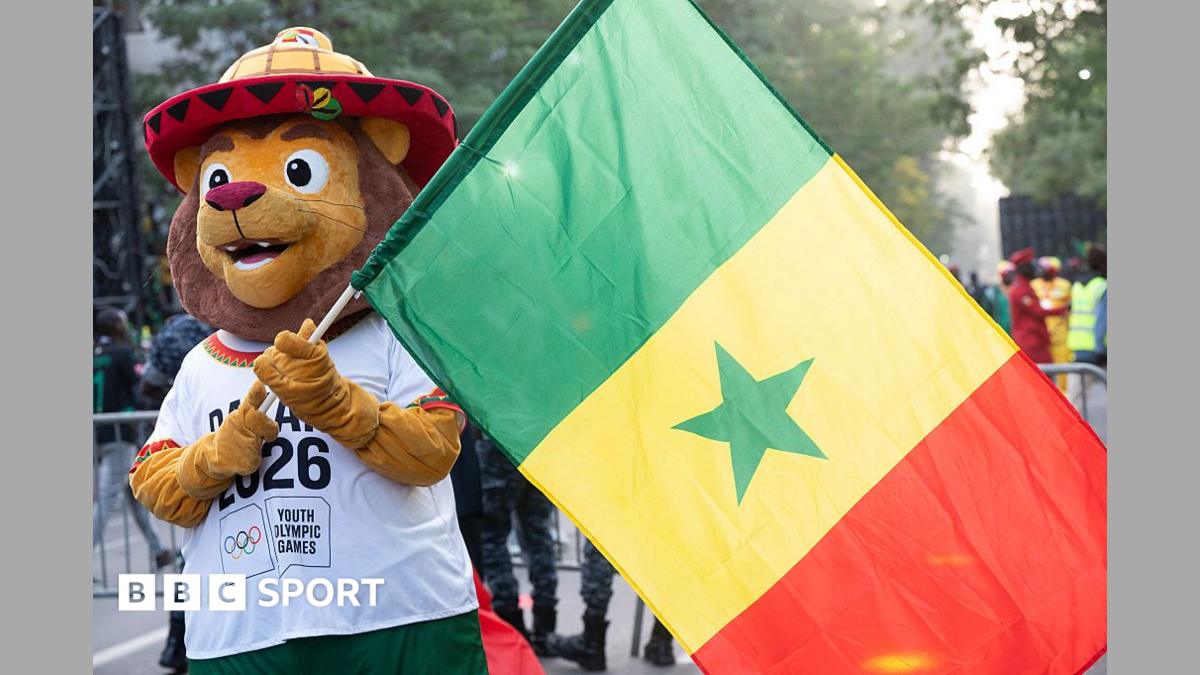
With just 100 days remaining until the opening ceremony, the 2026 Dakar Youth Olympic Games is on track to make history as the first Olympic-sanctioned event ever held on African soil. For decades, the continent has produced some of the world’s most iconic champions in athletics, football, boxing and a host of other global sports, but it has never hosted a competition bearing the Olympic rings — a milestone the International Olympic Committee says will resonate far beyond the two weeks of competition.
Dakar was first selected as the host city for the Youth Games back in October 2018. Initially scheduled to take place in 2022, the event was postponed to 2026 at the request of local organizers, pushed back to accommodate more robust, sustainable planning in the wake of the Covid-19 pandemic. When competition kicks off on 31 October, events will be spread across three locations: the Senegalese capital Dakar, the newly developed city of Diamniadio, and the coastal resort town of Saly.
Local organizing committee leaders say preparations are proceeding firmly on schedule, and the entire nation is embracing the responsibility of acting as host for the entire continent. “We know we are going to be ambassadors for Africa during this period,” explained Thierno Cisse, deputy chief operating officer of the Local Organising Committee (LOC), in an interview with the BBC. “It’s really important for us as a country to proudly represent the whole continent and show that Africa meets global high standards.”
The significance of hosting the Youth Games in Africa extends beyond symbolism: per United Nations data, Africa is the world’s youngest continent, with 70% of the population in sub-Saharan Africa under the age of 30. “The symbolism of having Africa hosting the global sports community is very strong,” said IOC official Christophe Dubi. “This is a very important first step.”
Beyond the celebration of sport, many local residents hope the landmark event will shine a much-needed spotlight on the critical challenges facing young Senegalese people. Recent data from Senegal’s national statistics and demographics agency puts youth unemployment for 15 to 34-year-olds at more than 27%, driven largely by a lack of stable formal opportunities in the domestic economy. In recent years, high joblessness has also fueled a crisis of irregular migration, with hundreds of young Senegalese risking their lives each year to seek better prospects in Europe. Local resident Issa Diao told the BBC he expects the Games to generate immediate employment opportunities for local young people: “We are in a country where the rate of joblessness is very high, so when we have this kind of event here, it will help people to get jobs.”
To raise global awareness of the event, organizers have tapped a roster of high-profile African and global figures as official Games ambassadors, including Senegal men’s national football team captain Kalidou Koulibaly, TikTok superstar Khaby Lame, and acclaimed French-Senegalese actor Omar Sy. The IOC has also selected 31 veteran athlete role models to provide mentorship and support to the young athletes competing in Dakar. As part of its pre-Games outreach, the IOC launched a skills development program last year that has already trained more than 400 young Africans across critical event management roles, including operations, logistics, digital technology, athlete accreditation, and venue coordination. Per Cisse, the volunteer recruitment strategy was intentionally opened up to the entire continent: “We have more than 30 countries represented from all around the world, but mainly from Africa as youth volunteers.”
One of the most distinctive innovations of Dakar 2026 will be the debut of a dedicated youth refugee team at the Youth Olympic Games, building on the full refugee athlete delegation first introduced at the 2016 Rio de Janeiro senior Olympics. Working in partnership with the Olympic Refuge Foundation and international sports federations, the IOC has held identification trials and development programs across East Africa to identify young refugee athletes. All athletes selected for the delegation will receive ongoing support for education and mental wellbeing beyond the Games. Dubi noted that the team sends a powerful message of inclusion: “Even for people who have lived through extremely difficult circumstances, there is still hope. There is a place where you are welcomed.”
While the Youth Games are smaller in scale than the flagship summer and winter Olympic Games, Dakar 2026 will still welcome roughly 2,700 athletes competing across 25 official sports. Additionally, 10 non-competitive engagement sports will be held to encourage participation among local Senegalese youth, helping expand access to new recreational activities. In a break from the common practice of building new, single-use venues for major events, Dakar 2026 organizers have prioritized the rehabilitation and reuse of existing urban spaces. Dubi highlighted that two prominent underused parcels in central Dakar were saved from being redeveloped into private housing and instead restored for public sports use: “This is about thinking beyond the Games.”
That focus on long-term legacy does not erase questions around the cost of hosting the large-scale event. Public reports indicate Senegal invested roughly $270 million to construct the new Abdoulaye Wade Stadium in Diamniadio, which will host the Games’ opening ceremony, and the Senegalese sports ministry has estimated total Games organizing costs at around $60 million. The BBC’s requests to confirm these figures with the LOC and IOC went unanswered. Both organizations emphasized that the success of Dakar 2026 will not be measured by the 14 days of competition alone, but by the lasting infrastructure, opportunities and talent the event leaves behind. “The Games are opening a whole range of new sports that are not famous here,” Cisse said. “Maybe we’ll be able to say in 20 years from now that some champions were discovered.”
The event also arrives at a moment of shifting representation within the IOC: last year, Zimbabwean swimming legend Kirsty Coventry made history as the first African, and first woman, to be elected president of the IOC. Before taking on the IOC’s top role, Coventry served as chair of the Dakar 2026 coordination commission, creating a personal and institutional tie to the landmark event. “We are very proud that an African woman is representing the continent on the biggest stage,” Cisse said. “I know she has a special bond with the Games and holds it in very high esteem.”
For the IOC, Dakar 2026 is far more than a sporting competition: leaders frame it as a cultural and social movement to celebrate African youth, talent, and the continent’s growing influence on the global stage. “It’s going to have an effect that is wider than Senegal and Dakar,” Dubi said. “It’s not only about sport. People will be amazed by what they will see. It’s the energy.” As the 100-day countdown ticks on, people across the continent are hoping the Games will cement Africa’s place in the global Olympic movement, while opening new lasting opportunities for young people, sports administrators and athletes across the region.