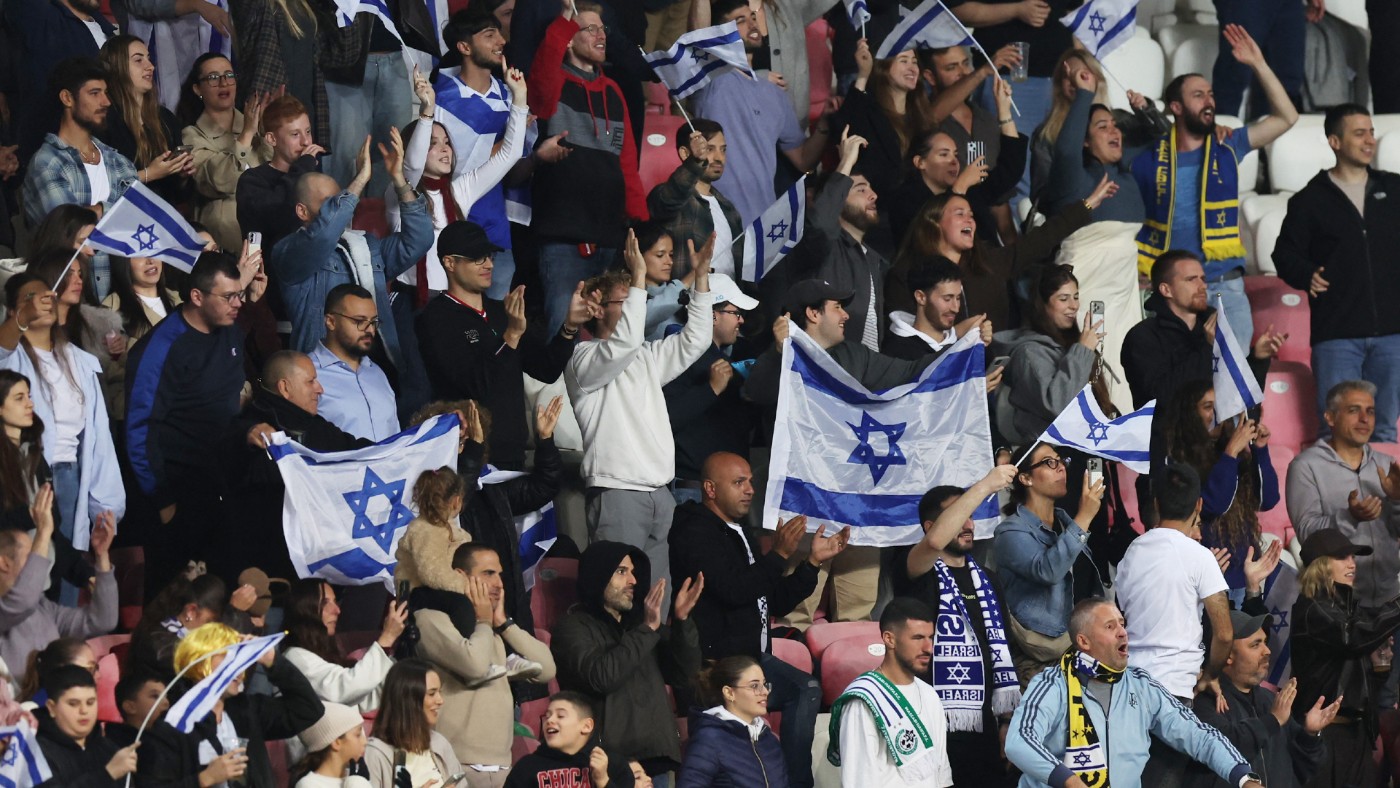
A UEFA Nations League fixture between the Republic of Ireland and Israel, played out on a neutral pitch in Budapest, Hungary, on Sunday night, ended in a decisive 3-0 Irish victory – but the result has been overshadowed by widespread controversy over whether the match should ever have been allowed to proceed, amid ongoing public outrage over Israel’s military campaign in Gaza.
The contest, relocated from Israel due to regional security concerns, became a stage for political protest from the Irish side ahead of kickoff. Irish players wore black armbands to honor the more than 74,000 Palestinians killed in Gaza since the October 7 2023 attacks, a death toll that includes over 21,000 children, which the Irish players and pro-Palestine activists frame as a genocide. They also observed a moment of silent reflection by bowing their heads during the playing of the Israeli national anthem, and declined to pre-match handshakes with their Israeli opponents.
The gesture drew immediate anger from the small contingent of Israeli fans in attendance, who responded with boos, chants of “IDF, IDF” in support of the Israeli military, and verbal abuse directed at the Irish squad. Former Israeli soldier turned right-wing political influencer Yoseph Haddad, who is standing for a seat in the Knesset with the new Amcha Yisrael party, filmed the crowd chants and posted the clip to social media with a provocative message.
“Israel’s national team lost to Ireland on the field, but let the antisemites not celebrate too much – because what really matters is that the IDF will defeat the terrorists that they support!” Haddad wrote. In an accompanying video, he added: “So yes, we lose on football, yes. But you know where we don’t lose? The IDF. We always win. So maybe the football Irish team beat us on the football field, but they will never ever break the Israeli spirit.”
Israeli captain Manor Solomon, who plies his club trade with English Premier League side West Ham United, doubled down on that criticism, accusing Irish players of open animosity. “The Irish players had said stupid things during the game. Obviously they hate us and we don’t like them,” Solomon told reporters. “We have a country ten times better than theirs… We’re proud to be Israelis, proud of our country, proud of our soldiers…”
On the pitch, Ireland took control of the contest within the opening 25 minutes, with goals from Troy Parrott, Adam Idah and Jack Moylan securing a comfortable win. But off the pitch, another controversy emerged during the match: Irish midfielder Jayson Molumby stopped play to draw the referee’s attention to alleged racial abuse directed at Idah, who has a Nigerian father. Photographs from the stadium appear to confirm Israeli fans were shouting toward Idah, but UEFA dismissed the claim, stating that no official complaint was submitted following match protocols, so no disciplinary action would be taken.
The debate over whether the match should have been held at all has dominated reactions to the result, with pro-Palestine campaigners saying Irish football authorities failed to show moral leadership. Rebecca O’Keeffe, a former Irish international basketball player and campaign organizer with Irish Sport for Palestine, called the decision to play “a loss for Irish football” in comments to Middle East Eye, which first reported on the match.
“Stepping on that pitch was a loss. Playing that game was a loss. They had stood to gain so much and had the opportunity to do the right thing, but they lost when they stepped on the pitch,” O’Keeffe said. “Ultimately the power lies with Football Association of Ireland, UEFA, the Irish government, and it was a complete absence of moral authority there.”
The debate over the fixture stretched back seven months, when the match schedule was first announced, and has been shaped by deep tensions between Irish public opinion and competing geopolitical and economic pressures. The Irish public has broadly stood in solidarity with Palestinians throughout the Gaza conflict, a bond often rooted in shared experiences of anti-colonial struggle against British rule. That popular stance, however, clashes with Ireland’s deep economic dependence on the United States, Israel’s closest global ally.
Data from the American Chamber of Commerce Ireland shows that more than 1,000 U.S.-owned companies operate in Ireland, employing 245,000 Irish workers across sectors. American investment has also reshaped European football in recent years: a 2025 report from CIES Sports Intelligence found that 144 European clubs count at least one American investor, many of whom hold pro-Israel views. U.S. politicians have also openly lobbied against any Irish move to sanction the Israel Football Association.
Before his passing, senior U.S. Republican senator Lindsey Graham, a close ally of former President Donald Trump and staunch Israel supporter, issued a direct threat to Ireland. If Ireland moved to bar Israel from European tournaments, Graham said, it would amount to “punishing the Jewish people 80 years after the Holocaust.” He added: “If these attacks against Israel continue, I will do everything in my power to make those who participate in this effort to marginalise Israel in sports, and elsewhere, pay a heavy price when it comes to access to the American economy.”
The question of whether the match would go ahead remained unresolved until 24 hours before kickoff, with the FAI ultimately leaving the decision to the playing squad. Roughly one-third of the squad voted to boycott the contest, and starting goalkeeper Gavin Bazunu withdrew from the team entirely over his objections.
“My decision is based purely upon my personal belief that the killing of innocent people is wrong,” Bazunu said in a public statement announcing his withdrawal.
The Football Association of Ireland (FAI) has faced widespread condemnation as cowardly and incompetent for its handling of the controversy. In the aftermath of Sunday’s match, FAI president Paul Cooke defended the decision to play, arguing that the lead-up “went as well as could be expected in the face of unprecedented coverage.”
FAI officials have cited two key reasons for pushing ahead with the fixture: the association is currently carrying more than $40 million in debt, so losing match revenue from canceled games would have created a catastrophic financial hole, and the FAI claimed it faced unspecified sanctions from UEFA if it boycotted. Critics, however, have pushed back on that justification. Irish Times journalist Ken Early questioned how severe the “unspecified sanctions” could have been if Ireland had publicly taken a stand that Israel violated multiple UEFA statutes banning political and military breaches of governing body rules.
O’Keeffe echoed that criticism, pointing to the months of advance notice the FAI had to organize a response. “This is the FAI’s doing. The lead-up exemplifies the lack of leadership, the FAI’s total incompetence,” she said. “They had months to act on this but again it descended into last-minute chaos.”
Despite Sunday’s result, the controversy is far from over. O’Keeffe noted that public anger over the match has only energized Ireland’s pro-Palestine movement, with new demonstrations planned for Ireland’s upcoming Nations League fixture against Austria in Dublin this Thursday. A second leg between Ireland and Israel is scheduled for October 4 in Serbia, ensuring the debate over sports and the Gaza conflict will remain front and center in Irish public life for weeks to come.