Washington D.C. – The administration of U.S. President Donald Trump has formally submitted notification to the U.S. Congress of its plan to revoke the African Growth and Opportunity Act (AGOA) eligibility status for South Africa and Rwanda, a move that would strip both nations of duty-free access for thousands of product categories to the lucrative U.S. market starting January 1, 2027.
The AGOA framework, enacted to foster bilateral economic ties and spur development across sub-Saharan African economies, grants qualifying nations tariff exemptions for a vast catalog of goods shipped to the United States. U.S. Trade Representative Jamieson Greer outlined in an official public statement that the decision follows a mandatory annual eligibility audit, which concluded that both South Africa and Rwanda have engaged in operational practices that directly contradict the core requirements laid out in the trade legislation.
Greer confirmed that the Trump administration has already delivered formal notification of the impending status change to officials in both African nations. The administration’s formal justifications for the action cite systemic barriers that restrict U.S. cross-border trade and foreign direct investment, alongside unresolved U.S. national security and foreign policy priorities in the East and Southern African regions.
For Rwanda specifically, U.S. officials also flagged long-running concerns over alleged gaps in human rights protections, limited political pluralism, inconsistent enforcement of the rule of law, and inadequate safeguards for labor rights across the country’s economic sectors. The trade eligibility revocation announcement arrives less than one week after the U.S. Treasury Department imposed sweeping sanctions on Rwanda’s national defense ministry, over allegations that the Rwandan military has deployed thousands of active-duty troops to operate alongside the M23 armed insurgency in the eastern Democratic Republic of Congo. U.S. Treasury investigators assert that the Rwandan defense ministry has supplied the rebel faction with weapons, military hardware, operational logistics support, and formal combat training.
In South Africa’s case, U.S. trade regulators highlighted pervasive, unaddressed systemic corruption as a key contributing factor to the eligibility revocation. Ambassador Greer emphasized that the Trump administration remains committed to collaborating with African partner nations to support policy adjustments that would allow them to meet AGOA’s full eligibility standards in the future.
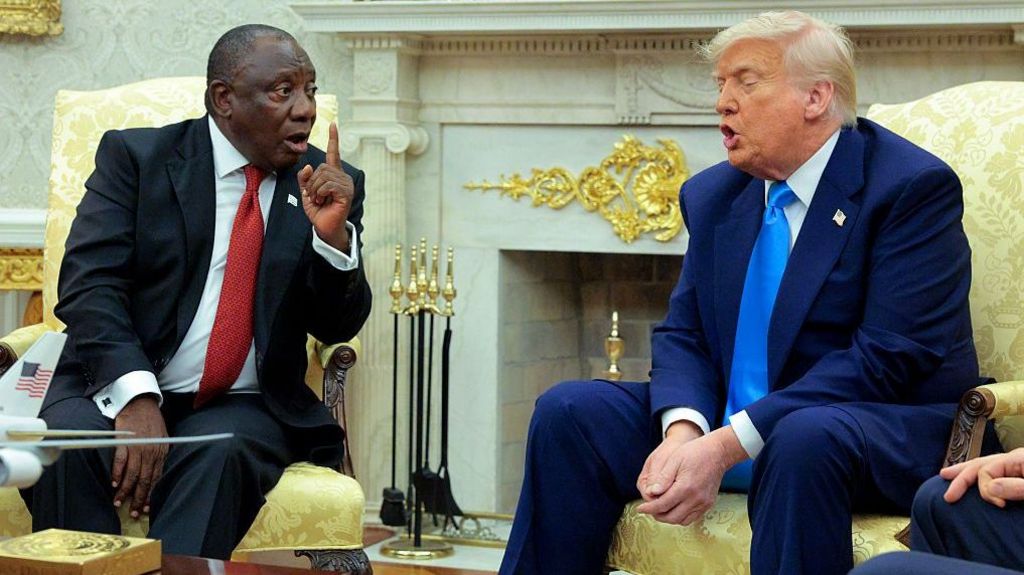
The announcement lands against a backdrop of sharply frayed diplomatic and economic relations between Washington and both targeted nations. Last year, during a high-profile White House bilateral meeting with South African President Cyril Ramaphosa, Trump made unsubstantiated public claims of a so-called “white genocide” taking place in South Africa, and subsequently launched a dedicated U.S. refugee resettlement pathway for Afrikaner communities. U.S. Ambassador to South Africa Leo Brent Bozell III released a public statement on social media platform X framing the AGOA termination as a regrettable but predictable outcome, stating that South Africa’s own policy choices led to the revocation, and that the situation was entirely preventable had Pretoria addressed longstanding, clearly communicated U.S. concerns over the past years.
Trump to remove Rwanda and South Africa from US trade deal