A decades-long Ebola outbreak centered in East Africa has reached Nigeria, with health authorities confirming the country’s first imported case this week and launching an urgent contact-tracing effort to stop the virus from spreading further. The infected patient is a 42-year-old woman, the wife of a Ugandan diplomat based in Nigeria’s capital Abuja, who recently returned from a trip to East Africa.
According to Dr. Jean Kaseya, head of the Africa Centres for Disease Control and Prevention (Africa CDC), the woman arrived back in Abuja on October 3, and first developed telltale Ebola symptoms three days later on October 6. Nigeria’s Health Minister Muhammad Ali Pate told the BBC she spent two and a half weeks in Uganda’s capital Kampala during her trip, and made a two-hour stopover in Addis Ababa, Ethiopia, on her return journey to Nigeria.
Initially, the woman sought care at two private hospitals, where medical staff suspected she had malaria — a common endemic illness in Nigeria that shares key early symptoms with Ebola, including fever, muscle aches, and headaches. It was not until October 19, when her condition failed to improve, that public health authorities were alerted. She tested positive for Ebola the following day, after three rounds of laboratory testing. As of this week, Pate says the patient is in stable condition and showing signs of improvement. She has not left Abuja since arriving back in the country, and 44 people who came into contact with her have been identified and placed in isolation. None of the contacts have developed Ebola symptoms to date, according to the minister. “We cast the net wide so that we contain it as broadly as possible,” Pate told the BBC.
There is currently a public disagreement between Nigerian health officials and the Ugandan Ministry of Health over the details of the patient’s travel history. Earlier statements from Uganda claimed the woman was a Nigerian national who traveled to eastern Democratic Republic of Congo (DRC) for business and only transited through Uganda, adding that there are no active confirmed Ebola cases in Uganda currently. Pate and Kaseya have pushed back against this account, but both have downplayed tensions, emphasizing cross-border collaboration is the priority.
Kaseya urged all African nations to share transparent, timely information to help investigators trace the woman’s movements and pinpoint where she contracted the virus. He also called on Western nations to avoid imposing broad travel bans, arguing that collaboration and continental solidarity are the most effective tools to curb the ongoing outbreak.
The current outbreak, which originated in the DRC this past May, has already been linked to more than 9,500 confirmed cases and at least 4,600 deaths, per data from the European Centre for Disease Prevention and Control. After the outbreak was first announced, Uganda reported a small number of cases that left two people dead, but the country declared itself Ebola-free in August following the discharge of its last patient. In recent weeks, the virus has spread further east, with Kenya confirming at least nine infections. On Monday, the U.S. State Department raised its travel advisory for Kenya, urging American citizens to reconsider travel plans to the country due to Ebola-related health risks.
This outbreak is caused by the rare Bundibugyo strain of Ebola, for which no approved vaccine or specific treatment currently exists, though clinical trials for new countermeasures are ongoing. Unlike many countries in the region, Nigeria has prior experience successfully containing an Ebola outbreak: back in 2014, the country stopped the spread of the virus after recording 20 confirmed cases and eight deaths. Pate expressed confidence that Nigeria can replicate that success today, pointing to strengthened disease surveillance systems, expanded laboratory capacity, and thousands of trained epidemiologists. “Nigeria has muscle memory that has been activated, but we are not fighting the past outbreak in exactly the same way. We have to be vigilant,” he said.
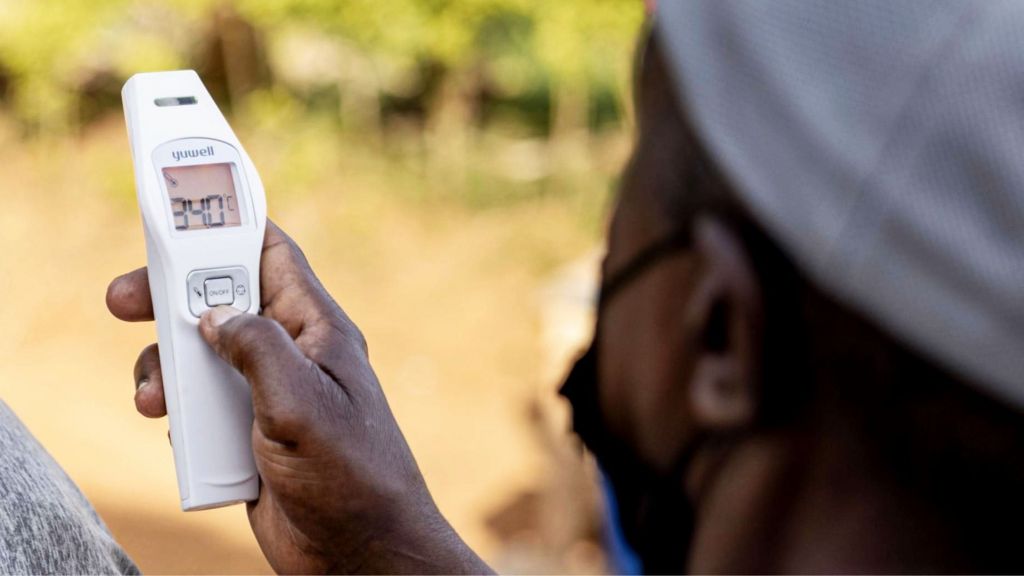
Currently, there are no rapid, on-demand Ebola tests available to screen cross-border travelers, so public health officials rely on basic temperature monitoring to identify potential cases at ports of entry. Ebola spreads through direct contact with infected bodily fluids such as blood or vomit. The virus has an incubation period ranging from 2 to 21 days, meaning exposed individuals can remain asymptomatic for weeks after contracting the virus, making contact tracing and containment particularly challenging.