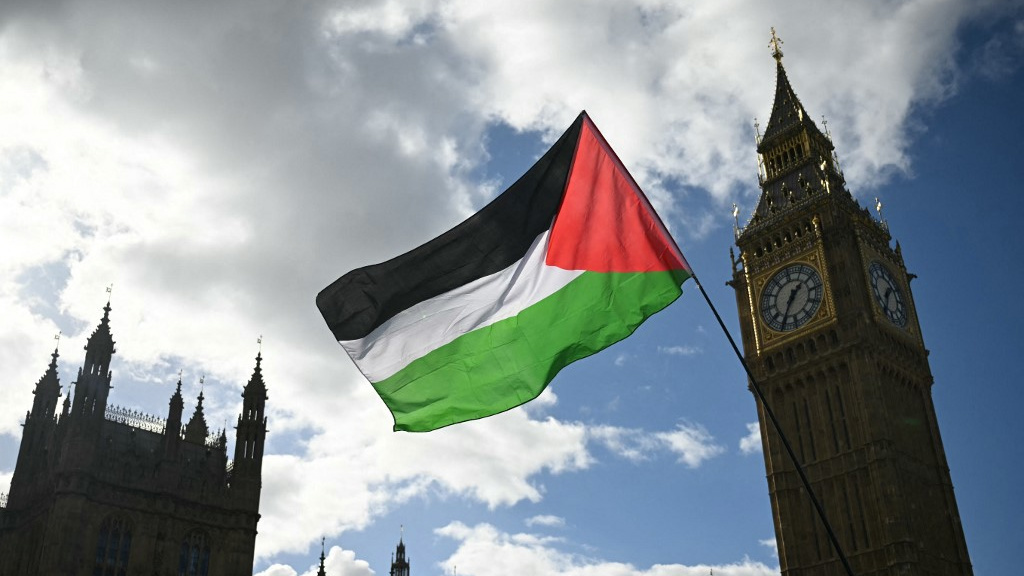
A government-commissioned independent review into rising antisemitism in British schools is set to recommend new restrictions on political expression by school staff, including proposed guidance that would discourage teachers from wearing pro-Palestine badges and symbols, according to advance reports of the findings. The report, led by former education chief Sir David Bell, is expected to be published imminently, and the UK government has already signaled it will adopt all of its recommendations in full.
The review’s key statistical finding, which has been pre-reported by multiple outlets, will confirm that 60% of Jewish school students in the UK have personally encountered antisemitic abuse within school settings, while one in five students of all backgrounds have witnessed antisemitic incidents on campus. In framing the report’s core argument, Bell has argued that previous broad commitments to combating hate crime have failed to specifically name and target antisemitism as a distinct form of prejudice. “If you don’t name it, you don’t actually know what you’re tackling or what you’re going to be able to do to respond to it,” Bell stated in pre-released commentary.
Among the most controversial recommendations slated to appear in the report is advice for schools to adopt the International Holocaust Remembrance Alliance (IHRA) working definition of antisemitism, a non-binding framework that has faced widespread criticism over its impact on free speech. Originally drafted in 2004 to help global bodies monitor antisemitic incidents, the IHRA definition includes an example that labels claims that “the existence of a State of Israel is a racist endeavour” as antisemitic. Even Kenneth Stern, the original author of the definition, has repeatedly warned against using it as a disciplinary tool, arguing it would unfairly chill legitimate political criticism of Israel. In 2018, prominent human rights lawyer Geoffrey Robertson QC issued a legal opinion concluding that widespread adoption of the definition would have a chilling effect on free speech by discouraging legitimate commentary on Israeli policy.
On the issue of staff political expression, advance reports indicate the review will stop short of calling for a total ban on all political badges, but will advise school leaders to examine whether pro-Palestine insignia — including the widely used watermelon symbol, which has become a popular visual shorthand for Palestinian solidarity — are appropriate for classroom settings. The report will also call on the UK Department for Education to develop updated, clearer guidance for teachers on maintaining impartiality when leading discussions of the Israel-Palestine conflict, alongside new educational resources for the topic. Additional recommendations include mandatory media literacy training to help students identify and push back against antisemitic conspiracy theories shared online, and updates to Holocaust education curricula to frame antisemitism as a central, explicit theme of the Holocaust atrocity.
The commissioning of the Bell review followed a specific political incident: a school visit planned by Damien Egan, a Labour MP and deputy chair of the pro-Israel lobbying group Labour Friends of Israel, was cancelled after organisers learned pro-Palestine protests were planned outside the school campus. Since the outbreak of the current Israel-Gaza war last year, UK authorities have reported a sharp rise in the number of school children referred to the controversial Prevent counter-extremism programme over their display of pro-Palestine badges and stickers, in a trend that has raised alarms among free speech advocates.
In response to early media coverage of the review’s contents, a Department for Education spokesperson told independent outlet Middle East Eye that the full report has not been made public, and all current claims about its findings are still based on speculation.