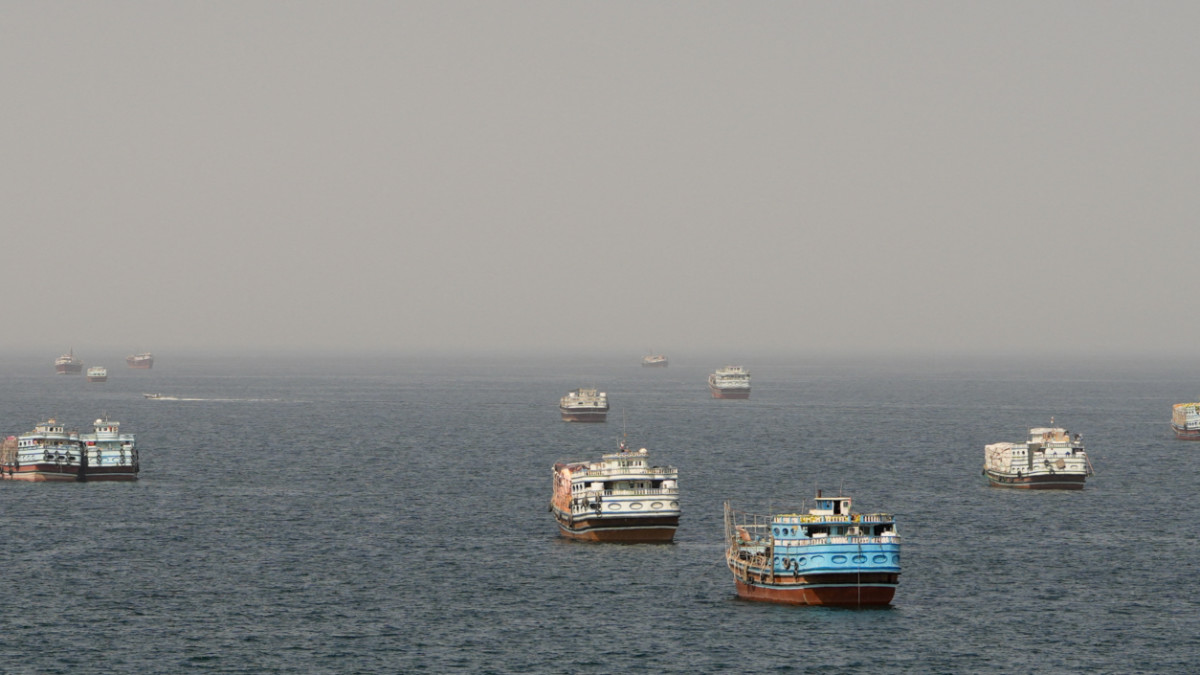
Against a backdrop of escalating geopolitical friction following the outbreak of the U.S.-Israeli military campaign against Iran in late February, Middle Eastern Gulf states have managed to push total oil exports above pre-conflict levels, using creative workarounds to blunt Iranian efforts to assert control over the strategically critical Strait of Hormuz, even as new threats of expanded military action loom from Washington and Tel Aviv.
New data from leading energy analytics firm Kpler shows that for the week ending October 18, Gulf crude and product exports hit 24.6 million barrels per day (bpd), topping the pre-war baseline of 23.3 million bpd. This export growth comes amid a sharp spike in Iranian targeting of commercial shipping transiting the Strait of Hormuz, the narrow chokepoint through which roughly a fifth of global oil supplies normally pass.
According to updates from United Kingdom Maritime Trade Operations (UKMTO), at least 12 separate vessel attacks were recorded in the waterway last week alone. One of the most high-profile incidents saw a fully loaded UAE-owned container ship sink after sustaining damage from what is believed to be a projectile strike.
To avoid the rising risks of direct passage through the Strait, Gulf exporters have widely adopted ship-to-ship transfer operations. Under this model, smaller shuttle vessels load crude from Gulf ports, then carry the cargo out to giant very large crude carriers (VLCCs) waiting in international waters outside the Strait. Amid growing safety concerns and soaring insurance premiums that have pushed most private shipping owners away from the high-risk zone, many Gulf states are now deploying their own national tanker fleets to handle these transfers.
Top regional exporter Saudi Arabia has also diversified its export routes to reduce reliance on the Strait, ramping up shipments through the Red Sea. After Houthi forces in Yemen imposed an embargo on Saudi-flagged vessels using the Bab el-Mandeb Strait, the kingdom shifted to an alternative pipeline corridor that runs through Egyptian territory to the Mediterranean coast, allowing it to continue accessing Asian markets without passing through the Strait of Hormuz.
Kpler data confirms that direct shipments through the Strait of Hormuz still remain more than 30 percent lower than pre-war levels, a clear sign that Iranian actions continue to deter regular transits. But the success of alternative logistics routes has drastically reduced Tehran’s leverage over global oil supplies: as of September, 40 percent of all non-Iranian crude exported from Gulf states bypassed the Strait entirely, up from just 17 percent before the outbreak of conflict.
Regional governments are now moving to lock in these gains with permanent bypass infrastructure. In July, Iraq, OPEC’s second-largest producer, signed a deal with Syria to rehabilitate an existing pipeline connecting Iraq’s northern oil fields directly to Syria’s Mediterranean export terminals. Middle East Eye first broke news of the project, which has received backing from the United States.
Even with overall exports now above pre-war levels, global energy markets have not seen a corresponding drop in prices. International benchmark Brent crude has remained stable around $109 per barrel, and prices for refined products – most notably diesel – have jumped sharply in recent weeks. Much of this upward pressure stems from skyrocketing shipping costs: the workaround logistics required to bypass Hormuz have increased demand for tanker tonnage and extended voyage lengths, tightening available vessel supply and pushing up freight rates.
The unexpected rebound in Gulf oil exports comes at a sensitive moment, as U.S. and Israeli officials openly discuss plans for a new round of military strikes against Iran. Israeli Prime Minister Benjamin Netanyahu reaffirmed this week his commitment to removing the Islamic Republic’s government, repeating claims that Tehran is moving forward with restarting its nuclear weapons program. Earlier this month, U.S. President Donald Trump, in a public endorsement of Netanyahu ahead of Israel’s upcoming general election, said he looked to Netanyahu to help “finish the job” against Iran.