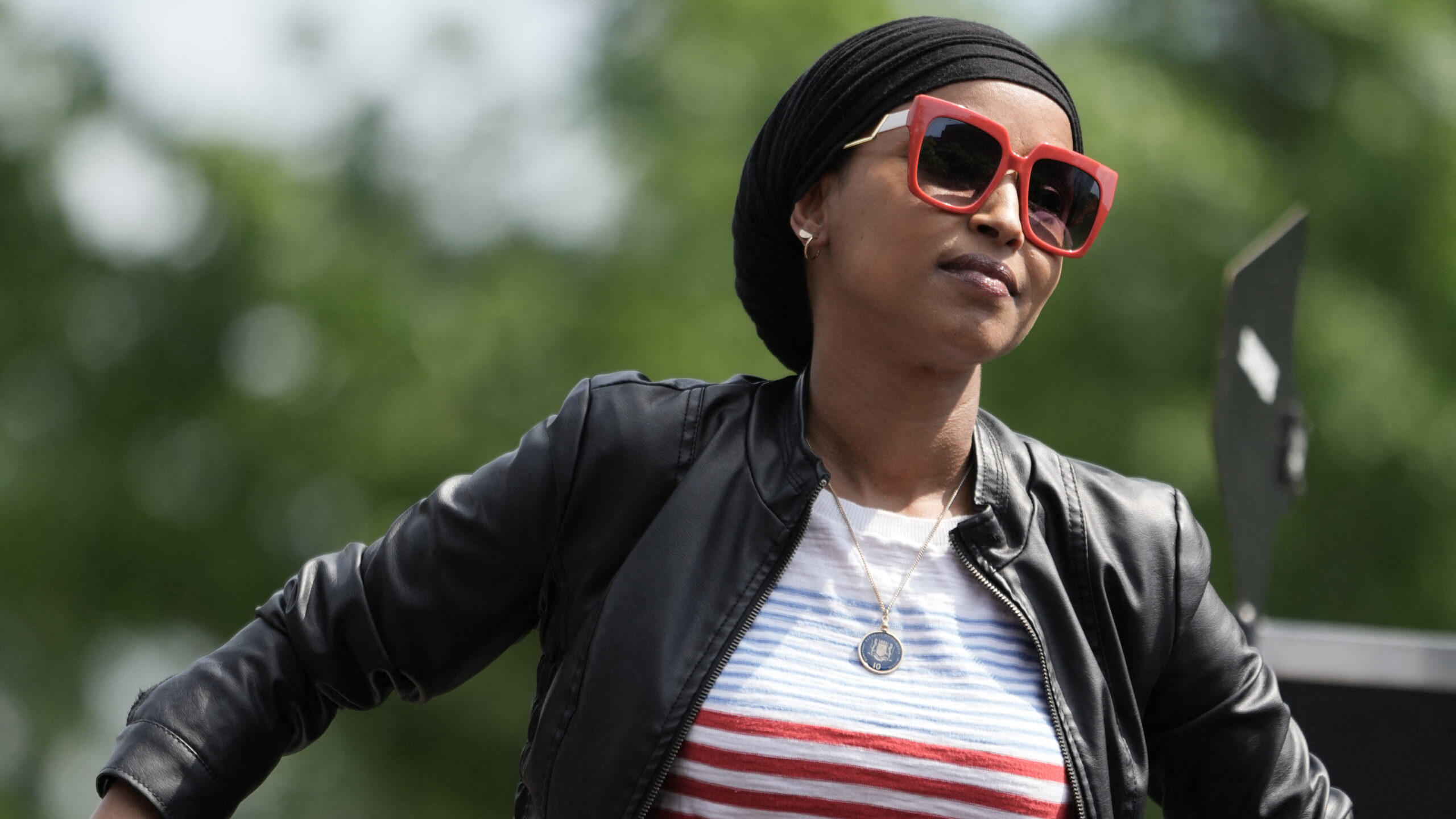
In a recent appearance at the White House on Tuesday, former President turned incumbent Donald Trump escalated his years-long verbal assault on Minnesota Congresswoman Ilhan Omar, openly floating the possibility that the naturalized citizen could face both deportation and imprisonment over unproven questions about her immigration records.
Trump, who has targeted Omar since she took office in 2019, repeated his inflammatory attacks, calling Omar “a very dishonest person” who “hates our country.” He went on to denigrate Omar’s country of birth, Somalia, describing it as “a real shithouse” and repeating long-debunked tropes about Somali immigrants damaging the state Omar represents. The comments represent a new high water mark in Trump’s sustained campaign against Omar, and they have amplified broader national concerns about the normalization of racist and xenophobic rhetoric in mainstream American political discourse.
Omar’s biography frames the entire controversy: she fled civil war in Somalia as a child refugee, arrived in the U.S. in 1995, and gained American citizenship in 2000. As one of the first Muslim women elected to Congress, Omar has been a consistent critic of Trump’s restrictive immigration policies and hawkish foreign policy positions, making her a top target for Trump and his conservative allies. This pattern of attack is not new: during his first term in office, Trump repeatedly insisted that Omar and three other progressive minority congresswomen—collectively known as “the Squad”—should “go back” to the countries they came from, even though all four are U.S. citizens. At a 2019 campaign rally, Trump’s supporters even chanted “send her back” directly targeting Omar, sparking national outrage and widespread accusations of racism.
This is not the first time Trump has used derogatory language to describe majority-non-white nations. Back in 2018, he faced widespread international condemnation after reports emerged that he referred to Haiti and multiple African countries as “shithole countries.” At that time, Trump’s White House staff tried to downplay and deny the remarks. Now, Trump openly repeats the same language on camera—a shift that has not gone unnoticed by political commentators. “During [Trump’s] first term his whole White House denied that he used this language to describe foreign countries, now he just says it on camera,” journalist Zaid Jilani noted on social media, echoing fellow commentator Mehdi Hasan’s observation that open bigotry that once sparked national controversy has now become normalized in American politics.
The current controversy comes amid an active federal investigation into Omar’s immigration and naturalization records. Federal authorities searched Omar’s Washington, D.C. home on October 12 as part of an inquiry into whether Omar or her family provided false information when entering the U.S. as refugees and applying for citizenship. The investigation has also revived longstanding, unsubstantiated conservative allegations that Omar married her brother to commit immigration fraud, a claim Omar has repeatedly denied. Just this month, the New York Post reported that federal prosecutors are examining DNA evidence tied to the allegations, but no public proof of wrongdoing has been released, and no court has upheld the claims. Notably, the Washington Post confirmed that officials in Trump’s first administration reviewed Omar’s immigration history back in 2019 but declined to open a full investigation due to a lack of evidence. The decision to revive the inquiry has led to widespread accusations that the Trump administration is weaponizing federal law enforcement to target a political opponent. Omar’s legal team has publicly denounced the probe as politically motivated, while the Department of Justice has defended its actions, stating all investigative steps complied with federal legal requirements.
The escalating attacks on Omar have also put the Democratic Party under increased scrutiny over its response. Critics of top Democratic leaders have argued that the party has not done enough to push back against attacks that target Omar’s identity as a Black, Muslim, refugee-born American lawmaker. One progressive commentator went as far as accusing the Democratic National Committee of cowardice for its perceived lack of public support for Omar. Still, Democratic leadership has not been entirely silent: after the FBI raid on Omar’s home, House Minority Leader Hakeem Jeffries and other senior House Democrats released a joint statement condemning the search and accusing the Trump administration of abusing federal power to target political opponents. Even former President Barack Obama weighed in, criticizing the administration’s push to potentially revoke Omar’s citizenship and warning about the dangerous long-term precedent this sets for all elected officials.
As the November midterm elections approach, the controversy over Omar has crystallized growing national anxiety about three overlapping issues: the use of political intimidation against minority elected officials, the erosion of independence for U.S. law enforcement, and the normalization of virulent bigotry in mainstream presidential discourse. Trump’s latest comments do not merely question a political opponent’s policy stances; they call into question the legitimacy of Omar’s citizenship, her patriotism, and her fundamental right to serve in the U.S. Congress. As one democracy activist asked on social media, “Are we all seriously just letting him talk about imprisoning a sitting duly elected member of Congress because he doesn’t like her?”