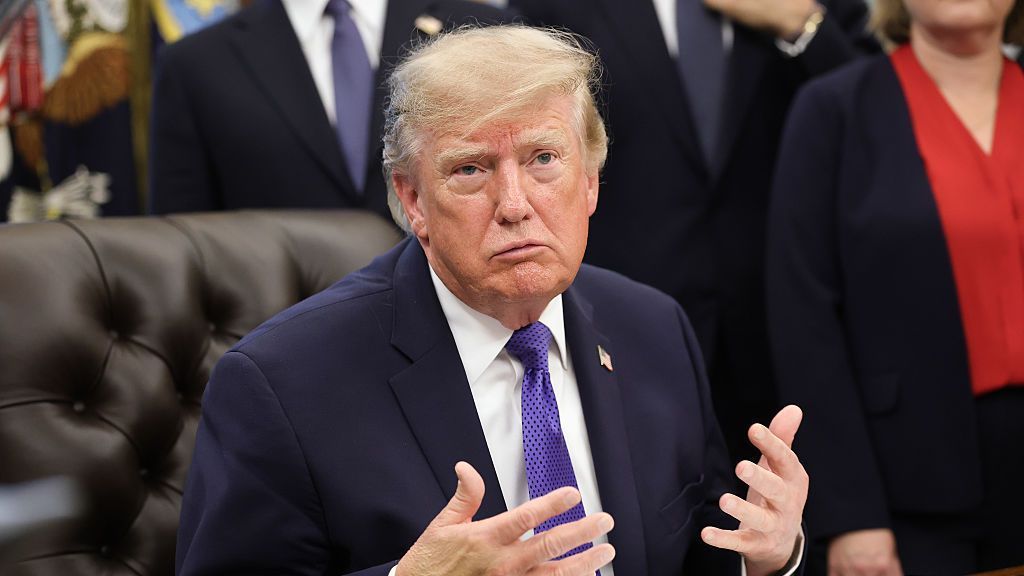
In a newly published interview with Time magazine, former President Donald Trump has cast uncertainty over the future of U.S. military engagement with Iran, confirming that a scaled-up bombing campaign against the country remains a distinct possibility after November’s midterm congressional elections. The comment comes as multiple independent and official assessments have documented severe depletion of critical U.S. weapons stockpiles stemming from months of ongoing conflict in the region.
Trump acknowledged publicly for the first time that stockpiles of certain types of munitions have dropped to noticeably lower levels as a direct consequence of the Iran war, even as he sought to downplay the severity of the shortfalls. “Some forms of ammunition are a little bit lower than other forms. We have that middle grade and upper middle grade, which is very powerful,” Trump told Time, adding that the administration is moving to rapidly replenish stockpiles to unprecedented levels. He also noted that U.S. defense contractors are currently constructing new manufacturing facilities across the country to ramp up production of key air and missile defense systems, including Patriot interceptors and Terminal High Altitude Area Defense (THAAD) systems. He offered no specific details on which exact munitions are facing the most acute shortages.
The U.S. entered open conflict with Iran in late February, and since that time, American forces have expended enormous volumes of long-range ground attack ordnance as well as defensive interceptor systems used to shoot down incoming Iranian strikes. A mid-July report from the Pentagon’s own inspector general first flagged that the conflict had created critical munition shortfalls and created major bottlenecks in the military’s resupply chain. At the time of the report’s release, Trump dismissed the findings as “mostly fake news.”
Independent analysis from the Center for Strategic and International Studies (CSIS), published in July, echoed the inspector general’s warning, estimating that stockpiles of key interceptors including Patriots and THAADs have been depleted by as much as 50% or more in some cases. Despite this grim assessment from multiple expert and official bodies, Trump maintained in the Time interview that the U.S. military remains in “great shape” and is aggressively building up stockpiles to address gaps.
Beyond confirming the possibility of expanded strikes, Trump also shed new light on recent diplomatic overtures from Iran. He revealed that he had rejected an Iranian proposal to reopen the Strait of Hormuz, a critical global shipping chokepoint that has been closed for much of the conflict, calling the offer “just not good enough.”
His latest comment about post-election bombing represents a shift from his earlier framing of the conflict. In early September, Trump told reporters he believed the war would “end immediately after the election because they can’t hold out any longer,” arguing that Iran was desperate to impact the outcome of the midterm contests through continued hostilities.
The conflict and Trump’s handling of it have emerged as a major political liability ahead of the November elections, which will determine which party controls control of both chambers of Congress. A new Associated Press-NORC Center for Public Affairs Research poll released this week shows deep public dissatisfaction with Trump’s economic policies, with only 17% of U.S. adults approving of his handling of the cost of living and just 26% approving of his management of the broader economy—an all-time low for his presidency. A substantial share of the public openly blames Trump’s policies, including the Iran war, for soaring domestic inflation.
Republican campaign strategists have privately expressed growing alarm that widespread negative views of Trump’s performance will drag down GOP candidates across the country in next month’s voting. Unsurprisingly, Trump has pushed back against the polling data, dismissing the results as “fake numbers” during his Time interview. He expressed unshakable confidence that his own campaigning would carry Republican candidates to victory in key competitive races, noting “I think we’ll do okay if I campaign, and I intend to. If I campaign for people, those people are going to win.”