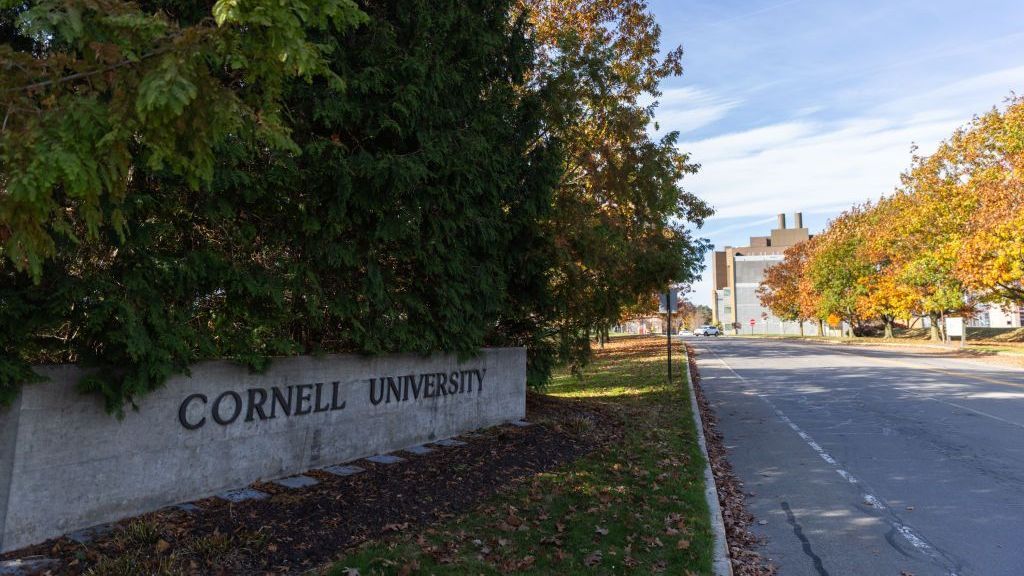
A high-profile sexual assault case tied to an Ivy League fraternity has surged back into the national spotlight, after New York state prosecutors announced they will reopen a dormant criminal investigation into the alleged 2024 gang rape of a female Cornell University student. The case first became public in mid-September, when the accuser—identified in court records only as Jane Doe to protect her privacy—filed a civil lawsuit outlining disturbing claims against seven members of Cornell’s Chi Phi fraternity chapter.
According to Jane Doe’s allegations, the assault unfolded on the night of October 19, 2024, at the fraternity’s on-campus house. She claims the men plied her with alcohol and ketamine, leaving her so severely intoxicated that she was incapable of giving informed consent to any sexual activity. The civil suit also includes a screenshot pulled from a private Snapchat group chat for fraternity members, where one participant used vulgar language to alert other members that a sexual encounter with Jane Doe was imminent.
When Jane Doe first reported the incident to Cornell University Police nearly three weeks later, on November 8, 2024, prosecutors from the Tompkins County District Attorney’s office reviewed the evidence and decided the case did not meet the legal threshold required to file criminal charges. That decision is now being reversed. In a public statement issued Monday, current District Attorney Matthew Van Houten confirmed his office would move forward with the case by presenting evidence to a grand jury, a standard procedural step in the U.S. legal system that allows independent jurors to weigh evidence and vote on whether criminal charges are warranted.
“Once we determine the appropriate charges, the case will be prosecuted in the most objective and impartial means possible” through the grand jury process, Van Houten said. He also acknowledged a key, widely recognized reality for sexual assault survivors: that the trauma of an attack can leave victims unable to fully process or articulate what happened to them for months or even years after the incident.
Still, Van Houten highlighted a critical discrepancy between Jane Doe’s original 2024 statement to police and the claims laid out in her recent civil suit. “Jane Doe’s sworn statement in November of 2024 did not allege that she was drugged against her will or gang raped,” he said. “On the contrary, Jane Doe’s statement described her participation in drug use and sexual conduct as voluntary, conscious, and consensual.” He also added that prior to the filing of the civil suit, Jane Doe’s legal team had never reached out to his office to advise that her original statement was inaccurate, or to request that the initial declination to charge be reconsidered.
Jane Doe’s legal team has pushed back hard against that narrative, and criticized prosecutors for their initial handling of the case. Thomas Giuffra, Jane Doe’s attorney, said in a statement obtained by CBS that in the immediate aftermath of the assault, his client was so deeply traumatized that she was in survival mode, unable to process or accept the full scope of the violence she experienced. Giuffra argued that basic investigative protocol was never followed: “I would have expected at the very least that she would have been interviewed several times and evidence collected by law enforcement and a case developed. This is the normal sequence for serious crime investigations.” He also suggested that Van Houten’s defensive framing of the initial decision indicates prosecutors are trying to cover up past investigative failures.
Alongside the criminal allegations against the fraternity members, Jane Doe’s civil suit also accuses Cornell University of failing to protect her and of handing down overly lenient punishments to the accused, claiming the men were allowed to reduce their penalties simply by submitting written essays. The lawsuit states that Jane Doe has endured severe long-term emotional, psychological and physical harm as a result of both the assault and the university’s inadequate response, with news of the incident spreading rapidly across the campus community.
Cornell has forcefully denied these claims, even as it expressed support for moving forward with the grand jury process. “Any suggestion that the university did not impose consequential punishments for those involved is false,” the university said in its own public statement Monday. Back in November 2024, shortly after the initial report, Cornell suspended the Chi Phi local chapter and multiple individual students tied to the incident, launched an internal campus investigation, and opened a formal civil rights inquiry under Title IX, the federal law that prohibits gender-based discrimination in educational institutions that receive public funding.
Cornell officials clarified that the case was reviewed by a specialized panel of trained faculty and staff, which issued a range of serious penalties including expulsions and long-term suspensions for involved students. “None of the individuals charged were offered the opportunity to write essays as a sole consequence of their involvement,” the university’s statement read.
Attorneys for the accused men have also rejected Jane Doe’s claims outright. Jeremy Saland, legal counsel for one of the men named in the suit, acknowledged his client made an immature comment in the Snapchat group chat, but insisted he “did nothing else.” Saland denied his client engaged in any sexual activity, touched the accuser, or consumed ketamine the night of the incident.
Since the filing of the civil suit and the announcement that the criminal inquiry will be reopened, the case has garnered nationwide media attention, with high-profile public figures including actress Florence Pugh speaking out about the allegations. For people experiencing trauma or distress related to sexual violence, support resources are available globally through Befrienders Worldwide, with additional targeted services listed for UK residents on the organization’s website.