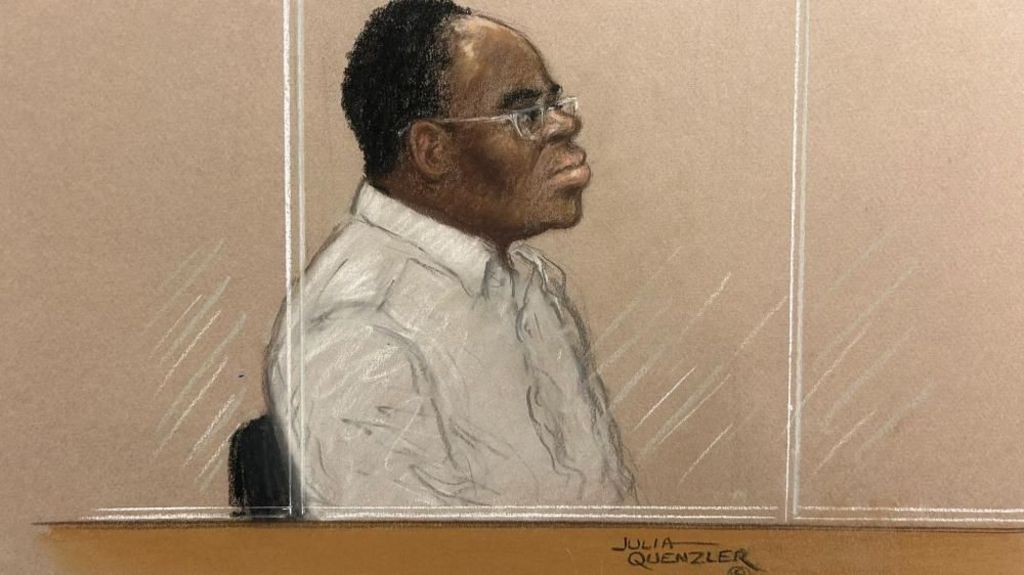
Nearly three decades after one of the worst atrocities of the 20th century, the first person to face UK criminal charges linked to the 1994 Rwandan genocide remains behind bars, after a London judge tightened bail conditions and raised the required financial guarantee to £100,000.
Dr. Vincent Brown, 65, a Rwandan-trained medical doctor who previously went by the name Vincent Bajinya and has built a decades-long life and career supporting refugees in the United Kingdom, stands accused of acting as a leader and supervisor of mass violence targeting ethnic Tutsis during the 100-day genocide that killed an estimated 800,000 people, mostly Tutsis alongside politically moderate Hutus. Prosecutors allege he directly participated in, directed, and encouraged the killing of six specific people between April 6 and April 13 1994: Dominique Mukurarinda, Immaculee Mukankusi, Gerasi Rurangirwa, Leandre Mbogoye, Charlotte Kamaguja and Olivier Tuyishime, a young child. Brown has repeatedly and unequivocally denied all charges against him.
The case marks a landmark moment for UK justice, as Brown is the first individual to be formally prosecuted in British courts for crimes connected to the Rwandan genocide. The charges came after a seven-year long investigation by British law enforcement into the alleged offences, and Brown’s arrest brought a long-running probe into alleged Rwandan genocide perpetrators residing in the UK into a new public phase.
At a Monday hearing at London’s Central Criminal Court, the Old Bailey, Judge Mark Lucraft KC granted conditional bail but imposed significantly stricter terms than those set during an earlier preliminary hearing. Most notably, he raised the required surety from the initial £25,000 set by magistrates to £100,000. Under the court’s ruling, Brown will remain in custody until the full £100,000 guarantee is paid to secure his release.
Additional strict conditions attached to the bail grant include an immediate surrender of all passports and national identity documents, a ban on applying for any new international travel documentation, and a mandatory curfew requiring Brown to remain at his Islington, north London home for overnight residence. He is also required to wear an electronic monitoring tag to track his movements and check in with local police every single day, a level of supervision intended to mitigate any risk of flight.
Before leaving Rwanda, Brown built a prominent public health career in the country: he qualified as a doctor in the 1980s and rose to lead the Rwandan Ministry of Health’s Department of Family Health in Kigali, where he lived in a suburban neighborhood with his wife and child. After relocating to the UK, he continued his work in refugee support services: in 2006 he joined Praxis, a London-based charity that provides support to displaced people from conflict zones including Rwanda, and he went on to serve on the UK government’s own Refugee Nurses Task Force, established in 2003 to advise policymakers on refugee health and workforce issues.
Judge Lucraft confirmed that Brown is next scheduled to appear for a further case management hearing at the Old Bailey on October 9. As the court proceedings move forward, British law enforcement continues active investigations into other individuals accused of genocide-related crimes stemming from the 1994 Rwandan atrocities who currently reside in the UK.