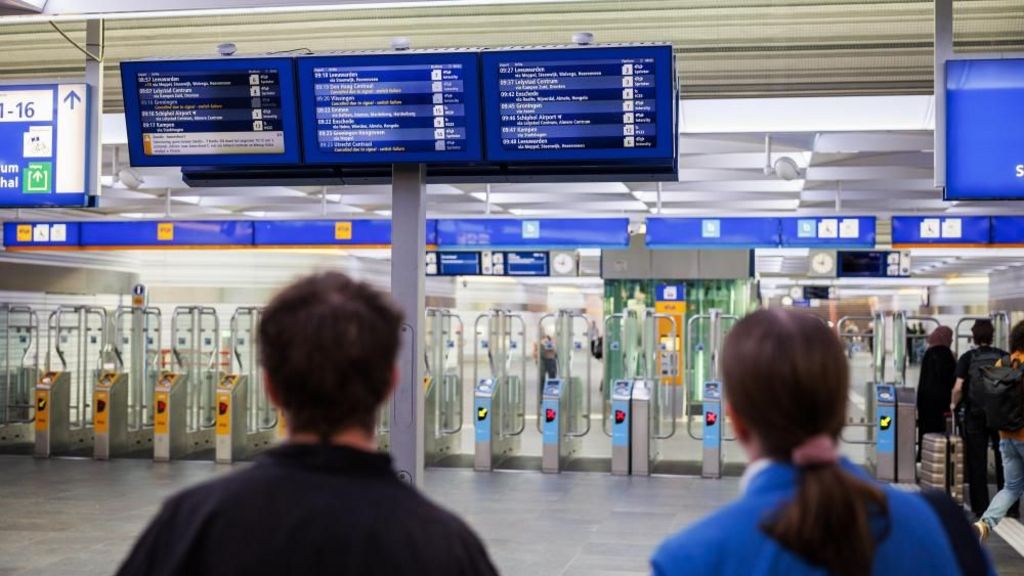
The Netherlands’ national railway infrastructure manager ProRail has confirmed that large-scale service disruptions have paralyzed parts of the national rail network, including the capital Amsterdam, following an apparent case of intentional sabotage on key tracks.
The disruptions, which unfolded on Tuesday, have impacted passenger travel across the central and northern regions of the country, bringing widespread cancellations and significant delays to thousands of commuters and leisure travelers. Alongside track-related issues, multiple level crossings across the affected regions have also experienced critical malfunctions, compounding transport chaos.
According to early reporting from local Dutch media, unauthorized pipes were found deliberately fixed to rail tracks at multiple separate locations across the network. In an official public statement released shortly after the disruptions began, ProRail confirmed that preliminary assessments point to a deliberate, man-made attack on the rail system. “Materials were found at multiple locations in the track that were deliberately placed there. This causes section malfunctions. Sabotage appears to be involved,” the statement read.
As of Tuesday afternoon, authorities have not yet identified any persons of interest or established a clear motive for the incident. The country’s national police unit has launched a full criminal investigation into the act, and the BBC has confirmed it has reached out to Dutch law enforcement for additional comment on the ongoing probe.
Real-time data published on ProRail’s official website logged at least 15 separate disruption points across the national network by mid-Tuesday. High-traffic routes connecting to Schiphol Airport, the Netherlands’ primary international hub, and the central city of Utrecht were among those heavily impacted, stranding hundreds of passengers heading for international and domestic connecting travel.
Visual evidence published by Dutch public broadcaster NOS shows law enforcement personnel removing approximately 1.5-meter (5-foot) metal pipes from a section of track near the central Dutch town of Veenendaal, one of the confirmed sites of tampering.