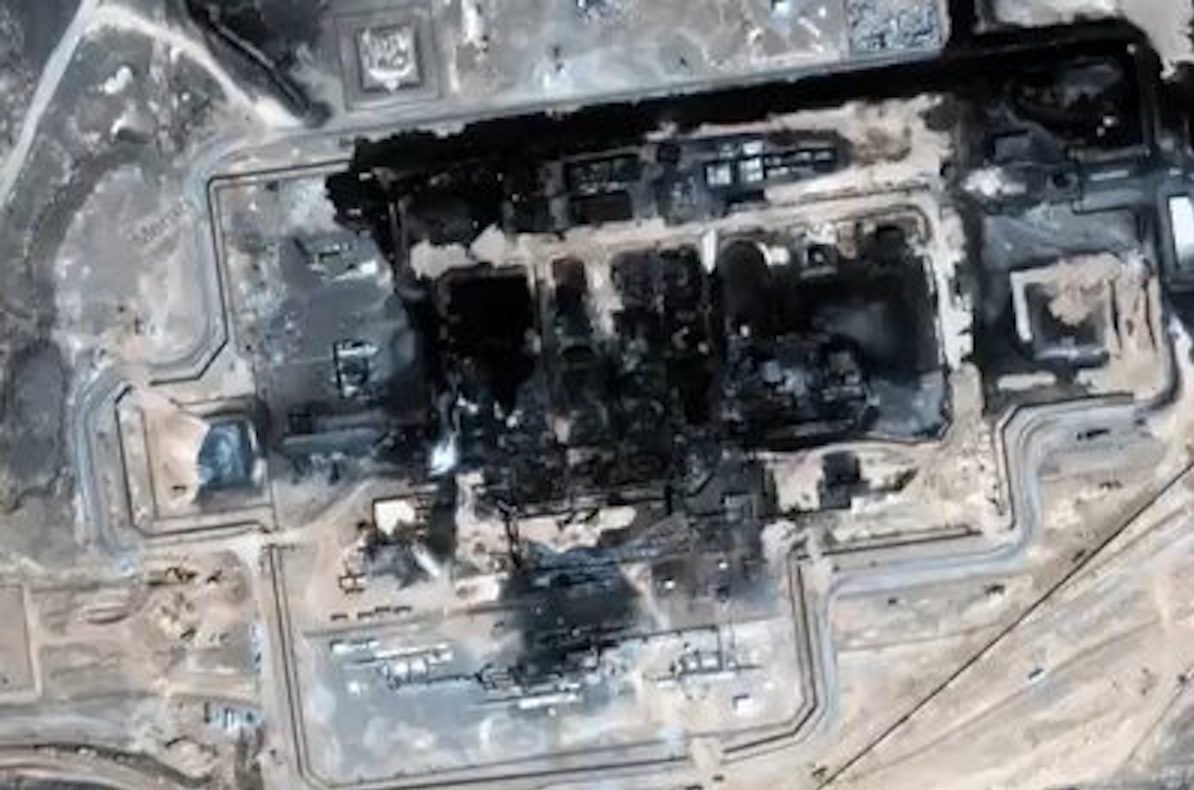
Growing anxiety over a potential global energy crisis has intensified following new details about severe damage inflicted by a drone attack on a critical Saudi Arabian oil pipeline last week. As first reported by The Associated Press on Monday, the kingdom’s East-West Pipeline – a key artery that moves crude oil from production centers to Red Sea export terminals – will remain out of operation for multiple weeks after the strike that occurred last Thursday.
Anonymous regional officials confirmed to the AP that full repairs, which include work on a major pumping facility impacted in the attack, will take between three and five weeks to complete. Saudi authorities have pinned responsibility for the assault on Iran-aligned militias operating from Iraqi territory. Satellite imagery published over the weekend confirmed extensive fire damage to the targeted pumping station, undercutting early attempts to downplay the severity of the incident.
The pipeline had taken on outsized strategic importance in recent months. Saudi Arabia began rerouting most of its oil exports through the East-West Pipeline to the Red Sea after the Strait of Hormuz, the world’s busiest traditional chokepoint for Middle Eastern oil shipments, was effectively closed to most commercial traffic following the outbreak of war between the United States and Iran in February, launched under former U.S. President Donald Trump. This shift made the pipeline the sole viable route for most of Saudi Arabia’s export volumes.
According to a Monday report from The Guardian, if repairs are not completed within a matter of days, Saudi Arabia will deplete its available stored crude oil allocated for export, a disruption that could remove up to 4% of total global oil supply from international markets.
Energy analysts warn this disruption could not come at a worse moment for already strained global energy systems. In a Monday market analysis for Bloomberg, senior energy correspondent Alex Longley noted that global markets have already faced persistent volatility for months, driven by the ongoing U.S.-Iran conflict and the continuing Russia-Ukraine war that has scrambled European and global energy flows. “Whatever happens, the oil market will need a quick fix,” Longley wrote. “It’s currently screaming for barrels.”
Even a rapid repair of the pipeline would not immediately ease sky-high energy prices, analysts caution. Multiple overlapping disruptions continue to block alternative supply routes: the Strait of Hormuz remains closed, Houthi forces in Yemen have significantly escalated attacks on commercial oil shipping moving through the Red Sea, and the U.S. has shown no willingness to pursue a diplomatic resolution with Iran that could reopen Hormuz to traffic.
The Houthi movement gained additional leverage over Red Sea shipping last Thursday, when it seized the key Yemeni port city of Mocha from Saudi-backed government forces. The capture of the port strengthens the group’s ability to launch attacks on vessels transiting the Bab el-Mandeb Strait, another critical chokepoint for Red Sea energy trade.
News of the pipeline’s prolonged shutdown immediately roiled global energy markets on Monday. During intraday trading, international benchmark Brent crude spiked above $109 per barrel in response to the revelations. The price surge has already translated to heavier cost burdens for consumers, particularly in the United States. New data released Monday by the American Automobile Association (AAA) shows the average U.S. retail gasoline price now stands at $4.32 per gallon, while diesel prices – a key driver of broader logistics and food costs – hit a new record high of $6.23 per gallon.