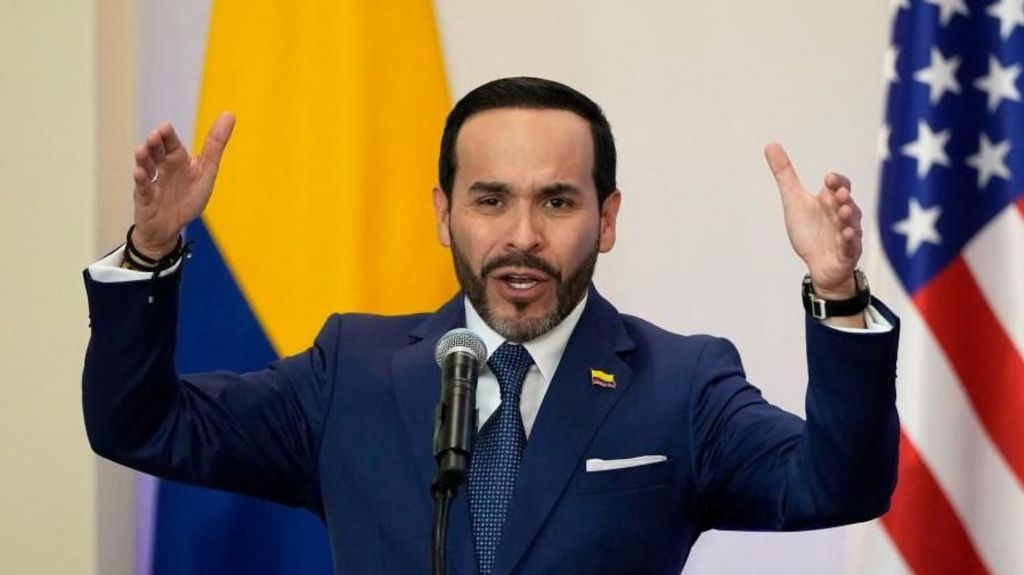
Just three months after winning the Colombian presidential election on a hardline anti-crime platform, President Abelardo de la Espriella has followed through on a polarizing campaign pledge by signing a executive decree rolling back long-standing restrictions on the public carry of legally owned firearms. The new order lifts a 10-year-old suspension that required even permit-holding gun owners to obtain extra, case-by-case approval before carrying their registered weapons outside the home.
The original restriction was first introduced in December 2015 by then-president Juan Manuel Santos as a short-term temporary security measure for the Christmas and New Year holiday season. What was meant to be a brief adjustment, however, was extended annually by three successive presidents from across Colombia’s political divide: conservative Iván Duque, and left-wing Gustavo Petro, turning an emergency measure into a decade-long policy.
Speaking at the signing ceremony, de la Espriella pushed back against criticism of the move, framing the policy shift as a matter of principle for his administration. “It is unjust that criminals are fully armed while law-abiding citizens are stripped of the right to defend themselves,” he stated, adding, “A man’s word is his honor, and I have honor — that is why I keep my campaign promises.” The president also emphasized that the new decree does not open the door to unregulated gun ownership, noting that strict background checks and permit requirements for gun ownership will remain fully in place. He argued the change merely removes a permanent restriction that was never intended to be permanent in the first place.
According to estimates from Spanish daily newspaper El País, the policy change will impact approximately 700,000 Colombians who already hold valid carry permits for firearms. Moving forward, these permit holders will be allowed to carry their registered firearms outside their homes as long as their permits remain active and up to date.
The announcement has drawn sharp criticism from opposition lawmakers. Ariel Ávila, a senator with the left-leaning Green Alliance Party, condemned the decree as a “serious mistake.” Ávila warned that legally held firearms will ultimately be diverted to criminal networks, arguing that only official state security forces should hold the authority to carry firearms in public as the guarantors of citizen safety, creating an ethical contradiction in the new policy.
De la Espriella has rejected claims that the reform will undermine public safety. He countered that his administration is already aggressively targeting illegal gun possession, with security forces having seized more than 15,000 unregistered firearms so far in 2026. Most of these seized weapons, he said, were linked to breakaway factions of the former FARC rebel group and the powerful Gulf Clan transnational criminal gang, the primary sources of organized violence in the country.