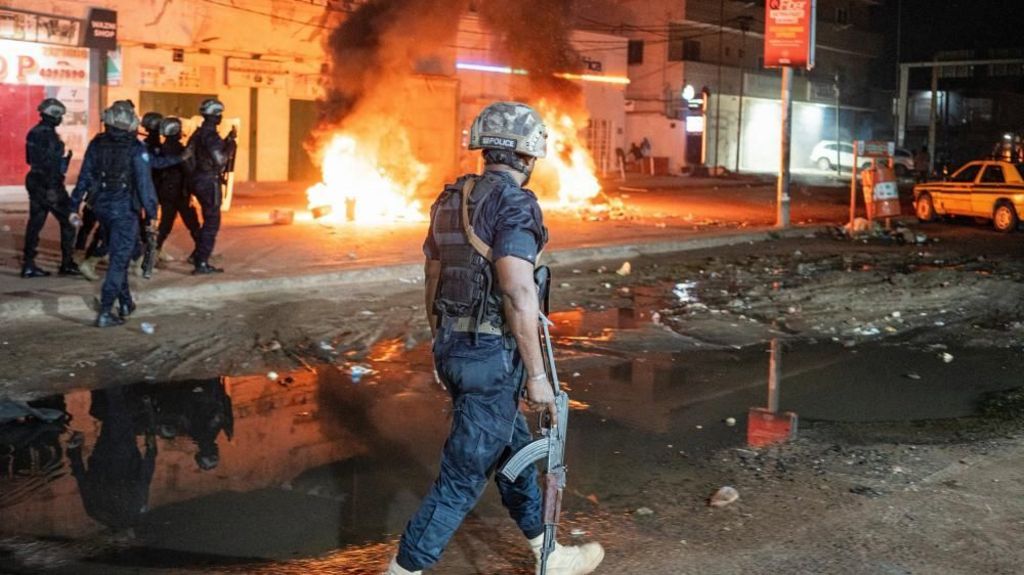
Widespread public anger over weeks of crippling, extended electricity outages boiled over into street demonstrations across The Gambia this week, forcing police to deploy tear gas to disperse crowds of hundreds of frustrated protesters just months ahead of a highly contested presidential election.
The unrest, which unfolded Monday night across the capital Banjul and its surrounding suburban areas, was sparked by persistent blackouts that local residents report can stretch for up to 48 consecutive hours. The outages have grown increasingly severe since June, exacerbated by record high temperatures during the region’s hot season that have sent residential demand for electricity surging for cooling and daily use.
In the Westfield district, crowds advanced on the headquarters of the National Water and Electricity Company (Nawec), The Gambia’s state-run power utility, chanting calls for incumbent President Adama Barrow to step down. Additional demonstrators gathered outside the vice president’s official residence in Farato, where signage at a local office of Barrow’s ruling National People’s Party was damaged during the unrest. Protesters reportedly burned tires and blocked major roadways to voice their discontent.
In a national televised address delivered Tuesday evening, Barrow acknowledged the severe hardship the outages have imposed on ordinary Gambian households, admitting that systemic failures in government planning, power generation infrastructure, and maintenance routines have created what he called a “national security” emergency. He called on citizens to exercise patience, noting that the current electricity crisis is not unique to The Gambia, and has impacted multiple nations across West Africa.
“When you lie down in the heat and the dark, believe that you are not alone in that darkness,” Barrow said in his address. He detailed tangible steps the government is taking to resolve the crisis, promising that a 24-megawatt new generating unit being installed at the Brikama power station will be fully operational by the end of October, and that additional new generators will be delivered to the country by the end of the current week. A contract for a 50-megawatt utility-scale solar power plant in Soma has also been finalized, though a completion timeline for that project has not yet been announced.
Barrow warned demonstrators against damaging public infrastructure, arguing that destruction of public assets would only prolong service disruptions by diverting limited public funds away from system upgrades and into repairs. “Let us not destroy in a moment of anger what we suffered so long to gain,” he added. “I know that the fans have stopped turning, children work in the dark, mothers throw away stale food, and the heat is unbearable by day and by night.”
Nawec Chief Executive Gallo Saidy echoed Barrow’s call for patience, explaining that the shortages have been compounded by reduced imported electricity from the regional power grid. Lower than average rainfall across the region this year cut into hydropower generation available through cross-border transmission lines, which The Gambia relies on to supplement its domestic output—most of which currently comes from imports from neighboring Senegal and Guinea.
The unrest comes as The Gambia prepares for a presidential election scheduled for December, where Barrow is seeking a controversial third term in office. Opposition figures and critics have challenged the legality of his third-term bid, adding heightened political tension to a moment of already strained public frustration over basic service delivery.