On Monday, Indonesia maintained major travel disruptions and public safety measures following a massive 25-hour eruption of the Anak Krakatau volcano, even as geological authorities reported that the volcano’s most intense activity was beginning to subside.
According to Indonesia’s Geological Agency, the continuous eruption that sent lava fountains soaring and generated a detonation loud enough to be heard 435 miles from the volcano’s site concluded on Sunday. However, the volcanic island did not return to a stable state overnight. On Monday, Anak Krakatau continued to display moderate, intermittent eruptive activity, releasing plumes of dark ash into the atmosphere and triggering small, localized seismic tremors. Inclement weather in the region has also blocked scientists from conducting clear visual monitoring of the volcano’s crater, complicating ongoing hazard assessments.
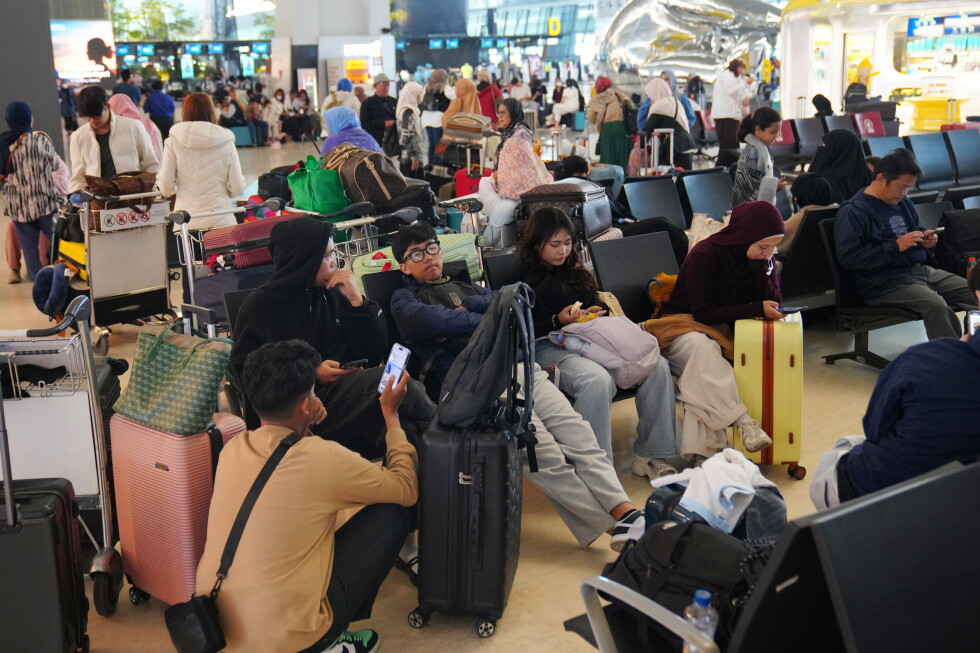
Indonesia’s air navigation authority AirNav Indonesia confirmed that air quality tests detected dangerous levels of volcanic ash in the airspace surrounding Jakarta and multiple other population centers across the country. In response, officials ordered eight airports to remain shut until 6 p.m. local time on Monday. The shutdown includes four major commercial hubs operated by state-owned airport manager InJourney Airports: Jakarta’s two primary international airports, Soekarno-Hatta and Halim Perdanakusuma, Husein Sastranegara International Airport in West Java, and Radin Inten Airport in Lampung, located on the southern tip of Sumatra.
As of Monday, InJourney Airports reported that the closures have already disrupted roughly 2,300 scheduled flights, impacting an estimated 268,539 passengers traveling through the four affected major hubs. Beyond travel disruptions, Indonesian public officials moved quickly to protect student health, authorizing temporary remote learning transitions for schools across ash-affected regions, including Jakarta, West Java, Banten, and Lampung provinces. The policy shift is designed to minimize children’s exposure to toxic airborne ash that can cause serious respiratory distress.
Geological Agency head Lana Saria warned that the threat of further volcanic activity has not passed. “The probability of additional eruptions in the coming days remains high,” she stated. Saria outlined the primary ongoing hazards, noting that future eruptions could launch volcanic bombs, produce widespread heavy ashfall, and generate lava flows if large-scale sustained activity resumes.
Anak Krakatau, which translates to “Child of Krakatau,” is a volcanic island located in the Sunda Strait between Indonesia’s two most populous islands, Java and Sumatra. The active volcano formed from the remnants of the original Krakatau, whose catastrophic 1883 eruption was one of the most explosive volcanic events in recorded history, triggering a multi-year period of global cooling by blocking incoming solar radiation with atmospheric ash. In 2018, another major eruption of Anak Krakatau triggered a devastating tsunami after volcanic activity destabilized the volcano’s slope and caused a massive underwater landslide. The disaster killed at least 430 people across coastal Sumatra and Java.
Indonesia sits along the Pacific “Ring of Fire,” a global belt of active seismic faults that hosts the majority of the world’s earthquakes and volcanic activity. As a result, the country is home to more than 120 active volcanoes, making frequent volcanic eruptions a persistent natural hazard for local communities and national infrastructure.