As the Russia-Ukraine conflict enters its third year of full-scale combat and long-stalled peace efforts hang by a thread, two high-profile U.S. envoys have touched down in Moscow to reignite negotiations to end the devastating war, Russian state media confirmed Saturday. Steve Witkoff and Jared Kushner, former U.S. President Donald Trump’s son-in-law and a long-time diplomatic advisor, were greeted at the airport by Russian envoy Kirill Dmitriev, according to Russia’s official state news agency Tass.
This high-stakes visit comes against a sharp, deadly escalation of cross-border aerial attacks, with both Moscow and Kyiv ramping up strikes amid months of stalemate along the 1,250-kilometer front line where neither side has managed to secure significant territorial gains. Ukrainian President Volodymyr Zelenskyy announced a unilateral pause in Ukrainian airstrikes for the duration of the U.S. envoys’ trip and called on the Kremlin to match the gesture to create space for diplomatic progress. As of Saturday evening, Moscow had not issued a public response to Zelenskyy’s proposal.
U.S.-led mediation efforts to end the war have lost significant momentum in recent months, as Washington has shifted its military and diplomatic focus to its ongoing conflict with Iran over the past six months. This is not the first diplomatic mission for Witkoff and Kushner: the pair last traveled to Moscow in January, where they held a closed-door meeting with Russian President Vladimir Putin inside the Kremlin. The envoys have not yet traveled to the Ukrainian capital Kyiv during this diplomatic push, but Zelenskyy confirmed Saturday that he expects their arrival in Kyiv on Sunday.
In recent weeks, Russia has taken advantage of Ukraine’s critical shortage of air defense systems to expand its bombardment campaign, launching round-the-clock strikes on Kyiv and other major Ukrainian cities that now extend into daylight hours, a sharp break from previous patterns of mostly nighttime attacks. Just one day before the U.S. envoys landed, a Russian drone struck Ukraine’s Security Service (SBU) headquarters in central Kyiv, one of Ukraine’s most prominent government buildings and a key agency leading deep-strike operations inside Russian territory. Early Saturday, Zelenskyy confirmed overnight Russian strikes targeted Kyiv’s Boryspil International Airport, linking the attack directly to the planned U.S. diplomatic visit.
“Clearly, these Russian strikes on the airports are a reaction to the discussions and preparations for the possibility of the U.S. side using an aircraft to travel to Ukraine,” Zelenskyy wrote in a social media statement Saturday. “We have taken note of this Russian move, and next week we will adjust our operation accordingly regarding Russian airspace, which has become dangerous because of our drones and missiles in the sky. Of course, there are and will be no threats to diplomacy from our side.”
The intensifying air campaign has already claimed multiple civilian lives and left dozens injured across Ukraine. In southern Ukraine’s Dnipropetrovsk region, five civilian employees at an industrial site were killed and five more wounded in a Russian attack, regional military administration head Oleksandr Hanzha confirmed. “A locksmith, an electrician, a plumber and a machinist. People of peaceful professions. They were simply working their shift. They were doing their job when enemy missiles cut off their lives,” Hanzha said. A separate strike on the region’s Nikopol district wounded a 62-year-old man and damaged multiple residential buildings. Russia’s Ministry of Defense claimed the Dnipropetrovsk strikes targeted two metallurgical plants it described as “major suppliers of metal products for Ukraine’s military production.”
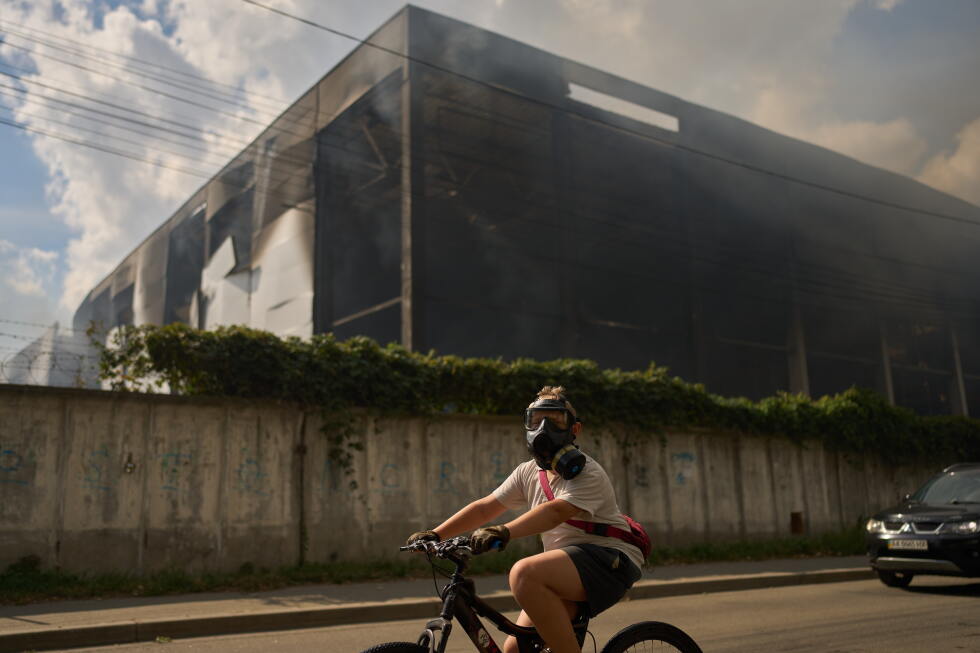
Further strikes hit Kyiv region overnight, leaving two people wounded in Boryspil district, where a strike-sparked fire partially destroyed a nine-story apartment building. In the southern Mykolaiv region, Russian drones repeatedly struck a local shopping center overnight, igniting multiple fires and damaging retail space. A 72-year-old man and a 17-year-old girl were injured in the attack, Ukraine’s State Emergency Service reported, noting that emergency response teams were repeatedly forced to pull back to safe zones to avoid being hit by follow-up strikes, only returning when lulls in the bombardment allowed.
Ukraine’s Air Force reported that Russia launched a massive overnight assault, firing ballistic missiles from its Rostov and Voronezh regions and deploying 167 attack drones. The fleet included a large share of fast-flying jet-powered Shahed and Geran drones, as well as decoy drones. Ukrainian air defense forces managed to shoot down or neutralize 128 of the incoming drones, but unintercepted weapons still caused widespread damage and casualties. Air-raid sirens now sound repeatedly across Kyiv, becoming an inescapable part of daily life for the capital’s residents, who have been forced to adjust to constant risk of attack.
Cross-border strikes are not limited to Russian attacks on Ukraine: Ukraine’s long-range strikes have repeatedly hit Russian military facilities, oil refineries and key economic hubs in a campaign to undermine the Kremlin’s war machine and force Russian civilians to experience the consequences of the war launched by their leadership. On Saturday, Russian local officials reported that a Ukrainian strike on Russia’s border Belgorod region wounded three people, including a 14-year-old girl. Russia’s Ministry of Defense claimed its air defenses shot down 53 Ukrainian drones during the overnight exchange of attacks.
As of Saturday, the Kremlin has not commented on the substance of talks with the U.S. envoys, nor on Zelenskyy’s proposal for a temporary ceasefire in airstrikes. Diplomatic observers caution that the odds of a breakthrough remain low, given the hardened positions of both sides and the recent escalation of violence that has already raised tensions ahead of the negotiations.