Ten days after catastrophic floodwaters swept through mountainous regions of Nepal, rescue teams have pulled two survivors—one Chinese national and one local woman—from devastated sites, in a rare bit of hope amid a widespread tragedy that has left more than 1,300 confirmed dead and thousands more unaccounted for, Nepalese officials confirmed Saturday.
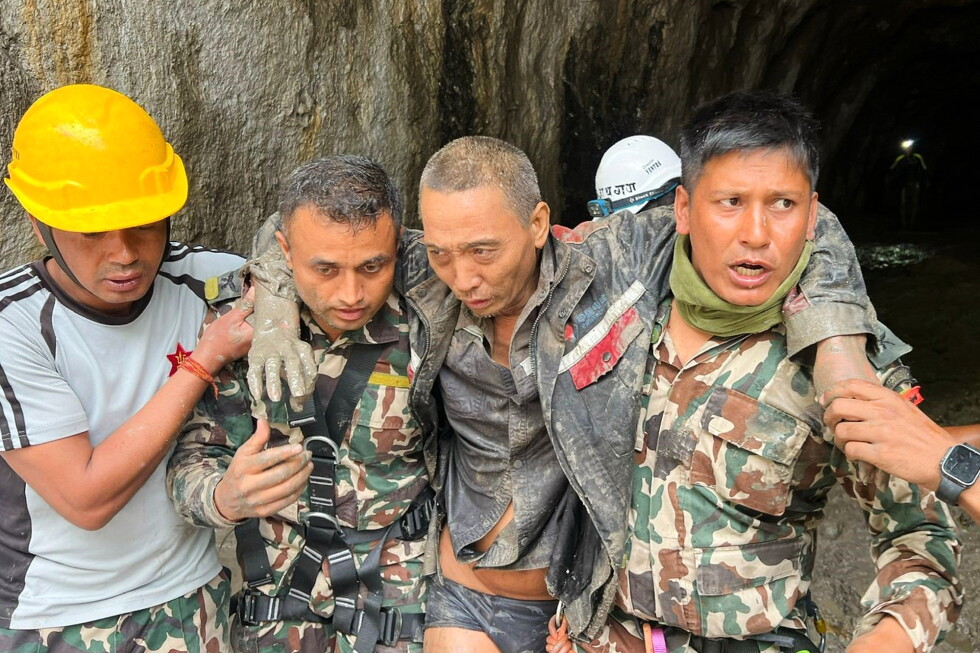
The Chinese survivor, a worker at the Trishuli 3A hydropower project, was extracted from a 225-meter access tunnel, deep below the flood-ravaged landscape, according to multiple official and media sources. He is the third worker pulled alive from the project’s tunnels in 48 hours: two Nepalese employees were pulled from the same tunnel system on Friday, officials from the prime minister’s office confirmed in a social media statement.
The rescue operation was a joint effort between Nepalese military personnel and a team of South Korean disaster response specialists, the Nepalese Army shared in an official update. After being pulled from the tunnel, the man was airlifted via military helicopter for urgent medical care, with on-board medics monitoring his condition throughout the flight. Photos released by Chinese state broadcaster CCTV show two rescuers carrying the worker out of the tunnel entrance, while official Nepal Army imagery shows him receiving care mid-flight. He is currently undergoing a full health assessment to evaluate any long-term effects of his 10-day entrapment.
In a separate, equally remarkable discovery in the flood-battered town of Nuwakot, a second survivor—a local woman—was pulled alive from the rubble of a collapsed house 10 days after the floods struck. Nepal Army spokesperson confirmed the extraction Saturday, adding that the woman was also being airlifted to the capital Kathmandu for emergency medical treatment. Official photos from the scene show the woman covered in mud and debris when rescuers located her. Crews gave her emergency bottled water before moving her to safety, wrapping her in a warm gray blanket for the flight.
These two discoveries come amid a grim backdrop to Nepal’s largest natural disaster in recent years. The August 26 floods, which researchers and disaster officials say were triggered by a sudden glacial collapse in the Himalayan mountains, have already claimed at least 1,300 confirmed lives, according to Nepal’s national disaster management agency. More than 5,000 people remain unaccounted for across flood-hit regions, with hundreds of workers confirmed missing at hydropower development sites scattered across the affected river valleys.
Authorities estimate that roughly 900 workers from 12 different hydropower projects are currently missing, with around 500 of those unaccounted for believed to be trapped inside the network of construction and access tunnels dug for the projects. Rescue teams are working around the clock to reach trapped sites, but rugged terrain and ongoing flood damage have slowed progress across the region.