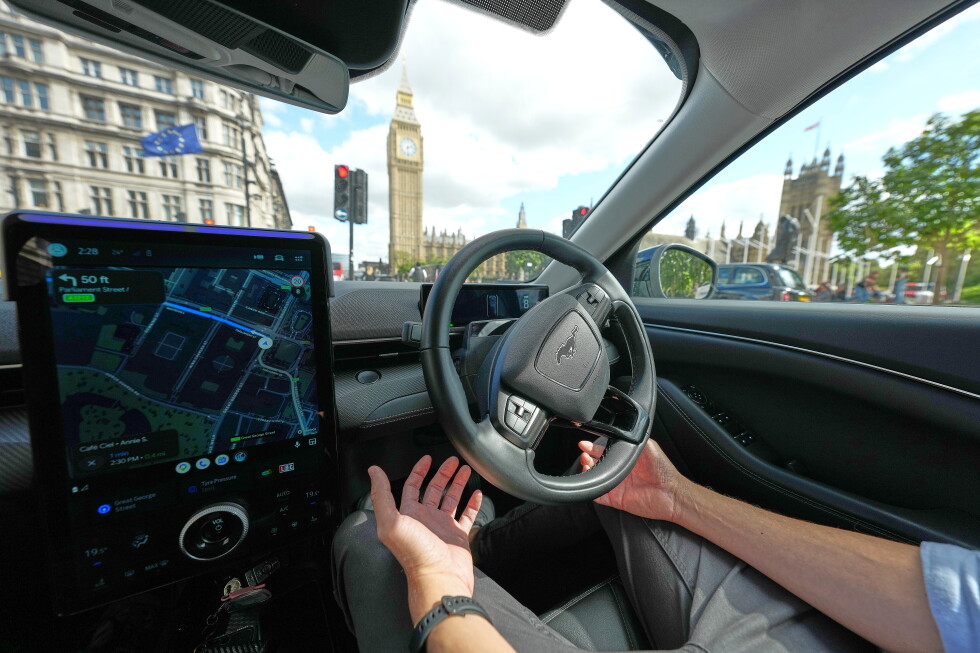
On Thursday, a milestone in European autonomous mobility arrived in London: ride-hailing giant Uber and British autonomous vehicle technology firm Wayve have launched the capital’s first commercial self-driving taxi service, bringing a technology already widely accessible across U.S. and Chinese cities to UK consumers for the first time.
The rollout will begin on a small, controlled scale, with a fleet of all-electric Ford Mustang Mach-E SUVs fitted with Wayve’s proprietary autonomous driving software and sensor hardware. Unlike fully driverless robotaxi services already operating in multiple U.S. and Chinese metropolitan areas, Europe has adopted a far more cautious, regulatory-first approach to autonomous public transit. For this London pilot, a trained human safety operator will remain in the driver’s seat for every trip, ready to take over manual control of steering or braking if any safety issue arises during the journey.
Under the UK government’s existing national pilot framework for self-driving vehicles, commercial operators such as Uber and Wayve must obtain specific regulatory approval before they can remove human safety drivers from fully autonomous services. Sarfraz Maredia, Uber’s global head of autonomous mobility, noted that the approval process is still ongoing, with no clear timeline for when fully driverless operation can begin.
London’s complex street network presents unique testing challenges that set it apart from many North American and Asian cities already hosting robotaxi services. Its narrow, notoriously winding roads are consistently choked with mixed traffic, including private cars, double-decker buses, regular bicycles and the city’s large fleet of dockless electric rental bikes. Adding to the complexity, jaywalking is not illegal in the UK, meaning pedestrians frequently cross streets outside designated crossing areas, requiring more advanced adaptive driving responses from autonomous systems.
Uber and Wayve are not the only firms racing to launch commercial robotaxi service in London. U.S. autonomous technology leader Waymo, a subsidiary of Google-parent Alphabet, and Chinese tech giant Baidu are also finalizing preparations to launch their own commercial passenger services in the city in the near future.
This London pilot marks the second commercial robotaxi launch for Uber in Europe. Last month, the company rolled out its first European service in Zagreb, Croatia, in partnership with Chinese autonomous firm Pony.ai and a local operator, which also requires on-board human safety drivers. Most European markets remain in the early testing phase of autonomous vehicle regulation as policymakers work to balance innovation with public safety.
Globally, the robotaxi industry is expanding rapidly. In the U.S., Waymo already operates fully driverless commercial service across 14 cities, with Amazon-owned Zoox and Tesla working to scale up their own competing services. In China, three major players — Baidu, WeRide and Pony.AI — run robotaxi networks across dozens of cities, and all three have recently expanded into the Middle East through partnerships with Uber and local fleet operators in Dubai, Abu Dhabi and Saudi Arabia.
Maredia confirmed that the initial London fleet will consist of fewer than 20 autonomous vehicles, with plans for gradual expansion as the pilot collects data and earns regulatory approval. For consumers using the Uber app, customers cannot specifically request a self-driving vehicle, but may be randomly matched with a Wayve-equipped Mach-E when hailing a ride. Riders retain the option to accept or reject the autonomous vehicle match, and pricing for robotaxi rides will be identical to standard Uber trips. The company also confirmed that no tip prompt will appear for passengers at the end of self-driving trips.