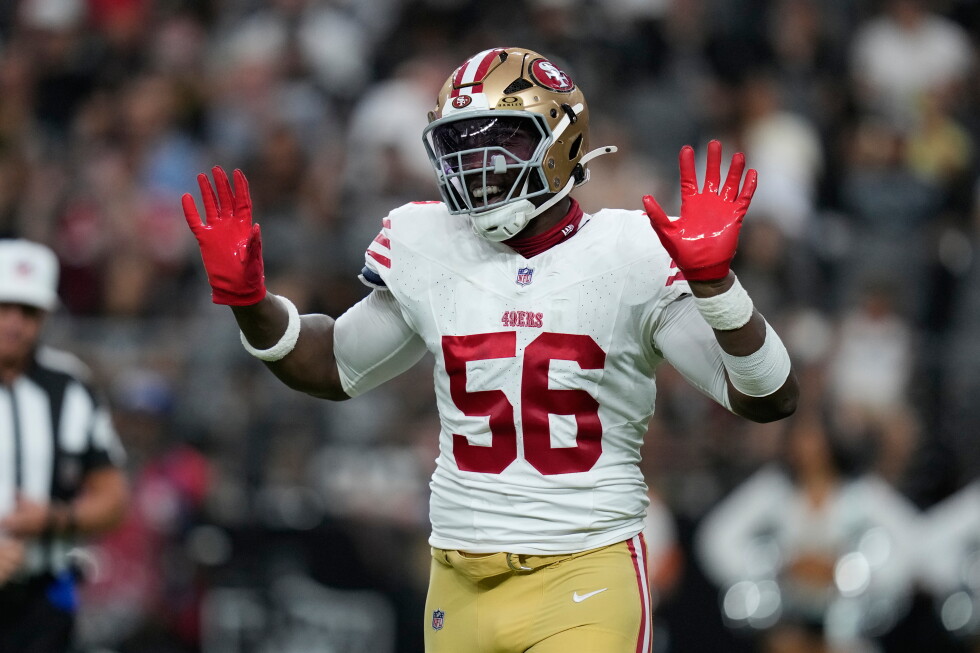
In what will go down as the longest road journey in National Football League history, the San Francisco 49ers are set to depart their Bay Area home base late Wednesday for Melbourne, Australia, where they will face off against the Los Angeles Rams in the 2025 NFL season opener on September 11. The unprecedented trip requires a massive logistical overhaul and careful preparation, as the 16-hour, 8,000-mile flight crosses the international dateline, turning a Wednesday departure from California into a Friday arrival in Australia.
Team officials and medical staff have outlined detailed guidance for players covering everything from in-flight nutrition and hydration to post-arrival routines and sleep scheduling to combat the harsh effects of severe jet lag. Players have adopted a wide range of personal strategies to adjust to the 14-hour time difference.
Second-year defensive lineman Keion White, an experienced world traveler who has already competed in NFL regular-season games in Germany and London, is approaching the trip with casual enthusiasm, unlike some of his teammates and head coach Kyle Shanahan who have openly expressed frustration over the taxing opener schedule. White’s unconventional game plan for beating jet lag relies heavily on sleep aid melatonin. “I don’t know if you can OD on melatonin, but I’m going to try,” he explained. “Take five melatonins, go to sleep on the plane. As soon as I wake up, I’m taking five more. Just keep rolling like that.”
Once he lands, White plans to spend his first free day after mandatory team meetings exploring Melbourne. He intends to browse TikTok for activity ideas, navigate the city’s public transit system, and spend the entire day awake to reset his circadian rhythm as quickly as possible. “I’m an experience guy,” he said. “If I’m up, walking around, just going to do stuff, I’ll be up. Just go explore.”
While both the 49ers and the Rams worked extensively with sports scientists and logistics teams during the offseason to develop their jet lag mitigation strategies — even sending advance staff to Australia to study time zone adjustment firsthand — the two franchises landed on completely opposite approaches. The 49ers opted for an early arrival strategy: landing two full days before the game to give players time to gradually adapt. Their schedule calls for a light practice on Saturday, a rest day on Sunday, three full regular practices from Monday through Wednesday, and kickoff on Friday morning. Immediately after the game ends, the team will fly back to California, landing in the Bay Area that same Friday afternoon, allowing them the entire weekend to rest before their Week 2 home game against the Miami Dolphins on September 20.
Shanahan noted that he initially had reservations about the early arrival plan, but aligned with the recommendation from sports scientists and his players, ultimately agreeing the approach makes sense. “It’s a big adjustment on the body,” Shanahan said. “So, the recommendation for everybody has been to tell us when to go, and it’s made a lot of sense. I know how our players feel also. I was a little bit on the fence. Science wasn’t and what I was reported on and our players weren’t at all. So that helped me get off the fence.”
In contrast, the Rams are taking the opposite tack: they will complete nearly all of their pre-game preparation at their California facility and only arrive in Melbourne roughly 24 hours before kickoff, betting that a shorter stay will minimize jet lag disruption. It remains to be seen which strategy will deliver better on-field results, with the answer only set to emerge after the opening whistle.
The rushed lead-up to departure has created a whirlwind of behind-the-scenes work for the 49ers front office. Following the team’s final preseason exhibition game in Las Vegas on August 28, players got the Labor Day weekend off, returning to practice on Monday, just one day after the NFL’s mandatory deadline to cut rosters down to 53 active players. General manager John Lynch’s staff had to finalize roster cuts, build the 16-player practice squad, confirm injury statuses for all active players, and handle a host of unforeseen logistics hurdles before departure.
“There’s a lot behind the scenes,” Lynch said. “Our logistics folks, our folks that work in the cafe, have just gone to tremendous lengths, our health and performance team, to make sure that we’re giving our players the best opportunity to feel right when they play down there in Australia. Everything from getting visas, which much more complicated than I ever knew, and they’ve been outstanding. … Hats off to those guys for pulling off a monumental task, and it’s not done yet.”
Lynch recalled that securing valid passports for all players created last-minute scrambles, including one practice squad signee who required his parents to overnight his passport to the team facility. The chaos was even more pronounced for recently acquired offensive lineman Jarrett Patterson, who was traded from the Houston Texans to the 49ers just three days before departure. “They were like, hey, do you have a passport? We’re leaving for Australia in three days,” Patterson said. “I was like, ‘Whoa!’ It’s obviously a quick turnaround getting here a couple hours after I found out and now getting ready for Australia.”
Despite the logistical headaches and physical toll of the cross-hemisphere trip, most 49ers players have embraced the unique opportunity. Cornerback Deommodore Lenoir said he would be willing to travel 30 hours straight just for the chance to play in an NFL regular-season game. For rookie cornerback De’Zhaun Stribling, the trip even comes with a bucket-list item he plans to check off before his first NFL regular season appearance: “I kind of want to see a kangaroo, just because,” he said. “To see how big they are.”