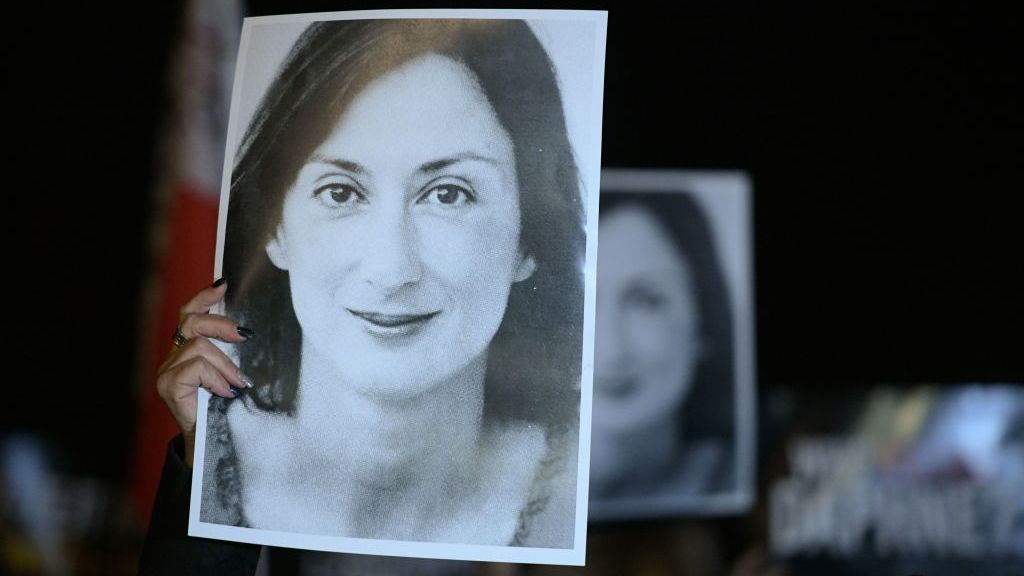
Nearly nine years after investigative journalist Daphne Caruana Galizia was assassinated by a car bomb in Malta, a high-profile trial over her killing has delivered a shocking verdict that has reopened old wounds and reignited debates over impunity for corruption-linked violence in the European nation.
On Thursday, a Maltese jury acquitted 44-year-old billionaire businessman Yorgen Fenech of all charges against him: complicity in murder and criminal conspiracy to commit murder. After eight hours of closed-door deliberation, the jury delivered the not-guilty verdict by an 8-1 margin. Courtroom observers described chaotic emotional scenes: Fenech’s family burst into cheers and cries of relief, while members of Caruana Galizia’s family wept openly at the verdict.
Caruana Galizia, a 53-year-old award-winning investigative reporter, was killed in October 2017 while leaving her home. A fierce critic of Malta’s ruling establishment, she built a global reputation through her independent blog *Running Commentary*, where she exposed networks of political corruption, transnational money laundering, and organized crime stretching from Malta to offshore tax havens. She was a key contributor to the 2016 Panama Papers investigation, which exposed secret offshore financial holdings linked to top Maltese government officials, making her one of the most high-profile enemies of the country’s ruling elite.
Her brutal assassination via a car bomb planted in her vehicle triggered mass public outrage and weeks of street protests across Malta, demanding full accountability for the killing and widespread speculation that senior political figures had sanctioned the attack. In the years since, three groups of defendants have been convicted in connection with the murder: brothers George and Alfred Degiorgio received 40-year prison sentences in 2022 for carrying out the killing, while Robert Agius and Jamie Vella were sentenced to life in prison in 2025 for supplying the explosive used in the attack.
Prosecutors had argued during the three-month trial that Fenech, one of Malta’s wealthiest men, orchestrated the plot after Caruana Galizia began investigating his business dealings and was preparing to publish damaging information about him just months before her death. Fenech, who owned a company that Caruana Galizia had already reported on, has repeatedly denied all involvement in the killing. In his defense, he shifted all blame to Keith Schembri, the former chief of staff to ex-prime minister Joseph Muscat, who was one of Caruana Galizia’s main investigation targets.
Both police and Schembri have denied any connection to the assassination: Schembri was never named as a suspect, and he has repeatedly rejected any claims of involvement. The political fallout from Caruana Galizia’s killing ultimately forced Joseph Muscat, who was never directly linked to the murder, to resign from office in January 2020.
In the aftermath of Fenech’s acquittal, Caruana Galizia’s family released a scathing statement criticizing the systemic failures that have plagued the case from the start. “Nine years after Daphne’s brutal assassination, the institutional failures that enabled her murder remain unaddressed and unreformed,” the statement read. “Lasting justice means no person should ever face the same risks again. Our country failed to protect Daphne’s life. It owes it to her to prevent other lives being lost.”
The verdict has renewed international scrutiny of press freedom and the rule of law in Malta, with press freedom advocates warning that the acquittal leaves the mastermind of one of the most high-profile journalist assassinations in European history unpunished, sending a dangerous message to investigative reporters across the continent.