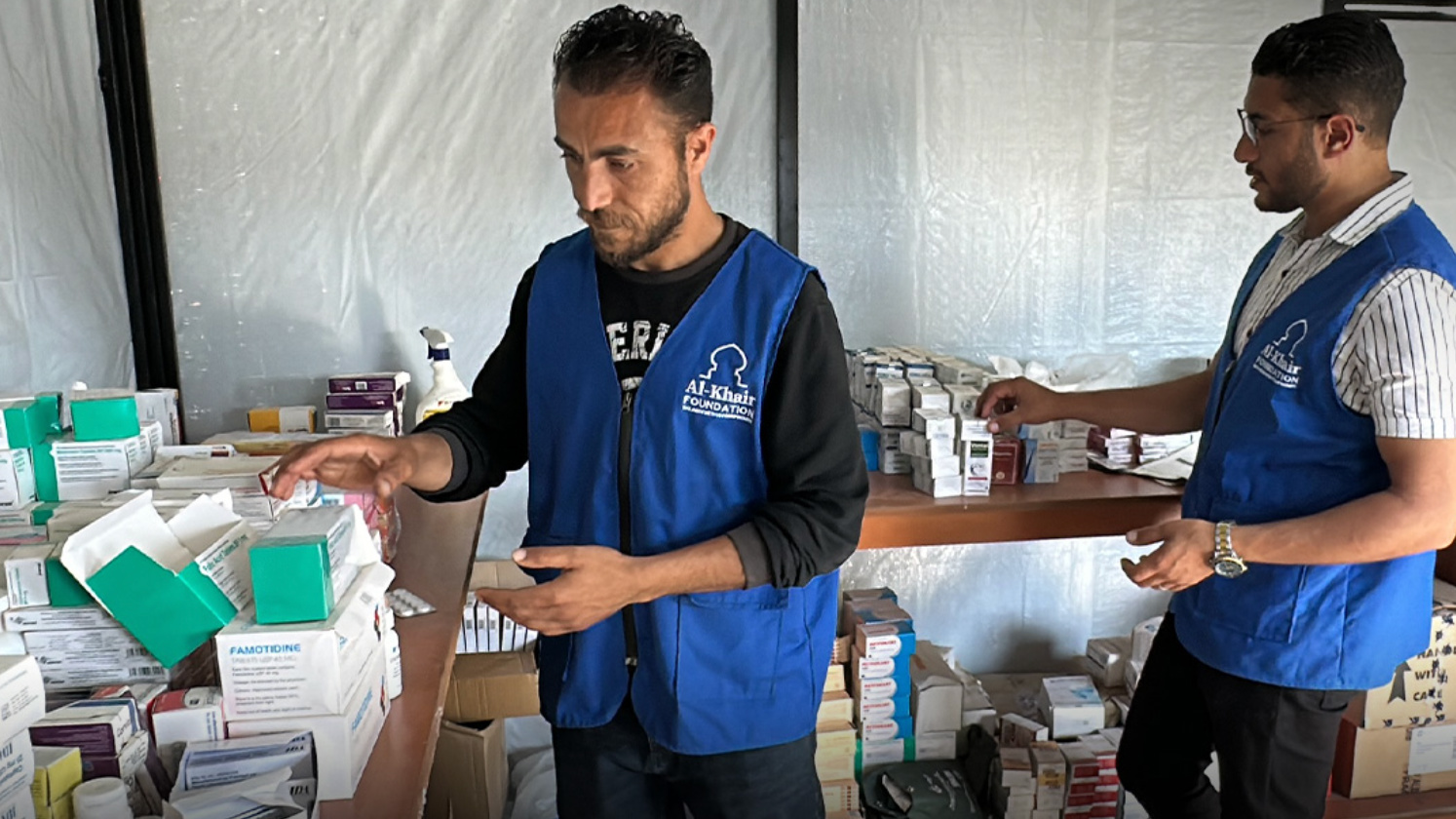
A prominent UK-based international aid organization is at the center of a high-stakes regulatory investigation after a pro-Israel advocacy group formally accused it of ties to the proscribed militant group Hamas, prompting firm denials from the charity and renewed scrutiny of partisan efforts targeting Palestine solidarity work in Britain.
The Al-Khair Foundation, which delivers critical humanitarian aid to vulnerable populations in Gaza, is now the subject of parallel probes by the Charity Commission for England and Wales and the UK Department for Education. The investigation was launched following a formal complaint submitted by UK Lawyers for Israel (UKLFI), an advocacy group that has long targeted organizations and individuals critical of Israeli government policy.
The chain of events that led to the probes began in July, when Mohammad Yousef Hasna was arrested in the UK at the request of American federal law enforcement. US prosecutors have charged Hasna with providing material support to Hamas, which is listed as a banned terrorist organization by both the US and UK governments. Al-Khair Foundation has clarified that Hasna was never a direct employee of the organization, noting he worked for a separate partner charity that carries out humanitarian relief work in Gaza. No charges have been filed against Al-Khair itself in relation to the case.
Within hours of learning of Hasna’s arrest on suspicion of terrorism-linked offenses, Al-Khair proactively submitted a mandatory serious incident report to the Charity Commission — a step the organization took before the regulator opened its formal inquiry. In an official statement released this week, the charity forcefully pushed back against all allegations of connections to Hamas or any other proscribed group.
“We unreservedly condemn violence and extremism of all kinds,” the statement read. “Al-Khair Foundation as an organisation categorically denies any allegation of channelling support to, supporting or assisting Hamas or any proscribed entity in Gaza or elsewhere.” To address the inquiry fully, the charity has appointed an independent consultant to conduct a full factual review, with findings to be shared alongside all required legal and operational documentation for the investigation.
The Department for Education’s parallel investigation centers on four schools operated by Al-Khair Foundation: three based in London and one in Oldbury, West Midlands. The charity emphasized that the school network operates completely independently from its international humanitarian aid programs, and has no connection whatsoever to Hasna. “The schools recognise the need for questions from the Department for Education and are responding to all of them,” the organization added.
This investigation is not an isolated incident: for years, the Israeli government has repeatedly leveled unsubstantiated accusations of Hamas links against international charities that deliver aid to Gaza, where a decades-long blockade and escalating humanitarian crisis have left more than two million residents dependent on outside assistance. Al-Khair reaffirmed its commitment to serving vulnerable communities in the territory, noting its programs have reduced food insecurity and sustained life-saving support for thousands of families amid extremely challenging operating conditions. “We hope the inquiry process will allow us to present evidence that will establish the facts of the work of AKF, and the realities of our humanitarian operations in Gaza,” the charity said.
Behind the complaint lies a long pattern of advocacy by UKLFI, which was founded in 2011 and has become a leading actor in pressuring UK-based organizations and individuals that express support for Palestinian rights or criticism of Israeli government policy. The European Legal Support Centre’s Britain Index of Repression, which documents systemic efforts to suppress Palestine solidarity activism across the UK, lists UKLFI 128 times. The centre’s research shows that UKLFI frequently acts as an initiating or escalating actor in campaigns against Palestinian solidarity activity, using formal complaints, legal threats, and public pressure to push schools, universities, employers, and public bodies to launch disciplinary proceedings or cancel planned events. This pattern of activity, the centre argues, has created a “chilling environment” where even lawful Palestine-related organizing is often abandoned out of fear of costly legal action and professional reputational harm.